
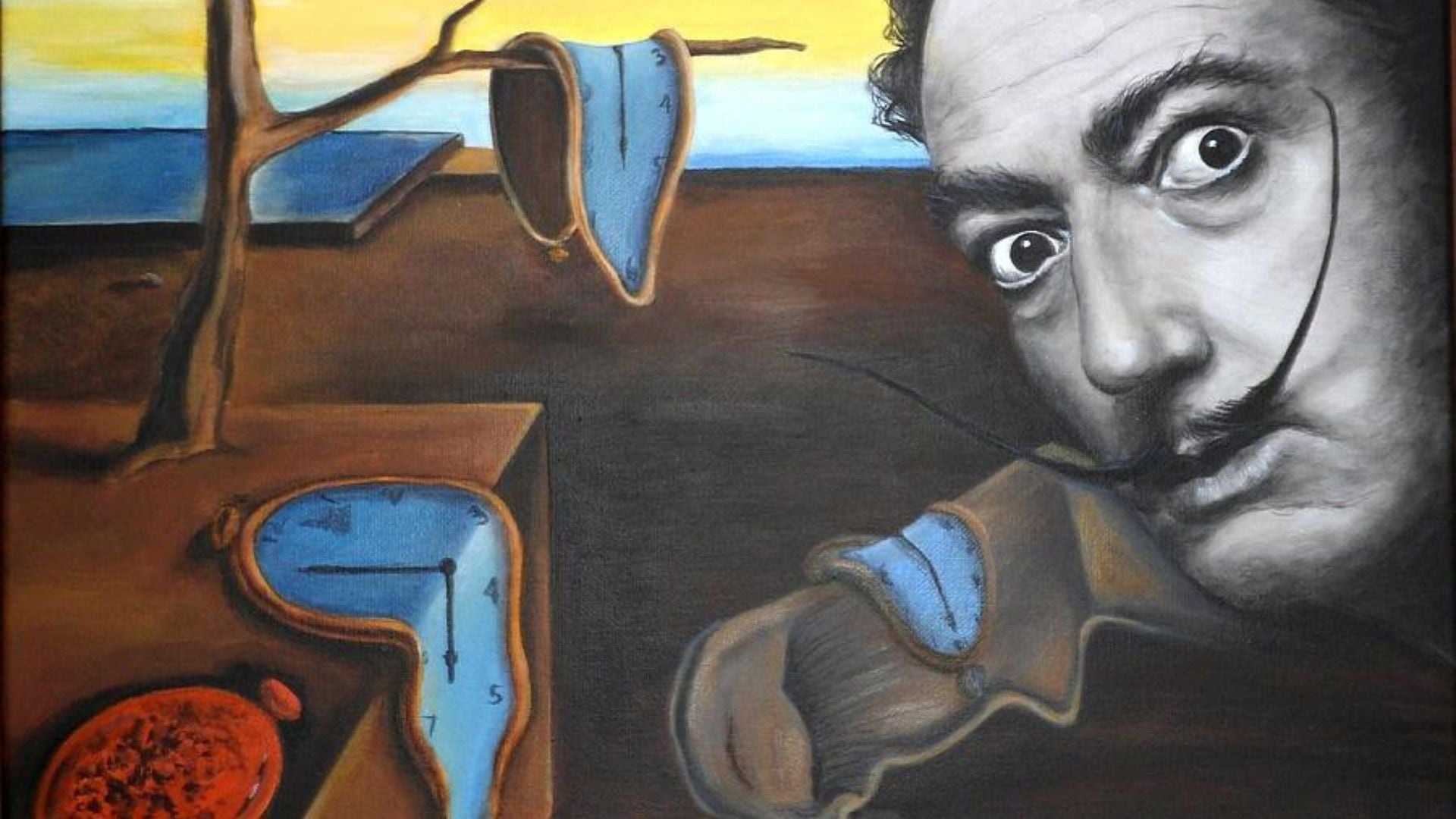
Salvador Dalí, the renowned visionary responsible for the iconic melting clocks and dreamlike landscapes, revolutionized the art world through his avant-garde surrealism, making him a true art superstar. This exploration traces his fascinating journey from an unconventional childhood to the creation of masterpieces that challenge the perception of reality. One can discover the influences that shaped his distinctive style, the symbols prevalent in his work, and his lasting impact on contemporary culture. Engaging with his oeuvre may profoundly enhance one's understanding of art.
Who is Salvador Dalí?
.jpg_00.jpeg)
Salvador Dalí, a distinguished figure in the Surrealist movement, is widely recognized for his eccentric and theatrical demeanor, which captivated audiences around the globe. Born in Figueres, Spain, he emerged as an art icon whose distinctive vision significantly influenced modern art and popular culture.
His works, often imbued with elements of irrationality and obsessive themes, invite viewers to delve into the complexities of the subconscious mind. Dalí's artistic development, shaped by personal experiences and significant cultural events such as the Spanish Civil War, led to fruitful collaborations, particularly with his muse and wife, Gala Dalí, thereby solidifying his legacy within the realm of avant-garde art.
What Are His Major Contributions to Art?
Salvador Dalí's significant contributions to the art world encompass a wide range of techniques and styles, most notably within the Surrealist ideology, which he played a pivotal role in defining and popularizing in the 20th century.
His innovative approach, particularly through the paranoid-critical method, enabled him to unlock subconscious creativity, resulting in remarkable works that challenged conventional perceptions of reality.
Iconic pieces such as 'Lobster Telephone' and 'Persistence of Memory' exemplify his capacity to merge dream-like imagery with meticulous detail, thereby fundamentally altering the landscape of modern art and influencing numerous avant-garde artists. Dalí's influence extends beyond his own creations; numerous avant-garde artists have drawn inspiration from his techniques, particularly his exploration of found-object sculptures. This evolution in artistic expression has fostered a greater appreciation for the absurd and the unexpected.
- Paranoid-Critical Method: A technique employed to access the subconscious.
-
Iconic Works:
- 'Lobster Telephone': A surrealist piece that merges the ordinary with the bizarre.
- 'Persistence of Memory': A visual exploration of time and its relativity.
This rich legacy continues to shape contemporary art movements, inspiring artists to embrace the eccentricities of their imagination.
What is the Background of Salvador Dalí?
Salvador Dalí was born in Figueres, Spain, in 1904. His childhood experiences played a significant role in shaping his artistic development, instilling in him a fascination with surrealist techniques and dreamlike sequences that would later characterize his career.
Growing up in Catalonia, Dalí was exposed to a variety of cultural influences, which contributed to his distinctive artistic vision. He successfully blended traditional and avant-garde approaches, thereby establishing a foundation for his future impact on the art world.
What Influences Shaped His Artistic Style?
The artistic style of Salvador Dalí was profoundly influenced by the psychological theories of Sigmund Freud, particularly the exploration of the subconscious mind and irrational knowledge, which became pivotal in his surrealist works.
Dalí's engagement with Freudian principles extended beyond academic interest; it permeated the very essence of his creations. This fascination manifested through recurring motifs of erotic fixation and a deliberate emotional detachment, often reflected in the bizarre landscapes and distorted figures present in his paintings. His artistic imagination, guided by dream imagery and primal instincts, pushed boundaries and challenged conventional narratives.
Furthermore,
- the broader surrealist movement significantly shaped his artistic methodology.
- His distinctive interpretations not only contributed to the establishment of surrealism as a formidable art form but also emphasized the intersection of unconscious thought and artistic expression.
- By merging his personal psyche with universal themes, he created a dialogue between reality and fantasy that captivated audiences.
In this manner, the artist cultivated an environment where the subconscious held paramount importance, echoing Freud's assertion that the unconscious mind is a vital reservoir of creativity.
What Role Did His Family Play in His Development?
.jpg_01.jpeg)
Dalí's family significantly influenced his development as an artist, providing essential support and inspiration during his formative years. Notably, his relationship with his father, who encouraged his artistic endeavors, laid the groundwork for his creative pursuits. Later, his marriage to Gala Dalí evolved into a pivotal artistic partnership.
Raised in Catalonia, Dalí found himself in a rich artistic environment that profoundly impacted his creative journey. His father, an amateur painter, introduced him to various artistic techniques and encouraged him to explore and develop his talent from an early age. This foundation not only instilled confidence in Dalí to fervently pursue his passion but also fostered a deep respect for the artistic tradition he would later challenge.
Gala Dalí, serving as both muse and business manager, played an equally instrumental role in shaping his public persona and artistic vision. Her unwavering support afforded him the freedom to experiment with innovative ideas that blurred the lines between reality and imagination.
This dynamic relationship profoundly influenced Dalí's work and solidified his legacy within the art world, where both familial love and partnership became fundamental pillars of his creative expression.
What Are the Key Characteristics of Dalí's Artwork?
The key characteristics of Salvador Dalí's artwork are marked by a unique blend of surrealistic imagery, visual illusions, and dreamlike sequences. These elements challenge conventional perceptions of reality and invite viewers to engage with a realm that is both bizarre and fantastical.
How Did Surrealism Influence His Work?
Surrealism exerted a significant influence on the work of Salvador Dalí, as he embraced its fundamental principles to delve into the depths of the subconscious mind and challenge conventional artistic expression.
Dalí's distinctive approach to surrealism markedly diverged from traditional practices, as he infused his artwork with eccentric symbolism and vivid imagery that often appeared dreamlike yet were meticulously crafted. His fascination with irrational knowledge served as a driving force behind his intricate and fantastical scenes, wherein he employed techniques such as:
- Paranoiac-critical method,
- Hallucinogenic imagery,
- Unexpected juxtapositions.
These elements not only encouraged viewers to question their perceptions of reality but also opened new avenues for expression within the surrealist movement. Iconic works like "The Persistence of Memory" exemplify how Dalí's unique vision challenged established norms, captivating audiences with a fusion of meticulous realism and imaginative abstraction.
Through these creations, he initiates a dialogue concerning the fluidity of time and the complexity of human experience, ultimately contributing to the broader evolution of surrealism as a genre.
What Are Some Iconic Symbols Found in His Art?
Some of the most iconic symbols present in Salvador Dalí's art include the melting watch, which signifies the fluidity of time, and the Lobster Telephone, a surrealist object that exemplifies his playful and provocative approach to artistic expression.
These symbols not only encapsulate the essence of Dalí's imagination but also challenge conventional perceptions of reality. The melting watch compels the viewer to reconsider the rigidity of time as a fixed construct, while the Lobster Telephone evokes the absurdity inherent in the human psyche.
Along with these prominent motifs, Dalí's body of work features other recurring themes, such as:
- The Elephant: Symbolizing heavy burdens and the weight of memory.
- Ants: Representing decay and mortality.
- Dreamscapes: Environments that blur the boundaries between reality and the subconscious.
Each of these elements contributes significantly to a complex narrative, creating a tapestry of emotional and philosophical inquiry that enhances Dalí's legacy as a master surrealist and reflects the cultural impact of his works over time. Collectively, they encourage audiences to engage in deeper interpretations, bridging personal reflection with Dalí's striking artistic vision.
What Are Some Notable Works by Salvador Dalí?
.jpg_10.jpeg)
Some of the most significant works by Salvador Dalí include The Persistence of Memory, renowned for its distinctive melting clocks; Un Chien Andalou, a surrealist film co-directed with Luis Buñuel; and L’Age d’Or, which exemplifies his avant-garde approach to storytelling and the influence of Surrealism.
What is 'The Persistence of Memory' About?
"The Persistence of Memory" by Salvador Dalí is a significant artwork that delves into themes of time, memory, and the fluidity of perception through its surrealistic imagery and visual illusions.
This iconic painting depicts a dreamlike landscape in which ordinary objects are transformed into extraordinary visuals, thereby challenging the viewer's understanding of reality. The melting watches draped over various surfaces symbolize the relativity of time and its distortion of memory, offering a profound commentary on existential philosophy.
Through the skillful application of visual illusions, Dalí encourages reflection on the nature of consciousness, positing that our experiences and recollections are not fixed entities but rather fluid and subject to change. The landscape itself serves as a metaphor for the mind, representing the complex interplay between memory and reality. Each element within the painting prompts the viewer to consider their own relationship with time and how it influences their experiences.
What Themes Are Explored in 'The Elephants'?
"The Elephants" by Salvador Dalí explores themes of emotional distance and obsession, effectively illustrated through the portrayal of elephants with elongated legs that evoke a sense of surrealism and dreamlike qualities.
In this iconic artwork, the surrealist elements encapsulate sentiments of alienation and longing, as these majestic creatures traverse an imaginary landscape. Their disproportionate limbs symbolize the burdens of existence. Dalí's meticulous attention to detail adds a layer of complexity, prompting viewers to engage deeply with the psyche of the figures depicted.
Visitors may find themselves absorbed in the narrative that unfolds, as shapes and colors intermingle, emphasizing a sense of disconnection from reality. The following elements contribute to the emotional weight of the scene:
- The use of distortion
- Dreamlike scenarios
- Vivid contrasts to engage the observer
Together, these aspects leave a lasting impression that encourages contemplation of the intricacies of personal desires and obsessions.
What Impact Did Dalí Have on Popular Culture?
Salvador Dalí's impact on popular culture is significant, as his surrealist influence extends beyond the confines of the art world to permeate various domains, including film, literature, and advertising. This broad reach reinforces his legacy as a visionary artist.
How Has Dalí's Work Influenced Film and Literature?
.jpg_11.jpeg)
Dalí's work has had a profound influence on both film and literature, particularly through his collaboration with Luis Buñuel on 'Un Chien Andalou,' which exemplifies the principles of surrealism and surrealist cinema, challenging traditional narrative conventions.
His significant impact on cinematic storytelling and literary expression is evident in the ways contemporary artists and filmmakers draw inspiration from his distinctive visual style and thematic explorations.
- Dalí's techniques frequently blur the lines between reality and illusion, a characteristic that resonates in numerous modern films and novels.
- For example, the dreamlike sequences and nonlinear narratives present in contemporary works reflect the surrealist principles that Dalí advocated.
His examination of subconscious themes has paved the way for modern storytellers to explore deep aspects of human psychology, employing dream symbolism, unexpected juxtapositions, and surrealist objects to elicit emotional responses.
This fusion of visual art and narrative form continues to shape the creative landscape, inspiring new generations to delve into the depths of imagination.
What Were the Later Years of Salvador Dalí Like?
In his later years, Salvador Dalí encountered a combination of prolific creativity and health challenges that profoundly influenced his artistic evolution and the trajectory of his work, reflecting his artistic legacy.
What Projects Did He Pursue in His Later Life?
In his later life, Salvador Dalí engaged in a variety of projects, including theatrical designs, art exhibitions, and a notable collaboration with Walt Disney, which highlighted his innovative approach to artistic expression.
These creative endeavors not only illustrate his adaptability but also his unwavering passion for advancing the frontiers of artistic innovation. For example, his work on theatrical designs included the creation of visually striking backdrops and costumes that infused the stage with his signature surrealistic style. Dalí’s art exhibitions frequently showcased elaborate installations, merging painting, sculpture, and multimedia, thereby captivating audiences and inspiring fellow artists.
- His collaboration with Walt Disney on the animated short film Destino exemplified a synthesis of animation and surrealism, demonstrating how art can transcend conventional boundaries.
- His late installations in museums redefined viewer interaction with art, further solidifying his legacy.
Through these projects, Dalí showcased his capacity for evolution while preserving a distinctive voice, affirming that true creativity knows no bounds.
How Did His Health Affect His Work?
Dalí's health challenges in the later stages of his life had a significant impact on his artistic endeavors, influencing both the themes he explored and the techniques he employed, often reflecting a sense of emotional detachment in his work, akin to the theatrical behaviors he exhibited.
As his physical ailments progressed, particularly due to the debilitating effects of Parkinson's disease, this deterioration redefined his artistic vision and shaped his approach to creation. The pain and discomfort he experienced prompted a transition from elaborate, intricate compositions to simpler, more abstract forms, echoing the tumultuous emotions he faced.
These health issues led to a period of introspection, compelling the artist to explore themes of mortality and existentialism more deeply. His later works frequently exhibit a stark contrast, characterized by a pervasive sense of isolation that encourages viewers to reflect on the complexities of the human condition.
- This emotional detachment is evident in the cold, detached style of his later pieces, suggesting an ongoing struggle between his desire for connection and the barriers imposed by his ailments.
- Such transformations not only illuminate a shift in Dalí's personal narrative but also underscore the profound influence of physical health on creative expression.
Ultimately, this evolution culminated in a legacy distinguished by its depth, reflecting not only the triumphs of a visionary artist but also the trials that shaped his journey, including the impact of the Spanish Civil War.
What is the Legacy of Salvador Dalí?
The legacy of Salvador Dalí is multifaceted, characterized by his notable contributions to the surrealist movement and a profound impact on modern art, including pop art, that continues to inspire artists and engage audiences today.
How Is He Remembered Today in the Art World?
Salvador Dalí is recognized today as one of the most influential figures in the art world, celebrated for his distinctive style and creative genius that challenged established conventions and expanded the parameters of artistic expression.
His legacy is meticulously preserved through a range of art exhibitions and retrospectives that highlight his iconic works and innovative techniques. Major galleries and institutions worldwide frequently curate Dalí exhibitions, providing opportunities for both enthusiasts and new audiences to explore his surrealist visions and eccentric narratives.
These events not only honor his artistry but also analyze the significant impact he has had on numerous contemporary artists. Dalí's inclination to blur the lines between fantasy and reality continues to serve as a source of inspiration for modern creators, fostering discussions about the enduring relevance of surrealism within today’s art landscape.
His engagement with themes such as identity, dreams, and the subconscious remains pertinent, prompting continued dialogues among art critics and scholars. Within this dynamic context, discussions surrounding Dalí encourage viewers to reflect on how imagination continues to influence artistic expression.
What Museums Feature His Work?
Several museums around the world prominently display Salvador Dalí's work, with the Teatro-Museo Dalí in Figueres, Spain, featuring the largest collection of his art and serving as a testament to his artistic legacy.
Along with the renowned Teatro-Museo, another significant institution is the Dalí Museum in St. Petersburg, Florida, a hub for Surrealism. This museum boasts an impressive collection that includes masterpieces such as "The Persistence of Memory," which encapsulates Dalí's exploration of time and perception, reminiscent of the Persistence of Memory. Additionally, the Queen Sofia Museum in Madrid, Spain, provides visitors the opportunity to admire the iconic work "Autumnal Cannibalism," showcasing the unconventional relationships in Dalí's art.
Each of these institutions plays a crucial role not only in exhibiting Dalí's creations but also in engaging audiences with the complex themes and revolutionary techniques that characterize his work, reflecting his creative influence.
- Teatro-Museo Dalí: Houses the largest collection of Dalí's works and serves as his burial site.
- Dalí Museum, St. Petersburg: Features the significant painting "The Persistence of Memory."
- Queen Sofia Museum: Showcases the artwork "Autumnal Cannibalism."
Frequently Asked Questions
Who is Salvador Dali?
Salvador Dali was a prominent Spanish surrealist painter, sculptor, and writer, known for his eccentric and imaginative works that challenged the conventions of art. Born on May 11, 1904, in Figueres, Catalonia, he became one of the most influential artists of the 20th century, especially in the realm of Surrealism.
What are some famous works by Salvador Dali?
Some of Salvador Dali's most famous works include "The Persistence of Memory," which features melting clocks, and "The Elephants," known for its surreal imagery, a style influenced by Sigmund Freud. His unique style blends dreamlike scenes with bizarre and fantastical elements, making his art instantly recognizable.
Who is Salvador Dali in the context of surrealism?
In the context of surrealism, Salvador Dali is one of the leading figures, celebrated for his innovative approach to the movement. He used dream imagery and irrational scenes to explore the unconscious mind, making significant contributions to the development of surrealist art, alongside contemporaries like André Breton.
How did Salvador Dali influence modern art?
Salvador Dali influenced modern art through his exploration of the subconscious and his use of unconventional techniques, such as double images and symbolism, including theatrical transformations. His unique vision inspired countless artists and changed the perception of what art could represent in contemporary society.
Who is Salvador Dali and what is his legacy?
Salvador Dali's legacy is marked by his imaginative genius and the lasting impact of his work on both art and culture, making him a celebrated celebrity. He left behind a vast body of work, including paintings, sculptures, and films, continuing to inspire future generations of artists and art enthusiasts.
Where can I see works by Salvador Dali?
Works by Salvador Dali can be seen in various museums around the world, including the Salvador Dali Museum in St. Petersburg, Florida, and the Teatre-Museu Dali in Figueres, Spain, where visitors can see his works like The Dream of Venus. These institutions showcase a wide range of his art, allowing visitors to immerse themselves in his surreal world.
Van Gogh Starry Night
When Art Demands More Than a Moving Truck