
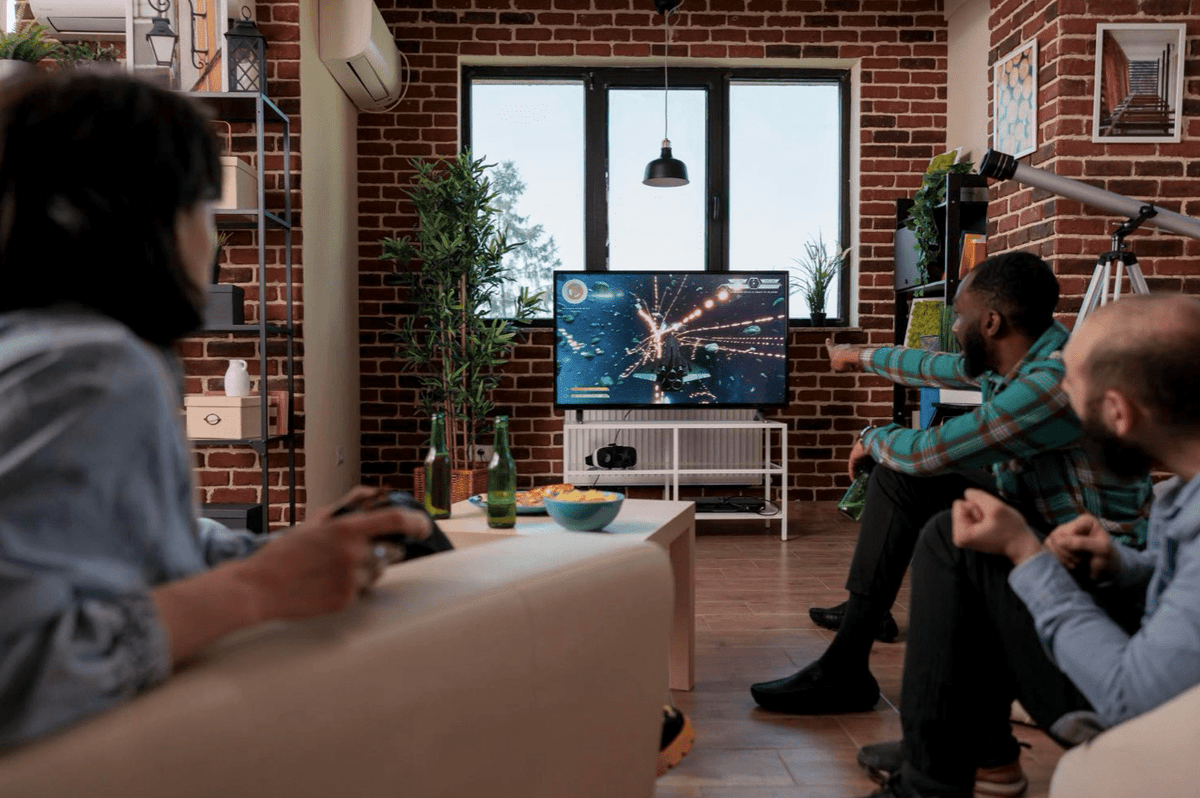
For a long time, the parts of the home dedicated to leisure and screens were treated as design afterthoughts. The games corner, the media setup, the spot where you unwind at the end of the day were all function and no form, a tangle of cables and black boxes hidden away from the rooms you actually wanted people to see. That has changed. As our homes have become the centre of how we relax and entertain ourselves, the spaces built for it deserve the same aesthetic care as any other room. Here is how to design a home entertainment space that is as pleasing to look at as it is to use.
Start With Mood, Not Gadgets
The temptation with any entertainment space is to lead with the technology. Resist it. The most successful rooms start with a mood, a feeling you want the space to evoke, and let everything else follow. Do you want something moody and cinematic, all deep tones and low lighting? Something bright, playful, and energising? Something calm and minimalist that quiets the mind after a busy day?
Deciding on that emotional direction first gives you a framework for every choice that follows, from the wall colour to the art to the lighting. A room designed around a clear mood feels intentional and cohesive, while one designed around a list of gadgets tends to feel like a showroom.
The Power of Wall Art in a Screen-Heavy Room
Rooms dominated by screens present a particular design challenge. When the television or monitor is off, it becomes a large black rectangle, a dead visual space that can flatten the whole room. This is where wall art earns its place. Thoughtfully chosen pieces around and near the screen break up that void, add colour and personality, and give the eye something to enjoy when the screen is dark.
The key is balance and scale. A large statement canvas can anchor a wall and hold its own against a big display, while a curated cluster of smaller pieces adds texture and interest. Choose art that echoes your chosen mood: bold, graphic prints for an energetic space, or moody, atmospheric pieces for a cinematic one. The goal is for the room to feel like a designed whole, where the screen is one element among many rather than the only thing to look at.
Lighting Sets the Tone
Nothing shapes the feel of an entertainment space more than lighting. Harsh overhead light kills the mood instantly, while layered, adjustable lighting transforms a room. Think warm lamps, dimmable fixtures, and subtle accent lighting that can shift the atmosphere from bright and social to low and immersive depending on the moment.
Backlighting behind a screen reduces eye strain and adds a soft, modern glow. Picture lights or LED strips can highlight your wall art and give the room depth after dark. The ability to dial the lighting up for company and down for a solo film night is one of the simplest ways to make a space feel considered and versatile.
The Beauty in Digital Design
It is worth appreciating that a great deal of artistry now lives on the screens themselves. Modern digital entertainment is a genuine visual craft. Video games are celebrated for their art direction, streaming interfaces are carefully designed, and even casual online entertainment has become surprisingly polished. Platforms like Mr Q, for example, present their games with clean, colourful, considered visual design, part of a wider trend of digital experiences treating their look and feel as seriously as any physical product.
For anyone who cares about design, this is a reminder that aesthetics extend beyond the walls and into the content itself. A well-designed room and a well-designed screen experience share the same underlying principle: that how something looks and feels is not superficial but central to how much we enjoy it.
Keep It Comfortable and Balanced
A beautiful entertainment space is only successful if it is also a pleasure to spend time in. Comfortable, well-chosen seating matters more than almost anything, since a stunning room you cannot relax in defeats its own purpose. Soft textures, throws, and cushions add warmth and stop a screen-heavy space from feeling cold or clinical.
And whatever form your entertainment takes, balance is part of good living as much as good design. If real-money online games are among the ways you relax, treat them as light entertainment with firm limits rather than a way to make money, and lean on the responsible-play tools that reputable platforms provide. Charities such as GambleAware offer free, confidential advice for anyone who wants to keep any pastime healthy. A well-designed life, like a well-designed room, is about proportion.
Bringing It All Together
Designing a home entertainment space is really about refusing to accept that function and beauty are opposites. With a clear mood, thoughtful wall art, layered lighting, comfortable seating, and an appreciation for good design both on and off the screen, a leisure space can be every bit as elegant as the rest of your home.
The rooms where we relax deserve as much care as the rooms where we entertain guests, because they are, in the end, the rooms we actually live in. Give your downtime a space that looks as good as it feels, and the whole experience of unwinding at home is elevated.
Museum Quality Bathroom Canvas Art Made in USA for Upscale Homes
One Statement Wall + Selfie Zone: Salon Wall Art That Gets Photos