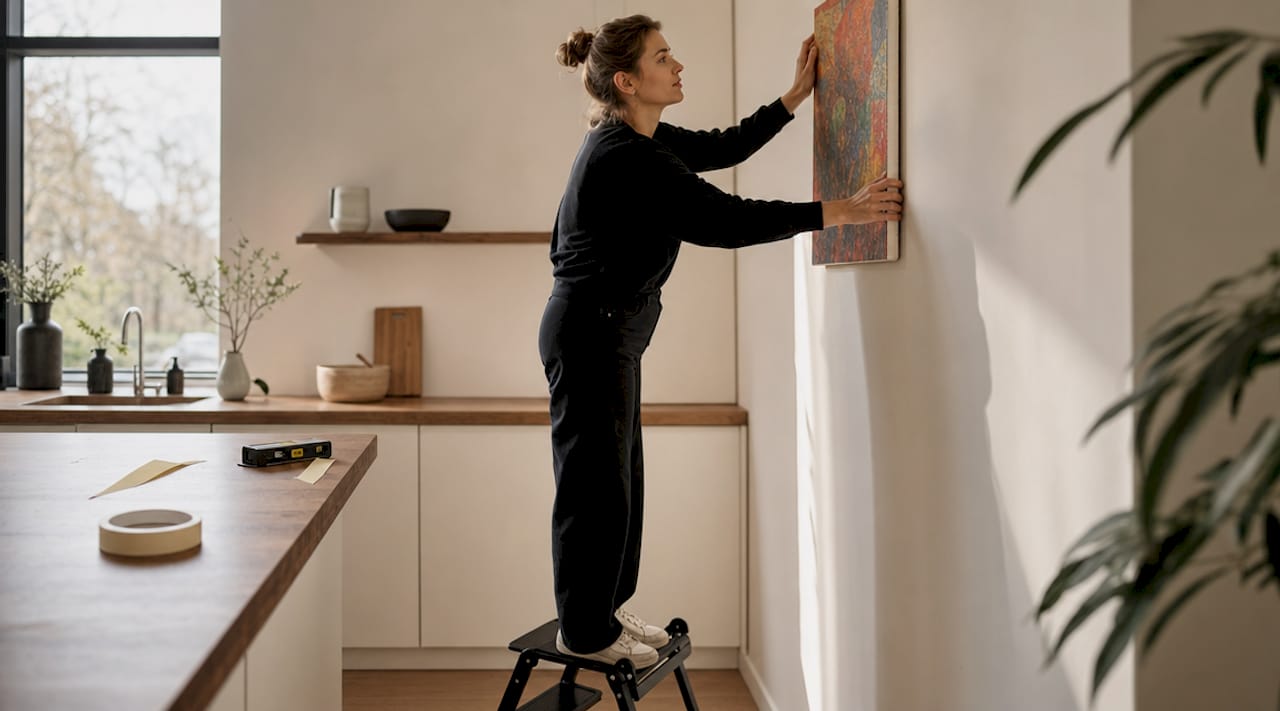
Hanging canvas art without damaging walls is fully achievable when you match your hanging method to your artwork’s weight and your wall’s surface type. Renters and homeowners alike have more options than ever, from Command adhesive strips and Monkey Hooks to picture rail systems and furniture leaning. The key is knowing which tool fits your situation before you commit. This guide walks you through every practical method, including how to prepare surfaces, apply hangers correctly, and remove them cleanly when it’s time to move on.
How to hang canvas art without damaging walls
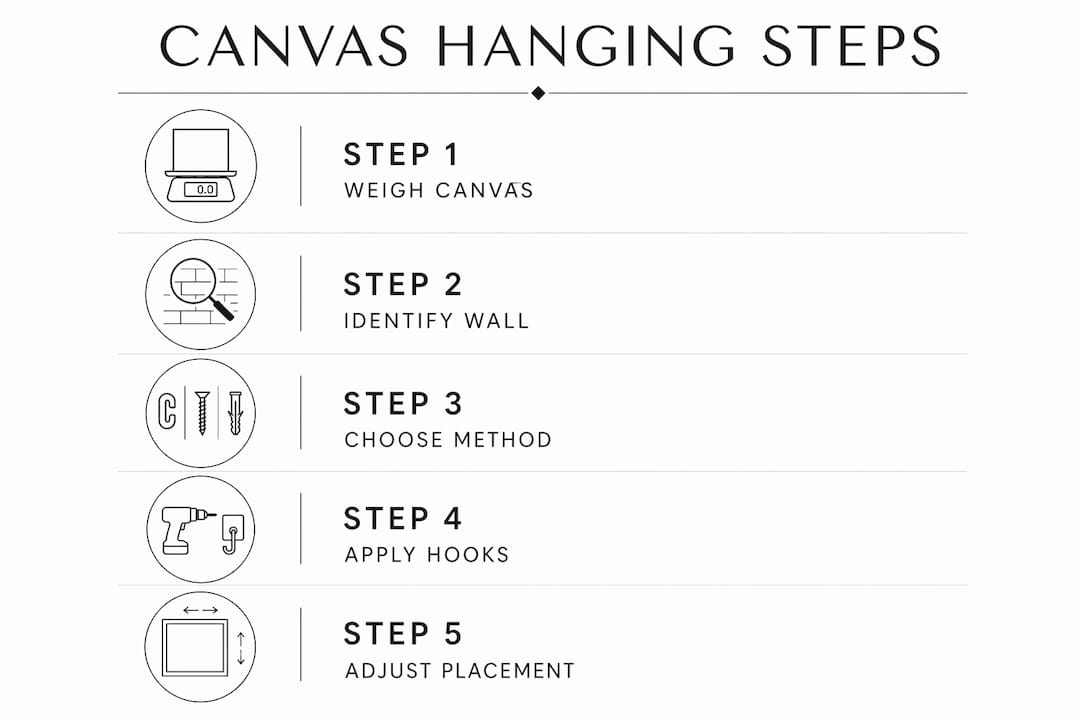
No single product works for every canvas on every wall. Success depends on matching your hanging method to the specific weight of your artwork and the surface you’re working with. Before you pick up a strip or hook, you need two pieces of information: how much your canvas weighs and what your wall is made of.
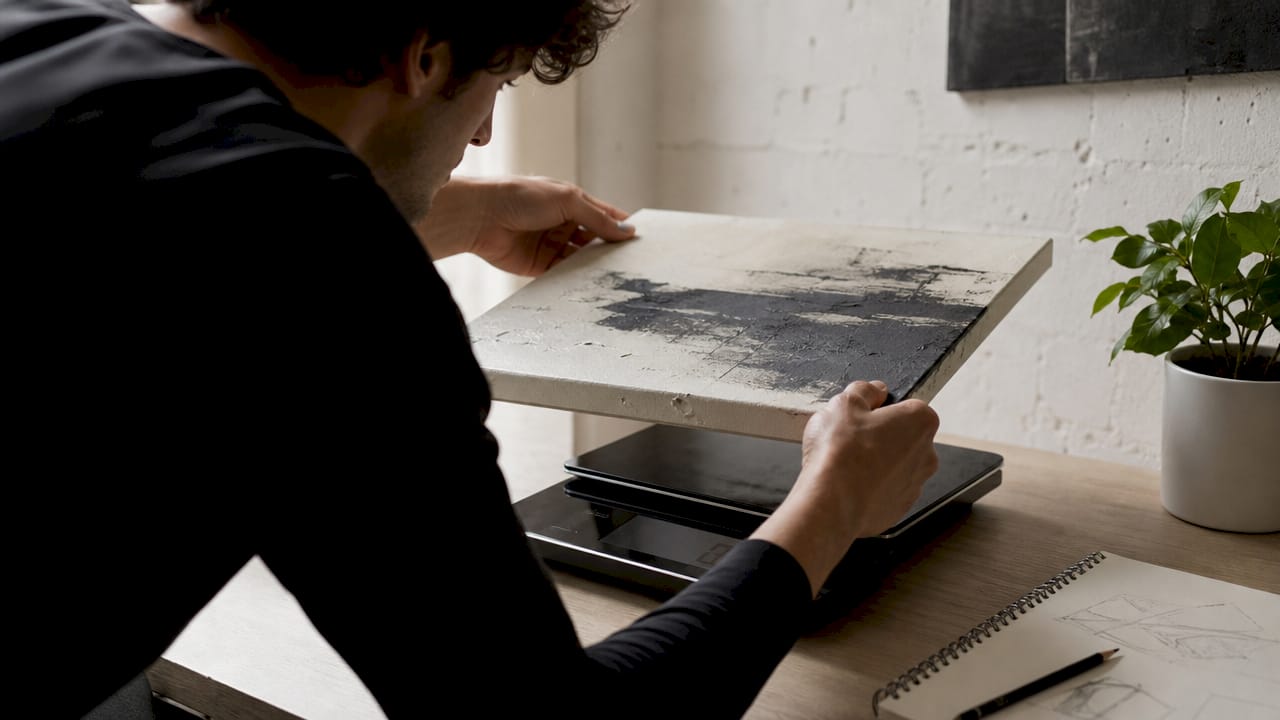
Weighing your canvas accurately
Most canvases don’t come with a weight label, but a simple kitchen or postal scale gives you an accurate reading in under a minute. Anything under 5 pounds is a candidate for lightweight adhesive strips. Canvases between 5 and 20 pounds need heavier adhesive kits or minimal-penetration hardware. Pieces above 20 pounds require hardware anchored into studs or wall anchors.
Identifying your wall surface
Rental properties typically feature one of four wall types: smooth drywall, plaster, textured paint, or wallpaper. Smooth drywall is the most adhesive-friendly surface available. Plaster and textured walls reduce adhesive contact area, which lowers the effective holding strength of any strip. Wallpaper is the most problematic surface because adhesive removal can pull the paper away from the wall. Knowing your surface type before you buy anything saves you from a costly mistake.
Pro Tip: Run your hand across the wall surface. If it feels like orange peel or sand, adhesive strips will underperform their rated weight limit. Drop down one weight tier or switch to a minimal-penetration hook instead.
The two categories of wall-friendly art hanging are zero-damage methods (adhesive strips, leaning, ledges, rails) and minimal-damage methods (small hooks that leave a pinhole). Zero-damage is the right choice for wallpaper and textured walls where even a small hole could cause visible damage. Minimal-damage methods are acceptable on smooth drywall where a tiny hole can be filled with a dab of spackle at move-out.
What are the best adhesive strips for canvas art?
Adhesive strips are the most popular removable wall art solution for renters, and Command picture hanging strips are the category standard. Four pairs of Command Medium strips hold frames up to 10 pounds and 18x24 inches, while larger kits handle up to 20 pounds. That covers the majority of canvas prints sold by retailers like Luxuryartcanvas.
The application process matters as much as the product itself. Follow these steps exactly:
- Clean the wall surface with isopropyl alcohol and let it dry completely for at least 15 minutes.
- Attach the adhesive strips to the back of the canvas frame first, pressing firmly for 30 seconds.
- Press the canvas against the wall in your target position for another 30 seconds.
- Pull the canvas away from the wall and let the wall-side adhesive cure for at least one hour before rehanging.
- Rehang the canvas and press firmly along all four strip locations.
Proper surface prep and curing time are the two steps most people skip, and they account for the majority of adhesive failures. A strip applied to a dusty or slightly damp wall will never reach its rated holding strength.
Removing adhesive strips incorrectly causes most paint damage. Always pull strips straight down slowly and parallel to the wall surface. Never pull outward or at an angle.
Load distribution across the canvas backing is equally important. Place strips at the corners and at the midpoints of longer edges rather than clustering them in one area. This prevents the canvas from sagging on one side even when the total weight is within the rated limit.
Pro Tip: Velcro-style adhesive strips from brands like VELCRO Brand or 3M also work well for lighter canvases under 8 pounds. They allow micro-adjustments to positioning after hanging, which Command interlocking strips do not.
Adhesive solutions are not suitable for canvases heavier than 20 pounds, for textured or wallpapered surfaces, or for humid rooms like bathrooms where moisture weakens the bond over time.
When should you use minimal-penetration hooks instead?
When adhesives aren’t enough, minimal-penetration hardware is the next best option for wall-friendly art hanging. Monkey Hooks and Gorilla Hooks are the two most recognized products in this category. Monkey Hooks hold up to 50 pounds and push directly into drywall without a drill, leaving only a tiny hole roughly the diameter of a toothpick.
Here’s what makes these hooks renter-friendly in practice:
- Monkey Hooks push in with hand pressure alone, no tools required, and work on standard drywall up to 50 pounds.
- Gorilla Hooks use a similar J-shaped design but are rated for heavier loads and provide a slightly wider base for stability.
- Small picture hanging hooks with a single thin nail are the traditional option, leaving a hole under 2mm that fills easily with white toothpaste or spackle at move-out.
A stud finder helps you place any of these hooks into a stud rather than bare drywall, which dramatically increases holding strength and reduces wall stress. Hanging a 30-pound canvas into a stud with a single small hook creates far less wall damage than hanging the same piece into drywall with multiple anchors.
Pro Tip: Before using any hook in a rental, check your lease. Many leases allow small nail holes but prohibit drilling. Monkey Hooks and small picture hooks typically fall within the “small nail hole” category, but confirm with your landlord if you’re unsure.
Patching small holes at move-out is straightforward. A tube of lightweight spackle, a putty knife, and a touch of matching paint covers a pinhole in under 10 minutes. Most landlords consider this normal wear and tear, but document the wall condition with photos before and after hanging anything.
What are the best no-nail canvas display ideas?
Furniture-based and rail-based display methods eliminate wall contact entirely, making them the most renter-friendly canvas art display ideas available. These approaches also offer flexibility that fixed hanging never provides.
Here’s a comparison of the main no-nail options:
| Method | Best for | Wall damage | Flexibility |
|---|---|---|---|
| Picture ledges | Small to medium canvases | None | High, easy to rearrange |
| Leaning on furniture | Large statement pieces | None | Very high |
| Picture rail systems | Multiple pieces, gallery walls | Minimal (one-time rail install) | Very high |
| Museum putty | Lightweight canvases on shelves | None | High |
Picture ledges let you layer canvases at different depths, creating a gallery effect without a single nail. IKEA’s MOSSLANDA shelf and similar products from Target and Amazon hold canvases up to about 15 pounds per shelf and install with just two screws, which most leases permit.
Leaning large canvases against a wall on a mantel, console table, or directly on the floor is the zero-damage method with the highest visual impact. A 36x48-inch canvas leaned against a living room wall reads as intentional and styled, not lazy. Use museum putty or non-slip furniture pads under the bottom edge to prevent sliding.
Picture rail systems mount a single horizontal rail near the ceiling, from which adjustable cords or rods hang the art. The rail itself requires a few screws, but once installed, you can hang, remove, and rearrange as many pieces as you want without touching the wall again. This is the preferred system for renters who change their art frequently.
Planning your layout with painter’s tape or paper templates before committing to any placement prevents the repositioning mistakes that leave adhesive residue or multiple small holes. Tape the outline of each canvas on the wall, step back, and adjust until the arrangement looks right.
Key takeaways
The most reliable approach to hanging canvas art without damaging walls is matching your method to both the canvas weight and the wall surface type before purchasing any product.
| Point | Details |
|---|---|
| Match method to weight | Canvases under 10 lb suit Command strips; heavier pieces need Monkey Hooks or studs. |
| Prep surfaces before applying adhesive | Clean with isopropyl alcohol and allow full curing time for maximum bond strength. |
| Remove adhesive strips correctly | Pull straight down, parallel to the wall, to avoid peeling paint or leaving residue. |
| Use furniture and ledges for zero damage | Leaning and picture ledges eliminate wall contact entirely for renters. |
| Check your lease before using any hardware | Confirm what counts as acceptable wall damage with your landlord before hanging anything. |
What I’ve learned after years of renter-friendly hanging
I’ve watched people ruin a security deposit over a canvas that weighed less than 8 pounds. The mistake is almost always the same: they grabbed the first adhesive strip they found, skipped the surface prep, and hung the piece the same day. Three weeks later, the canvas is on the floor and a chunk of paint is on the back of the strip.
The real lesson is that damage-free hanging is a process, not a product. You can use the best Command strips on the market and still cause damage if you apply them to a dusty wall or remove them in a hurry. Conversely, a Monkey Hook in smooth drywall leaves a hole so small that most landlords never notice it, and the ones who do accept a $3 tube of spackle as a fix.
My honest preference for most renters is a combination approach. Use adhesive strips for lighter pieces under 10 pounds, a picture ledge for anything you want to rearrange frequently, and a single Monkey Hook for that one statement canvas that needs to be perfectly placed. This covers 95% of situations without requiring a single drill.
The one thing I’d push back on is the idea that leaning art looks unfinished. A large canvas leaned on a console with a smaller piece in front of it, layered at different heights, looks more considered than most gallery walls. It’s also the only method that lets you change your mind completely without any consequences. For renters who move every year or two, that flexibility is worth more than any hanging hardware.
— James
Transform your space with art that’s built to move with you

Luxuryartcanvas designs canvas art for people who take their style seriously, whether they own their walls or rent them. Every piece ships ready to hang, lightweight enough for adhesive strips, and bold enough to anchor a room. From graffiti canvas wall art inspired by street culture to pop art canvases that bring color and energy to any space, the collection is built for renters who refuse to compromise on aesthetics. Browse over 1,000 designs crafted in the USA, backed by more than 10,000 satisfied customers, and find the piece that makes your rental feel like home. Explore the full canvas art collection at Luxuryartcanvas today.
FAQ
Can Command strips hold canvas art safely?
Command Medium picture hanging strips hold frames up to 10 pounds using four pairs, and larger kits handle up to 20 pounds. They work best on smooth, clean drywall and require proper surface prep and curing time for a reliable bond.
What is the best way to hang canvas art without nails?
Adhesive strips like Command strips work for canvases under 20 pounds on smooth walls, while picture ledges and leaning methods work for any size without touching the wall at all. Match the method to your canvas weight and wall type for the best result.
How do you remove adhesive strips without damaging paint?
Pull the strip straight down, parallel to the wall surface, slowly and steadily. Never pull outward or at an angle, as that is the motion most likely to peel paint.
Are Monkey Hooks renter-friendly?
Monkey Hooks push into drywall without drilling and hold up to 50 pounds, leaving only a tiny pinhole that fills easily with spackle. Most leases permit small nail holes, but confirm with your landlord before using any hardware.
Can you hang large canvas art without drilling?
Yes. Large canvases over 20 pounds are best displayed by leaning them on a mantel, console table, or floor with museum putty at the base, or by using a picture rail system that requires only a one-time ceiling-level installation.
Why Office Art Reflects Company Culture: A Leader's Guide
Urban Apartment Wall Art: What Renters Need to Know