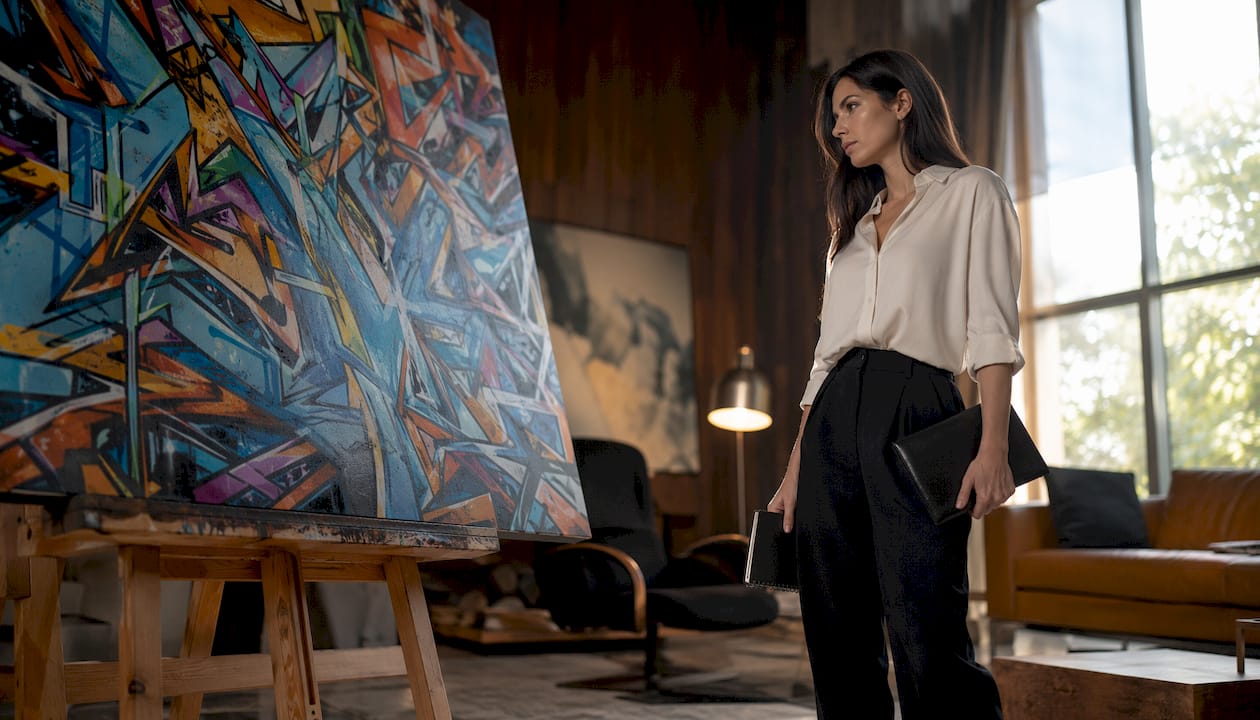
High-end graffiti art is the professional evolution of urban street graffiti into a legitimate, collectible fine art form. It sits at the intersection of raw street culture and sophisticated interior design, appearing in luxury galleries, penthouse walls, and bespoke brand collaborations. Unlike traditional graffiti, which speaks primarily to other writers through tags and coded lettering, high-end graffiti art is curated for collectors, designers, and discerning homeowners who want cultural depth on their walls.
A few distinctions set it apart from conventional street art:
- Intentionality: Every compositional choice, from color palette to letterform, serves an aesthetic and conceptual purpose.
- Medium and permanence: Works appear on archival canvas, premium coatings, or luxury surfaces rather than ephemeral concrete.
- Audience: The work addresses viewers and architectural space, not just fellow writers.
- Collectibility: Pieces carry provenance, artist attribution, and market value.
- Interior fit: Stylized lettering and signature aesthetics create a personalized, edgy statement, while street art murals lean toward figurative narrative for broader visual impact.
Luxuryartcanvas offers over 1,000 graffiti-inspired designs, each crafted in the USA with high-quality materials and backed by reviews from more than 10,000 satisfied customers.
What defines the look of high-end graffiti art?
The visual language of luxury graffiti styles is built on technical mastery. Two styles dominate collector interest and high-end interiors.
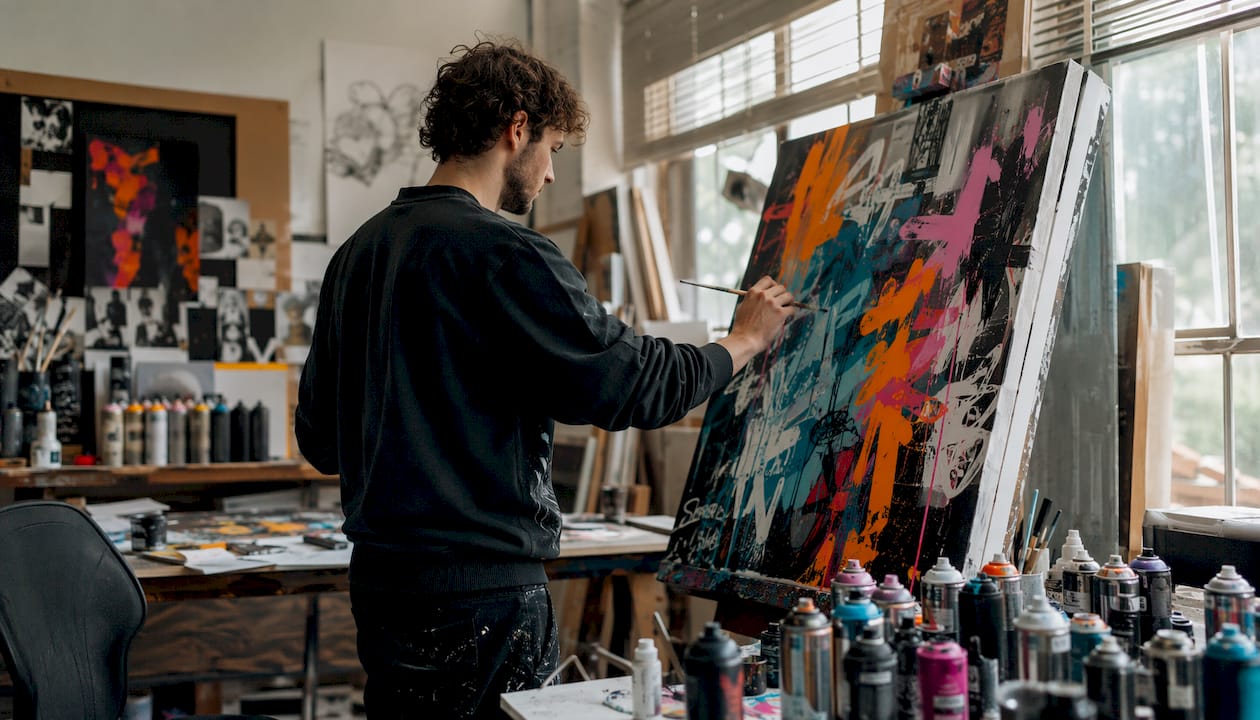
Wildstyle features complex interlocked lettering with decorative elements like arrows, spikes, and interwoven characters. Reading it requires fluency in graffiti culture, which is precisely what gives it cachet. 3D Graffiti creates elaborate illusions of depth, making letters appear to lift off the surface or recede into shadow. Both styles reward close attention in a way that a generic print never does.
Key characteristics collectors and designers look for:
- Layered color work with deliberate tonal gradients
- Letterforms that function as both text and abstract sculpture
- Controlled negative space that balances visual energy
- Signature motifs that identify the artist’s hand
- Scale calibrated to the architectural context
Pro Tip: When selecting a graffiti canvas for a minimalist interior, choose a piece where the background palette echoes your existing wall color. The lettering carries the energy; the background keeps the room from tipping into chaos.
Browse graffiti canvas paintings from Luxuryartcanvas to see how these styles translate to collectible wall art.
How graffiti went from subway cars to gallery walls
The cultural shift behind high-end graffiti art is not just about aesthetics. It is about legitimacy earned over decades.
Graffiti began as an underground dialogue among writers, a coded language invisible to outsiders. What changed was institutional acceptance: galleries in New York, luxury brand collaborations in Paris, and collectors willing to pay serious money for work rooted in the streets. Artists like Keith Haring and Jean-Michel Basquiat traced exactly this arc, from spray cans to auction houses.
“It’s not merely about decorating an item, but treating the surface as a sophisticated, jazz-like composition that embodies the creator’s psyche. The goal is to bring the same energy I used in the streets, to make something elegant.”
— Cyril Kongo, on his Rolls-Royce Black Badge collaboration
Artist Dror Hadadi frames the fundamental shift this way: traditional graffiti was an internal dialogue among writers, while high-end graffiti art is a curated conversation with the viewer and the architectural space itself. That reframing is what legitimized once-criminalized techniques for residential and institutional settings.
Key cultural milestones in this evolution:
- Graffiti writers transitioning from subway cars to gallery exhibitions in the 1980s
- Luxury brand collaborations, from Louis Vuitton’s artist scarves to Rolls-Royce bespoke commissions
- Institutional exhibitions treating graffiti with the same curatorial rigor as traditional fine art
- Collectors driving auction prices that validated graffiti as a serious asset class
How to bring high-end graffiti art into your interior
Demand for custom graffiti wall art in luxury properties has notably increased by over 40% since 2020, and select installations have been reported to raise property values by up to 7% in key markets such as Hong Kong, Dubai, Los Angeles, and Singapore. The trend reflects how a well-placed graffiti canvas can transform a room from decorated to defined.
Practical integration tips:
- Scale to the wall: Large-format pieces anchor open-plan spaces; smaller canvases work in hallways or reading corners.
- Use digital mock-ups before committing. Many premium providers offer previews that show the piece against your actual wall color.
- Coordinate with lighting: LED accent lighting intensifies color saturation and brings 3D lettering to life after dark.
- Balance with minimalism: Pair a vibrant Wildstyle canvas with neutral furniture to let the art lead.
- Apply premium coatings on commissioned murals to preserve vibrancy under UV exposure indoors.
Pro Tip: Position a graffiti canvas at eye level on the wall opposite your room’s main light source. The contrast between shadow and highlight in layered letterwork becomes most visible from that angle.
Luxuryartcanvas makes this process straightforward with graffiti canvas wall art designed specifically for stylish interiors.
Quick reference: what you need to know
- High-end graffiti art is street graffiti elevated into a collectible, gallery-recognized fine art form.
- Wildstyle and 3D Graffiti are the two styles most prized by collectors and interior designers.
- The art form gained legitimacy through luxury brand collaborations and institutional gallery exhibitions.
- Artists like Cyril Kongo and Dror Hadadi define the standard for precision, elegance, and cultural authenticity.
- Demand in luxury residential markets has grown sharply since 2020, with measurable effects on property value.
- Canvas works crafted with archival materials offer the most practical and durable option for home interiors.
How to authenticate and source genuine pieces
Authentication in the graffiti art market relies on provenance, not just style. A genuine high-end piece carries documented artist attribution, often a certificate of authenticity, and a clear exhibition or commission history. The post-graffiti valuation process differs from traditional fine art because the art form’s roots in anonymity and street culture complicate standard appraisal methods. Artist reputation and the work’s title carry significant weight.
When sourcing, prioritize galleries with a track record in urban art, platforms with verified artist partnerships, and retailers who manufacture in controlled conditions with documented materials. Luxuryartcanvas produces each canvas in the USA with high-quality materials, giving buyers a transparent supply chain and consistent quality standards.
Investment value and market trends
Graffiti as fine art has moved well past novelty status in the collector market. Works by artists who successfully crossed from street to gallery command prices that rival mid-career painters in other contemporary genres. Valuation remains fluid because the market is still maturing, but the trajectory is clear: institutional acceptance drives prices upward, and scarcity of authenticated early works amplifies that pressure.
The over 40% demand increase in luxury residential graffiti art since 2020 signals a market that has moved beyond trend into sustained preference, with some installations shown to enhance property values by as much as 7% in select global cities. Collectors entering now benefit from a category where prices have not yet caught up with cultural prestige.
Materials and techniques: high-end versus traditional graffiti
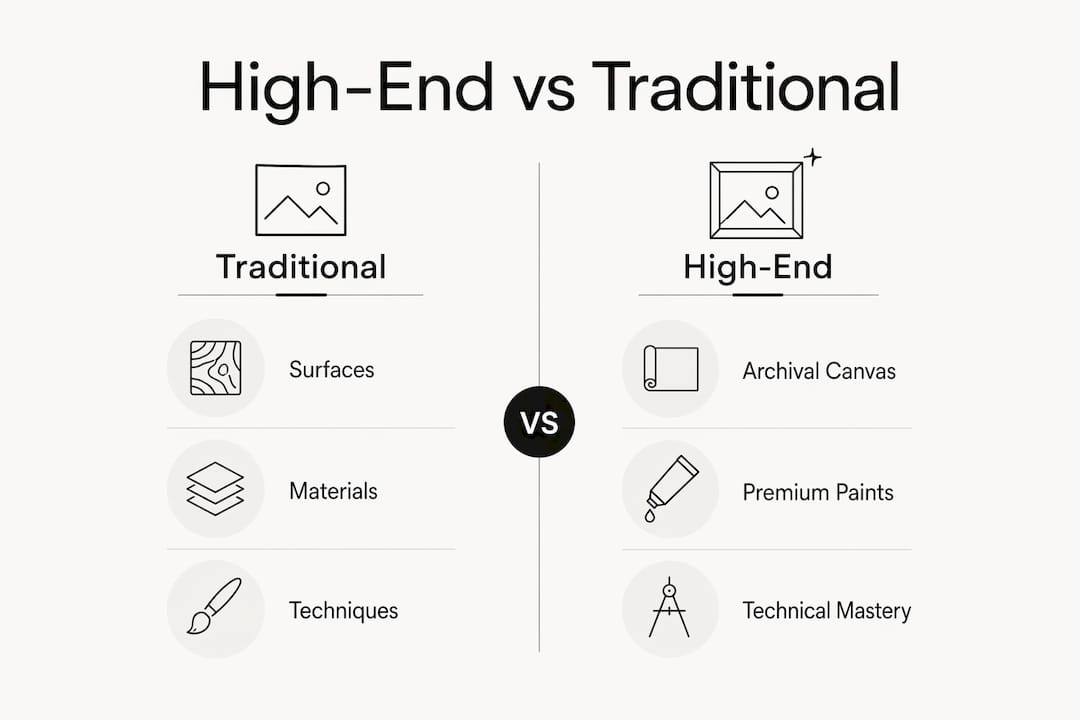
Traditional graffiti relies on aerosol spray paint applied fast, often illegally, with no expectation of permanence. High-end graffiti art uses many of the same foundational techniques but applies them with entirely different materials and intentions.
| Element | Traditional graffiti | High-end graffiti art |
|---|---|---|
| Surface | Concrete, trains, walls | Archival canvas, luxury substrates |
| Paint | Standard aerosol | Fade-resistant pigments, airbrush, acrylic |
| Durability | Weeks to months | 10+ years with UV coatings |
| Process | Fast, spontaneous | Digital mock-ups, layered application |
| Finish | Raw, unprotected | Lacquer, UV coating, gallery varnish |
The Rolls-Royce Black Badge project with Cyril Kongo illustrates the upper end of this spectrum: Rolls-Royce artisans applied ten layers of lacquer over hand-painted surfaces, sanding and polishing each layer to a gallery finish. That level of craft is what separates a collectible piece from a wall tag.
Key Takeaways
High-end graffiti art is street graffiti transformed into a collectible fine art form, defined by technical mastery, archival materials, and cultural legitimacy earned through gallery exhibitions and luxury brand collaborations.
| Point | Details |
|---|---|
| Definition | High-end graffiti art elevates urban street graffiti into collectible fine art for galleries and luxury interiors. |
| Signature styles | Wildstyle and 3D Graffiti are the most prized styles for their technical complexity and collector appeal. |
| Cultural legitimacy | Artists like Cyril Kongo and Dror Hadadi drove graffiti’s acceptance in institutional and residential contexts. |
| Market growth | Demand in luxury properties rose over 40% since 2020; select installations have been shown to boost property values by up to 7% in key global cities. |
| Sourcing | Authenticated pieces with documented provenance and archival materials offer the strongest investment and decor value. |
Types of Canvas Art for Open Plans: 2026 Styling Guide
Why Retail Spaces Benefit from Wall Art: A 2026 Guide