
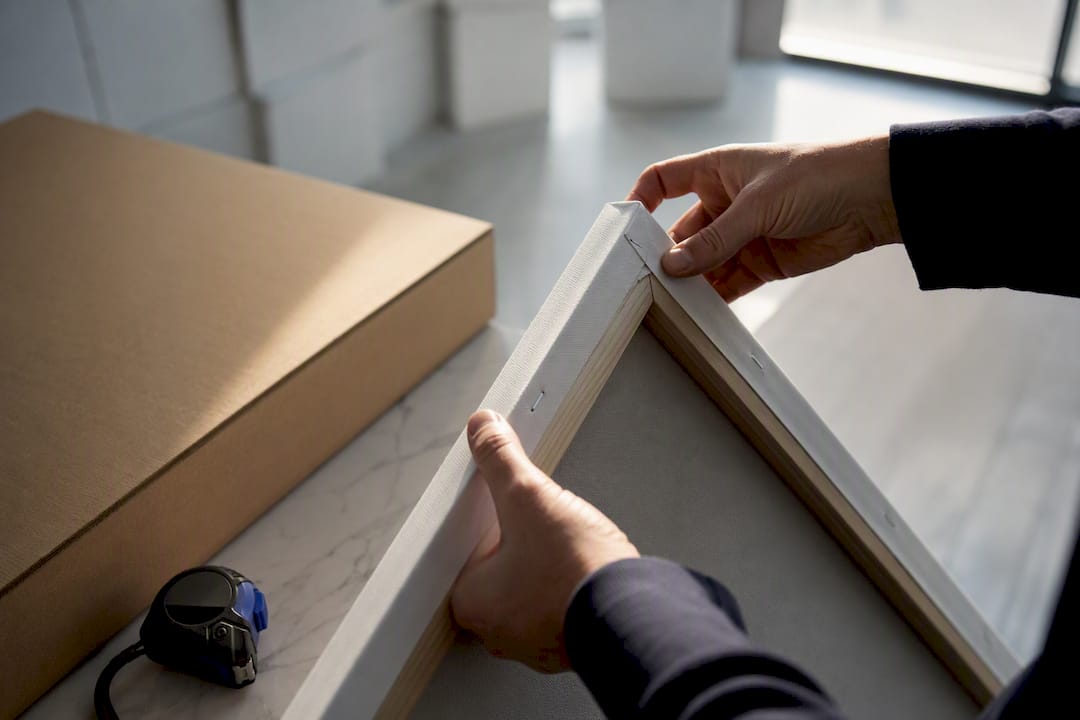
Banksy-inspired stencil-style canvas prints are widely available, but quality varies enormously between listings. Buy a ready-to-hang canvas with archival inks, a sturdy FSC-certified frame, and hanging hardware already installed. One solid option for USA-made pieces that check every one of those boxes is available, avoiding any licensing gray area to worry about.
Table of Contents
- What Does Banksy Inspired Wall Art Actually Look Like?
- How Do You Choose the Right Size and Placement?
- What Materials and Quality Signals Should You Check?
- Where Should You Buy a Banksy Style Canvas, and What Should It Cost?
- Are Banksy Originals and ‘Inspired’ Prints the Same Thing Legally?
- How Do You Verify a Seller’s Credibility Before You Buy?
- How Much Weight Should Reviews and Ratings Carry?
- What Are Typical Return and Refund Policies for Canvas Art?
- How Do You Care for a Banksy Style Canvas After It’s Hung?
- Publisher Perspective: Why Consider Luxury Art Canvas
- Ready to Bring Banksy-Style Art Into Your Space?
- Sources
- FAQ
What Does Banksy Inspired Wall Art Actually Look Like?
Stencil silhouettes are the giveaway. Sharp black edges, high contrast, and a single splash of color (usually red) against gray or white backgrounds define the look, whether it’s a rat holding a sign or a girl reaching for a heart-shaped balloon. Retailers commonly group this under “street art,” “stencil,” or “graffiti” collections, and that labeling isn’t accidental. It reflects the visual traits shoppers actually search for when browsing banksy style wall art.
Subjects repeat for a reason: they’re recognizable, they carry a message, and they photograph well on a living room wall. Expect to see:
- The balloon girl, arguably the most reproduced motif in this entire category
- Rats holding protest signs or spray cans, a recurring stand-in for the anonymous artist himself
- Riot police, soldiers, or authority figures juxtaposed with something soft or childlike
- Political or social commentary rendered in a single stark color palette
Format matters just as much as subject. You’ll find single-panel canvases for tighter budgets, multi-panel triptychs for larger walls, and both framed and unframed gallery-wrapped options.
How Do You Choose the Right Size and Placement?
Getting scale wrong is the single most common regret with canvas art, more common than color or subject complaints combined. A piece that looked fine in a product photo can swallow a hallway or disappear over a king bed.
- Measure your wall space first, including where furniture lines fall beneath it.
- For proper scale, your canvas should cover a significant portion of the furniture width below it (a sofa, headboard, or console table).
- Mock up the footprint with painter’s tape or a paper template taped to the wall before you order anything.
- Factor in viewing distance and ceiling height. Higher ceilings pull the eye upward and often call for a larger or vertically oriented piece.
- Decide between one statement canvas or a gallery arrangement of two or three smaller pieces.
For a standard sofa, a single canvas around 40 by 60 inches or a triptych spanning that same total width both work well. Over a queen or king bed, go no smaller than 48 inches wide. Entryways favor a vertical orientation, often 24 by 36 inches, since most entry walls are narrow but tall.
Pro Tip: Cut your paper template to the exact canvas dimensions and live with it taped to the wall for a full day before ordering. Lighting changes how a piece reads at 8 a.m. versus 8 p.m., and that difference matters more than any product photo.
What Materials and Quality Signals Should You Check?
Not every canvas holds up. The difference between a print that still looks sharp in five years and one that fades or sags in five months comes down to a handful of specs buried in the product description.
Look for these before adding anything to your cart:
- Archival or fade-resistant ink claims, ideally with a stated pigment type rather than a vague “high quality” descriptor
- Canvas weight and weave, since thin canvas stretches unevenly over time
- Kiln-dried stretcher bars and FSC-certified wood framing, which resist warping far better than green or untreated lumber
- Pre-installed hanging hardware such as D-rings and wire, versus a bare canvas with no hardware included
- Clear shipping, return, and warranty language on the product page itself
Archival-grade inks paired with FSC-certified wood frames are what actually prevent fading and sagging over years of display, not months. Cheaper frames without that certification tend to warp or let the canvas loosen at the corners well before the print itself shows any wear.
Hardware is where a lot of buyers get caught off guard. Higher-end canvases typically arrive with D-rings and wire already installed, while budget listings often ship the canvas alone, leaving you to buy hooks and wire separately. If the listing doesn’t say “ready to hang,” assume it isn’t.

Where Should You Buy a Banksy Style Canvas, and What Should It Cost?
Three main channels sell this category: large general marketplaces, specialist canvas retailers, and direct-to-consumer brands like Luxury Art Canvas. Marketplaces offer the widest selection and the widest quality gap in the same search results. Specialist retailers narrow that gap but often charge more for it. DTC brands sit in between, usually with tighter quality control since they control production end to end.
Price tracks size and build quality more than subject matter. Retailers listing Banksy-inspired canvases show that framing choice and print quality, not the image itself, drive most of the price spread you’ll see across listings. Expect diverse price tiers: budget decorative prints on thin canvas with limited features; mid-tier gallery-wrapped canvases with improved materials and sometimes pre-installed hardware; and higher-end archival canvases with certified wood frames and ready-to-hang kits.
Before you check out anywhere, confirm four things: where the piece is actually produced, stated shipping time, the return window, and exact dimensions in inches (not just “large” or “medium”). Vague size labels are a red flag on their own.

Are Banksy Originals and ‘Inspired’ Prints the Same Thing Legally?
No, and the distinction matters more than most buyers realize. Genuine Banksy originals and any officially licensed reproduction of his work are handled through a single, tightly controlled channel.
That doesn’t make the entire category off-limits. Canvases described honestly as “Banksy-inspired,” “in the style of,” or “stencil street art” are a different thing entirely: original interpretations that reference a recognizable aesthetic rather than reproduce a specific copyrighted image and pass it off as licensed merchandise. That’s a legal, common, and widely sold category.
The trouble starts when a seller blurs the line. If a listing claims a piece is “authentic,” “an official Banksy print,” or “licensed,” treat that as a serious claim requiring serious proof. Before paying a premium for anything marketed that way:
- Ask for provenance documentation, not just a certificate the seller printed themselves
- Request evidence of actual licensing through Pest Control Office, not a vague reference to “authorized” status
- Be skeptical of any price that seems low for a claimed original or high for what’s obviously a decorative reproduction
How Do You Verify a Seller’s Credibility Before You Buy?
Start with how the seller describes the product, not just how the image looks. A trustworthy listing states production origin plainly, gives exact dimensions in inches, names the ink and canvas type, and discloses whether hanging hardware is included. Vague copy like “premium quality art” with no specifics is usually a sign the seller is filling in gaps rather than describing an actual product.
Check the seller’s return policy before you check their price. A retailer confident in their product typically offers a real return window, often 30 days or more, with clear conditions. If a return policy is buried, contradictory, or absent entirely, that’s a bigger red flag than a slightly higher price tag elsewhere.
Look at how long the seller has been operating and whether they have a dedicated storefront versus a single product listing that appeared recently with no other history. Established sellers with catalog depth, meaning dozens or hundreds of designs rather than one or two, tend to have more accountability built into their business model. A seller who only sells one image under a dozen different listing titles is worth a second look.
Photos matter too, but not the polished hero shot. Look for lifestyle photos showing the canvas actually hung on a wall, close-up shots of the canvas edge and stretcher bar, and, when available, a shot of the back showing hanging hardware. Sellers hiding the product’s construction usually have a reason.
How Much Weight Should Reviews and Ratings Carry?
Reviews tell you what a product photo can’t: how it looks after shipping, whether colors match the listing, and whether the frame arrived intact. For canvas art specifically, pay closer attention to reviews mentioning shipping damage, color accuracy, and size perception than to generic five-star praise with no detail.
A large review count matters less than review substance. Ten reviews describing exact wall placement, actual dimensions received, and photos of the finished install tell you more than five hundred one-line “love it!” comments. Look specifically for mentions of packaging quality, since canvas art is genuinely fragile in transit and a seller who’s solved that problem usually mentions reinforced corners or double-boxing in their own product description.
Rating patterns matter, not just averages. A 4.6-star product with a cluster of one-star reviews all citing the same problem (arrived torn, wrong size, missing hardware) tells a more useful story than a flat 4.9 with no detail anywhere. Read the most recent reviews first, since production and shipping partners can change over time even when a listing’s overall rating stays stable.
If you’re comparing two similar canvases at similar price points, let review specificity be the tiebreaker. A brand backed by thousands of documented purchases, rather than a handful of anonymous ratings, gives you a far better sense of what you’re actually going to receive.
What Are Typical Return and Refund Policies for Canvas Art?
Art prints get special handling in most return policies, and it’s worth knowing why before you order. Canvas is bulky, can warp in transit, and loses resale value the moment it’s unwrapped, so retailers often build in shorter windows or restocking conditions that don’t apply to smaller goods.
A fair policy for this category typically includes a window of at least 14 to 30 days from delivery, clear photo documentation requirements if the item arrives damaged, and a straightforward path to either a refund or a replacement without excessive back-and-forth. Custom or personalized canvases, including any piece made to a nonstandard size, are frequently final sale or subject to a restocking fee, so check that detail specifically if you’re ordering something outside a retailer’s standard dimensions.
Damage in transit is common enough with canvas that it deserves its own line item in any policy you read. Confirm whether the seller requires unboxing photos within a set number of days, whether they cover return shipping on a defective item, and whether a damaged piece gets replaced or simply refunded. A seller who spells this out clearly, rather than burying it in a generic terms page, is generally the safer bet.

Before you buy, screenshot the return policy as it appears on the product page. Policies do change, and having your own record protects you if a dispute comes up later.
How Do You Care for a Banksy Style Canvas After It’s Hung?
Canvas art is low-maintenance, but a few habits extend its life considerably. Keep it out of direct sunlight where possible, since UV exposure is the single biggest cause of fading over time, even with archival inks rated for durability. A north-facing wall or a spot away from a sun-exposed window will noticeably outlast a piece hung directly across from bright afternoon light.
Humidity is the other quiet threat. Bathrooms, uninsulated basements, and rooms with poor ventilation can cause canvas to loosen on its stretcher bars over months, which is part of why kiln-dried, FSC-certified frames hold their shape better than cheaper alternatives. Dust with a dry microfiber cloth or a soft brush attachment on a vacuum, and never use glass cleaner or water directly on the printed surface.
Mounting matters as much as the canvas itself. Use the pre-installed D-rings and wire if the piece came with them, and confirm your wall anchor is rated for the canvas’s actual weight, particularly on larger multi-panel pieces. If you ever move or reframe the piece, handle it by the frame edges, not the canvas face, since even light pressure can leave a permanent indent in the fabric.
Publisher Perspective: Why Consider Luxury Art Canvas
Most Banksy-style shopping guides tell you what to look for and stop there, leaving you to hunt through marketplace listings hoping one matches the checklist. This brand builds to that checklist from the start: pieces are made in the USA, printed with archival inks, and shipped ready to hang.
What sets the catalog apart is breadth paired with curation. Over 1,000 designs span stencil-style street art alongside fashion-forward collaborations, so a buyer isn’t choosing between “street art” and “polished decor.” A curated Banksy-inspired collection sits next to pieces that pull from high-fashion visual language, both produced to the same material standard.
The honest case for choosing it over a general marketplace search isn’t lower prices. It’s fewer unknowns: no guessing at frame quality, no wondering if hardware ships separately, and a catalog large enough that finding the right subject and size doesn’t mean settling.
— James
Ready to Bring Banksy-Style Art Into Your Space?
If you’ve been scrolling marketplace listings trying to figure out which “stencil art canvas” is actually archival quality versus which one just uses that word in the title, you already know the frustration this guide is solving. This brand skips that guesswork by building every piece to the same standard: archival inks, ready-to-hang hardware, and production based in the USA rather than an unlisted overseas facility.
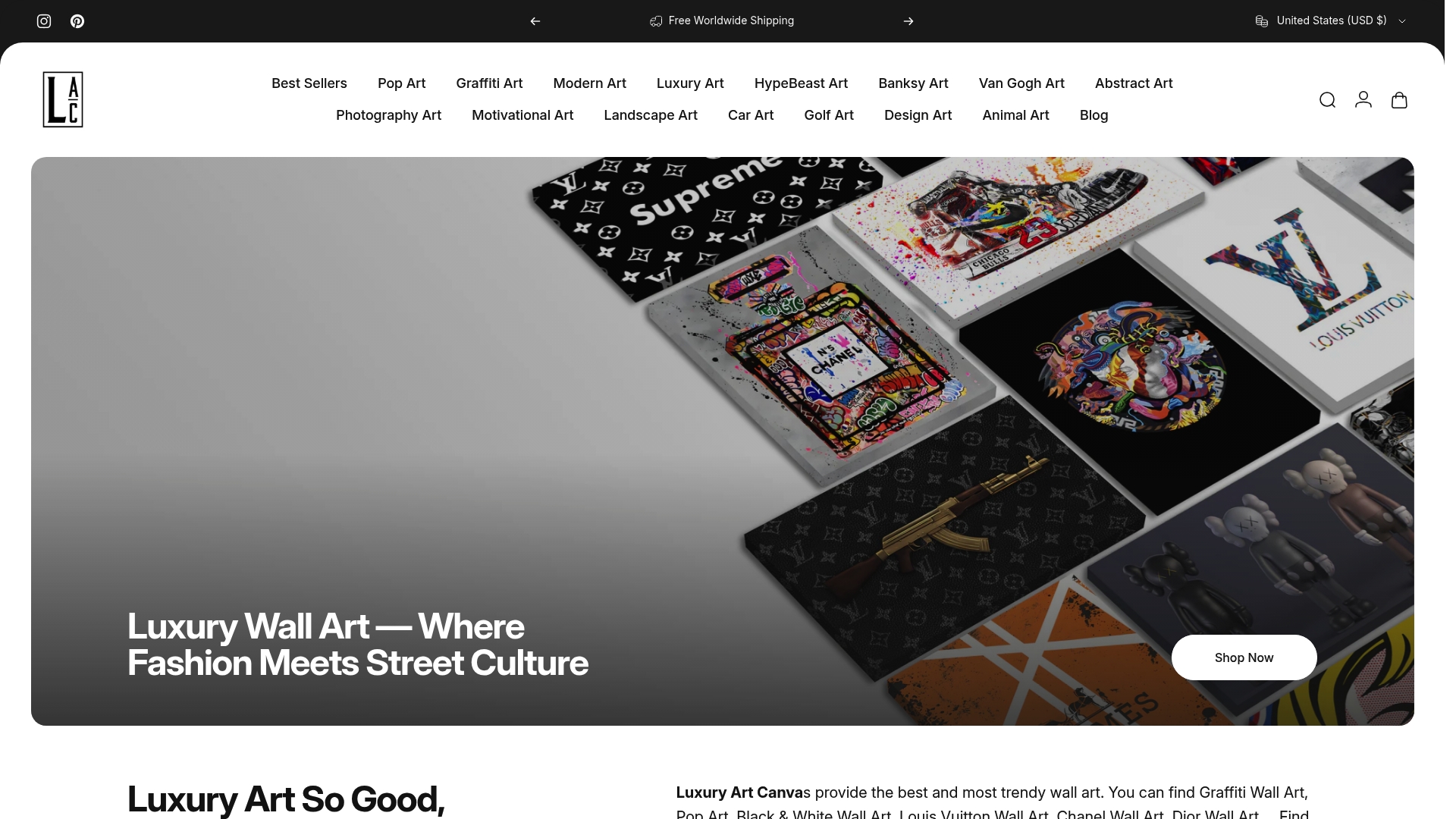
The Graffiti Street Art Canvas collection is the natural starting point if you want stencil silhouettes and street art energy without hunting through mixed-quality marketplace results. If the balloon girl motif is what you’re after specifically, the Banksy Girl With Balloon canvas is a ready-to-hang option built around that exact image. Prefer something with more color and pop culture edge? The Graffiti Pop Art Canvas line blends stencil technique with brighter palettes for rooms that want energy over stark contrast.
Before you order anything, confirm the exact size in inches, whether the frame is included or the piece ships gallery-wrapped, current shipping timeline, and the return window listed on the product page. Once those four details check out, you’re set to order with confidence instead of hoping the thumbnail matches what actually arrives.
FAQ
What Is Banksy’s Style Called?
Banksy works primarily in stencil graffiti, a technique defined by sharp-edged silhouettes, high-contrast color use, and quick reproducibility on walls and other surfaces. Most retailers label reproductions in this aesthetic as “stencil art” or “street art” rather than using his name directly.
Does Banksy Sell Canvas Art Himself?
Banksy doesn’t sell canvas reproductions of his street pieces directly to consumers, and any commercial licensing of his imagery has to go through his Pest Control Office. What you’ll find on retail sites are independently produced pieces described honestly as Banksy-inspired or stencil-style, which is a separate, legal category.
Is It Legal to Sell Banksy-Inspired Art?
Yes, selling art that’s inspired by or in the style of Banksy is legal as long as the seller doesn’t misrepresent it as an official, licensed, or authentic Banksy piece. Problems arise specifically when a listing falsely claims licensing or provenance it doesn’t have.
How Much Is an Original Banksy Painting Worth?
Original Banksy paintings and authenticated works have sold at auction for prices ranging from hundreds of thousands to several million dollars, depending on the piece and its history. That market is entirely separate from the inspired canvas prints covered in this guide, which are original interpretations sold at decor-friendly prices.
What Should I Check Before Ordering a Banksy Style Canvas Online?
Confirm archival ink claims, frame material (ideally FSC-certified and kiln-dried), whether hanging hardware is pre-installed, exact dimensions in inches, and the seller’s stated return window before adding anything to your cart.
75–200 Years: Choose Mid Century Modern Canvas for Luxury Interiors
Skip Murals: Buy Ready to Hang Graffiti Wall Art Decor, USA Made