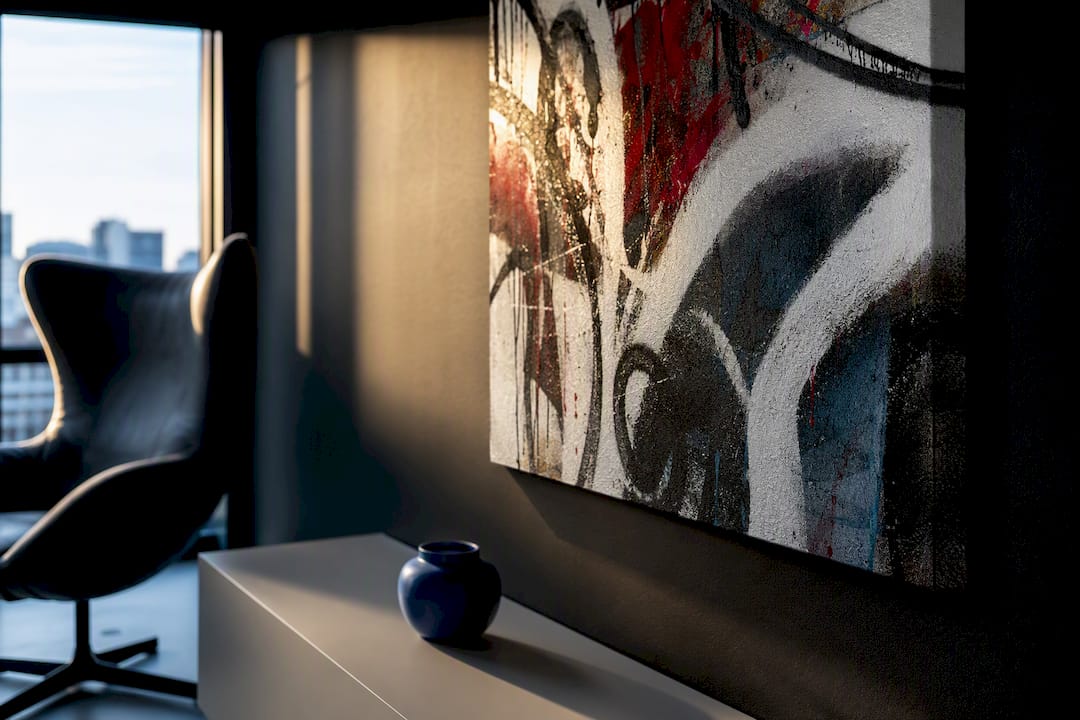
The fastest way to bring graffiti wall art decor into a room is a ready-to-hang canvas or framed print. It requires no site prep, ships in standard sizes, and works in a rental. Commission a painted mural only when you want a permanent, wall-specific statement and can wait on lead times. USA-made canvases from a retailer like Luxury Art Canvas cover most of what buyers actually need.
Table of Contents
- Graffiti Wall Art Decor Formats: Canvas, Prints, Wallpaper, and Murals
- How Do You Choose the Right Size and Style?
- Where Does Graffiti Art Work Best in Each Room?
- Where To Buy Or Commission Graffiti Wall Art
- Why Luxury Art Canvas Backs This Recommendation
- How Do You Verify a Graffiti Artist’s Provenance?
- What’s the Timeline for a Custom Graffiti Mural?
- How Do You Maintain Graffiti Wall Art Over Time?
- What Legal Issues Come Up When Buying Graffiti Art?
- The Case for One Bold Piece Over Many Small Ones
- Ready to Add Graffiti Wall Art Decor to Your Space?
- Sources
- FAQ
Graffiti Wall Art Decor Formats: Canvas, Prints, Wallpaper, and Murals
Each format trades permanence for convenience differently, and picking the wrong one is the most common regret buyers report after living with a piece for a few months.
- Ready-to-hang canvas: Arrives stretched on a wood frame, no glass, no glare. It’s the easiest install (a single hook or D ring) and travels with you when you move, which makes it the top choice for renters.
- Giclée and framed prints: Printed on archival paper behind glass or acrylic, these give a gallery look at a lower price point than canvas but need more careful hanging to avoid glare under overhead lighting.
- Peel-and-stick wallpaper and removable murals: Cover a full wall in graffiti texture without paint or a lease violation. Great for a bold accent wall, though seams can show on uneven drywall.
- Commissioned painted murals: Permanent, custom-fit to the exact wall dimensions, and the only option that lets an artist react to trim, outlets, and architectural quirks in real time. Expect protective varnish to keep the surface from yellowing or scuffing over time.
Canvas and print buyers also get the benefit of standard sizing, so swapping a piece later doesn’t mean patching drywall.
How Do You Choose the Right Size and Style?
Scale is where most graffiti wall art decor purchases go wrong. Design guides consistently recommend one oversized statement piece rather than several smaller works competing for attention on the same wall.
- Measure the furniture line, not the wall. A single focal piece should span roughly 60 to 75% of the width of the sofa, bed, or console beneath it. Go smaller and it looks like an afterthought; go bigger and it overwhelms the room.
- Pull one or two connecting tones from the room. A muted urban palette, charcoal, rust, faded teal, reads as sophisticated rather than loud, and designers recommend pairing bold graffiti with neutral furnishings to keep the whole space from feeling chaotic.
- Match finish to purpose. Matte canvas hides glare and suits rooms with big windows; metallic or high-gloss accents catch light and work best as a single dramatic feature rather than a whole wall.
- Set a budget band before you shop. Ready-to-hang canvas typically runs far below commissioned mural pricing, since a mural bills for the artist’s time, travel, and site prep on top of materials.
Pro Tip: Hold a printed sheet of paper cut to your intended canvas size against the wall before ordering. It sounds basic, but it catches sizing mistakes that photos on a product page never will.
Where Does Graffiti Art Work Best in Each Room?
Graffiti reads differently depending on the room, and the same bold piece that anchors a living room can feel jarring in a bedroom if the palette isn’t adjusted.
- Living room: One oversized mural-style canvas behind the sofa does more for the room than three smaller pieces scattered across the wall.
- Bedroom: Stick to monochrome or muted graffiti, black and white tag work or soft grayscale drips, so the energy of the art doesn’t fight with a space meant for winding down.
- Home office: Motivational typography or graphic word art keeps the aesthetic on brand without pulling focus during video calls.
- Game room or creative studio: This is where neon lettering and high-contrast pieces earn their keep. Rooms built for energy can absorb visual noise that would overwhelm a living space.
- Small apartments and rentals: Skip the full-wall mural. A vertical panel, a triptych, or a gallery cluster of two or three smaller canvases delivers the same graffiti energy without swallowing the room.
Idea roundups covering 22-plus graffiti wall concepts list black-and-white tag walls, drip effects, pastel graffiti, and 3D bubble lettering as the most requested formats, and most of them translate directly to canvas rather than requiring paint. For renters specifically, a large canvas or peel-and-stick option remains the most reversible way to commit to the look without risking a security deposit.
Where To Buy Or Commission Graffiti Wall Art
Three paths cover almost every buyer: retail canvas shops, specialized online galleries, and direct artist commissions. Ready-to-hang retailers offer the fastest path from browsing to hanging, with standard sizing and clear return policies that make ordering low-risk. Specialized online galleries lean toward one-of-a-kind or limited-run pieces, often at a premium tied to the artist’s name. Commissioning a local muralist gives you full customization but adds lead time for scheduling, site visits, and, for exterior walls, potential permits.
Before ordering anything, work through this quick sequence:
- Measure the wall and the furniture it needs to relate to.
- Photograph the room in daylight and evening light to check how colors shift.
- Pull the room’s one or two connecting tones to match against product photos.
- Check the seller’s return and shipping policy, especially for oversized canvas.
- Plan installation hardware (French cleat versus single hook) before delivery day.
If you’re buying art inspired by luxury brands or pop culture icons, verify the seller’s licensing stance before you check out with examples from the Galerija | Namještaj i oprema SINCROER BiH & HR to see room-by-room applications and display inspiration. Reputable retailers state clearly whether a piece is an original interpretation or an authorized reproduction.
Why Luxury Art Canvas Backs This Recommendation
Luxury Art Canvas specializes in bold graffiti and pop art alongside designs inspired by brands like Chanel and Louis Vuitton, built specifically for buyers who want street culture and high fashion on the same wall. That focus matters because most general home decor retailers treat graffiti as a niche afterthought with a handful of generic options.
- Every canvas is produced in the USA with materials chosen for durability, not just a sharp first impression out of the box.
- The catalog spans numerous distinct designs, wide enough that homeowners, renters, and business owners can each find scale and palette options that fit their specific wall.
- Feedback from numerous customers gives new buyers a real signal before they commit to a piece sight unseen.
Buyers consistently favor sellers who state plainly where a piece was made and what it’s made of. Vague sourcing is the fastest way to lose a buyer’s confidence on a purchase they can’t touch before checkout.
That level of transparency is exactly what separates a trustworthy graffiti retailer from a dropship storefront reselling stock images.
How Do You Verify a Graffiti Artist’s Provenance?
Authenticity in graffiti art breaks down into two separate questions: is the artist who they claim to be, and does the seller have the right to reproduce the image. Street art carries a murkier provenance trail than traditional gallery work, since much of it originates on public or semi-public surfaces rather than in a studio with paperwork attached.
For an original or limited-edition piece, ask for the artist’s name, a portfolio link, and, where possible, a certificate of authenticity or numbered edition marking. Reverse-image search a piece before buying if a seller can’t answer basic questions about who created it. For reproductions, the standard changes: a legitimate seller of a canvas inspired by a well-known artist’s style, rather than a direct copy, should be upfront about that distinction in the product description.
Reputable retailers separate their catalog into originals, licensed reproductions, and artist-inspired interpretations rather than blurring the three together. If a listing shows a famous mural, say, a Banksy-style piece, without any language clarifying whether it’s an authorized print or an inspired reinterpretation, treat that as a red flag rather than a technicality. The distinction affects both the legality of the purchase and its long-term value.
A quick way to sanity-check a seller: look for consistent product photography of the actual canvas (not just a flat digital rendering), stated production location, and a return policy that assumes people might change their mind after seeing it on the wall.
What’s the Timeline for a Custom Graffiti Mural?
Commissioning original graffiti wall art decor follows a fairly predictable sequence, even though the artist and city change the specifics. It starts with a consultation, sharing photos of the wall, room dimensions, lighting, and a general sense of palette or theme. Most artists then produce a sketch or digital mockup before any paint touches the wall, giving you a chance to request changes cheaply, before the labor-intensive part begins.

Site prep comes next: patching, priming, and sometimes masking off trim or flooring. For exterior murals, this stage can also mean pulling a permit, depending on the property and municipality, so build that into your timeline if the mural faces a street or shared space. The painting itself can take anywhere from a single day for a small accent wall to over a week for a large, detailed interior mural.
Realistically, budget several weeks from first consultation to a finished wall once you account for scheduling an in-demand artist, drying time between layers, and a final protective coat. That timeline is the single biggest reason most buyers choose ready-to-hang canvas instead: it compresses the entire process down to shipping time.
If permanence matters more than speed for your space, a mural remains the right call. Just plan the purchase timeline the way you’d plan a renovation, not an online order.
How Do You Maintain Graffiti Wall Art Over Time?
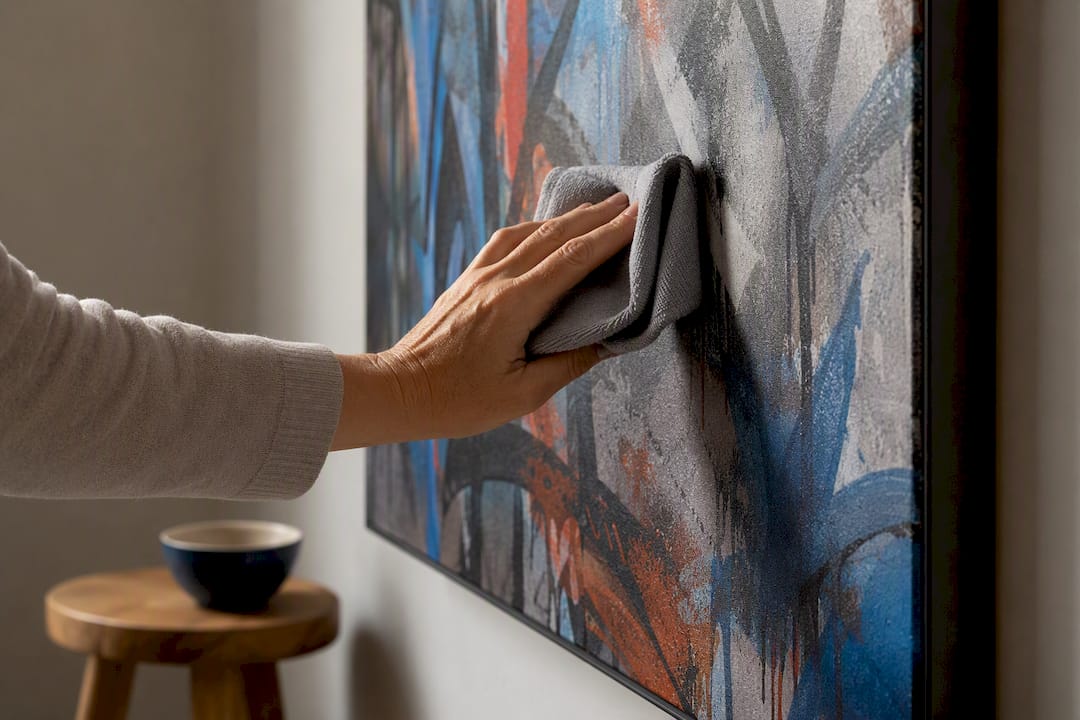
Maintenance depends entirely on which format you chose, and mismatching care routines is how good pieces age badly. Canvas prints need almost nothing: keep them out of direct sunlight to slow fading, dust with a dry microfiber cloth, and avoid hanging them in bathrooms or kitchens where humidity and grease build up on the surface.
Painted murals need more attention. A protective varnish or sealant applied after the paint cures protects against UV fading and surface scuffing, and reapplying that coating every few years keeps colors from dulling. Peel-and-stick wallpaper murals hold up well against light dusting but shouldn’t be scrubbed. A damp cloth on stubborn marks is usually the limit before the adhesive backing starts to lift at the edges.
One detail buyers overlook: canvas stretched on wood frames can warp slightly in rooms with big humidity swings, like a space near an unvented bathroom. Keep canvases away from vents, radiators, and windows that get direct afternoon sun, and they’ll hold their color and shape for years without any special treatment.
The Case for One Bold Piece Over Many Small Ones
Graffiti has fully crossed into contemporary interior design, and the 2026 trend line points toward texture-driven, oversized murals in muted urban palettes rather than the loud, primary-color tags people picture by default. That shift toward “architectural storytelling” is the right direction. Graffiti reads best as part of a room’s structure, not a poster tacked onto it.
My practical read: skip the temptation to layer multiple graffiti pieces around a room. One well-scaled canvas or a single commissioned wall does more work than five smaller ones fighting for attention. Buy the size that matches your furniture line, match one or two tones to your existing palette, and commit.
— James
Ready to Add Graffiti Wall Art Decor to Your Space?
If you’ve been scrolling product pages trying to figure out which graffiti design actually fits your wall, the shortcut is picking from a catalog built specifically for this style rather than hunting through a general art retailer’s limited street art section. Luxury Art Canvas organizes its graffiti collection by mood and intensity, from subtle graffiti pop art canvas pieces to bolder pop culture graffiti wall art, so you’re comparing options that were actually designed for a living room or office wall, not repurposed street photography.

Every canvas ships ready to hang, produced in the USA on materials built to hold color and shape over years, not months. Sizing runs from single-panel accent pieces to oversized statement canvases, and standard return policies mean you’re not stuck if a color reads differently on your wall than on screen. Browse the graffiti wall decor collection and match a piece to your wall dimensions before you check out.
Sources
- 22+ graffiti wall ideas to inspire your space (Ostrali)
- Graffiti wall art ideas and placement rules (The Walls Art)
FAQ
What Is Rule 1 of Graffiti?
In street art culture, the most cited unwritten rule is respect: don’t paint over another artist’s work without permission. In interior decor terms, the equivalent rule is scale discipline, choosing one statement piece rather than covering a wall in competing designs.
What Kind of Wall Art Is Trending Right Now?
Texture-driven, oversized murals in muted urban palettes are leading the trend for 2026, moving graffiti away from primary-color tags toward what designers call architectural storytelling. Monochrome graffiti, drip effects, and mixed-texture walls also show up frequently in current styling guides.
How Do You Do Graffiti Art on a Wall?
A painted mural typically starts with a sketch or digital mockup, followed by site prep like patching and priming, then the painting itself, which can take a single day for a small accent wall or over a week for a detailed interior piece. Most homeowners get the same visual effect faster and with no wall damage by using a ready-to-hang graffiti canvas instead.
Where Can You Buy Graffiti Art?
You can buy graffiti wall art decor through specialized online retailers offering ready-to-hang canvas and prints, through galleries selling limited or original pieces, or by commissioning a local muralist directly. Luxury Art Canvas offers numerous designs shipped ready to hang, which covers the fastest and lowest-risk path for most buyers.
How Much Does Graffiti Wall Art Typically Cost?
Ready-to-hang canvas and prints sit at the lower end of the price range and scale up with size, while commissioned murals cost significantly more once you factor in the artist’s time, travel, and site prep. Budget accordingly based on whether you need a permanent custom wall or a flexible statement piece you can move with you.
4 Checks Before Ordering a Banksy Inspired Canvas
No Drill Apartment Wall Art Ideas for Renters