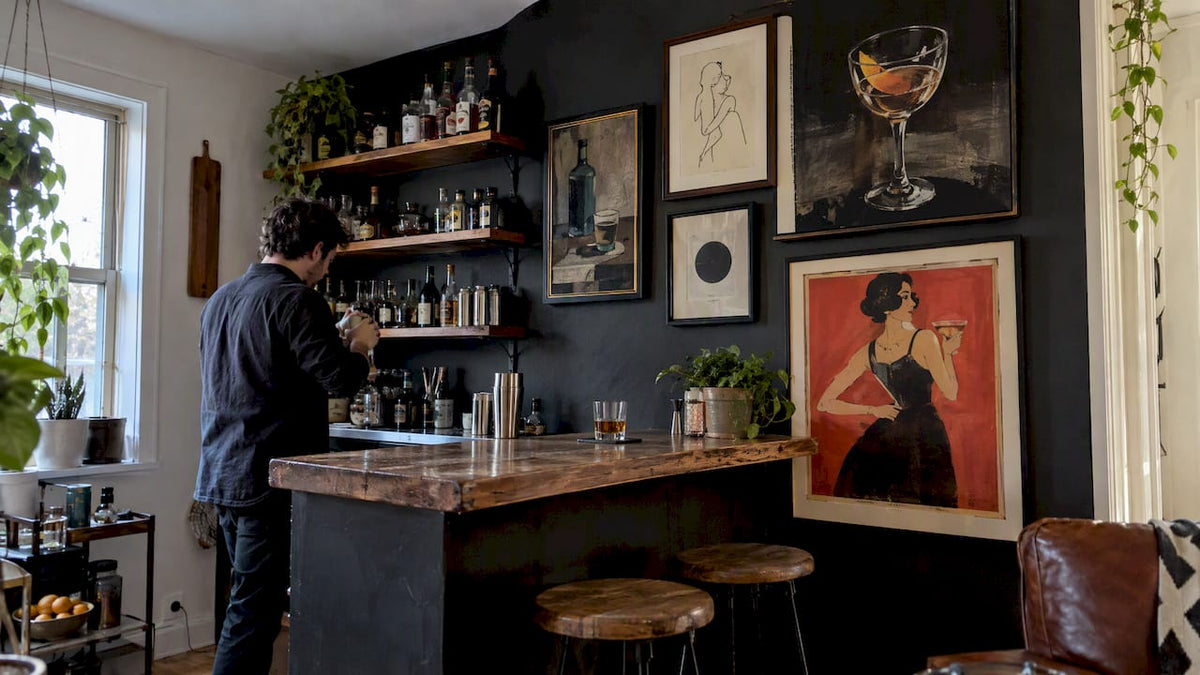
For a single feature wall behind a home bar, one bold focal canvas makes the strongest statement; for a narrow or awkward layout, a coordinated gallery wall reads better. Either way, the fastest categories to shop are pop and graffiti canvases, vintage alcohol posters, neon or typographic signs, and textured metal or 3D pieces that break up hard, glossy surfaces.
Table of Contents
- 1. Styles and motifs that set the mood at your bar
- 2. Placement, scale, and arrangement rules for bar art
- 3. Materials, frames, and finishes that work best near bars
- 4. Lighting and mounting that show your art off at night
- 5. Care and conservation basics for art near bar equipment
- 6. Building a thematic or cohesive art collection for your bar
- 7. Inspiration from standout bar wall art installations
- 8. Integrating branded and fashion-inspired pieces into your bar
- 9. Blending graffiti, pop art, and other styles in one space
- How our catalog fits home-bar projects
- Shop the styles that fit your bar
- FAQ
1. Styles and motifs that set the mood at your bar
Every home bar has a personality, and the art should match it rather than fight it.
- Pop and graffiti canvases work best in lively, contemporary bars where you want energy on the wall. Go big, go bright, and let the color do the talking.
- Vintage alcohol posters and retro advertising suit a classic, rustic, or speakeasy-style setup. These read best in muted, warm tones that echo wood paneling or leather stools.
- Neon signs and typographic pieces act as mood lighting and art at once. A single neon phrase above the bottles often does more for atmosphere than a whole wall of prints.
- Oversized abstract canvases anchor modern, minimalist bars where you want one commanding piece instead of clutter.
- Metal, woven, and 3D pieces introduce texture in rooms dominated by glass shelving, chrome fixtures, or polished countertops.
- Murals or statement wallpaper build an immersive, thematic space when you want the whole wall, not just a canvas, to carry the concept.
- Small-format framed prints and floating shelves fit narrow bars or the tight strip behind barstools where a large canvas would not fit.
Here is a quick way to match style to space:
- Open layout with one dominant wall: choose one oversized canvas as the anchor.
- Narrow bar or hallway-style setup: group small- to medium-format prints in a tight gallery.
- Bar with heavy glass and metal fixtures: add a textured or 3D piece to soften the hard surfaces.
- Themed or retro bar: lean into vintage posters with warm, low-saturation color palettes.
Color and scale matter as much as subject matter. A pop art piece with saturated reds and yellows will dominate a small room, while a black-and-white graffiti print lets the bar’s own color scheme stay in charge. Vintage posters tend to work in smaller formats grouped together, while abstract or luxury-brand canvases usually look best as one large statement piece rather than several competing for attention.
2. Placement, scale, and arrangement rules for bar art
Getting the size and height right is what separates a styled bar wall from one that just has art on it. For pieces hung above a counter or console, hanging art 6 to 10 inches above the surface keeps the piece visually tied to the furniture instead of floating awkwardly toward the ceiling. The same guidance recommends sizing the art to span roughly between half and three-quarters of the counter or console width, which keeps the proportions balanced whether you are working with a narrow bar cart or a full back-bar setup.
Center the art on the furniture below it, not on the wall as a whole, especially when the bar sits off-center in the room.
For gallery arrangements:
- Anchor the layout by keeping the bottom row 6 to 10 inches above the bar surface, matching the single-piece rule.
- Keep spacing between frames consistent, typically 2 to 3 inches, so the grouping reads as one unit.
- Mix one larger anchor piece with two or three smaller supporting prints rather than using uniform sizes throughout.
Choose a single piece when your wall is short or sightlines are tight, and a grouped arrangement when you have height and width to fill without overwhelming the space.
Pro Tip: Before buying anything, tape the dimensions of your planned canvas directly on the wall. It takes five minutes and prevents the most common sizing mistakes.
A quick measuring checklist before you shop: measure the bar or console width, calculate 60 to 75% of that number for your target art width. Confirm 6 to 10 inches of clearance above the surface, and check ceiling height to decide between one statement piece or a grouped layout.
3. Materials, frames, and finishes that work best near bars
The material you choose affects both look and longevity, especially in a zone that sees spills, steam, and temperature swings.
- Canvas is ready-to-hang and holds up better against humidity and splashes than paper prints sealed behind glass, making it a practical first choice for most bar walls.
- Framed prints behind glass look elegant but carry a higher condensation risk in humid spots; sealed backs and proper spacing from the wall help manage that.
- Metal and acrylic pieces are durable and low-maintenance, which suits busy or humid zones near ice machines and sinks.
- Neon and LED signage double as lighting and art, but they need attention to heat output and proper mounting hardware.
Match the frame and finish to the aesthetic: matte black or white frames suit modern bars, warm wood frames suit vintage or speakeasy looks, and raw or brushed metal frames fit industrial spaces.
4. Lighting and mounting that show your art off at night
Good lighting does as much for a bar wall as the art itself.
- Use picture lights for a classic, gallery-style glow on a single focal canvas.
- Install track lighting when you want flexibility to highlight a grouped arrangement.
- Add LED backlighting behind metal or 3D pieces to emphasize their texture after dark.
- Angle any light source to avoid glare, and favor matte canvas surfaces over glossy ones in rooms with overhead lighting.
Match mounting hardware to the piece’s weight and your wall type: heavier canvases need studs or appropriate anchors, while renters can rely on strip-style hanging systems rated for the weight involved.
Pro Tip: Measure your space, mock up the layout with painter’s tape, pick fasteners rated for the piece’s weight, then test the lighting at night before committing to final placement.
5. Care and conservation basics for art near bar equipment
Bars generate heat, steam, and condensation, all of which can shorten the life of the wrong materials in the wrong spot.
- Keep paper prints and framed works away from direct condensation sources like ice machines or sinks; canvas or sealed framing handles humidity better.
- Leave a small air gap, about 20 millimeters, behind any framed print to reduce the temperature gradient that causes condensation on glass.
- Avoid placing art in direct sunlight, which accelerates fading, and rotate more vulnerable pieces seasonally if your bar gets strong natural light.
- Stick to simple upkeep: dust gently, check that hanging hardware is still secure every few months, and reserve lower-value prints for the highest-risk spots near steam or spills.
When moving or leaning larger framed pieces during a reset, carry them on a supporting board and avoid touching the painted surface directly.
6. Building a thematic or cohesive art collection for your bar
A bar wall feels intentional when the pieces share a thread, whether that is color, subject, or attitude, rather than looking like a random assortment. Luxury brand motifs make an easy starting point: a cluster of fashion-inspired canvases featuring labels like Chanel or Louis Vuitton signals a polished, high-end bar without requiring matching frames or colors. Street art themes work the same way in the opposite direction: graffiti tags, spray-paint textures, and bold type create a gritty, contemporary feel that suits a bar built around craft cocktails or an industrial loft setting.
The easiest way to keep a collection cohesive is to pick one unifying element and let everything else vary. That might mean every piece shares a black-and-white palette, or every piece references the same cultural moment, whether that is 1980s street art or classic fashion advertising. Mixing sizes and frame styles within that shared thread actually makes the wall feel curated rather than matched from a single catalog.
For smaller bars, a tighter theme reads better: pick three to five pieces that clearly belong together rather than spreading a loose theme across too many mismatched prints. For larger back-bar walls, you have room to build out a fuller story, layering in a dominant luxury-brand or street-art anchor piece with smaller supporting prints around it.

7. Inspiration from standout bar wall art installations
The bars people remember usually commit to one strong idea instead of hedging across several. A back-bar wall built entirely around a single oversized abstract canvas creates an instant focal point that doesn’t compete with the bottles or glassware in front of it. Speakeasy-style spaces often lean on a dense gallery wall of vintage alcohol posters and retro advertising, packed tightly enough that the wall itself becomes part of the room’s story.
Contemporary cocktail bars frequently mix one large graffiti or pop art canvas with neon typography nearby, pairing color and light in a way that photographs well and sets the tone the moment you walk in. The trend toward textured and three-dimensional art plays into this too.

Smaller home setups can borrow the same logic at a reduced scale: one strong anchor piece, repeated materials or colors nearby, and enough restraint to let that anchor actually stand out instead of disappearing into a crowded wall.
8. Integrating branded and fashion-inspired pieces into your bar
Fashion-inspired canvases, think bold graphic takes on labels like Chanel, Dior, or Louis Vuitton, work especially well in bars that want to feel upscale without looking like a traditional art gallery. The trick is treating them as statement pieces rather than background decor: one well-placed luxury-brand canvas above the bar does more for the room’s tone than several smaller branded prints scattered around.
Pair a fashion-inspired piece with simpler surroundings so it has room to stand out. A plain wall color, understated bar stools, and minimal competing decor let the canvas carry the visual weight. If you want to blend branded art with other styles, keep the color palette consistent. A black, white, and gold branded canvas pairs naturally with monochrome photography or graffiti pieces that share the same tones, even though the subject matter is completely different.
Scale still matters here the same way it does with any other style: a fashion-inspired canvas above a bar or console should follow the same 60 to 75% width guideline as any other piece. It reads as intentional rather than oversized or lost on the wall.
9. Blending graffiti, pop art, and other styles in one space
Mixing styles is where a lot of bar walls either succeed brilliantly or turn into visual clutter, and the difference usually comes down to a shared thread tying the pieces together. Graffiti and pop art pair naturally because both rely on bold color and graphic shapes, so hanging them side by side tends to work even when the subjects are unrelated.
The safest way to blend styles is to pick one constant, color palette, scale, or framing, and let that repeat across every piece. If your graffiti canvas uses a lot of red and black, choose a pop art piece that pulls from the same palette rather than introducing a completely new color story. Keeping frame styles consistent, or keeping everything unframed canvas, also helps mismatched subjects feel like part of the same collection.
Avoid combining more than two or three distinct styles on one wall. A graffiti piece, a pop art piece, and one textured or 3D accent is usually the ceiling before a wall starts to feel chaotic rather than curated. Reserve the boldest, busiest piece as a single anchor and keep everything else quieter in comparison.
How our catalog fits home-bar projects
Our catalog at Luxury Art Canvas leans directly into the styles that work best for bar walls: bold pop art, graffiti, and fashion-inspired canvases that pair high-end branding with street culture. Every canvas is crafted in the USA from archival materials built for durability and visual impact, and with over 1,000 designs backed by positive reviews, finding a piece that matches your bar’s mood tends to be fast rather than a long search.
— James
Shop the styles that fit your bar
If any of these directions caught your eye, our Pop Art Canvas Prints and Graffiti Wall Art & Street Art Canvas collections are built for exactly this kind of project: bold, ready-to-hang pieces sized for a focal wall above a bar or console. For a retro or speakeasy feel, our vintage alcohol wall art brings the classic poster look without the search through flea markets.
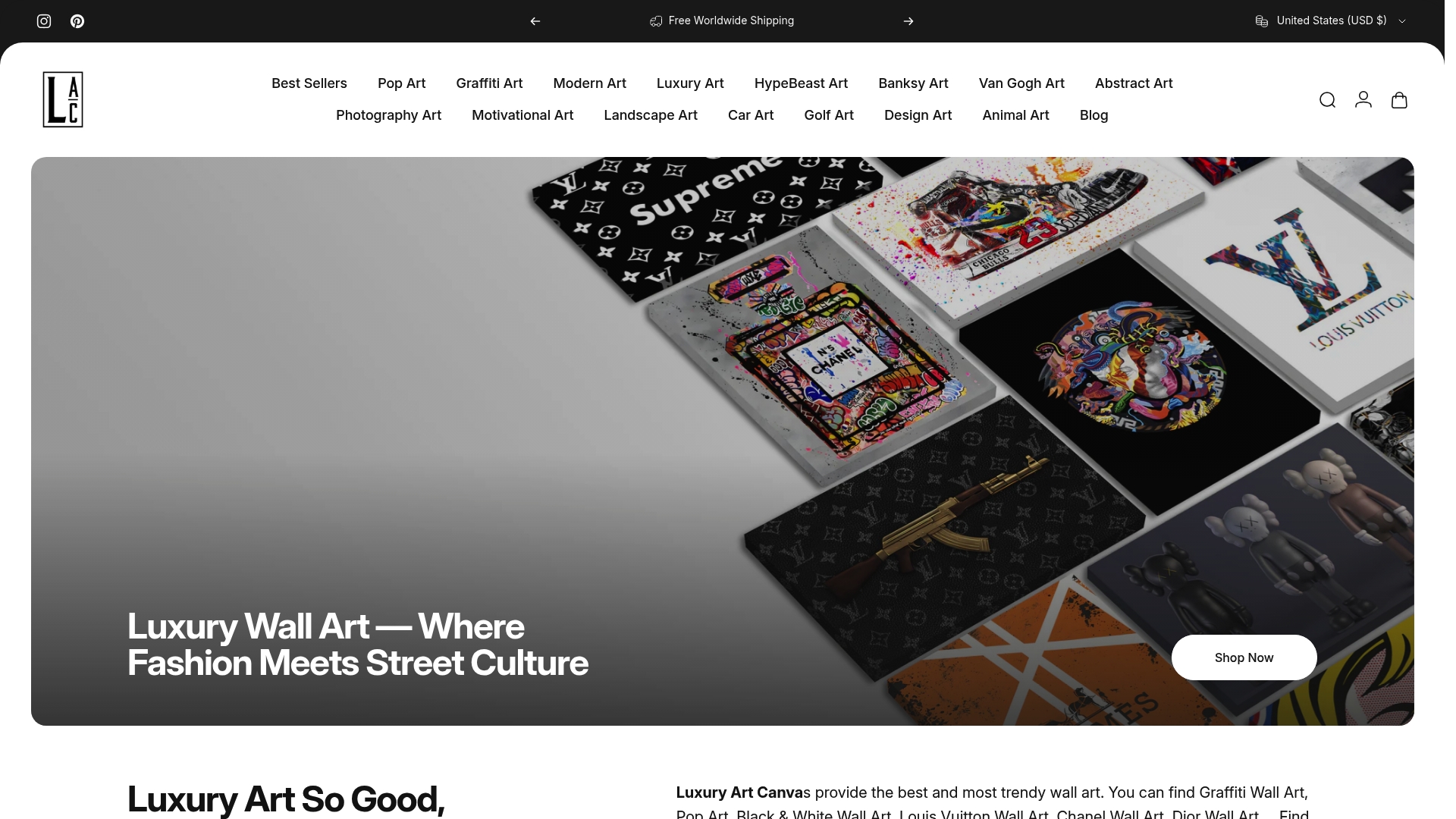
Browse the full range on our main collection page to compare styles side by side, from luxury brand motifs to street art, and find the piece that sets the tone for your bar.
FAQ
What size should wall art be above a home bar?
Aim for art that spans a large portion of the bar or console width without overwhelming it, following the sizing guidance used by interior stylists for balanced, professional-looking displays. A piece that’s too small will look lost, while one that’s too wide overwhelms the furniture below it.
How high should art hang above a bar counter?
Hang the bottom edge of the artwork 6 to 10 inches above the counter or console surface, based on the 6-10 inch placement rule commonly used for consoles and counters. This keeps the piece visually connected to the furniture instead of floating toward the ceiling.
Is canvas art a good choice for humid bar areas?
Canvas tends to hold up better than paper prints behind glass in humid, splash-prone spots, making it a practical choice for most home bars. Framed prints can still work well if you leave a small air gap behind the frame to reduce condensation risk.
How do I mix graffiti and pop art without it looking cluttered?
Keep a shared color palette or frame style across the pieces so they read as one collection rather than unrelated items. Limit the wall to two or three distinct styles, with one piece acting as the clear anchor.
What kind of art works best for a small or narrow bar?
Small-format framed prints or a tight gallery grouping usually fit narrow bars better than one oversized canvas. Keeping consistent spacing, around 2 to 3 inches between frames, helps a grouped layout feel intentional in a tight space.
Hand Stretched Canvas: 5 Checks for Street Art That Lasts
Art Placement Around Windows: Set 3–6 Inches Between Frames