
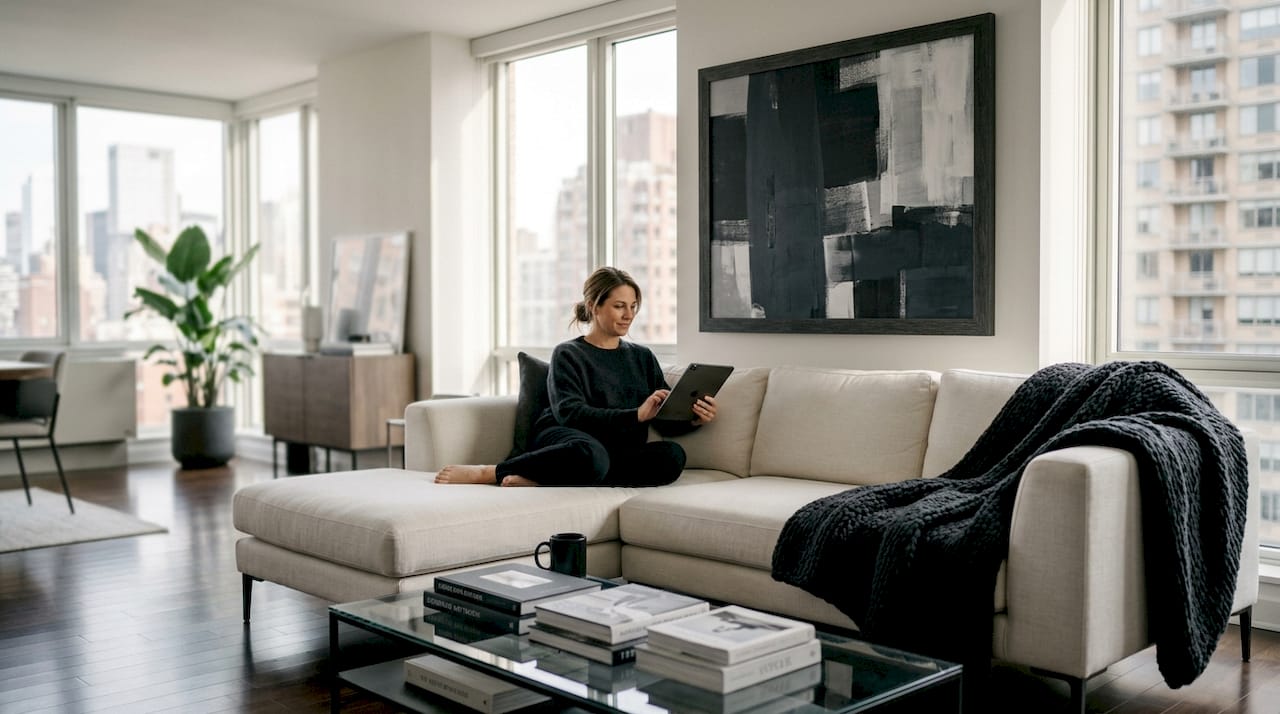
A blank wall doesn’t stay neutral for long. It either anchors a room with purpose or quietly drains energy from every other design decision you’ve made. Creating focal walls with oversized canvases is one of the fastest ways to solve that problem, and it works in apartments, rentals, and owned homes alike. This guide walks you through sizing, placement, installation, and styling so your large canvas does exactly what it should: make the room feel finished, intentional, and unmistakably yours.
Table of Contents
Key takeaways
| Point | Details |
|---|---|
| Scale determines impact | Your canvas should cover roughly two-thirds to three-quarters of the wall or furniture width beneath it. |
| Height matters more than you think | Center your artwork at 57 to 60 inches from the floor for the most natural, gallery-standard viewing height. |
| Two-point hanging is non-negotiable | Single-wire hanging causes tilting and shifting; use two-point hangers or French cleats for oversized pieces. |
| Wall choice shapes the whole room | Above a sofa, bed, or console table gives large art the furniture relationship it needs to feel grounded. |
| Lighting multiplies the effect | High-CRI bulbs and picture lights reveal true canvas colors and add depth that overhead lighting never will. |
Creating focal walls with oversized canvases: getting scale right
In interior design, a “focal wall” is the deliberate visual anchor of a room. It’s the wall your eye goes to first when you walk through the door. Oversized canvas art, typically anything 36 inches or larger in at least one dimension, is one of the most effective tools for building that anchor because it combines color, texture, and scale in a single piece.
The most common mistake people make is going too small. Art covering at least 50% of the wall prevents that “stuck in the middle” feeling where a piece floats without context. The stronger target is two-thirds to three-quarters of the wall or furniture width, which creates the visual weight needed to actually anchor the space.
Understanding the visual anchor effect
Scale is not simple decoration math. It controls visual anchor and room balance in a way that smaller art simply cannot replicate. A 24x36 inch canvas above a 90-inch sofa will always look like an afterthought. A 60x40 inch canvas above the same sofa starts a conversation.
Here is how to think about format and orientation before you buy:
-
Horizontal canvases work best above wide furniture like sofas, beds, and console tables
-
Vertical canvases suit narrow walls, tall ceilings, and entryways where height is the dominant dimension
-
Square canvases offer flexibility and work particularly well as single statement pieces in dining rooms or home offices
-
Multi-panel sets (diptychs and triptychs) let you cover furniture width across architectural interruptions like windows or doors
For finish, matte canvas reads as more organic and painterly, while gloss or semi-gloss finishes intensify color saturation and work well in modern or high-contrast spaces.
| Canvas format | Best wall placement | Ideal room style |
|---|---|---|
| Horizontal single panel | Above sofa or bed | Living room, bedroom |
| Vertical single panel | Entryway, narrow accent wall | Hallway, office |
| Diptych or triptych | Wide walls, above sectionals | Open-plan living, loft |
| Square statement piece | Dining room, above console | Transitional, modern |
Pro Tip: Before you purchase, tape newspaper or kraft paper to the wall in your target canvas dimensions. Live with it for 24 hours. You will almost always realize you need to go bigger.
Choosing the right wall and preparing your space
Not every wall earns the title of focal wall. The right choice depends on architecture, furniture placement, and how natural light moves through the room.
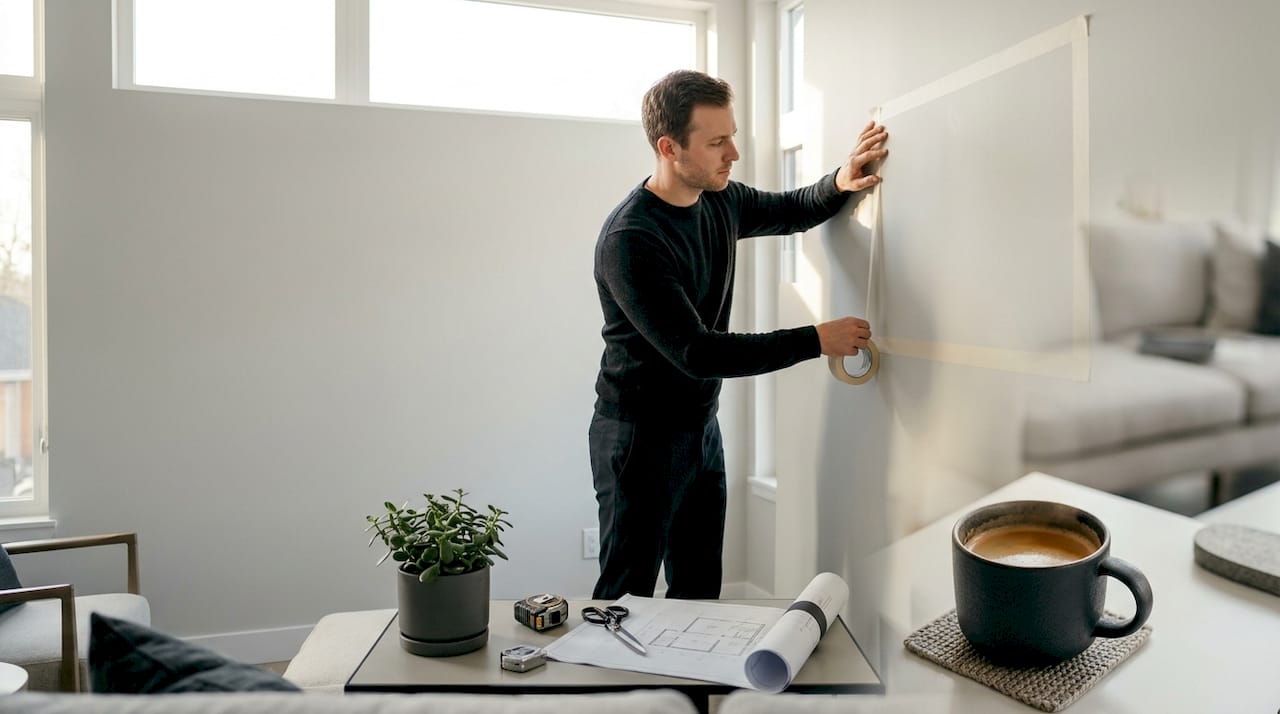
The strongest candidates are the wall directly behind a sofa, the wall above a bed’s headboard, an entryway wall that greets guests on arrival, and the wall behind a console table in a foyer or hallway. These locations all share one thing: a piece of furniture below that creates a visual relationship with the art above it. Large canvas art functions like furniture in this sense. It organizes the room and ties together color and shape from surrounding decor.
Once you have chosen your wall, check these conditions before you hang anything:
-
Direct sunlight: UV exposure fades canvas over time and can warp stretcher bars. Avoid south-facing walls with unfiltered afternoon sun.
-
Humidity and heat: Kitchens and bathrooms are poor choices for canvas unless the piece is sealed or the ventilation is excellent.
-
Wall texture: Heavily textured walls (like rough stucco) make leveling harder and limit your hardware options.
-
Wall material: Drywall, plaster, and concrete each require different anchors. Know what you are working with before you drill.
Pro Tip: If you are a renter, check your lease before making any holes. Many landlords allow small picture hooks. For heavier canvases, ask about temporary wall anchors or consider a leaning installation on a wide ledge shelf.
For renters specifically, lightweight canvases and non-damaging options like heavy-duty command strips or French cleats with minimal holes make large art possible without jeopardizing your security deposit.
| Wall type | Recommended hardware | Renter-friendly option |
|---|---|---|
| Drywall with stud | Screw into stud | Two-point hanger into stud |
| Drywall without stud | Drywall anchor | Command strip (rated for weight) |
| Plaster | Plaster anchor or toggle bolt | French cleat with minimal holes |
| Concrete or brick | Masonry anchor | Lean on wide picture ledge |
How to hang an oversized canvas correctly
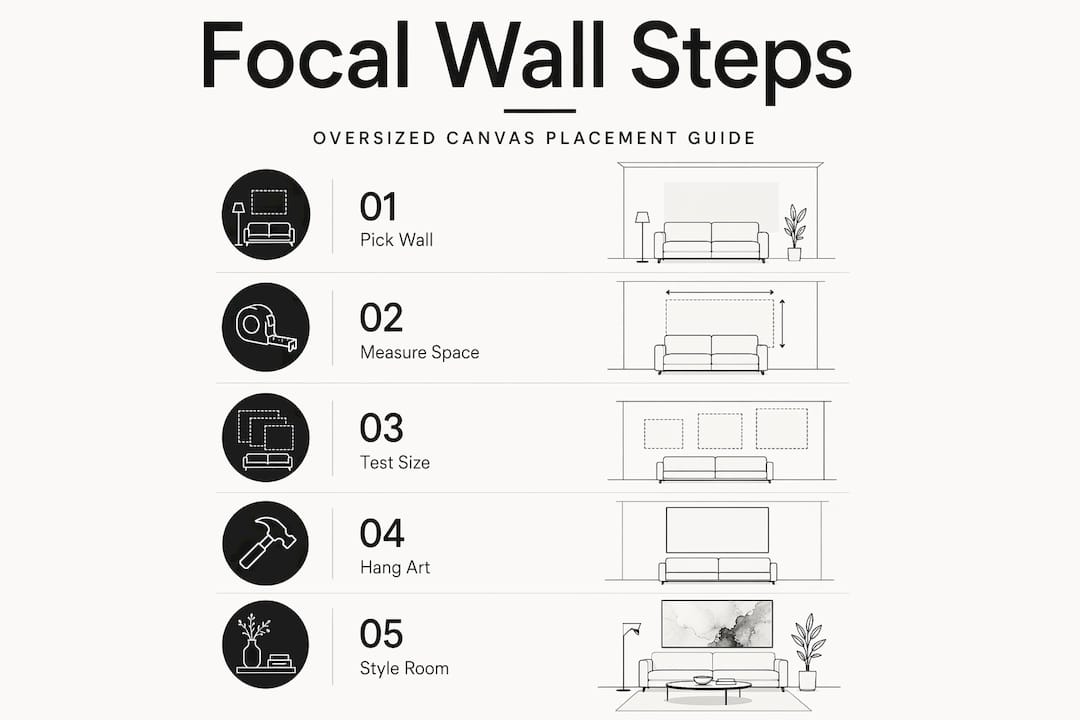
This is where most people rush and regret it. Take 20 minutes to do this right and you will never have to re-hang.
-
Measure your wall and furniture. Write down the width of the wall and the furniture below it. Your canvas target width is two-thirds to three-quarters of the furniture width.
-
Mark the canvas footprint with painter’s tape. Using painter’s tape to outline the canvas on the wall lets you test placement from multiple angles before a single hole is made. Step back. Check from the doorway.
-
Set your height. The standard gallery height is 57 to 60 inches from the floor to the center of the canvas. When hanging above furniture, position the bottom edge 6 to 10 inches above the piece below. These two rules occasionally conflict. When they do, prioritize the furniture relationship.
-
Calculate your hanging point. Measure the canvas height and find the midpoint. Subtract the distance from the top edge to the hanging hardware. Add that number to your desired center height. That is where your hook or screw goes.
-
Choose hardware that matches the weight. A canvas over 30 pounds needs studs or wall anchors rated for the load. Do not guess. Check the canvas weight before you buy hardware.
-
Use two-point hanging. Two-point hanging distributes weight and prevents tilting far better than a single central wire. For very large or heavy pieces, French cleats are the professional standard. They keep the canvas flush against the wall and allow micro-adjustments after installation.
-
Level and step back. Use a spirit level on the canvas itself, not just the wall marks. Then step to the doorway and look again. Small shifts of even two inches horizontally can change the entire feel of the wall.
“Wire hanging for oversized canvases can cause shifting and tilting; professional mounting systems like two-point hangers or French cleats offer better stability.” — richxtop.com
Pro Tip: For hallways narrower than 40 inches, keep frame depth under 1.5 inches. Deep frames in tight passages make the space feel cramped and can actually be a physical hazard.
Styling your focal wall for maximum impact
Hanging the canvas is only half the work. How you style around it determines whether the wall reads as intentional design or an isolated art project.
Large canvas art works best when it has visual companions. Think of the art as the lead and everything else as supporting cast.
-
Rugs: A rug that picks up one or two colors from the canvas creates a visual loop that makes both pieces feel deliberate. This is one of the most underused focal wall design tips in practice.
-
Throw pillows and blankets: Pull a secondary color from the canvas and repeat it in soft furnishings. You do not need an exact match. A close tone works better.
-
Lighting: High-CRI bulbs and picture lights reveal true canvas colors and add depth that standard overhead lighting flattens out. A picture light mounted above the canvas or a floor lamp angled toward it changes the entire atmosphere of the room after dark.
-
Plants and sculptural objects: A tall plant or a sculptural object on a nearby surface adds dimension and prevents the wall from feeling two-dimensional.
When decorating with large artwork, resist the urge to add more art nearby. One oversized canvas is a statement. Two competing oversized pieces on the same wall is confusion. If you want to use multiple panels, a diptych or triptych spaced evenly reads as a single cohesive piece rather than a collection.
Color psychology matters here too. Warm-toned canvases (reds, oranges, golds) energize a space and work well in living rooms and dining rooms. Cool-toned pieces (blues, greens, grays) create calm and suit bedrooms and home offices. Bold graphic art with high contrast reads as street-art energy and suits modern, loft-style, or eclectic interiors.
Pro Tip: When using large paintings in decor, choose a canvas with at least three colors and then limit your accent pieces to two of those three. This creates cohesion without making the room feel like a color-matching exercise.
Common mistakes and how to fix them
Even with the best intentions, these are the errors that show up most often.
-
Going too small. The most frequent issue. If your art looks like it is floating, it is too small for the wall. Size up before you style around it.
-
Hanging too high. Art hung at eye level for a standing person ends up too high when people are seated. The 57 to 60 inch center rule exists for a reason. Small adjustments in height dramatically change how a room feels.
-
Ignoring the furniture relationship. A canvas hung without reference to the furniture below it will always feel disconnected. The 6 to 10 inch gap above the furniture is the connective tissue between the two.
-
Using inadequate hardware. A canvas that falls is a safety issue, not just a decor problem. Match your hardware to the actual weight of the piece.
-
Overcrowding the wall. Adding too many decorative elements around an oversized canvas dilutes its impact. Let it breathe.
-
Not adjusting after installation. Most people hang and walk away. Spend five minutes shifting the canvas left, right, up, or down by small increments. The difference between “fine” and “perfect” is often two inches.
“Incorrect size or height of large artwork causes imbalance, makes the piece feel isolated or awkward.” — richxtop.com
My honest take on oversized canvas focal walls
I have seen hundreds of rooms where people spent real money on furniture and then hung a canvas the size of a dinner tray above a seven-foot sofa. The art is not the problem. The scale decision is.
What I have learned is that placement and proportion beat style every time. A bold, graphic canvas hung at the right height with the right relationship to the furniture below it will outperform a technically “better” piece hung incorrectly. Scale is what makes a room feel designed rather than decorated.
The other thing I would push back on is the idea that oversized art is only for large rooms. I have seen a 48x60 inch canvas in a 400 square foot studio apartment that made the space feel bigger, not smaller. The canvas gave the room a focal point that pulled everything else into order. Without it, the same room felt scattered.
My advice: commit to the size that makes you slightly nervous. That is almost always the right size. And choose art that reflects something you actually care about, not just what matches your couch. The rooms that feel most alive are the ones where the art was chosen with conviction.
— James
Transform your walls with Luxuryartcanvas
If you are ready to put these principles into practice, the right canvas makes all the difference. Luxuryartcanvas offers over 1,000 designs crafted in the USA, spanning bold graffiti, pop art, and fashion-forward collections that are built specifically for statement walls.

Whether you want the clean graphic energy of sneaker canvas art for a modern living room or the high-fashion edge of Chanel graffiti wall art for a bedroom focal wall, the collections are organized by style, size, and format so you can find exactly what your space needs. Single panels, diptychs, and triptychs are all available, making it straightforward to match the format to your wall. Every canvas ships ready to hang, backed by reviews from over 10,000 satisfied customers. Browse the full collection at Luxuryartcanvas and find the piece that makes your focal wall impossible to ignore.
FAQ
What size canvas works best for a focal wall?
A canvas covering two-thirds to three-quarters of the wall or furniture width below it creates the strongest focal point. For a standard 84-inch sofa, that means a canvas at least 56 to 63 inches wide.
How high should I hang an oversized canvas?
Center the canvas at 57 to 60 inches from the floor, which is the standard gallery height. When hanging above furniture, keep the bottom edge 6 to 10 inches above the piece.
Can renters hang oversized canvases without damaging walls?
Yes. Lightweight canvases paired with heavy-duty command strips rated for the canvas weight work well for renters. French cleats with minimal holes are another option that preserves walls while supporting heavier pieces.
Should I use one large canvas or multiple panels?
A single oversized canvas makes the boldest statement. Multi-panel sets like diptychs and triptychs work well on wider walls or when architectural features interrupt the space, as long as panels are spaced evenly and treated as one cohesive piece.
What lighting works best for canvas focal walls?
Picture lights mounted above the canvas or floor lamps angled toward it reveal the most color and texture. Use high-CRI bulbs (90 or above) and keep the canvas away from direct sunlight to prevent fading over time.
Why Canvas Prints Outlast Wall Posters for Good
Oversized Wall Art Placement Best Practices Guide