
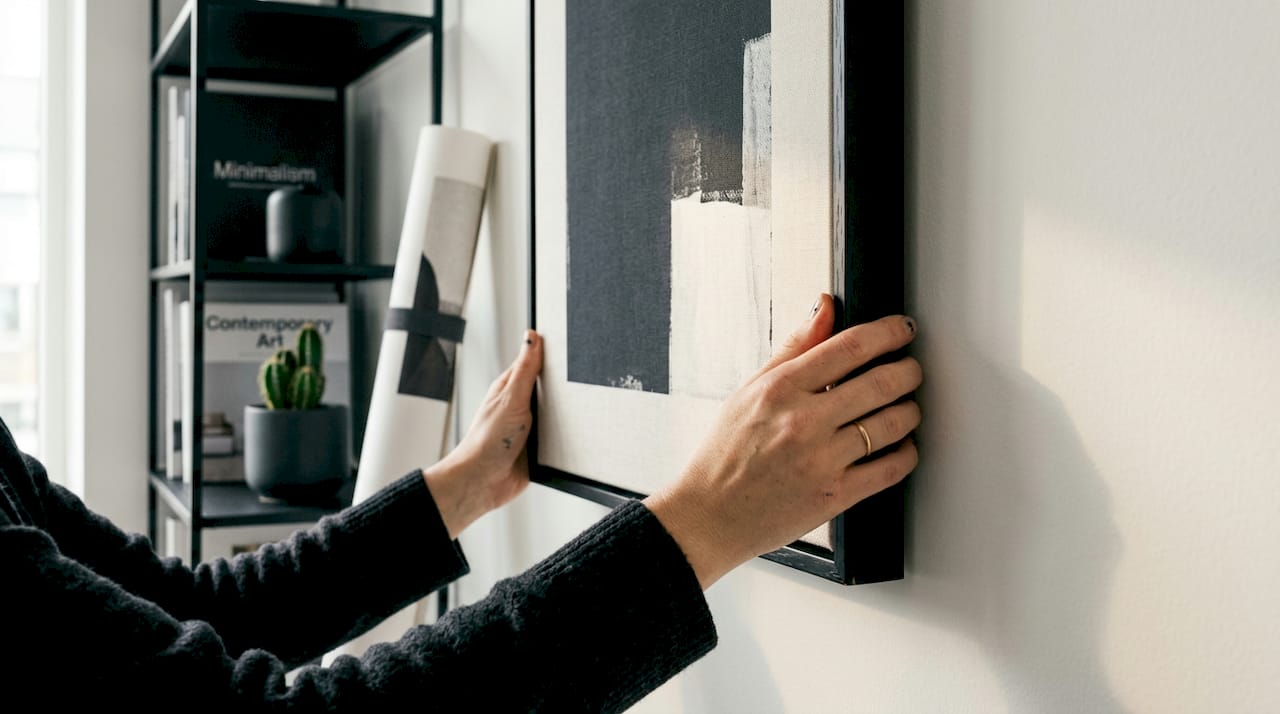
Most people assume a poster and a canvas print are just two ways to display the same image. They’re not. The reason why canvas prints outlast wall posters comes down to material science, ink chemistry, and how each format responds to the environment around it. A poster looks great on day one. A quality canvas print still looks great on year twenty. If you’re investing in wall art for your home or business, understanding what separates these two formats will save you money, frustration, and the disappointment of watching a piece you love fade into a yellowed ghost of itself.
Table of Contents
Key Takeaways
| Point | Details |
|---|---|
| Material determines lifespan | Canvas fabric on a wood frame resists tears and moisture far better than paper-based posters. |
| Ink type is the deciding factor | Pigment-based archival inks last 25 to 40 years; cheap dye inks fade within 5 to 10 years. |
| Environment accelerates aging | Humidity and direct sunlight damage posters faster than canvas, especially without UV protection. |
| Canvas arrives display-ready | Stretched canvas ships ready to hang, while posters need framing and glass to survive long term. |
| Care extends canvas life significantly | Avoiding direct sunlight and high humidity rooms can double the effective lifespan of your canvas art. |
Why canvas prints outlast wall posters starts with materials
The physical structure of a canvas print and a wall poster are completely different, and that difference is everything when it comes to longevity.
A canvas print is made from woven polyester or cotton fabric stretched tightly over a wooden frame, called a stretcher bar. That woven structure gives it flexibility and physical resilience. You can bump it, move it, and handle it without creasing or tearing the surface. The texture also creates a slight tooth that holds ink more effectively than a flat paper surface.
A poster, by contrast, is paper. Even high-quality poster paper is still a flat, fragile substrate that creases if you look at it wrong. Posters warp, curl, and yellow without UV-protective framing or a coating. The paper substrate and dye inks used in most posters degrade quickly under humidity and sunlight exposure. Without a frame and glass, a poster is genuinely vulnerable from the moment it leaves the tube.
The inks matter just as much as the substrate. Premium canvas prints use pigment-based archival inks, which bond deeply with the fabric fibers and resist UV degradation. Many budget canvas options and most standard posters use dye-based inks, which sit on top of the surface and fade rapidly without UV protection. The difference between pigment and dye inks is not subtle. One lasts decades. The other starts fading in a few years.
-
Woven fabric substrate: Canvas resists tearing, creasing, and physical damage that would destroy a paper poster.
-
Pigment-based archival inks: These inks bind with the canvas fibers and resist UV fading far longer than dye-based alternatives.
-
UV laminate coating: A protective top layer on quality canvas prints adds another barrier against light and moisture damage.
-
Wooden stretcher frame: The frame keeps the canvas taut and prevents warping, a structural advantage posters simply don’t have.
Pro Tip: When buying a canvas print, ask specifically whether it uses pigment-based inks and UV laminate coating. If the seller can’t confirm both, treat the product as a short-term decoration, not a long-term investment.
How environment attacks your wall art
The room where you hang your art matters more than most people realize. Both canvas and posters are affected by their environment, but they fail in different ways and at very different speeds.
Humidity is the first threat. Canvas is porous and absorbs moisture from the air, which can cause sagging, discoloration, and in extreme cases, mold growth. This is especially relevant in bathrooms, basements, and poorly ventilated rooms. Posters face the same humidity threat but respond faster and more dramatically. Paper absorbs moisture unevenly, causing visible warping and bubbling within weeks in a humid room.
UV light is the second threat. Sunlight bleaches color out of almost any printed surface over time. The speed of that bleaching depends entirely on the ink type and whether any UV-protective coating or glass is present. A poster hung in direct sunlight without UV-protective framing can visibly fade within a single year. A quality canvas print with UV laminate in the same spot will hold its color far longer, though direct sunlight is still not recommended for either format.
Temperature swings compound both problems. Repeated expansion and contraction of the substrate weakens paper fibers and can loosen the bond between ink and canvas fabric. Controlled indoor environments, meaning stable temperature and moderate humidity, dramatically favor canvas print longevity over time.
-
Avoid hanging any wall art in direct sunlight. Even UV-resistant prints benefit from indirect light placement.
-
Keep wall art away from HVAC vents, which create localized temperature and humidity swings.
-
Bathrooms and laundry rooms are the worst possible locations for both canvas and posters.
-
Living rooms and bedrooms with stable climate control are the ideal environments for maximizing canvas lifespan.
Pro Tip: If you love a specific piece and want it in a high-humidity room, consider a metal print instead. Metal prints outperform canvas and posters in moisture-heavy environments, though they come at a higher price point.
Canvas vs poster quality: a side-by-side comparison
The practical durability gap between canvas and posters becomes clearest when you look at the numbers and the day-to-day maintenance reality side by side.
Canvas prints resist creasing and tearing better than posters in normal handling and display conditions. A canvas print can be moved, rehung, and stored without the same risk of damage that comes with handling a paper poster. Posters suffer edge wear, corner curling, and surface scuffs with minimal contact.
| Feature | Canvas print | Wall poster |
|---|---|---|
| Substrate | Woven fabric on wood frame | Paper (coated or uncoated) |
| Typical lifespan | 25 to 40 years with quality inks | 5 to 10 years without UV framing |
| Physical resilience | High, resists tears and creasing | Low, prone to warping and edge damage |
| Maintenance | Gentle dry dusting | Requires framing and glass for protection |
| Display readiness | Arrives ready to hang | Usually needs framing and mounting |
| Glare | Matte surface, minimal glare | Glossy versions create significant glare |
| Cost over time | Higher upfront, fewer replacements | Lower upfront, more frequent replacement |
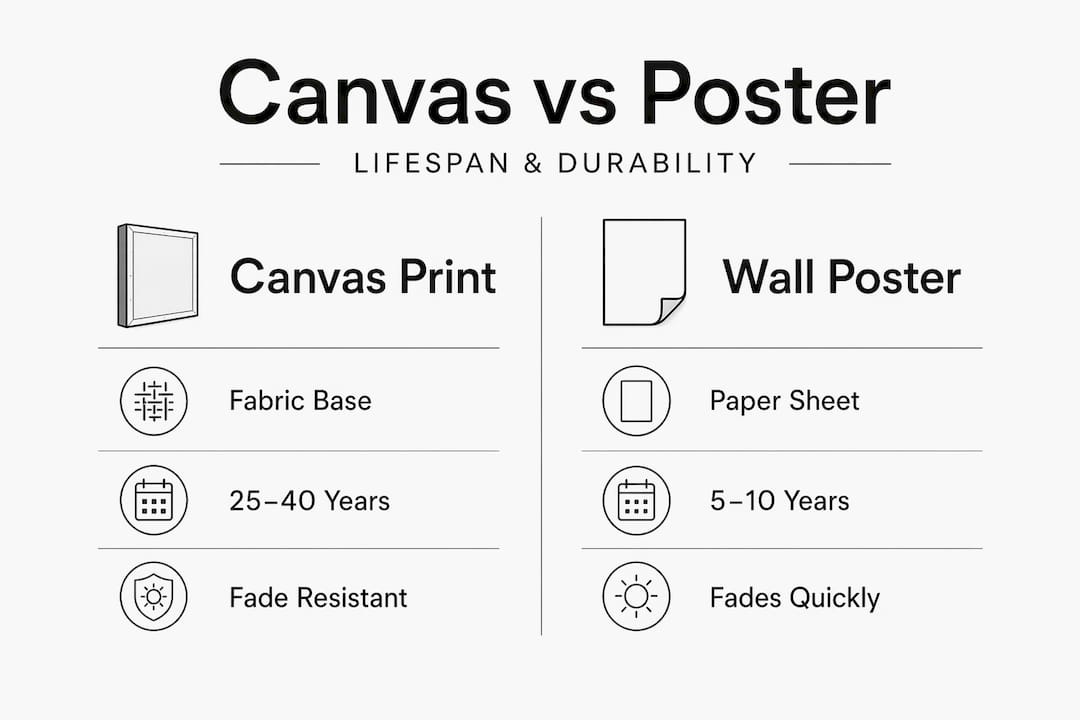
The cost-over-time argument is one that most buyers overlook. A quality canvas print costs more than a poster on day one. But if you replace a poster every five to seven years while a canvas print holds up for thirty, the math shifts decisively. You’re not paying more for canvas. You’re paying less per year of display.
Pro Tip: When comparing prices, calculate cost per year of expected display rather than sticker price. A $150 canvas print lasting 30 years costs $5 per year. A $30 poster replaced every 5 years costs $6 per year and requires more effort each time.
The aesthetic case for canvas
Durability is only part of the story. The visual and decorative advantages of canvas prints also explain why so many decorators and art collectors choose them over posters, even when budget is not the primary concern.
Canvas texture creates a depth and warmth that flat paper simply cannot replicate. The slight surface variation catches light differently at different angles, giving printed images a quality that feels closer to original painted artwork than a reproduction. This is why canvas prints offer a matte surface that reduces glare and enhances viewing from multiple angles, something glossy posters consistently fail to deliver in brightly lit rooms.
The ready-to-hang format is another practical advantage. Canvas prints arrive stretched on wooden frames and need nothing more than a wall hook. Posters require a frame, mat, and glass before they look finished. That adds cost, time, and the ongoing risk of glass breakage. For renters and frequent movers, the self-contained nature of a stretched canvas is genuinely useful.
-
Canvas supports larger formats and multi-panel gallery walls without the structural fragility of large paper prints.
-
The wrapped edges of a gallery-style canvas look finished from every angle, eliminating the need for a frame entirely.
-
Canvas texture complements bold graphic designs, photography, and fine art reproductions equally well.
-
The absence of glass means no reflections, no condensation risk, and no weight penalty on the wall.
Practical tips to get the most from your canvas art
Choosing a quality canvas is only step one. How you care for and place it determines whether it reaches its full potential lifespan.
-
Choose pigment-based inks with UV lamination. This combination is the single most important factor in canvas prints durability. Confirm this before purchasing, not after.
-
Avoid high-humidity rooms. Bathrooms, basements, and kitchens expose canvas to moisture that accelerates sagging and discoloration over time.
-
Use proper hanging hardware. A canvas that hangs unevenly or shifts repeatedly will eventually warp at the frame joints. Use two hooks or a French cleat for larger pieces.
-
Clean with a dry, soft cloth only. Liquid cleaners can penetrate the fabric and damage the ink layer. A gentle dusting every few months is all a canvas print needs.
-
Match your print choice to the room. Designers should prioritize room conditions, especially humidity and sunlight exposure, when choosing between canvas and alternative formats.
-
Consider metal prints for extreme conditions. If you need wall art in a high-humidity or high-light environment, metal is worth the premium. For standard living spaces, quality canvas is the right balance of durability, aesthetics, and cost.
Pro Tip: Rotate art in rooms with unavoidable sunlight exposure. Even moving a canvas a few feet from a direct sun path can add years to its color vibrancy.
My honest take on the canvas vs. poster debate
I’ve spent years looking at how wall art holds up in real homes and commercial spaces, and the most common mistake I see is not choosing the wrong format. It’s choosing the right format with the wrong expectations about what makes it last.
People buy a canvas print and assume the material alone guarantees longevity. It doesn’t. I’ve seen cheap canvas prints with dye-based inks fade faster than a well-framed poster in a UV-protective glass frame. The label “canvas” is not a guarantee. The ink type, the coating, and the environment are what actually determine how long your art looks good.
What I find genuinely frustrating is the marketing around poster longevity. Some sellers describe posters as “archival quality” when they mean the paper is acid-free. Acid-free paper resists yellowing from within, but it does nothing to protect against UV fading or humidity warping. It’s a real but narrow claim dressed up to sound more comprehensive than it is.
My honest recommendation is this: invest in a quality canvas print from a maker who uses pigment inks and UV laminate, hang it in a stable indoor environment, and you will almost certainly never need to replace it. That’s not a marketing claim. That’s just how the materials behave when you treat them right. The upfront cost is real, but the long-term value is better than almost anything else you can put on a wall.
— James
Discover canvas art built to last at Luxuryartcanvas
If you’ve decided quality canvas is the right investment for your walls, the next step is finding designs worth that investment.
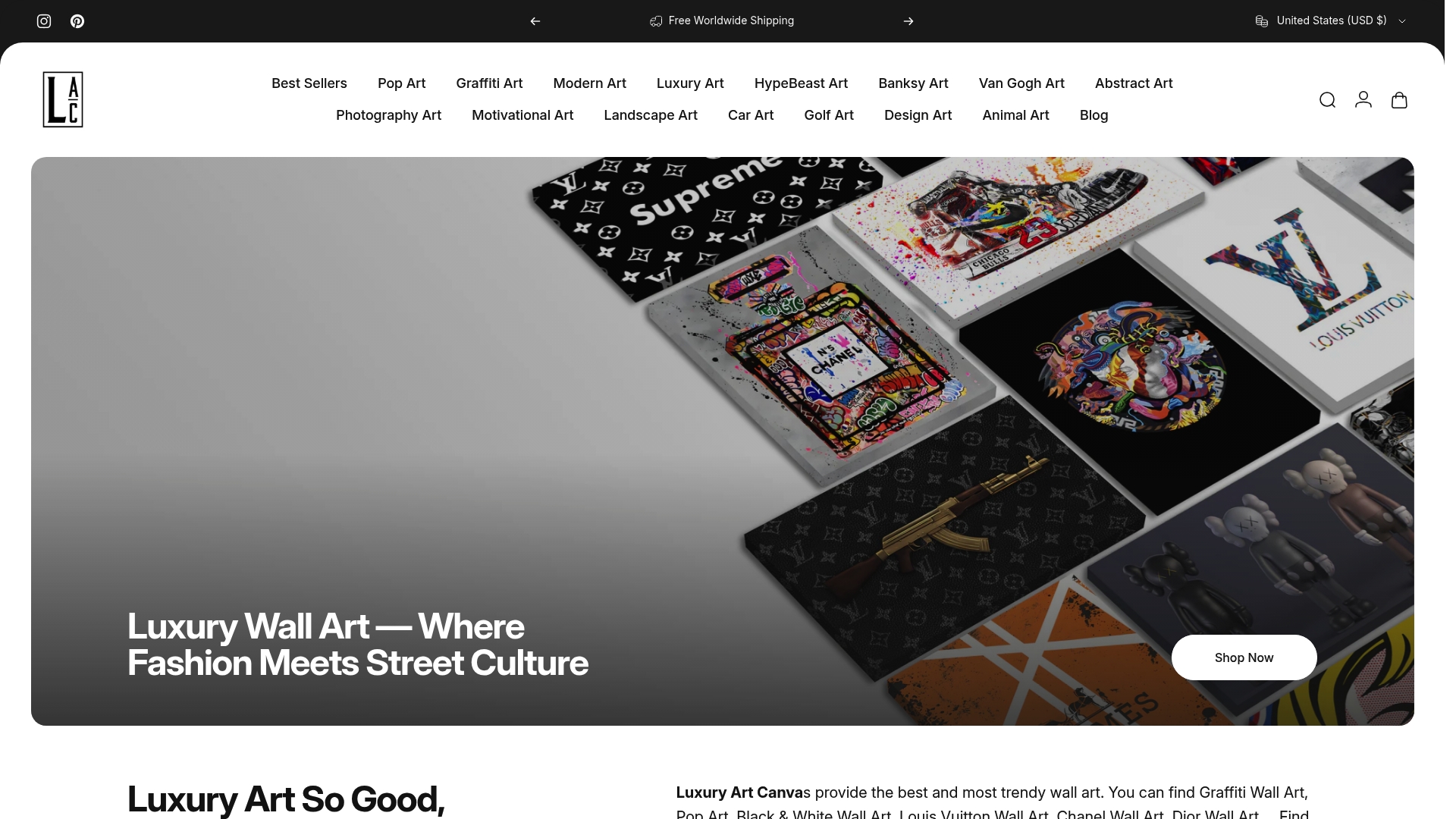
Luxuryartcanvas crafts every piece in the USA using archival pigment inks and professional-grade UV laminate coatings on premium stretched canvas. The collection spans over 1,000 designs, from bold Chanel pop art and Louis Vuitton wall art to iconic Nike Air Jordan wall art and Dior wall art pieces built for long-term display. Every canvas arrives stretched and ready to hang. With more than 10,000 satisfied customers, Luxuryartcanvas delivers art that looks as sharp in year fifteen as it did on day one.
FAQ
How long do canvas prints actually last?
High-quality canvas prints using pigment-based inks with UV laminate coatings last 25 to 40 years in controlled indoor environments. Cheap dye-based inks without UV protection fade within 5 to 10 years.
How long do wall posters last before fading?
Most standard posters fade and degrade visibly within 5 to 10 years, and often sooner without UV-protective framing. Paper substrates and dye-based inks are particularly vulnerable to humidity and sunlight.
Do canvas prints need to be framed?
No. Canvas prints arrive stretched on wooden frames and are ready to hang without additional framing or glass, which also eliminates glare and reduces display cost.
What is the best room for hanging canvas art?
Living rooms and bedrooms with stable temperature and moderate humidity are ideal. Avoid bathrooms, kitchens, and basements where moisture exposure accelerates degradation of both canvas and paper prints.
Is canvas or poster better for a tight budget?
Posters cost less upfront, but canvas prints cost less per year of display when you account for replacement frequency. A quality canvas print is the better long-term value for any space you plan to keep decorated for more than five years.
How to Create a Statement Wall That Reflects Your Personality
Creating Focal Walls with Oversized Canvases: A Practical Guide