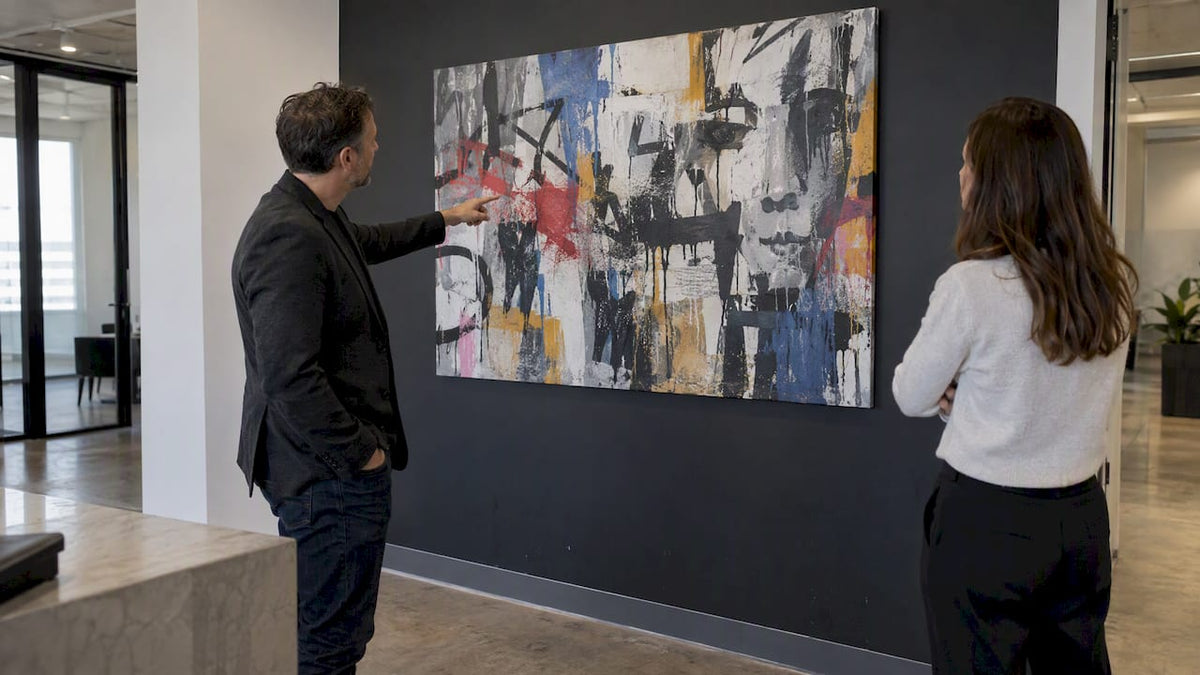
Graffiti-style wall art can energize and brand office spaces when chosen with intent, and a ready-to-hang canvas from a source like Luxury Art Canvas is the fastest way to test the look. A commissioned mural makes sense when you need something site-specific and permanent, although it requires more planning. Either route works, but scale, audience, and building permissions decide which one fits your space.
Table of Contents
- Office graffiti ideas: where and how it works best
- What research says about murals and workplace well-being
- How to commission a graffiti-style mural
- Graffiti styles that translate well to professional spaces
- Permissions and upkeep before you commit to paint
- Custom mural or ready-to-hang canvas: which fits your office
- Balancing aesthetics with day-to-day office operations
- A low-disruption option worth considering
- Primary sources and suggested further reading
- Sources
- FAQ
Office graffiti ideas: where and how it works best
Graffiti reads differently depending on where it lands and how much wall it covers. A reception area benefits from a bold, brand-colored piece near the entrance since it sets tone before a visitor sits down. Open-plan floors do well with a single feature wall rather than scattered pieces, since one strong statement reads as intentional while several small ones can look chaotic. Meeting rooms need restraint: a muted, abstract urban piece behind the presenter avoids competing with screens or whiteboards. Breakout areas can handle the most energy, since employees spend relaxed time there rather than client-facing hours.
Scale matters as much as placement.
- A full wall suits large open areas with 12-foot ceilings or more, where a half-measure would look underdressed.
- A half-wall treatment works in narrower corridors or shared zones where foot traffic needs a visual anchor without total coverage.
- A framed canvas cluster can provide graffiti-style energy in smaller offices or rented suites where painting directly on walls is not possible.
Color and contrast also carry function beyond decoration. High-contrast lettering or iconography can double as wayfinding, guiding people toward exits, break rooms, or department zones, while low-contrast, tonal pieces keep a space calm without disappearing into the background. For more on matching art types to office zones, see this guide to art for office environments.
What research says about murals and workplace well-being
The strongest available evidence on artwork and workplace outcomes comes from a Stanford mixed-methods study that tested eight room variations for exposure to natural materials, windows, and diverse representations.
The study found that natural materials and windows lowered negative stress responses, and that diverse representation in artwork increased divergent creativity for some subgroups, a finding with direct implications for mural content choices, not just wall coverage.
A separate pharmacy department case study on large interior murals found that biophilic imagery correlated more strongly with staff commitment and perceived productivity than bold abstract pieces did, and recommended gathering occupant preferences through architectural programming before finalizing any design. The practical takeaway: match imagery to your goal. Nature-adjacent, organic forms suit spaces meant for calm, while dynamic abstract or urban compositions suit spaces meant to spark creative output.

How to commission a graffiti-style mural
Commissioning a mural is a project, not a purchase, and treating it that way avoids most disputes.
- Define the goal and scope first. Measure the wall, note visibility from entrances or windows, and write down what the piece needs to communicate before contacting anyone.
- Set a budget anchor and timeline. Costs vary widely by artist reputation, wall size, and material prep, so request quotes only after scope is fixed, and build in several weeks for design approval before painting begins.
- Draft a request for proposal that includes wall dimensions, desired style references, brand colors, deadline, and budget range.
- Vet artists on portfolio match, references, and insurance. Ask whether they carry liability coverage, what materials they use, and who owns reproduction rights to the finished piece.
- Plan site prep and installation logistics. Confirm surface prep, masking of adjacent fixtures, and expected downtime for the affected zone.
- Set a maintenance plan before the artist leaves, covering touch-up paint storage and a conservation schedule.
Pro Tip: Ask every artist candidate for one reference who can speak to how they handled a missed deadline or scope change, not just finished work.
Graffiti styles that translate well to professional spaces
Not every graffiti style belongs in an office, and knowing the difference saves you from a look that reads as an afterthought. According to a 2026 style guide, graffiti breaks down into tags, throw-ups, pieces, and wildstyle, with wildstyle considered complex and requiring significant practice to master.
- Polished wildstyle or painterly pieces bring visual complexity and work well in creative agencies or design studios where the audience appreciates detail.
- Calligraffiti blends lettering with fine-art brushwork and suits law firms or consultancies that want edge without losing formality.
- Figurative or street-portrait work humanizes a space and fits hospitality lobbies or client-facing reception areas.
- Abstract urban compositions avoid literal imagery entirely and pair well with formal corporate settings that still want color.
- Mixed-media or typographic pieces can incorporate brand messaging directly, useful for breakout areas or internal culture walls.
Matching brand colors into any of these styles keeps the result feeling designed rather than sprayed, and legible typographic elements can carry a company value or tagline without ever resembling a tag.
Permissions and upkeep before you commit to paint
The single most important step before any mural goes up is documented property-owner authorization. Graffiti painted without permission is illegal in most jurisdictions, though many cities now support legal walls and commissioned mural programs, according to Wikipedia’s overview of graffiti in the United States. Get sign-off in writing from whoever owns or manages the building, not just a verbal nod from a landlord’s representative.
Beyond permission, confirm the artist or vendor carries liability insurance and ask about anti-graffiti or protective coatings if the wall sits in a high-traffic or exterior-facing zone. Build a maintenance plan into the contract: who stores touch-up paint, how often the piece gets inspected, and what the expected lifespan is for the materials used. Skipping this step is the most common reason murals look tired within a year or two.

Custom mural or ready-to-hang canvas: which fits your office
The right choice depends on how much disruption you can absorb and how permanent you want the result.
- Cost: murals vary by size and artist reputation and require a dedicated budget line, while ready-to-hang canvases carry a fixed, known price per piece.
- Turnaround: a mural can take weeks from proposal to finished paint, while a canvas ships and hangs within days.
- Disruption: murals require site access, masking, and possible downtime in the work area, while canvases install with a drill and a level.
- Permanency: a mural is fixed to the wall and expensive to change, while a canvas can move with you or rotate seasonally.
- Branding control: a mural offers full custom control over imagery and scale, while a canvas collection offers curated designs you can select quickly.
Choose ready-to-hang canvases when you need fast rollout across multiple office locations or want consistent branding that’s easy to implement. Choose a commissioned mural when the wall itself is a brand statement, unique to that location, and worth the extended timeline. Graffiti Wall Art & Street Art Canvas collections give you a low-disruption starting point if you want to see results this week rather than next quarter.
Balancing aesthetics with day-to-day office operations
A mural proposal that ignores fire code, HVAC clearance, or cleanability will stall in facilities review no matter how good it looks. Less obvious trade-offs include acoustic impact from textured surfaces and glare off glossy finishes near workstations. The best mural or canvas placement never competes with adjacency to high-touch surfaces like door frames or shared equipment.
— James
A low-disruption option worth considering
If a full commissioning process feels like more than your timeline allows, Luxury Art Canvas offers a faster path to the same visual impact. The canvases ship ready-to-hang, so there’s no wall prep, no artist scheduling, and no downtime for the space you’re updating.

- Choose from a catalog of over 1,000 designs when you need variety across departments or locations.
- Order consistent pieces for multi-site rollouts without coordinating separate artists per office.
- Rely on positive reviews from more than 10,000 customers as a signal of consistent quality.
Browse the Graffiti Wall Art & Street Art Canvas collection or the bolder Pop Art Canvas Prints line if your space calls for more color than line work. For inspiration on placement, the Urban Expressionist Wall Art piece shows how one statement canvas can anchor an entire room. Order today and most offices can have new wall art installed before the next team meeting.
Primary sources and suggested further reading
- Stanford mixed-methods study on materials, windows, and representation
- Pharmacy department mural case study
Sources
- Physical workplaces and human well-being: A mixed-methods study to quantify the effects of materials, windows, and representation on biobehavioral outcomes
- Impacts of large-scale interior murals on hospital employees: a pharmacy department case study
FAQ
What is rule 1 of graffiti?
Among graffiti artists, the most repeated informal rule is respect: never paint over another artist’s completed piece without permission. In a commissioned office context, the equivalent rule is documented property-owner authorization before any paint goes on a wall.
Is doing graffiti art illegal?
Graffiti painted without the property owner’s permission is illegal in most places, but commissioned murals and legal walls are common, permitted paths for the same art form, according to Wikipedia’s overview. An office mural done with written sign-off from building ownership carries no legal risk on that front.
What are the four types of graffiti?
A widely used breakdown separates graffiti into tags, throw-ups, pieces, and wildstyle, with wildstyle being the most complex and time-intensive to execute, per GraffSpace’s style guide. Office murals typically draw from the pieces or wildstyle categories rather than tags or throw-ups, since those read as more polished and intentional.
Does office graffiti art actually improve employee well-being?
Research on physical workplaces has linked natural materials, windows, and diverse imagery to lower stress and, for some groups, increased creativity, based on a Stanford study. A separate hospital case study found biophilic murals correlated more strongly with staff commitment than bold abstract pieces, so imagery choice matters as much as the decision to add art at all.
Should I choose a mural or a canvas for my office?
Choose a canvas when you need speed, consistency across multiple locations, or a lower-disruption install, and choose a custom mural when the wall itself needs to be a unique, site-specific brand statement. Ready-to-hang graffiti canvases from Luxury Art Canvas cover the first case without any site visit or lead time.
Delivered Prices and Archival Advice: Canvas Art Cost for U.S. Buyers
Buy Modern Glam Wall Art Right: 4 Decisions for U.S. Buyers