Prices for canvases vary widely, with smaller ready-made canvases generally less expensive than mid-size premium prints, and large or custom pieces costing the most. The biggest swings in price come from size, canvas material, whether the work is custom or original, and whether framing and shipping are bundled in. Before you buy, ask for a delivered price that already includes mounting and shipping so the number on the screen matches the number on your card.
Table of Contents
- Typical price ranges by size and product type
- Ready-made prints, custom prints, and original art compared
- What actually makes up the final delivered price
- How to budget and compare quotes without overpaying
- Why materials and mounting affect long-term value
- Balancing price and durability
- Where Luxury Art Canvas fits into your budget
- Sources
- FAQ
Typical price ranges by size and product type
Size drives cost more than almost any other factor, but the jump between ranges is not always linear once shipping and packaging enter the equation.
Small canvases, roughly 8x10 to 16x20 inches, tend to sit at the low end because they use less material and ship in standard boxes. These are common for gallery walls, bathroom accents, or entryway groupings where a single piece is not meant to dominate the room.
Medium canvases, 18x24 to 24x36, are the range where quality differences start to matter more to the price tag. A 24x36 print on standard polyester with basic printing costs less than the same size on artist-grade cotton with a gallery wrap and protective coating, even though the dimensions are identical.
Large and oversize canvases, from 30x40 up to 60 inches or beyond, cost more for reasons beyond fabric and ink. Production takes longer, packaging requires reinforced boxes or crates, and freight carriers often apply oversize surcharges that a small canvas never triggers. Some oversize pieces also need to be shipped rolled rather than stretched, which adds a restretching step on arrival.
For example, a delivered price for a 24x36 premium print might include costs for the canvas, gallery wrap, and shipping, adding up to a moderate sum. Larger pieces such as 40x60 require more for canvas, packaging, and freight, making the total delivered cost significantly higher.
- Small (8x10 to 16x20): budget-friendly, ships standard, ideal for gallery walls.
- Medium (18x24 to 24x36): the range where material and coating choices swing price the most.
- Large (30x40 to 60-plus): higher production time, reinforced packaging, and freight surcharges.
Ready-made prints, custom prints, and original art compared
Not every canvas costs the same to produce, even at identical dimensions, because the workflow behind it changes.
- Ready-made prints are the fastest and cheapest option because the design already exists in a print-ready file, with no proofing or color-matching required before production starts.
- Custom prints add cost through proofs, color correction for your specific photo or artwork, and sometimes a stretcher-bar adjustment for non-standard sizes, since each of those steps involves a human reviewing the file before it goes to press.
- Original artworks, whether commissioned or purchased from a working artist, carry the largest premiums because you are paying for the artist’s time, reputation, and often a certificate of authenticity, plus the buyer typically takes on insurance and conservation costs that a print never requires.
Custom or original work is worth the extra spend when you need an exact color match, a nonstandard size, or a piece with resale or sentimental value tied to a specific artist. For most home decor purposes, a well-made ready-to-hang print covers the visual impact at a fraction of the cost and lead time.
What actually makes up the final delivered price
The sticker price on a canvas rarely tells the whole story. Materials, production steps, framing, shipping, and fees each add a layer.
Canvas material is the first variable: cotton and linen canvases hold ink and tension better over time than cheaper polyester blends, which can sag or fade faster in observational comparisons across vendors. Production choices matter next: digital printing technology, whether a human proofs the file before it prints, protective coatings, and gallery wrap all add labor and material cost on top of the base canvas.
Framing and mounting are often separate line items. A basic gallery wrap is usually included, but a floating frame or a specialty mount is an upgrade you should ask about before checkout. You can see how gallery wrap options typically affect framing and mounting costs before comparing vendors.
Shipping is where hidden costs tend to surface. Oversize pieces, white-glove delivery, and international orders each carry their own surcharges, and a vendor who advertises a low base price sometimes recoups it through these add-ons rather than through the canvas itself. Sales tax, restocking fees on returns, and whether a discount code applies before or after shipping also change your final number.
- Materials: cotton and linen generally outlast polyester blends in appearance and structural integrity.
- Production: printing method, human proofing, coatings, and gallery wrap each add incremental cost.
- Framing: floating frames and specialty mounts are usually priced as upgrades.
- Shipping: oversize, white-glove, and international orders carry separate surcharges.
- Fees: sales tax, restocking charges, and promotion timing all affect the final total.
Pro Tip: Build a simple delivered-price table (canvas, upgrade, shipping, tax) for each vendor before you compare, so you’re never comparing a base price against an all-in price.
How to budget and compare quotes without overpaying
Start by deciding what role the piece plays in the room. A statement piece over a sofa or bed justifies a bigger budget than an accent print in a hallway, since the statement piece gets more visual attention and sits closer to eye level.
When comparing quotes across vendors, use the same checklist every time: does the quoted price include proofing, gallery wrap, shipping, and return coverage, or are those extra? A vendor with a higher listed price but free shipping and free returns can end up cheaper than one with a low base price and multiple add-on fees.
A few practical levers can lower your final cost without lowering quality:
- Buy standard sizes. Custom dimensions often trigger a restretching or requoting fee that standard sizes avoid.
- Watch for bundle or volume pricing. Buying two or three pieces together sometimes unlocks a lower per-unit price.
- Time purchases around off-season sales. Home decor retailers often discount inventory outside peak moving and holiday seasons.
Prioritize archival quality over the lowest price when the piece will hang in direct sunlight or a humid room like a bathroom, since cheaper materials degrade faster in those conditions.
Why materials and mounting affect long-term value
Paying more upfront for archival materials often costs less over the life of the piece. Backing boards and humidity control measurably protect canvas paintings from warping and surface damage over time, according to the Museum Conservation Institute’s packing and transport guidance. A rigid backing board reduces vibration and humidity exposure, which matters most for large canvases that flex more during handling and shipping.

A canvas with proper backing and archival inks is built to avoid the sagging and fading that cheaper materials show sooner, which means fewer replacement purchases over the years you display it.
Sellers should also know that payments received through third-party payment networks may be reported on Form 1099-K, and the IRS expects accurate recordkeeping whether the activity counts as a hobby or a business.
Balancing price and durability
Spend up on canvas and ink quality for anything that hangs in sunlight, near moisture, or somewhere you plan to keep for a decade. Budget prints are fine for rentals, temporary spaces, or rooms you expect to redecorate soon. Museum-quality materials cost more today but avoid a second purchase down the road.
— James
Where Luxury Art Canvas fits into your budget
If you want the durability benefits without guessing which vendor actually delivers on archival claims, some companies produce ready-to-hang canvases in the USA using materials built for the longevity conservation guidance points to. Catalogs of some vendors span over 1,000 designs, including graffiti and pop art and pieces inspired by high-fashion brands, sometimes backed by thousands of customer reviews.
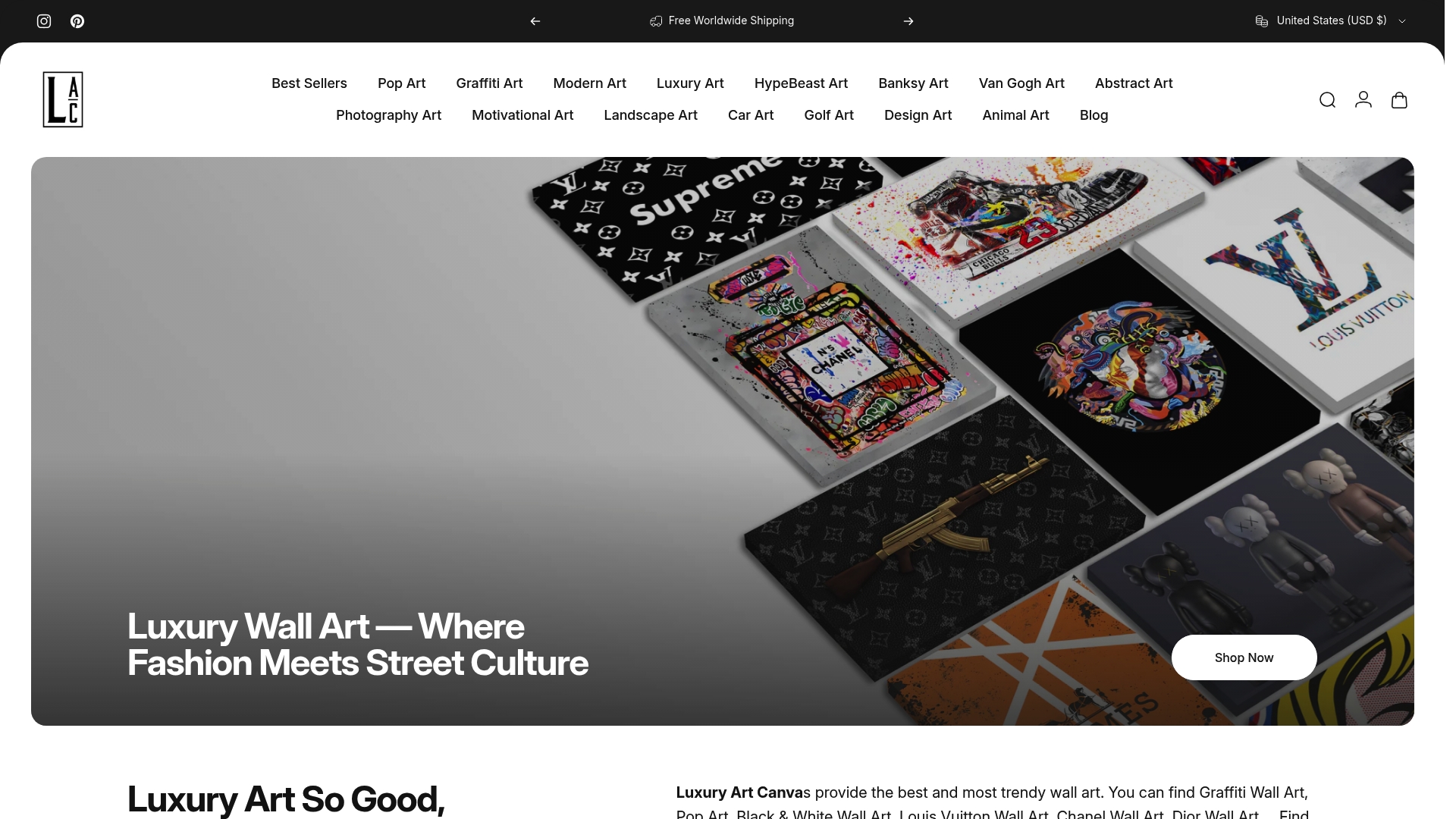
- Some sellers offer standard sizes with transparent, all-in pricing that includes shipping and mounting.
- The Pop Art Canvas Prints collection is a good starting point to see real size and price examples side by side.
- Bold statement pieces are also available through Graffiti Wall Art & Street Art Canvas for buyers who want an edgier look.
Browse the full catalog at Luxury Art Canvas to compare sizes and find a piece that fits your room and your budget.
FAQ
How much should a canvas painting cost?
A canvas painting’s price depends heavily on size, material, and whether it is a ready-made print, a custom order, or an original work. Small ready-made prints often fall in a lower budget range, while large or custom pieces climb higher once materials, framing, and shipping are included.
How much should I charge for a canvas painting?
Pricing for sellers should account for materials, printing or production labor, framing, and shipping, not just the raw canvas cost. Sellers should also track payments carefully, since income received through payment apps or marketplaces may be reported on Form 1099-K regardless of whether the activity is a hobby or a business.
How much to sell canvas art for?
There is no single number that works across all canvas art, since price depends on size, material quality, and whether the piece is a print or an original. A useful approach is to calculate your full delivered cost, including materials and shipping, before setting a retail price on top of it.
How much does a 24x36 canvas print cost?
A 24x36 canvas print typically falls in the mid-size price range, with the final number shifting based on canvas material, gallery wrap, and shipping. Adding upgrades like a floating frame or white-glove delivery raises the total above the base canvas price.
Versace Wall Art Ideas: 56–63in Focal Pieces and US made Canvases
Decision Makers: Office Graffiti in Days With Ready to Hang Canvases