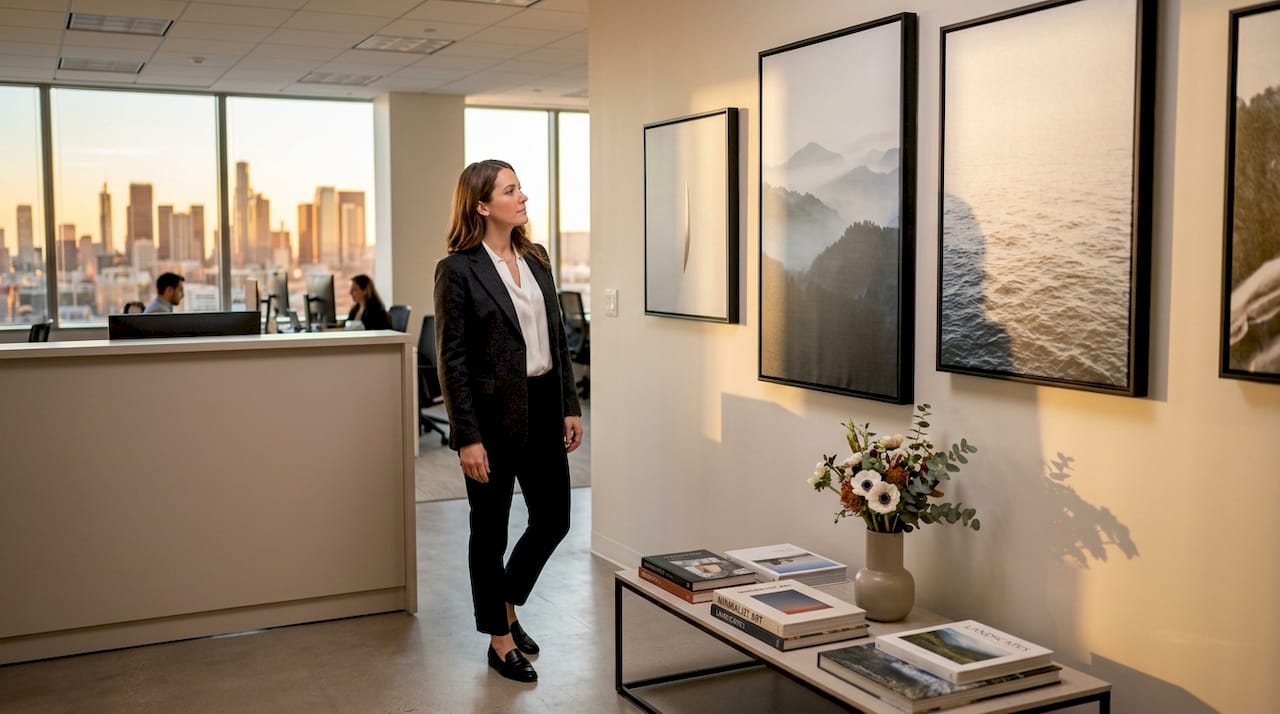
The best types of art for office environments are nature-inspired prints, abstract compositions, and geometric minimalist works because each one measurably shifts mood, focus, and creative output. Research confirms that enriched office environments with plants and imagery make employees 17% more productive than bare, minimalist spaces. That single number reframes art from decoration to infrastructure. This guide covers the primary art styles for workplaces, explains the science behind each, and gives you a practical framework for placing the right piece in the right zone.
1. Types of art for office environments: why the choice matters
Art in the workplace is not a neutral backdrop. Art type and placement directly affect cognitive functioning, emotional regulation, and creativity, with effects that vary depending on what you hang and where you hang it. A generic landscape print in a conference room does something different than a bold color-field abstract in a lobby. Getting specific about your choices is what separates offices that feel energizing from ones that feel forgettable.
The professional vocabulary for this practice is environmental art curation, and it sits at the intersection of interior design, organizational psychology, and brand strategy. You do not need a museum budget. You need a clear understanding of which art styles serve which behavioral goals, and the rest follows from there.
2. Nature-inspired art: the most research-backed choice
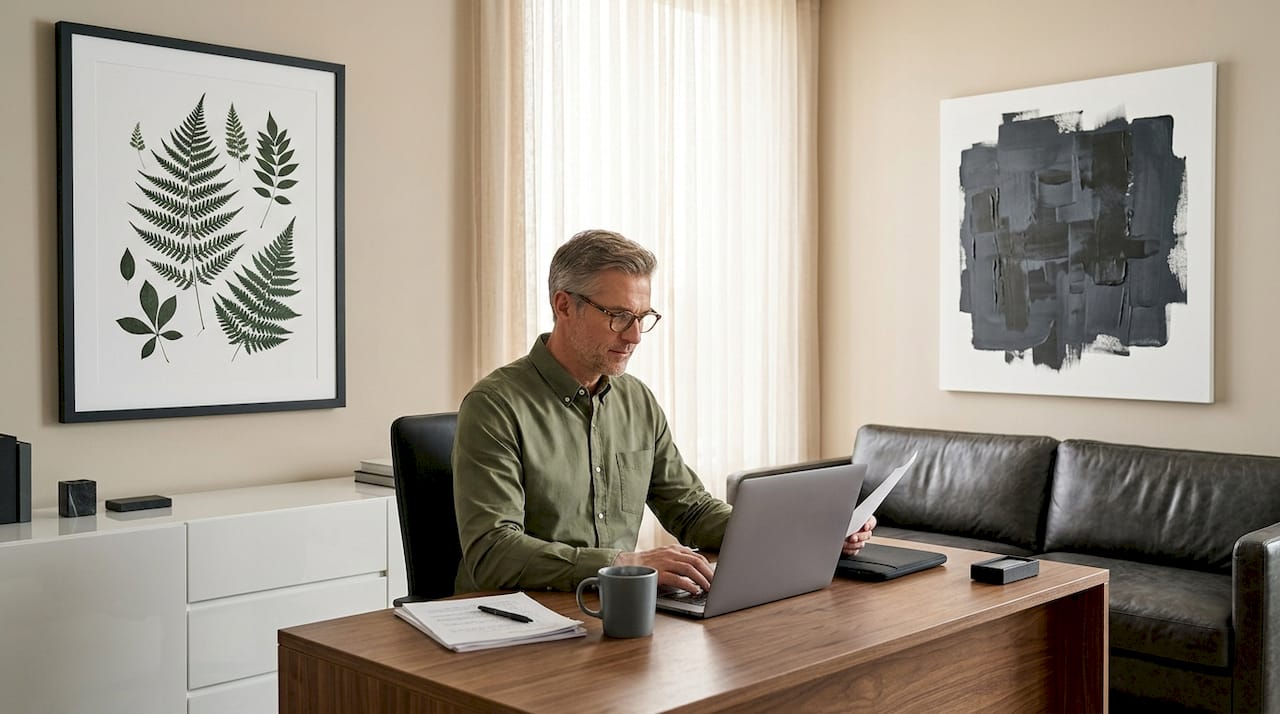
Nature-themed art is the single most evidence-supported category for office use. Nature-themed artwork reduces systolic blood pressure and triggers alpha brain wave activity comparable to actual window views or live plant walls. That means a well-chosen forest print or ocean photograph delivers measurable physiological restoration, not just aesthetic pleasure.
Popular themes include old-growth forests, coastal water scenes, botanical close-ups, and open meadows. These work as large-format canvas prints, photographic murals, or green-wall art installations. The key variable is composition. Curvilinear natural forms recover attention and reduce fatigue more effectively than linear or geometric plant arrangements, so choose art with flowing, organic shapes rather than rigid rows of foliage.
Placement matters as much as subject matter. Position nature-inspired pieces in focus zones and individual workstations where sustained attention is required. Break rooms and wellness corners benefit from larger, more immersive scenes. Avoid placing them behind monitors where they go unnoticed.
Pro Tip: Choose nature art with curved, organic compositions rather than symmetrical or grid-based layouts. The curvilinear form is what drives the attention-restoration effect, not simply the presence of green.
3. Abstract art: the creativity and mood amplifier
Abstract art covers a wide spectrum, and the office-appropriate end of that spectrum is more specific than most people realize. Color-field paintings, flowing organic shapes, soft geometric abstractions, and tonal gradient works all qualify. Loud, chaotic abstractions with high visual tension belong in creative studios, not in spaces where people need to concentrate.
The cognitive case for abstract art in offices is strong. Calm abstract compositions reduce mental fatigue by giving the eye a place to rest without demanding interpretation. Energizing abstracts in warm tones (amber, terracotta, deep gold) work well in collaboration areas where you want people to think expansively. Cool-toned abstracts in blue, sage, and gray suit focus rooms and private offices.
Industry and office culture should guide your selection. A law firm benefits from restrained, monochromatic abstractions that signal precision and calm. A marketing agency can push further into bold color contrasts and dynamic compositions. The art should reflect the cognitive mode the space is designed to support.
Pro Tip: Use abstract art to create distinct cognitive zones within your office. A warm, energizing abstract in the brainstorming room and a cool, minimal one in the deep-work area signals to employees what mode they are entering before they even sit down.
Here are the most effective abstract styles by office context:
- Color-field paintings: Large areas of flat, unified color. Best for lobbies and open-plan areas.
- Soft organic abstractions: Flowing, biomorphic shapes. Ideal for wellness rooms and break areas.
- Tonal gradient works: Gradual color transitions. Excellent for private offices and focus pods.
- Minimalist line abstractions: Single or few lines on a neutral ground. Strong in conference rooms.
4. Geometric minimalist art: clarity and professional authority
Geometric minimalist art is defined by clean lines, precise angles, repeated patterns, and limited color palettes, typically two to four colors at most. Its primary office benefit is visual order. In environments already dense with screens, furniture, and signage, geometric minimalism reduces cognitive load by giving the eye a structured, undemanding focal point.
This style performs best in conference rooms, executive offices, and reception areas where a sense of authority and precision matters. A single large-format geometric canvas in a meeting room communicates that the space is intentional and organized. That perception influences how people behave in it.
| Art style | Best office zone | Primary effect |
|---|---|---|
| Geometric minimalist | Conference rooms, executive offices | Focus, authority, reduced visual clutter |
| Nature-inspired | Focus zones, break rooms | Stress reduction, attention restoration |
| Abstract (cool tones) | Private offices, focus pods | Calm, cognitive recovery |
| Abstract (warm tones) | Collaboration areas, brainstorm rooms | Energy, expansive thinking |
| Graffiti and pop art | Reception, social hubs | Brand identity, community, energy |
Geometric art also pairs naturally with corporate branding. A piece that incorporates your brand’s primary colors in a clean geometric composition ties the space together without looking like a logo wall. Minimalist office wall art from Luxuryartcanvas offers several formats that work directly in this context.
Pro Tip: Commission or select geometric art that incorporates your brand’s two primary colors. It creates visual cohesion across the office without the heaviness of branded signage.
5. Graffiti, pop art, and experiential works: the bold alternatives
Graffiti and pop art are not fringe choices for offices anymore. Office landlords are investing tens of millions in art-forward renovations that include large-scale paintings, sculptures, and multimedia works precisely because tenants want spaces that feel alive and culturally relevant. Graffiti and pop art deliver that energy at a fraction of the cost of commissioned installations.
Graffiti-style canvas art works best in reception areas, social hubs, and collaborative zones where you want to signal creativity and forward-thinking culture. Large graffiti wall art creates an immediate visual statement that generic corporate prints cannot match. Pop art, with its bold outlines and saturated colors, adds vibrancy to open-plan areas and break rooms. Luxuryartcanvas specializes in both categories, with pieces that reference Chanel, Louis Vuitton, and street culture icons.
Sculptural and 3D installations occupy a different category. They require physical space planning, and large office artworks often need specialized installation including electrical wiring and building code review. For most businesses, large-format canvas art delivers comparable visual impact without the logistical overhead.
Experiential art, which combines imagery with sound, scent, or lighting, is the most powerful option for dedicated wellness or recharge spaces. Multisensory nature-based environments reduced stress by 59.1% in healthcare workers, a finding that translates directly to any high-pressure office setting. If you have a break room or quiet room, layering art with ambient sound is worth the investment.
6. How to choose and place art by office zone
The most effective approach to office art treats the floor plan as a behavioral map. Each zone has a distinct cognitive and emotional purpose, and the art in it should reinforce that purpose. Art selection by zone aligned to behavioral and cognitive aims outperforms generic decoration in every measurable outcome.
Here is a practical zone-by-zone framework:
- Reception and entry: This is your brand’s first physical statement. Use bold, large-format pieces. Graffiti-style art, oversized abstractions, or sculptural elements work here. The goal is immediate impression and cultural signaling.
- Focus zones and individual workstations: Nature-inspired prints with organic, curvilinear compositions are the top choice. Keep scale moderate. The art should be visible from the seated position without dominating the visual field.
- Conference and meeting rooms: Geometric minimalist works or restrained abstractions. Avoid anything visually complex that competes with presentations or whiteboard content.
- Collaboration and brainstorming areas: Bold color, dynamic abstraction, or pop art. These spaces benefit from visual stimulation that loosens thinking and encourages lateral connections.
- Break rooms and wellness corners: Immersive nature scenes, large-format botanical prints, or multisensory installations. This is where stress recovery happens, and the art should actively support it.
Budget and maintenance are real constraints. Canvas prints require no maintenance beyond occasional dusting and are far more durable than framed paper prints. For offices with high foot traffic or direct sunlight, UV-resistant canvas is worth specifying. Workplace plants and nature art together produce stronger results than either alone, so a hybrid approach in break rooms and focus zones delivers the best return.
Key takeaways
The most productive office art strategy combines nature-inspired, abstract, and geometric minimalist works placed deliberately by zone rather than distributed randomly across available wall space.
| Point | Details |
|---|---|
| Nature art is the top evidence-based choice | Organic, curvilinear compositions reduce blood pressure and restore attention better than any other art type. |
| Abstract art should match the cognitive zone | Cool tones support focus; warm tones support collaboration and creative thinking. |
| Geometric minimalism signals authority | Clean lines and limited palettes reduce visual clutter in conference rooms and executive spaces. |
| Graffiti and pop art build culture | Bold, graphic works in reception and social zones communicate brand identity and creative energy. |
| Zone-based placement multiplies impact | Matching art type to behavioral purpose turns decoration into a measurable productivity tool. |
Why most offices get art completely wrong
I have seen hundreds of offices where art was purchased in bulk from a catalog, distributed evenly across every available wall, and never reconsidered. The result is visual noise that employees stop seeing within two weeks. It does not calm anyone, inspire anyone, or say anything meaningful about the company.
The offices that get it right treat art the way they treat hiring: with intention, specificity, and a clear sense of what each piece is supposed to do. I have watched a single large-format nature mural in a break room change the energy of an entire floor. I have also watched a lobby full of expensive abstract prints fail completely because they were too small, too similar, and placed without any understanding of scale or sightlines.
The research on biophilic art benefits is now strong enough that ignoring it is a real business cost. The trend toward curated art as a brand statement is accelerating in 2026, and companies that treat their walls as strategic assets will attract and retain talent more effectively than those that treat them as afterthoughts.
My practical advice: start with one zone, get it right, and let the results make the case for the rest of the office. The break room is the highest-ROI starting point because the stress-reduction evidence is strongest there and the stakes of getting it wrong are lowest.
— James
Transform your office walls with Luxuryartcanvas
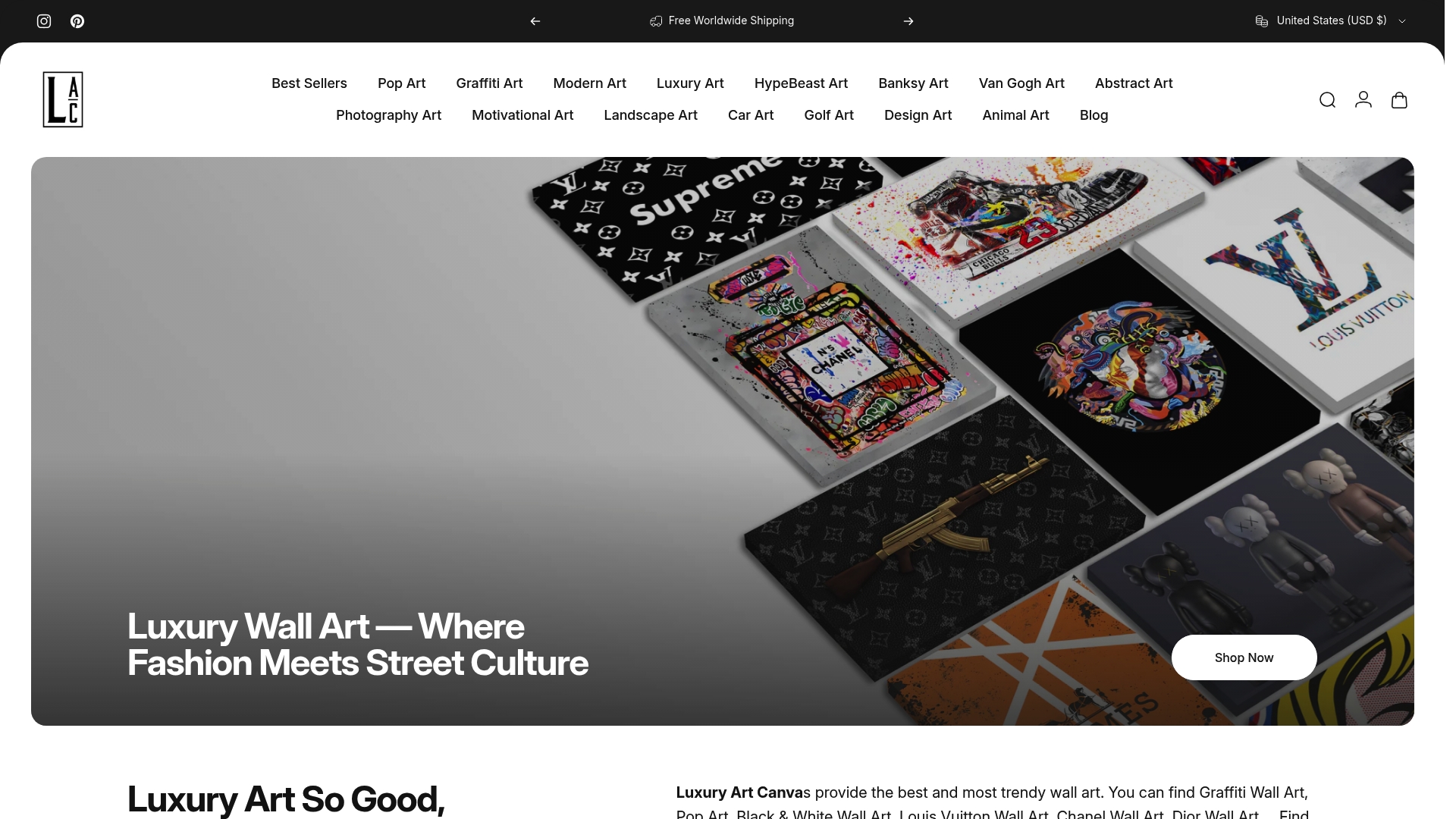
Luxuryartcanvas offers over 1,000 canvas designs that cover every art style discussed in this guide, from nature-inspired botanicals to bold graffiti wall art and vibrant pop wall art that energizes reception areas and collaboration zones. Every canvas is crafted in the USA with high-quality, UV-resistant materials built for commercial environments. Whether you are outfitting a single conference room or curating an entire floor, the catalog includes large-format options sized for focal walls and statement installations. More than 10,000 satisfied customers have used Luxuryartcanvas to transform their spaces. Browse the full collection at Luxuryartcanvas.com and find the pieces that match your office zones and culture.
FAQ
What types of art work best in office environments?
Nature-inspired prints, abstract compositions, and geometric minimalist works are the most effective types of art for office environments. Each style targets a different cognitive need: nature art restores attention, abstract art regulates mood, and geometric minimalism reduces visual clutter.
Does office art actually improve productivity?
Yes. Employees in offices enriched with plants and imagery are 17% more productive than those in bare minimalist spaces. The effect is strongest when art is placed intentionally by zone rather than distributed randomly.
What art style suits a conference room?
Geometric minimalist art is the best choice for conference rooms because its clean lines and limited color palette reduce visual distraction without competing with presentations or whiteboard content.
Can graffiti and pop art work in professional offices?
Graffiti and pop art are effective in reception areas, social hubs, and collaboration zones where energy and creative culture matter. They are less appropriate for focus-intensive spaces like private offices or meeting rooms.
How does nature art compare to live plants for office wellness?
Nature-themed artwork produces physiological restoration comparable to live plant walls, making it a practical alternative where maintenance or space constraints rule out live greenery. Combining both delivers the strongest results.
What Is Pop Art Decor Style: A Designer's Guide
Transforming Blank Walls with Canvas Art: 2026 Guide