
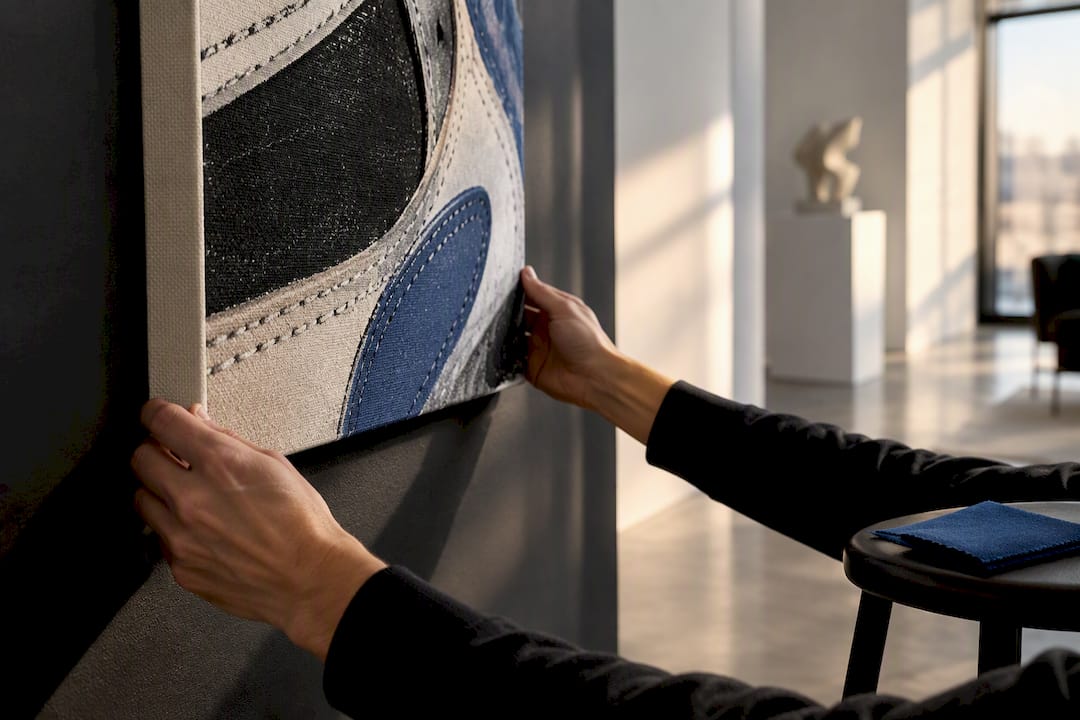
Four approaches cover almost every sneaker wall art project: a ready-to-hang canvas for a single statement piece, a curated gallery wall for rotating collections, a metal or accent piece for a small budget-friendly spot, and a collage kit for renters who need something removable. Pick based on wall size and commitment level, and lean toward canvas from a specialist like Luxury Art Canvas when you want a finished look without framing.
Table of Contents
- 1. Styles to use: pop art, graffiti, minimalist, and collage
- 2. Choosing materials and finishes for lasting display
- 3. Sizing, spacing, and hanging rules that make sneaker art look professional
- 4. Practical display methods and a simple DIY collage plan
- 5. Care and preservation tips for prints and canvases
- 6. Why professionally made sneaker canvases matter
- 7. How to authenticate sneaker art if buying from a collector or reseller
- 8. A personal take on styling sneaker art at home
- Where to buy sneaker wall art that matches these styles
- Sources
- FAQ
1. Styles to use: pop art, graffiti, minimalist, and collage
Sneaker art borrows its visual language from several art movements, and picking one gives your wall a clear identity instead of a scattered look. Pop art versions use bold flat colors and repeated silhouettes, echoing Warhol-style prints, and they work well over a bright accent wall in a living room or teen bedroom. Graffiti pieces bring spray-paint textures, drips, and tags into the frame, fitting a den, garage, or home studio where a rougher edge feels intentional rather than accidental.
Minimalist sneaker art strips things down to a single silhouette on a plain background, often in black and white, and it suits a bedroom or hallway where you want calm rather than noise. Photographic prints capture texture, stitching, and material detail up close, which reads as more editorial and fits a modern office or a closet turned display room. Patent and glossy finishes on certain prints catch light differently than matte canvas, adding a bit of shine to a piece hung near a window or under a spotlight.
Collage work takes a different approach entirely, mixing dozens of smaller images into one large composition instead of relying on a single hero shot.
- Pop art: bold color blocks and repeated shapes, best for a statement wall in a living space.
- Graffiti: textured, spray-paint aesthetic suited to garages, studios, or streetwear-themed rooms.
- Minimalist: single silhouette, muted palette, good for bedrooms and hallways.
- Photographic: close-up detail shots that fit modern offices and closets.
- Collage: many small prints arranged into one large gallery-style piece.
If you already know you want one cohesive graffiti or pop-art moment rather than dozens of small images, a sneaker wall art collection gives you that single-piece option in the same styles.
2. Choosing materials and finishes for lasting display
Material choice affects how a piece looks, how long it lasts, and how much it costs, so it’s worth matching the format to the room before you buy. Canvas is the most common choice for sneaker art because it has texture and weight that flat prints lack, and a well-made canvas can last for years with minimal care. Giclée prints on paper are typically cheaper and sharper in fine detail, but they need glass or acrylic glazing to survive daily light exposure. Metal prints have a glossy, almost photographic finish and shrug off humidity better than paper or canvas, making them a reasonable pick for a bathroom or kitchen nook. Wood-mounted prints add a rustic texture that suits a cabin-style den, though they’re heavier and need sturdier wall anchors.
- Canvas: textured, substantial feel, moderate cost, holds up well when framed or stretched properly.
- Giclée paper prints: sharp detail, lower cost, but fragile without protective glazing.
- Metal: glossy and humidity resistant, a strong pick for kitchens or bathrooms.
- Wood: rustic texture, heavier to hang, suited to cabin or lodge-style rooms.
- Acrylic face-mount: high shine and depth, but shows fingerprints and scratches easily.
Museum-quality canvas makes sense as the centerpiece of a room where the art is meant to be looked at closely and last for years. Cheaper prints work fine as filler pieces in a large gallery grouping where no single image carries the whole wall. Metal or acrylic accent pieces fit smaller, high-traffic spots like an entryway or bar area where durability matters more than texture. Whatever you choose, protective backing matters: acid-free mat board, sealed backing paper, and corner bumpers that create a small air gap all help prevent mold and surface imprinting over time, according to conservation guidance from the Balboa Park conservation group. For pieces near a window, UV-filtering acrylic glazing slows fading noticeably compared to plain glass.
Pro Tip: If you’re mixing formats on one wall, keep canvas and metal pieces separate from framed paper prints. The different depths and reflections read as intentional layering rather than a mismatched cluster.
3. Sizing, spacing, and hanging rules that make sneaker art look professional
Most amateur wall art mistakes come down to hanging pieces too high, which is why professional installers rely on a fixed centerline rather than guesswork. On a blank wall, the accepted gallery standard places the center of the artwork around average eye level, commonly about 57 inches from the floor, a rule used in museums and galleries to keep art at consistent average eye level, according to gallery hanging guidance from Art Academi.
The 57-inch rule works for empty walls, but furniture changes the math. When hanging art above a sofa, dresser, or console, leave a 6 to 8 inch gap between the top of the furniture and the bottom of the frame, per the same gallery hanging guidance. That anchored spacing often puts the piece a little above or below the strict 57-inch mark, and that’s fine, since the furniture becomes the visual reference point instead of the floor.
Scale matters as much as height. A single piece hung over a sofa or bed should span approximately two-thirds to three-quarters of the furniture’s width. A canvas that’s too narrow looks like an afterthought, while one that’s too wide crowds the wall.
A simple installation checklist:
- Measure the furniture width and multiply by 0.6 and 0.75 to find your target art width range.
- Mark the wall at 57 inches from the floor for open walls, or 6 to 8 inches above furniture for anchored placements.
- Measure from the top of the frame to the hanging wire or D-ring at its pulled-taut point.
- Subtract that distance from your mark to find the nail height.
- Use a stud finder or appropriate wall anchor before driving the nail.
- Hang, then step back and check the centerline against nearby furniture and doorways.
One widely cited figure worth remembering: the 57-inch centerline is the baseline for open-wall placement, and it’s the number to adjust from rather than ignore, even in rooms with unusually high or low ceilings.
4. Practical display methods and a simple DIY collage plan
Not every sneaker wall needs a frame and a nail. Floating shelves let you lean canvases or framed prints without committing to a fixed spot, and they double as a place to display actual sneaker boxes or figures alongside the art. Clear shadow boxes work well for anyone who wants to mix a physical sneaker with printed art behind it, turning the display into a small diorama rather than a flat image.
- Floating shelves: flexible, allow layering of art with objects, easy to rearrange.
- Shadow boxes: good for combining a real sneaker with printed backdrops.
- Removable hanging strips or hooks: ideal for renters who can’t drill into walls.
- Grid layouts: symmetrical rows of same-size prints for a clean, repeatable pattern.
Removable adhesive strips rated for the weight of your piece are worth the extra cost over standard nails in a rental, since they come off cleanly without damaging paint or drywall.
For a DIY collage, start with a kit or a set of coordinated prints rather than sourcing images individually, since a pre-matched set guarantees color and size consistency. Lay the pieces out on the floor first in your intended grid or scatter pattern, leaving even gaps between each print. Once you’re happy with the arrangement, transfer it to the wall piece by piece, using a level and a spacer card to keep gaps consistent as you go.
Pro Tip: Photograph your floor layout before you start hanging. It’s a lot easier to fix a spacing mistake on a phone screen than after six pieces are already on the wall.
5. Care and preservation tips for prints and canvases
Sneaker art holds its color and shape best when it’s kept away from extreme swings in temperature and humidity, not just kept out of direct sun. Conservators generally recommend a stable range of 65 to 70 degrees Fahrenheit and 40 to 55 percent relative humidity for stored artwork, with consistency mattering more than hitting an exact number, according to conservation storage guidance from the Austin Gallery.

If you’re storing pieces rather than displaying them, keep them vertical and padded rather than flat and stacked, since flat storage puts uneven pressure on canvas and frames over time. Avoid sealing art in plastic for long stretches, since trapped moisture encourages mold growth far more than a breathable cover does.
For displayed pieces, a few habits go a long way:
- Dust canvases gently with a dry microfiber cloth rather than spray cleaners.
- Keep art out of direct sunlight, or use UV-filtering glazing on light-exposed walls.
- Check corners and edges every few months for warping or lifting.
- Rotate seasonal or high-value pieces out of direct light when possible.
6. Why professionally made sneaker canvases matter
Not all sneaker canvases are built the same way, and the construction details behind a piece affect how it looks five years from now, not just on delivery day. Luxury Art Canvas produces its sneaker artwork in the USA using archival inks, which resist fading far better than standard consumer-grade printing. Pieces arrive ready-to-hang, skipping the framing step entirely, and the catalog runs to more than 1,000 designs across styles, backed by reviews from more than 10,000 customers.
Archival inks matter most in rooms with natural light, where cheaper prints visibly yellow or fade within a year or two. Ready-to-hang hardware also removes a common failure point: DIY framing jobs that shift or sag because of mismatched wire tension or weak backing board. A canvas built with US manufacturing standards and proper stretcher bars holds its shape better over time than a rolled print thrown into a bargain frame.
7. How to authenticate sneaker art if buying from a collector or reseller
Buying sneaker art secondhand carries the same risks as buying any collectible: misrepresented editions, altered signatures, or reproductions sold as originals. Ask for provenance first, meaning any documentation of where the piece came from, prior ownership, and the original purchase receipt if one exists. A legitimate seller should be able to tell you the printing method (giclée, screen print, or hand-painted) and the edition size if it’s a limited run.
Compare materials against what the artist or brand typically uses. Inconsistent canvas texture, printing that looks noticeably lower resolution than reference images, or a signature that looks stenciled rather than hand-applied are all warning signs. If the piece claims to be part of a numbered edition, ask whether a certificate of authenticity is included, and verify the numbering matches records from the original publisher when that information is available.
For higher-value pieces, a third-party appraiser familiar with street art and pop art markets can inspect materials and provenance directly. It costs more upfront, but it’s worth it before paying a premium price for a piece that can’t be verified. When in doubt, buying new from a retailer with clear manufacturing details removes the authentication question entirely, since there’s no chain of custody to verify.
8. A personal take on styling sneaker art at home
I’ve always thought sneaker art works best when it reflects the collector’s actual taste rather than whatever’s trending that month. A single well-chosen graffiti piece says more than a wall crowded with mismatched prints. When I want something polished without the guesswork of framing and hanging hardware, I look at ready-to-hang options like the ones from Luxury Art Canvas, since the finish work is already handled.
— James
Where to buy sneaker wall art that matches these styles
Once you’ve picked a direction, matching it to the right collection makes the buying part simple. If pop art appealed to you, the Pop Art Canvas Prints collection covers that bold, color-blocked look directly. For the textured, street-influenced look, the Graffiti Wall Art & Street Art Canvas collection matches that aesthetic, and the HypeBeast Art collection leans further into streetwear and sneaker culture specifically.
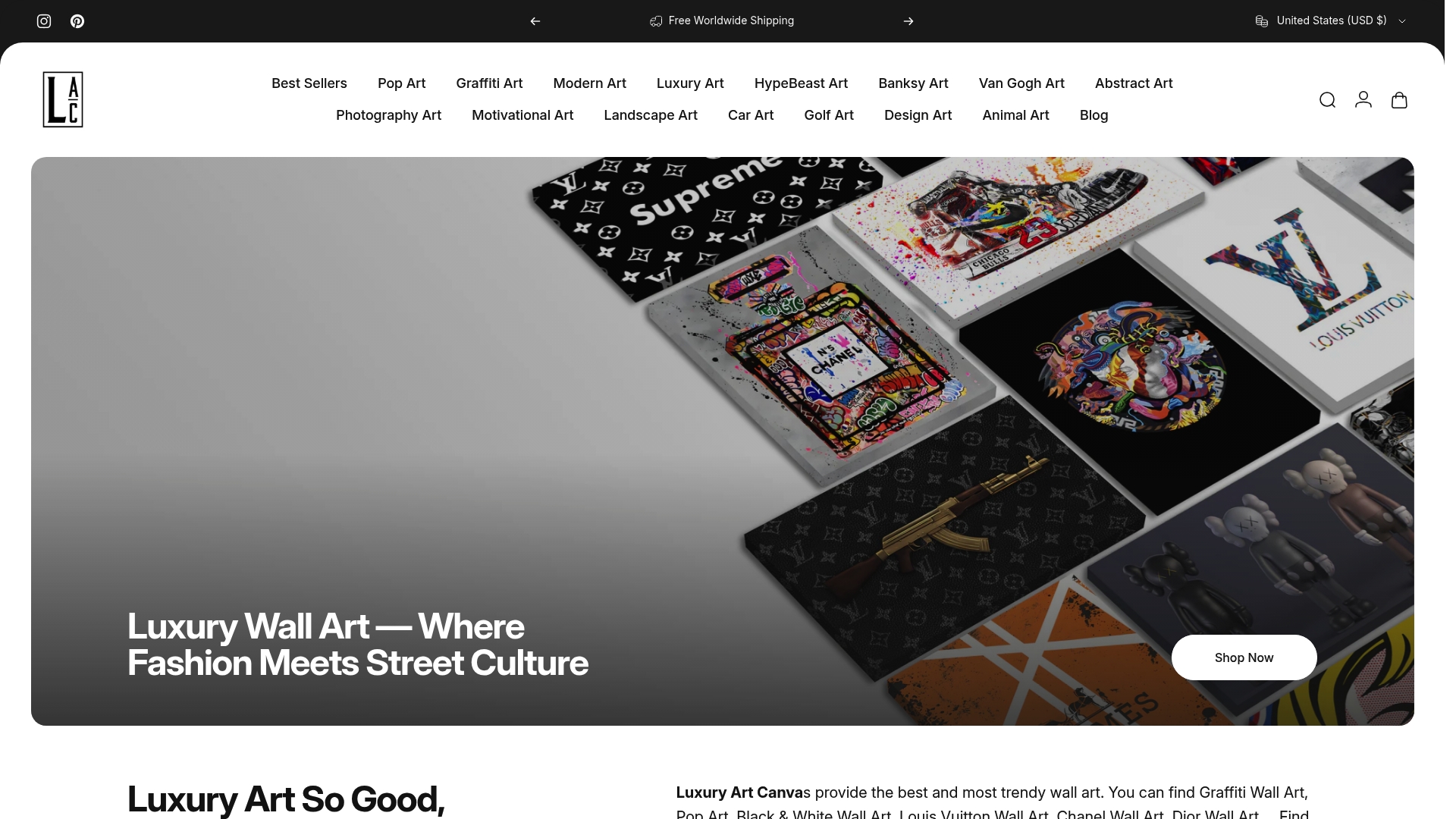
Before ordering, run through a short checklist: measure your wall and target furniture width, decide between canvas and a metal or framed option based on the room’s humidity and light, confirm whether you want ready-to-hang hardware or plan to frame it yourself, and check shipping timelines and the return policy before you commit. Browse the full sneaker wall art catalog to compare styles and sizes side by side before picking a final piece.
FAQ
What is the hottest sneaker out right now?
Sneaker popularity shifts quickly and depends heavily on current releases and collaborations, so there’s no single fixed answer that stays accurate for long. Rather than chasing the newest release for wall art, most collectors choose designs based on personal favorites or culturally significant models that hold visual appeal over time.
What is the 2/3 rule for wall art?
The general guidance is that a piece of art hung over furniture should span about two-thirds to three-quarters of that furniture’s width, keeping the piece from looking too small or overwhelming the space. This scale rule applies whether you’re hanging one canvas over a sofa or planning the total width of a gallery grouping.
What are the trends in wall art for 2026?
Collage-style groupings, mixed-material displays that combine canvas with metal or framed prints, and streetwear-influenced pop art and graffiti pieces are all common directions in current sneaker and lifestyle wall art. Rental-friendly and removable hanging solutions are also increasingly common as more buyers want flexibility without wall damage.
How do I decorate my sneakers?
If you mean displaying actual sneakers rather than sneaker art, floating shelves and clear shadow boxes are the most common approaches, letting the shoe itself become part of the wall composition. Pairing a displayed sneaker with a matching printed backdrop or nearby canvas ties the physical piece into the overall wall design.
Where can I buy ready-to-hang sneaker canvas art?
Ready-to-hang sneaker canvases are available through specialty retailers like Luxury Art Canvas, which produces designs in the USA using archival inks across more than 1,000 catalog options. Buying ready-to-hang skips the separate framing step, since the hardware needed for mounting is already included.
Texture Forward, Measured Loft Wall Art Ideas for Oversized Walls