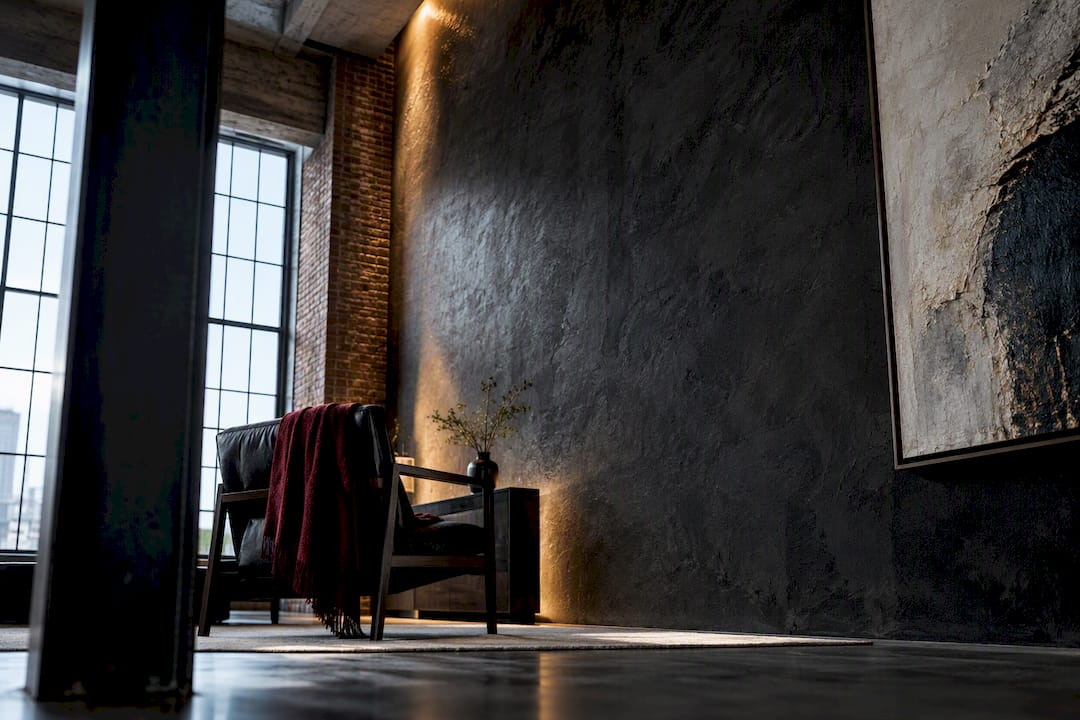
For most loft walls, one large, well-placed artwork, or a tightly planned diptych, reads better than a scatter of small pieces. Gallery walls can work too, but only with real planning: a clear anchor piece and consistent spacing. Ready-to-hang oversized canvases are often designed around common rules, including the 2/3 furniture-width rule and the 57-inch center rule that guide general sizing and placement of art.
Table of Contents
- 1. Top loft wall art ideas worth trying
- 2. Sizing and placement rules you can measure
- 3. Materials and finishes shaping 2026 loft trends
- 4. Should you choose one large piece or a gallery wall?
- 5. Lighting, hanging, and installation for loft walls
- 6. What ready-to-hang loft art from an established source looks like
- 7. Mixing art styles and periods for an eclectic loft look
- 8. Incorporating functional art elements like shelving and mirrors
- 9. Customizing or commissioning art for a unique loft space
- 10. Layering art with beams, ducts, and other structural features
- 11. Why scale and restraint work best on loft walls
- 12. How Luxury Art Canvas fits into your loft plan
- Sources
- FAQ
1. Top loft wall art ideas worth trying
Loft walls are unusual: tall, often uninterrupted, and full of texture from brick, concrete, or exposed duct work. That combination rewards scale and punishes clutter. Large-format canvases are the preferred choice for open-plan lofts because they anchor the eye in a way that several small frames cannot.
- Oversized single canvases: one large piece over a sofa or media wall gives an open-plan loft an immediate focal point.
- Diptychs and triptychs: splitting one large image across two or three panels adds scale without needing a single massive canvas.
- Large photographic or motorsport prints: black-and-white cityscapes or automotive shots bring personality to a plain industrial wall.
- Minimal, monochrome abstracts: quiet, low-contrast pieces balance busy brick or exposed steel.
- Textured canvases and 3D panels: raised surfaces catch loft lighting and add depth that flat prints cannot.
- Vertical tall pieces: narrow stairwells and slim walls benefit from height-forward art rather than wide horizontal pieces.
- Controlled gallery walls: pick one anchor piece first, then build outward with even spacing and no more than a couple of frame finishes.
- Window-front or brick-wall installs: possible with the right hardware, though these spots need extra planning around light and mounting.
A triptych layout centered at 57 inches is a practical way to get scale without committing to one giant panel, and it works well over a long sofa or console.
Pro Tip: If you are unsure whether to go big or go grouped, measure your longest sightline into the room. Walls you see from 15 feet or more almost always favor one large piece over a cluster.
2. Sizing and placement rules you can measure
Loft art fails most often for one reason: it is sized to the wall instead of the furniture. The fix is arithmetic, not taste.
- Apply the 2/3 to 3/4 rule. Artwork should span roughly 66% to 75% of the furniture width below it. An 84-inch sofa calls for art roughly 56 to 63 inches wide.
- Center at 57 to 60 inches. The 57 to 60 inch center rule is the museum standard for where the visual middle of a piece should sit off the floor. Lean toward 57 inches in rooms where people are usually seated, and closer to 60 inches in standing areas like entries or hallways.
- Space gallery pieces evenly. A 2 to 3 inch gap between frames, with 2.5 inches as a common default, keeps a grouping looking planned rather than accidental. Increase that gap to 3 or 4 inches when the individual pieces are oversized.
- Measure, template, then hang. Measure your furniture, calculate the art footprint using the rules above, tape a paper or craft-paper template to the wall to check scale, and hang the anchor piece before adding anything else around it.
A consistent 2 to 3 inch spacing (with 2.5 inches as a frequent sweet spot) is what most gallery-wall guidance settles on, and it is the single detail that most often separates a tidy grouping from a messy one.
For sofa-specific sizing, canvas placement above a sofa follows the same width and height math.
3. Materials and finishes shaping 2026 loft trends
Loft walls are rarely flat and neutral, so the art on them benefits from finishes that add their own texture rather than competing with the room’s.
- Textured canvases and dimensional panels: raised plaster, resin, or wood-panel effects give art a physical presence that reads well against concrete.
- Metallic-finish prints: subtle metallic accents catch loft lighting differently throughout the day, which flat prints cannot do.
- Biophilic and warm-minimal palettes: soft, nature-toned abstracts are one of the aesthetics gaining ground for 2026 interiors that want depth without visual noise.
- Matte over glossy near brick or concrete: matte finishes reduce glare against rough, light-catching surfaces, while glossy finishes can create distracting reflections.
Oversized pieces in any of these finishes need to hold up over time, so durability and light interaction matter as much as the initial look.
4. Should you choose one large piece or a gallery wall?
The right choice depends on the wall itself, not personal preference alone.
- Go with one large piece when the wall is uninterrupted, ceilings run high, and you want the room to feel calm rather than busy.
- Build a gallery wall when you need to define a specific zone, like a reading nook or entry, or want to tell a layered visual story. Start with one anchor piece and build outward from it.
- Keep it unified by limiting frames to no more than three finishes, using one consistent mat color, and keeping a clear outer boundary so the grouping reads as one composition.
Pro Tip: Before buying anything, stand at the far end of the room and picture the wall in one solid block of color. If that block already feels calm, one large piece is probably the better call.
5. Lighting, hanging, and installation for loft walls
Loft walls bring their own hardware challenges: brick, concrete, and exposed structural elements all behave differently than standard drywall.
- Match hardware to the wall. Brick and concrete need mechanical anchors rated for the piece’s weight, and anything above standard ladder reach is worth handing to a professional installer.
- Light it without glaring it. Picture lights, recessed spotlights, or directional track lighting all work, but keep art out of direct sun and avoid angles that bounce light straight back at viewers.
- Protect the piece long-term. Favor matte finishes in sun-exposed spots, limit direct UV exposure where possible, and check mounting hardware periodically on heavier canvases.
Pro Tip: A piece mounted 5 or more feet up on brick almost always needs a professional install, both for safety and to avoid cracking the wall.
6. What ready-to-hang loft art from an established source looks like
Luxury Art Canvas produces its canvases in the USA and offers more than 1,000 designs, including pieces built for oversized loft walls. Every order ships ready to hang, and the brand’s oversized wall art placement guide walks through the same hanging-height math covered above for readers who want a formula to follow.
7. Mixing art styles and periods for an eclectic loft look
Lofts, with their raw industrial bones, tend to absorb mixed styles better than more formal rooms do. A black-and-white photographic print can sit near a bold pop-art piece without clashing, as long as one element ties them together, usually color, scale, or framing.
A practical approach is to pick one unifying thread and let everything else vary. That thread might be a shared black frame across otherwise different pieces, a limited color palette that runs through each work, or a consistent large scale that keeps mismatched styles from feeling scattered. Street art next to a quiet landscape print can work in a loft precisely because the room’s architecture, brick, beams, open ceilings, already reads as eclectic, so the art has permission to follow suit.
Where this goes wrong is in scale mismatches: a small vintage print next to a massive graffiti-style canvas will make the smaller piece look like an afterthought. Keep pieces within a similar size range, or group the smaller works into their own tight cluster so they read as a deliberate collection rather than leftovers.
Layering periods works the same way. A modern abstract can sit comfortably beside a more classic photographic print if both share a frame style or a color cue. The goal in a loft is not matching, it is coherence.
8. Incorporating functional art elements like shelving and mirrors
Not every wall in a loft needs to be pure art. Floating shelves placed just below or around a canvas add a place for books, plants, or small objects without competing with the main piece, as long as the shelf sits outside the art’s visual boundary rather than crowding it.
Mirrors do double duty in lofts, which often have deep, dim interior sections far from windows. A large mirror placed opposite a window can bounce daylight across the room while also serving as the wall’s main visual anchor, effectively replacing a canvas in that spot. In smaller lofts, this also helps the space feel larger.

Combining art with function works best when one element leads. Treat the shelf or mirror as a supporting piece and the canvas as the anchor, or reverse that if the mirror is doing the heavy lifting for light. Trying to give both equal visual weight usually makes the wall feel cluttered rather than curated.
9. Customizing or commissioning art for a unique loft space
Standard sizes do not always fit loft walls, especially in older industrial conversions with irregular dimensions, angled ceilings, or walls interrupted by structural columns. Custom sizing solves that mismatch directly: a canvas made to the wall’s actual dimensions will always sit better than a standard size stretched to fill an odd space.
Commissioning or customizing art also lets you match a piece to the room’s exact palette rather than hoping a stock print lines up. This matters more in lofts than in typical rooms because so much of the wall’s existing color, brick red, raw concrete gray, blackened steel, is fixed and cannot be repainted easily.
For readers who want a specific look, whether a favorite photograph reworked at scale or a design tailored to a particular color story, working directly with a canvas provider that handles custom sizing removes most of the guesswork around fit.
10. Layering art with beams, ducts, and other structural features
Exposed beams, ductwork, and pipes are part of what makes a loft feel like a loft, and fighting them usually looks worse than working with them. Hanging art directly across a beam almost always looks like a mistake, since the beam interrupts the piece and pulls focus away from it.
Instead, treat structural features as boundaries. Size art to fit cleanly within the section of wall bordered by a beam or duct run, rather than letting it run underneath or behind the feature. This keeps the piece looking intentional rather than squeezed into a gap.

Ducts and pipes running along a ceiling can also frame art rather than compete with it: a piece hung just below a horizontal duct run, sized to the width of that section of wall, reads as a deliberate design choice. Where a wall has multiple structural interruptions, a series of smaller, evenly spaced pieces between them often works better than one attempt at a single large canvas that has to dodge every obstacle.
11. Why scale and restraint work best on loft walls
One confident, well-scaled piece almost always outperforms several small ones in a room built on big, honest architecture. When choosing art for a loft, I keep to three checks: scale against the wall, one clear anchor point, and how the piece reads under the room’s actual light.
— James
12. How Luxury Art Canvas fits into your loft plan
Luxury Art Canvas builds specifically toward the ideas above: oversized, ready-to-hang canvases across styles that suit different loft moods. Minimalist and abstract prints work for walls that need calm, while pop art and graffiti and street art collections bring personality to industrial brick and concrete.

- Want quiet and balance? Minimalist and abstract designs pair well with exposed brick or concrete.
- Want a statement wall? Pop art and graffiti-style canvases carry scale and color that stand up to loft ceilings.
- Want something specific to your space? Custom sizing options handle irregular loft walls that standard dimensions do not fit.
Browse the full range of curated collections to find a piece sized and styled for your wall.
FAQ
What are some good ideas for decorating a loft?
Start with one large focal artwork or a planned diptych or triptych over your main furniture piece, since large-format canvases suit open-plan lofts best. Layer in texture, rugs, and lighting around that anchor rather than adding many small, unrelated pieces.
What is the 2/3 rule for wall art?
The 2/3 rule recommends sizing artwork to about 66% to 75% of the width of the furniture beneath it. For an 84-inch sofa, that works out to roughly 56 to 63 inches of art width.
What wall decor is in for 2026?
Texture-forward pieces, including textured canvases, dimensional panels, and metallic-finish prints, are among the aesthetics gaining traction heading into 2026, alongside warm, biophilic abstract palettes. Large-format, single-focal-point art is also favored over dense gallery groupings in open-plan spaces.
What kind of wall art is trending right now?
Oversized single canvases and tightly planned multi-panel layouts are leading, particularly in open-plan and loft-style rooms. Textured and metallic finishes are also gaining ground as a way to add depth without adding clutter.
How high should I hang art on a loft wall?
Center your artwork between 57 and 60 inches from the floor, which is the museum standard for visual center height. Lean toward 57 inches in seated spaces like living rooms, and closer to 60 inches in standing areas.
Why Fewer, Larger Pieces Look Richer: Luxury Wall Art Ideas for 2026
Style First Sneaker Wall Art: Visual Directions, Hanging and Care