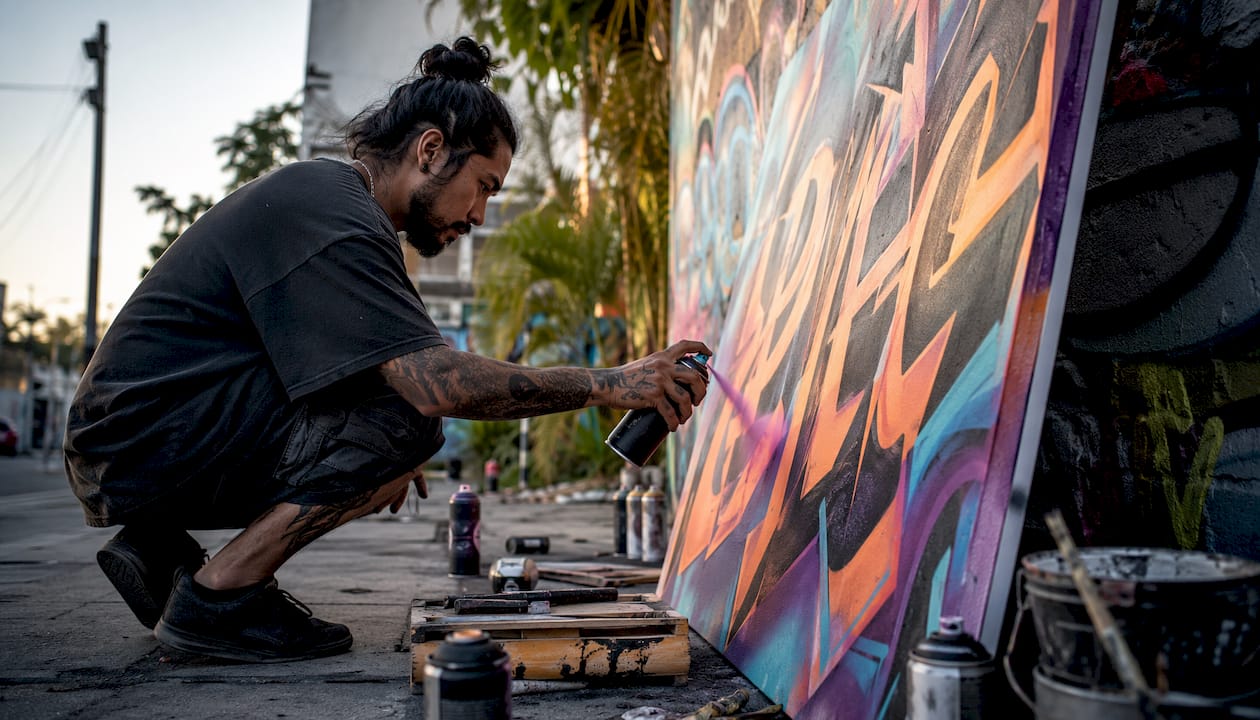
Street art canvas styles are defined as distinct visual techniques borrowed from urban art traditions and applied to canvas for decorative and expressive purposes. The most recognized categories include foundational graffiti lettering, high-impact throw-ups, complex wildstyle, stencil art, murals, and paste-ups. Each style carries its own visual weight, execution complexity, and decor personality. Whether you are decorating a living room, studio, or office, knowing the types of street art canvas styles helps you choose art that actually fits your space and taste.
1. What are the foundational graffiti styles on canvas?
Foundational graffiti styles are the building blocks of all street art lettering. They include tags, handstyles, throw-ups, and bubble letters. 80–90% of traditional graffiti centers on stylizing an artist’s name or pseudonym. That focus on identity is what gives graffiti its raw, personal energy on canvas.
Tags are the simplest form. A tag is a single-color signature, executed in one fluid motion. On canvas, tags read as confident, minimalist marks with strong calligraphic energy.
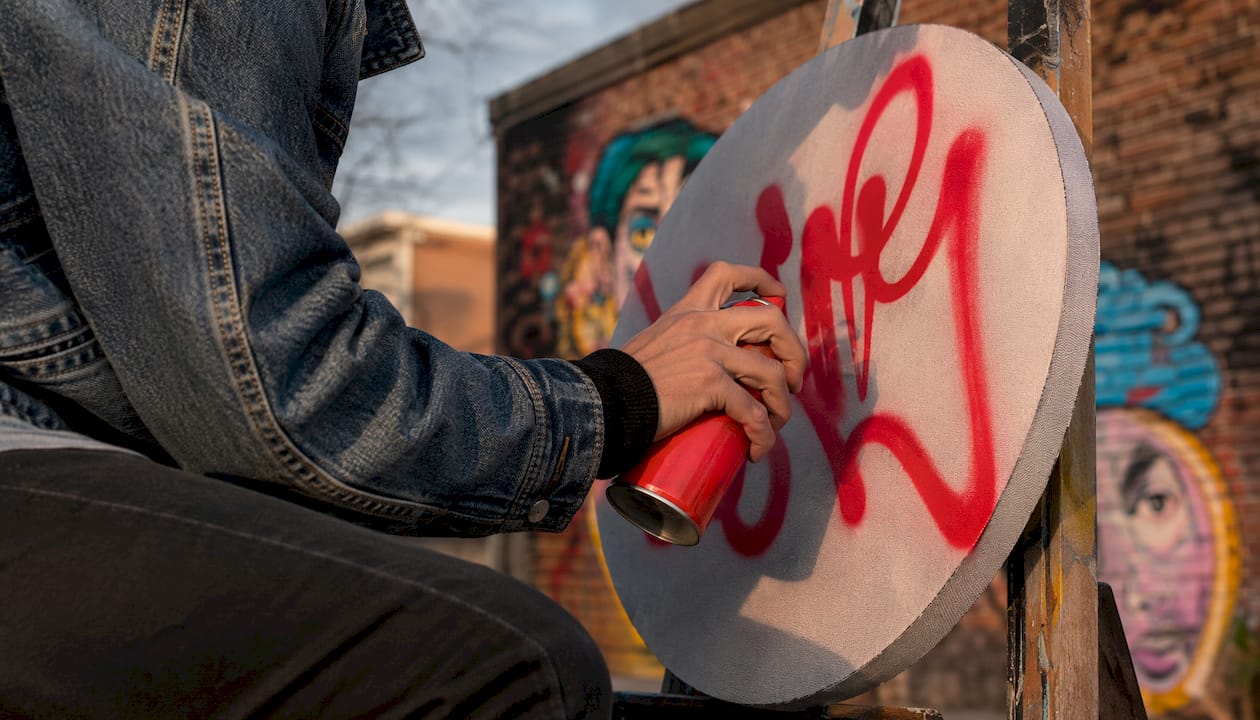
Handstyles are evolved tags with more stylized letterforms. They show an artist’s personal flair and are often the first style collectors notice in graffiti canvas ideas.
Throw-ups step up the complexity. They use two colors, typically an outline and a fill, and are designed for speed and visual punch. On canvas, throw-ups create bold, graphic statements that hold up across large wall spaces.
Bubble letters are rounded, inflated letterforms that feel approachable and playful. They work well in casual living spaces and creative studios.
- Tags: single-color, signature-style, minimalist
- Handstyles: fluid, personal, calligraphic
- Throw-ups: two-color, bold, fast-execution
- Bubble letters: rounded, friendly, graphic
Pro Tip: Throw-up and bubble letter canvases work best in open-plan spaces where viewers see them from across the room. The bold outlines read clearly at distance, making them ideal for living rooms and hallways.
2. How do wildstyle and 3D graffiti enhance canvas art?
Wildstyle is the most technically demanding of all graffiti lettering styles. It involves interlocking letters, arrows, and extensions that make the text almost illegible to non-graffiti readers. Wildstyle pieces can take 6–12 hours to complete, reflecting the depth of skill required. That time investment shows up directly in the visual complexity of the finished canvas.
3D graffiti adds a dimensional illusion to letterforms. Artists use shading, highlights, and perspective lines to make letters appear to lift off the surface. The effect is striking when viewed straight on, and it rewards close inspection.
Both styles carry serious credibility in urban art circles. Advanced graffiti styles like wildstyle require years of foundational hand control before an artist can execute them cleanly. That mastery is part of what makes wildstyle canvases feel like genuine art objects rather than decorative prints.
- Wildstyle: interlocking letters, arrows, high complexity
- 3D graffiti: dimensional shading, perspective illusion
- Both reward close viewing and suit intimate display spaces
Pro Tip: Choose wildstyle or 3D graffiti canvases for spaces where viewers will stand within 6–8 feet of the work. A home office, reading nook, or gallery wall is perfect. These styles lose their detail impact when hung in large, open rooms.
3. What are popular imagery-based street art canvas styles?
Street art evolved beyond graffiti’s lettering roots to incorporate illustration, graphic design, political cartooning, and pop culture. Imagery-based styles tell stories and communicate ideas without relying on letterforms. They are the most accessible types of urban art for general audiences and homeowners.
Stencil art is the most precise imagery-based style. Artists cut designs from card or plastic and spray paint over them, producing crisp edges and repeatable images. Banksy popularized stencil art for its ability to deliver detailed imagery quickly. On canvas, stencils create clean, graphic compositions that suit modern and minimalist interiors.
Murals are large-scale narrative works. They combine painting, illustration, and sometimes graffiti lettering into a single unified composition. Mural-style canvases work best as focal pieces in spacious rooms where the full composition can be appreciated.
Paste-ups (also called wheat-paste art) involve printing or painting on paper and adhering it to a surface. The layered, slightly worn texture of paste-up work translates beautifully to canvas, giving pieces a raw, collage-like quality.
Mixed media street art combines spray paint, stencils, hand-painted elements, and found imagery. The result is rich visual texture that no single technique achieves alone. Mixed media canvases are among the most collected varieties of canvas art because each piece is genuinely unique.
- Stencil: crisp, graphic, repeatable
- Mural: large-scale, narrative, painterly
- Paste-up: layered, collage-like, textured
- Mixed media: multi-technique, unique, tactile
4. What canvas art techniques optimize street art styles for longevity?
Professional canvas art techniques determine whether a street art piece stays vibrant for years or fades within months. Surface preparation is the first step. Applying gesso or an acrylic base layer prevents paint absorption and eliminates the chalky texture that plagues unprepared canvases. Skipping this step is the most common beginner mistake.
- Sketch and map. Start with a pencil sketch to plan proportions and composition before any paint touches the canvas.
- Block in major shapes. Use thin, diluted acrylic paint to establish the main color areas. Keep layers light at this stage.
- Build with thin glazes. Thin, layered acrylic glazes create depth and durability that thick opaque layers cannot achieve. Thick paint cracks over time.
- Add texture details. Techniques like stippling and dry brushing in the final stages create surface interest without muddiness.
- Apply a clear varnish. A final clear acrylic varnish protects against UV fading and dust, extending color life by 5–10 years compared to unsealed paintings.
Successful canvas works are rarely completed in a single sitting. Systematic layering is what separates lasting pieces from rushed ones.
Pro Tip: Never apply a second glaze layer until the first is fully dry. Wet-on-wet layering with acrylics muddies colors and destroys the translucency that gives street art canvases their depth.
5. How to select the right street art canvas style for your space
Choosing the right style starts with visual weight. High-impact styles like throw-ups suit large, standalone statements, while intricate wildstyle and stencil designs work best in smaller, high-detail viewing spaces. Scale and complexity must match the room’s proportions and the distance from which the art will typically be viewed.
Consider the room’s existing mood. Bold throw-ups and bubble letters add energy to neutral or industrial spaces. Stencil art and mural-style canvases work in rooms that already have strong design identities because they contribute narrative without competing with furniture.
Personal taste matters as much as spatial logic. Graffiti lettering styles carry a subcultural edge that feels intentional and confident. Imagery-based styles like stencils and paste-ups read as more universally accessible. Mixed media pieces sit between the two, offering both texture and storytelling.
- Small rooms or intimate spaces: wildstyle, 3D graffiti, stencil art
- Large open rooms: throw-ups, mural-style, mixed media
- Minimalist interiors: stencil art, clean bubble letters
- Industrial or urban-themed spaces: tags, handstyles, throw-ups
Pro Tip: Mixing two complementary styles on the same gallery wall creates dynamic tension. Pair a bold throw-up canvas with a detailed stencil piece at a different scale. The contrast makes both pieces stronger.
Luxuryartcanvas offers graffiti canvas wall art across all these style categories, making it straightforward to find pieces that match both your taste and your room’s scale.
Key takeaways
The most effective approach to street art canvas decor is matching visual weight, style complexity, and viewing distance to your specific space before choosing a piece.
| Point | Details |
|---|---|
| Style categories are distinct | Graffiti lettering and imagery-based styles differ in execution, complexity, and decor impact. |
| Surface prep is non-negotiable | Gesso or acrylic base layers prevent chalky texture and poor paint adhesion on canvas. |
| Layering determines longevity | Thin acrylic glazes with a final varnish extend color life by 5–10 years over unsealed work. |
| Visual weight guides placement | Bold throw-ups suit large rooms; intricate wildstyle and stencils work best in close-viewing spaces. |
| Mixing styles adds depth | Pairing a bold lettering piece with a detailed stencil canvas creates stronger visual impact than one style alone. |
Street art on your walls: what I actually think
Street art canvases get misread constantly. People treat them as decoration first and art second, which is exactly backward. The best graffiti and street art pieces carry real cultural weight. A wildstyle canvas is not just a colorful print. It represents a tradition of letter mastery that took decades to develop in cities like New York and Los Angeles.
What surprises most homeowners is how much a single well-chosen canvas changes a room’s energy. A throw-up piece in a white-walled living room does not just add color. It shifts the entire register of the space from neutral to intentional. That shift is harder to achieve with conventional wall art.
My honest advice for newcomers: start with stencil art or a clean throw-up canvas. These styles are visually strong without requiring the viewer to understand graffiti culture to appreciate them. Once you live with one piece, you will naturally want to go deeper into the more complex styles.
The trend I find most interesting in 2026 is the crossover between street art and high fashion imagery. Pieces that merge graffiti lettering with Chanel or Louis Vuitton iconography hit both the urban art and luxury design audiences at once. Luxuryartcanvas has built its entire catalog around exactly this intersection, and the results are genuinely striking.
— James
Premium street art canvas collections worth exploring
Luxuryartcanvas brings together over 1,000 street art and graffiti-inspired canvas designs, all crafted in the USA with gallery-quality materials. The collection spans every style covered in this article, from raw handstyle lettering to detailed stencil compositions and fashion-forward mixed media pieces.
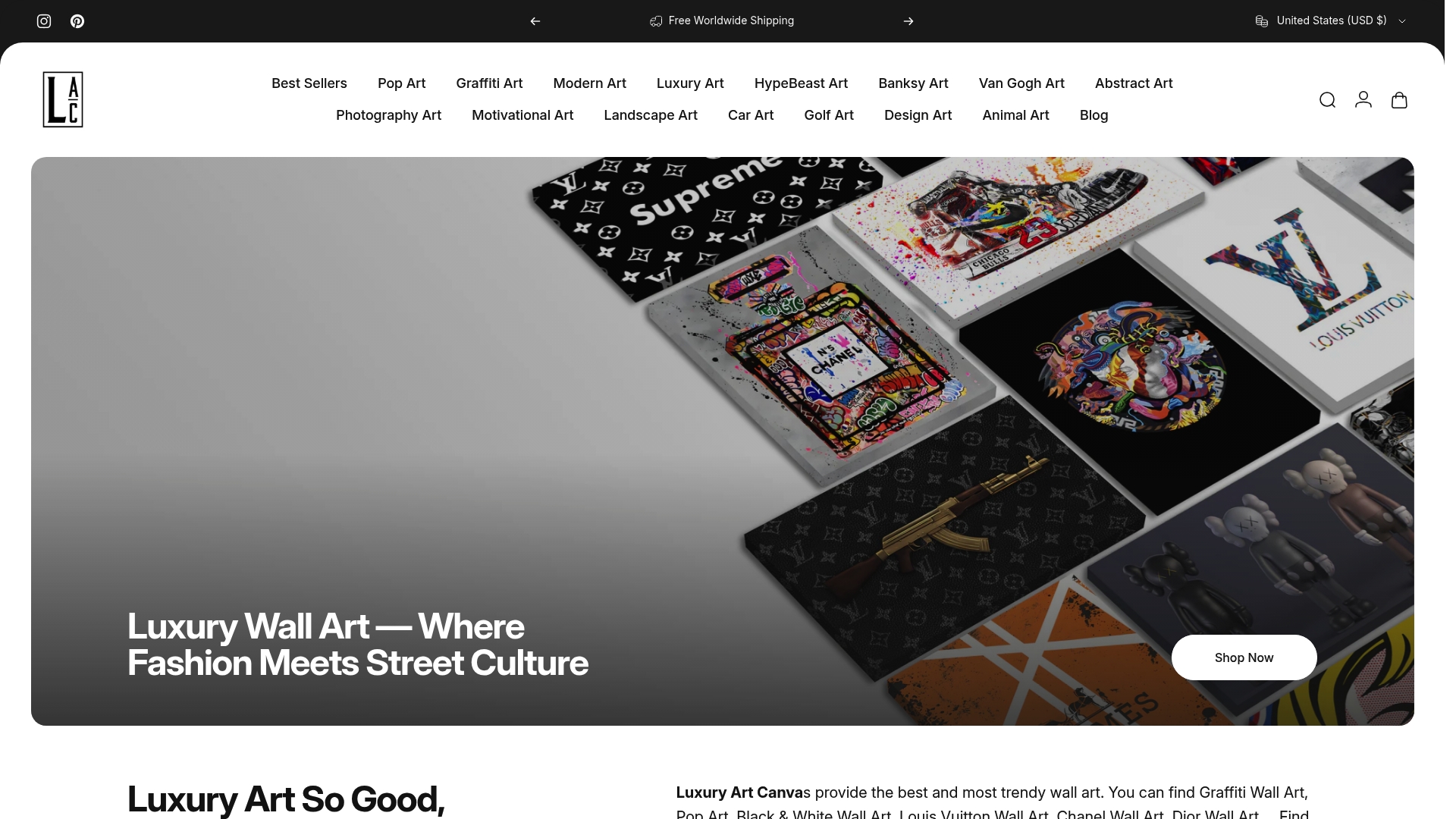
Each piece ships ready to hang, with no framing or finishing required. The graffiti wall art collection covers bold throw-ups, wildstyle lettering, and stencil-inspired prints at sizes suited for both small accent walls and large statement installations. For homeowners who want the full urban art experience without the guesswork of sourcing individual artists, Luxuryartcanvas delivers curated quality backed by more than 10,000 satisfied customers. Browse the wall art graffiti collection to find the style that fits your space.
FAQ
What are the main types of street art canvas styles?
The main types are foundational graffiti lettering (tags, handstyles), high-impact lettering (throw-ups, bubble letters), complex structural styles (wildstyle, 3D), and imagery-based styles (stencils, murals, paste-ups, mixed media). Each differs in execution complexity and visual impact.
What is the difference between graffiti and street art on canvas?
Graffiti focuses on letter-based identity signatures, with 80–90% of traditional graffiti centered on stylizing an artist’s name. Street art is a broader medium that incorporates illustration, graphic design, and pop culture imagery for public storytelling and aesthetic expression.
How do I prepare a canvas for street art styles?
Apply a gesso or acrylic base layer before painting to prevent absorption and chalkiness. This step is critical for translating outdoor street art aesthetics to indoor canvas surfaces with lasting results.
Which street art canvas style works best in a small room?
Wildstyle, 3D graffiti, and stencil art work best in small rooms because their detail rewards close viewing. Bold throw-ups and mural-style pieces are better suited to large open spaces where their scale reads correctly.
How long does a properly finished street art canvas last?
A canvas finished with thin acrylic glazes and a final clear varnish can maintain its color vibrancy for 5–10 years longer than an unsealed painting. UV protection from the varnish is the single biggest factor in long-term color preservation.
What Does Canvas Durability Mean in Art?
Wall Art in Entryway Design: Set the Right Tone