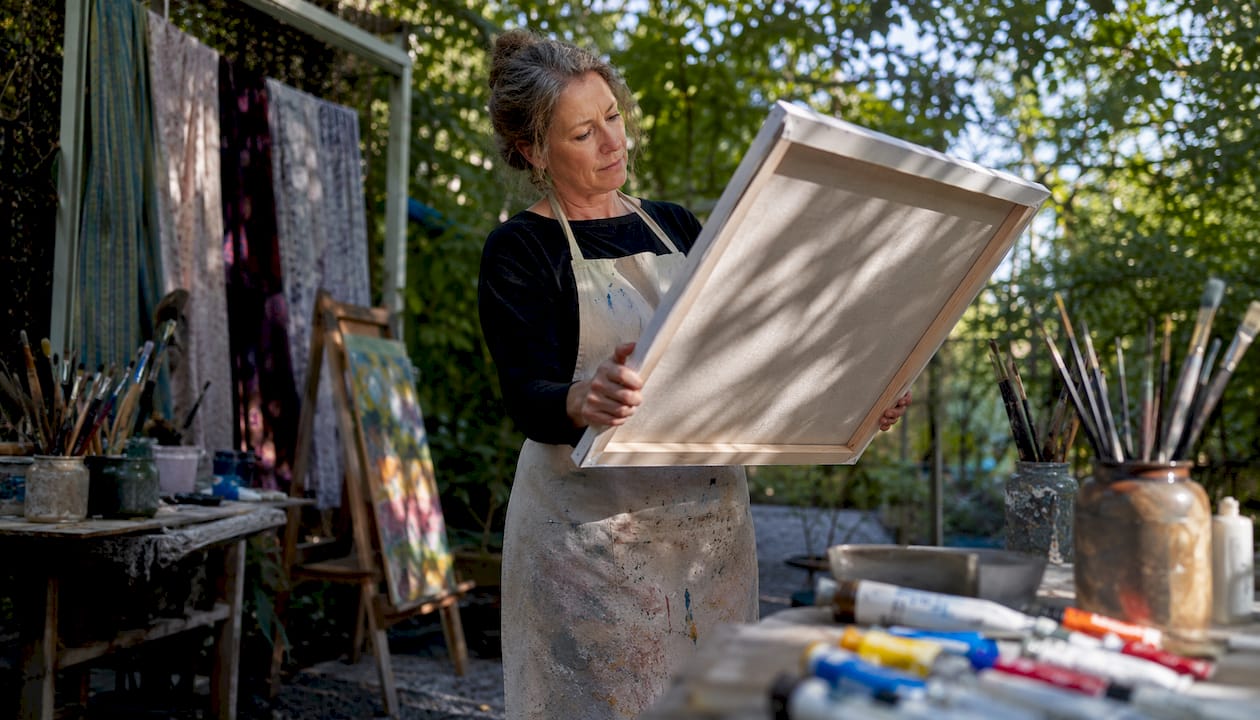
Canvas durability in art is defined as the canvas material’s ability to hold tension, resist environmental stress, and support paint layers without structural breakdown over time. This property, also called archival integrity by conservators, determines whether a painting survives decades or crumbles within years. Fiber type, weave density, and environmental resistance are the three primary factors that control how long a canvas holds up. Understanding what does canvas durability mean in art gives artists, students, and collectors the knowledge to make purchases that protect their work and investment for generations.
How does fiber type and weave density affect canvas durability?
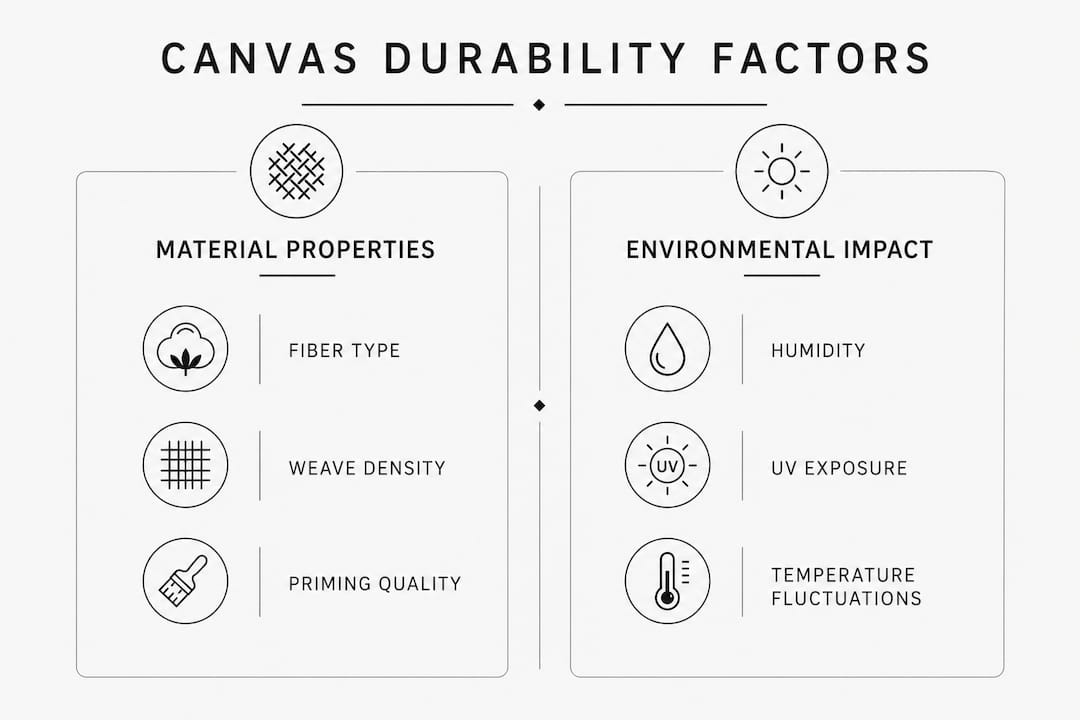
The fiber a canvas is made from sets the ceiling on its long-term strength. Cotton and linen are the two dominant natural fibers, and they behave very differently under stress and humidity.
Cotton vs. linen: which holds up better?
Cotton canvas expands evenly under humidity cycles, which keeps the surface geometrically stable with minimal center sag. Linen, by contrast, experiences a phenomenon called relaxation creep, where fibers gradually loosen under sustained tension, leading to sagging and uneven paint surfaces over time. That difference matters enormously for collectors who plan to store or display work for decades.
High-grade Italian cotton canvases maintain up to 95% of initial tension even after accelerated aging equivalent to 50 years when properly primed and stretched. That figure means a well-prepared cotton canvas loses almost nothing structurally across a human lifetime. Linen fibers, meanwhile, show a 30–40% tensile strength reduction after comparable aging, compared to only 10–15% for cotton. The gap is significant enough to change how you plan a long-term collection.
Synthetic canvas blends exist but rarely match the archival performance of quality cotton for fine art purposes. They resist moisture well but can develop surface brittleness that causes paint to crack under temperature swings.
Why weave density and thread count matter
Weave density directly controls canvas strength in art. A tighter weave means more threads per inch, which distributes mechanical stress across more contact points and reduces the chance of tearing or distortion. Thread count also affects how primer adheres to the surface. A loose weave absorbs primer unevenly, creating weak spots where paint can crack or peel years later.
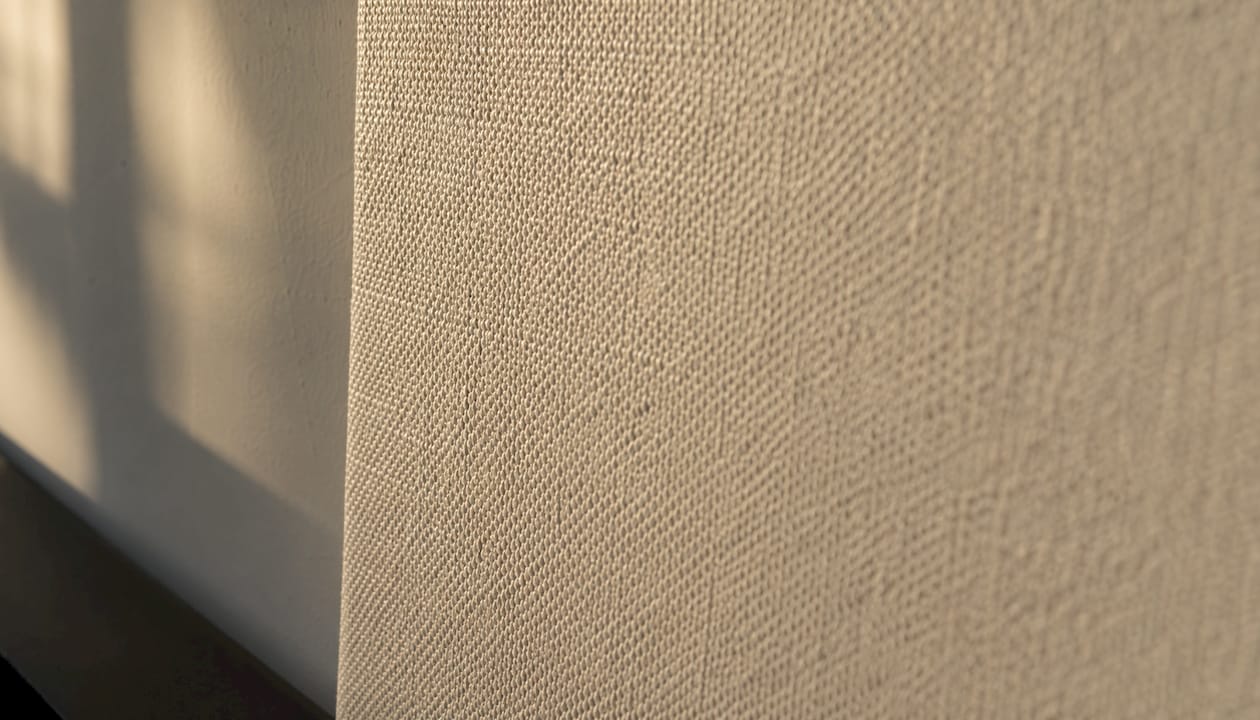
ASTM International publishes testing standards for textile tensile strength, and professional canvas manufacturers use these benchmarks to certify their products. Canvases that meet ASTM standards for tensile load and elongation provide a measurable baseline for durability. Collectors buying archival-grade work should ask whether the canvas substrate was tested against recognized standards.
Professional grade canvases use better materials, tighter weaving, and thicker priming, lasting decades, while student-grade canvases may start deteriorating within a few years. That gap in longevity is not subtle. A painting on cheap canvas can begin showing surface cracks and sag within a decade, regardless of how skilled the artist was.
Pro Tip: Run your fingers across the canvas surface before buying. A professional-grade canvas feels uniformly taut with no soft spots. Any give or unevenness in the weave signals inconsistent thread density that will worsen over time.
Understanding the role of premium canvas materials in fine art helps artists choose substrates that match the ambition of their work.
How do stretched canvases and canvas panels compare for longevity?
The way a canvas is mounted changes its durability profile completely. Stretched canvases and canvas panels each have distinct strengths, and the right choice depends on how the artwork will be used and stored.
Stretched canvas: long life with conditions
Properly cared-for stretched canvases can last over 100 years, making them the preferred substrate for serious fine art. That longevity depends on consistent environmental conditions and periodic maintenance. Stretched canvases are vulnerable to tension loss when humidity fluctuates, and the wooden stretcher bars can warp if exposed to moisture. A warped bar pulls the canvas unevenly, creating stress points where paint cracks first.
The good news is that stretched canvases are repairable. Keys inserted into the stretcher bar corners can re-tension a sagging canvas without removing the painting. This repairability is one reason museums and serious collectors favor stretched canvases for major works.
Canvas panels: stability without the maintenance
Canvas panels bond fabric to a rigid board, eliminating the tension variables that affect stretched canvases. Canvas panels resist warping and damage better under temperature and humidity changes, providing a stable painting surface across multiple decades. They will not sag, and they require no re-tensioning.
The tradeoff is texture and feel. Stretched canvas has a natural spring that many painters prefer for oil and acrylic work. Panels feel harder underbrush and suit tighter, more detailed techniques. For collectors, panels are easier to store flat and are less likely to suffer accidental punctures.
Key differences at a glance:
- Stretched canvas lasts 100+ years with proper care and periodic re-tensioning
- Canvas panels provide stable, crack-resistant surfaces for several decades without maintenance
- Stretched canvases are repairable; panels generally are not once the board warps or delaminates
- Panels handle transport and storage better due to their rigid structure
- Stretched canvases offer a preferred working surface for most traditional painting techniques
Canvas prints outlast wall posters by a wide margin precisely because the substrate holds color and structure where paper degrades.
What environmental factors reduce canvas life, and how do you protect artwork?
Environmental conditions are the leading cause of premature canvas failure. Moisture, UV radiation, and temperature swings each attack canvas fibers through different mechanisms, and all three can be controlled with the right practices.
Moisture and temperature
Humidity causes canvas fibers to expand and contract repeatedly. Over years, this cycling weakens the fiber structure and loosens the weave. Mold and mildew grow on canvas stored in damp conditions, producing acids that break down both the fabric and the paint layer above it. Temperature fluctuations compound the problem by causing the wooden stretcher bars to expand and contract at a different rate than the canvas, creating uneven tension that leads to cracking.
Stable storage environments reduce sagging, brittleness, and cracking over decades. The standard recommendation from conservators is to store paintings between 65°F and 75°F with relative humidity held between 45% and 55%. Deviating consistently from those ranges accelerates fiber degradation measurably.
UV radiation and chemical degradation
UV light breaks down the chemical bonds in both canvas fibers and paint pigments. Untreated canvases exposed to direct sunlight yellow and become brittle within years. UV-filtering glass or acrylic glazing blocks the most damaging wavelengths when framing works on paper, but canvases displayed without glazing need UV-resistant varnish applied over the finished paint surface.
Moisture and UV exposure degrade canvas fibers over time, reducing tensile strength and causing paint cracking if left untreated. That degradation is cumulative and largely irreversible once it begins.
Protective practices that extend art canvas longevity:
- Apply an archival varnish after the paint is fully cured to seal the surface against moisture and UV
- Store unframed canvases vertically, never stacked flat, to prevent pressure damage
- Keep works away from exterior walls, which conduct temperature and humidity from outside
- Use acid-free backing boards on framed works to prevent off-gassing from wood or cardboard
- Check stored canvases every six months for early signs of mold, sagging, or paint lifting
Pro Tip: Apply a UV-resistant isolation coat between the final paint layer and the varnish. This lets you remove and replace the varnish in the future without touching the paint, which is exactly what museum conservators do.
How do artists and collectors test and evaluate canvas durability?
Evaluating canvas quality before purchase prevents costly mistakes. The best canvases announce their quality through physical inspection and certification, and the process takes less than two minutes.
Visual inspection, feel for tension, and checking archival certifications are the key ways to evaluate canvas durability before purchase. Here is a step-by-step approach:
-
Examine the weave under light. Hold the canvas at an angle to a light source. A quality canvas shows a uniform, tight grid with no gaps, thin spots, or loose threads. Irregular weave patterns indicate inconsistent manufacturing that will show up as uneven paint absorption.
-
Press the center lightly with one finger. A properly tensioned canvas springs back immediately with no residual give. Sagging or slow recovery signals either low-grade fiber or poor stretching, both of which worsen under the weight of paint layers.
-
Check the primer layer. Run your hand across the surface. It should feel smooth and consistent, with no rough patches or areas where the weave shows through clearly. Thin or uneven priming means the canvas will absorb paint unpredictably and may crack as the paint dries.
-
Look for archival labeling. Reputable manufacturers label canvases as “archival grade” or “acid-free” when they meet recognized standards. These labels indicate the canvas has been tested for long-term stability. No label does not always mean poor quality, but it removes a key assurance.
-
Assess the stretcher bars on stretched canvases. Kiln-dried hardwood bars resist warping better than soft or green wood. Check the corners for tight joins with no gaps. Loose corners allow the canvas to shift and lose tension unevenly.
A mediocre painting on professional canvas outlasts a high-quality painting on cheap canvas. That insight reframes how collectors should think about condition reports and provenance. The substrate is as important as the artist’s skill when evaluating long-term value.
Key Takeaways
Canvas durability in art depends on fiber quality, weave density, mounting method, and environmental control, and all four factors must be managed together to achieve genuine art canvas longevity.
| Point | Details |
|---|---|
| Fiber type determines baseline strength | Cotton retains up to 95% of initial tension after 50 years; linen loses 30–40% over the same period. |
| Weave density affects primer adhesion | Tighter weaves distribute stress evenly and hold primer consistently, preventing early paint cracking. |
| Mounting method changes the durability profile | Stretched canvases last 100+ years with care; panels offer decades of stable, maintenance-free support. |
| Environment is the leading cause of failure | Controlling humidity, temperature, and UV exposure prevents the fiber degradation that no restoration can fully reverse. |
| Professional grade is a long-term investment | Professional canvases require fewer restoration interventions and hold their structure far longer than student-grade alternatives. |
Why I think canvas durability deserves more respect than it gets
Most artists spend hours agonizing over paint brands and brush quality, then grab the cheapest canvas on the shelf. I have watched that decision play out badly more times than I can count. A painting that looked strong at the studio show starts showing hairline cracks within five years because the canvas was never primed properly and the stretcher bars were soft pine.
The insight that changed how I think about this: a mediocre painting on archival canvas will outlive a technically brilliant painting on cheap fabric. That is not an argument for painting badly. It is an argument for treating the substrate as part of the artwork, not just the thing you paint on. Collectors who understand canvas quality in fine art consistently make better long-term purchases.
The cost difference between student-grade and professional-grade canvas is real but smaller than most artists assume. The difference in longevity is not small at all. Cotton canvas that requires no re-stretching and holds its tension across decades costs more upfront and far less over a lifetime of ownership. For anyone building a serious body of work or a collection meant to hold value, that math is straightforward.
— James
Archival-quality canvases from Luxuryartcanvas
Artists and collectors who care about canvas wear and tear over time need a source that takes substrate quality as seriously as visual impact.
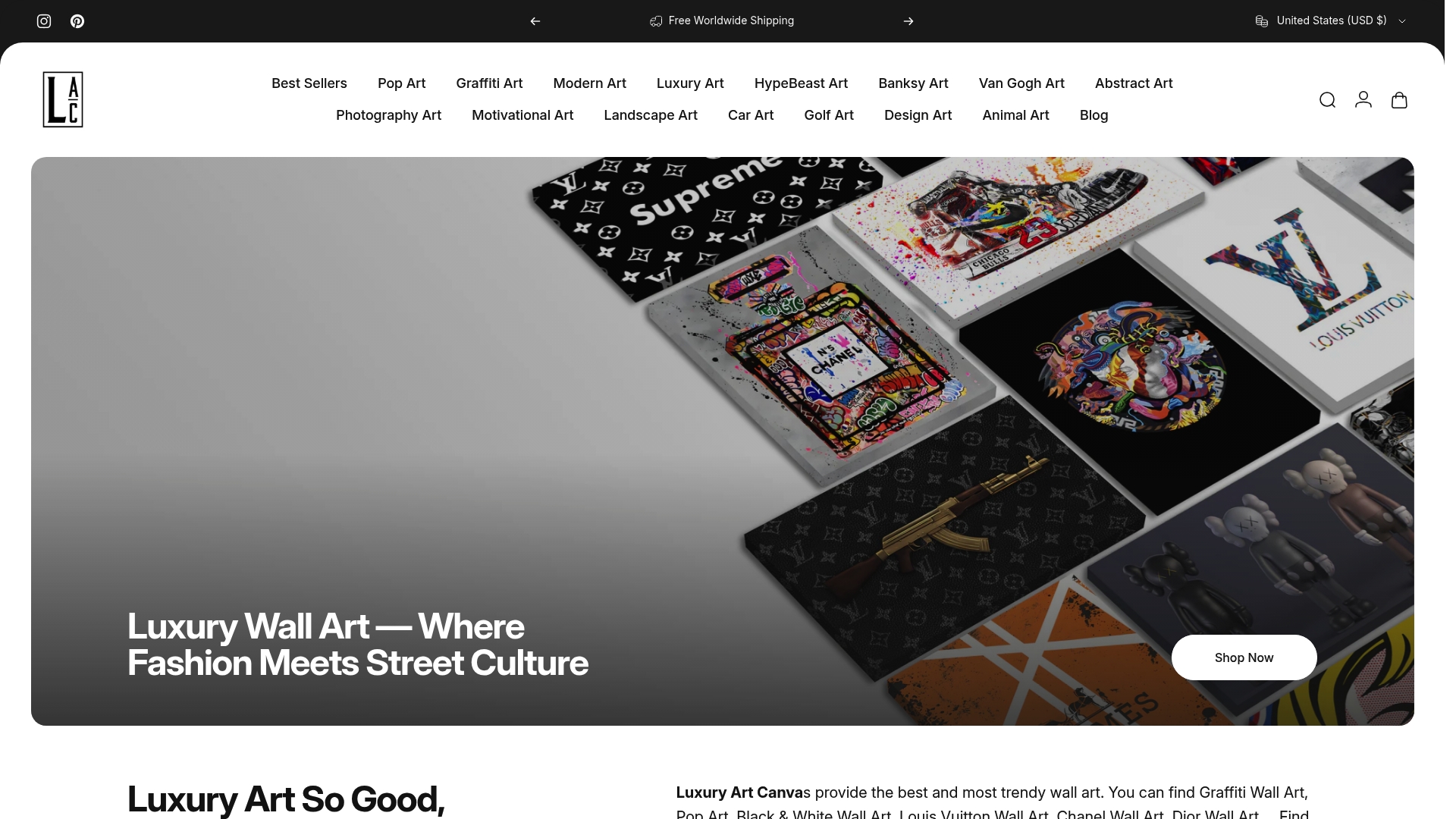
Luxuryartcanvas crafts every piece in the USA using high-quality materials built for long-term display. The collection spans bold graffiti street art canvases and striking pop art canvases designed to hold color and structure for decades. With over 1,000 distinct designs and more than 10,000 satisfied customers, Luxuryartcanvas delivers both aesthetic impact and the archival construction that serious collectors expect. Browse the full graffiti wall art collection to find pieces built to last as long as the walls they hang on.
FAQ
What does canvas durability mean in art?
Canvas durability in art is the canvas material’s ability to maintain structural integrity, hold tension, and support paint layers without degrading over time. It depends on fiber type, weave density, priming quality, and environmental conditions.
How long does a quality stretched canvas last?
A high-quality stretched canvas, properly primed and stored in stable conditions, can last over 100 years. Canvas panels offer several decades of stable, crack-resistant support with less maintenance required.
Is cotton or linen canvas more durable?
Cotton canvas is more dimensionally stable over time, retaining up to 95% of its initial tension after 50 years of aging. Linen loses 30–40% of tensile strength over the same period due to relaxation creep.
How do you test canvas durability before buying?
Press the center of the canvas lightly and check that it springs back immediately. Examine the weave under angled light for consistency, and look for archival or acid-free labeling that confirms the canvas meets recognized quality standards.
Does environmental control really extend canvas life?
Controlling temperature between 65°F and 75°F and humidity between 45% and 55% significantly reduces fiber degradation, sagging, and paint cracking. Stable environments are the single most effective way to extend art canvas longevity after the initial substrate choice.
What Is Mixed Media Canvas Art: A Beginner's Guide
Types of Street Art Canvas Styles for Your Space