
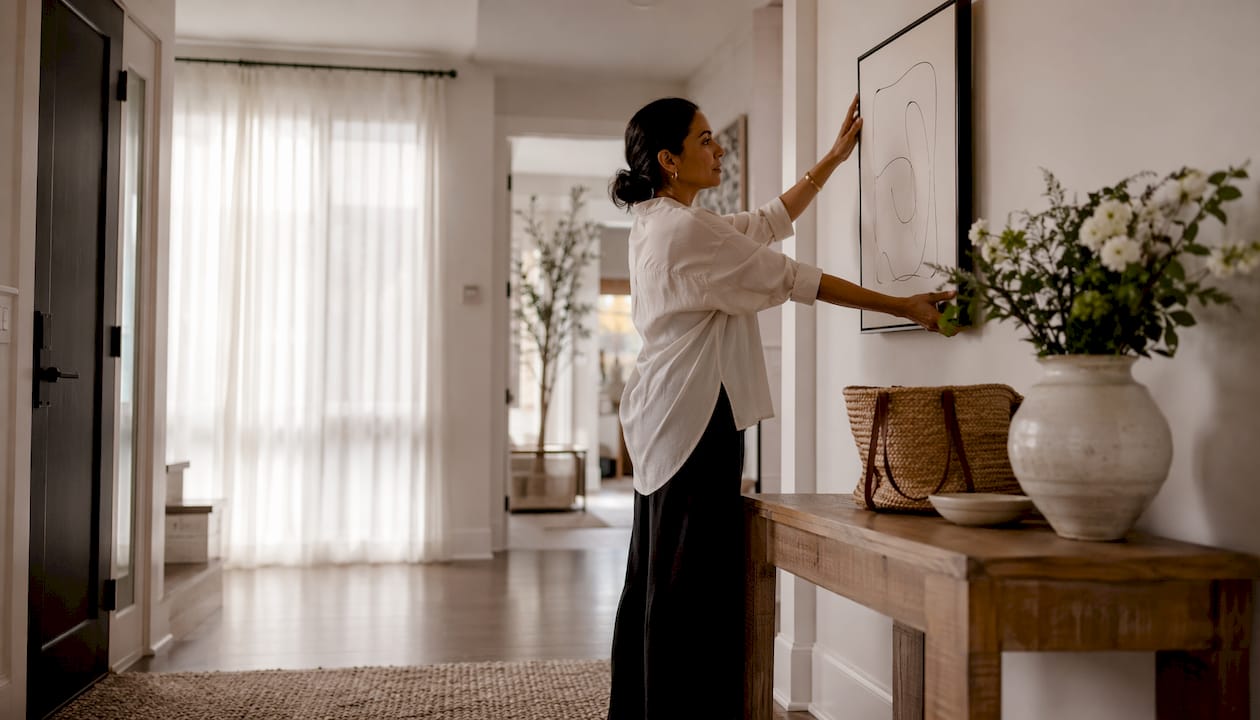
Your entryway is the first thing you see when you come home and the first thing guests notice when they walk in. Wall art is the single element that does the most work in that space, faster than furniture, faster than lighting, and faster than a rug. A 2019 review in Environment and Behavior found that residential environments with intentional, curated art were consistently linked to lower perceived stress and higher wellbeing, with the effect most pronounced in transitional spaces like entryways, where visual information is processed emotionally before it registers cognitively.
The role of wall art in entryway design comes down to three things: scale, simplicity, and intention. A complete entryway typically needs a surface, a mirror, and a light source, and art is what adds personality and warmth to that functional trio. Art interacts with every other element in the space. A mirror reflects it. Lighting frames it. A console table below it becomes a supporting player rather than the main event.
- Art sets the emotional tone before anyone speaks a word
- Scale matters more here than in almost any other room
- Simplicity beats complexity in a high-traffic transitional space
- Intention separates a piece that holds meaning from one you stop seeing after a week
Pro Tip: Choose art with a calm, grounded composition for your entryway. Pieces with generous negative space and a limited palette welcome you home rather than compete with the mental noise you’re already carrying through the door.
Popular wall art styles that work well in entryways
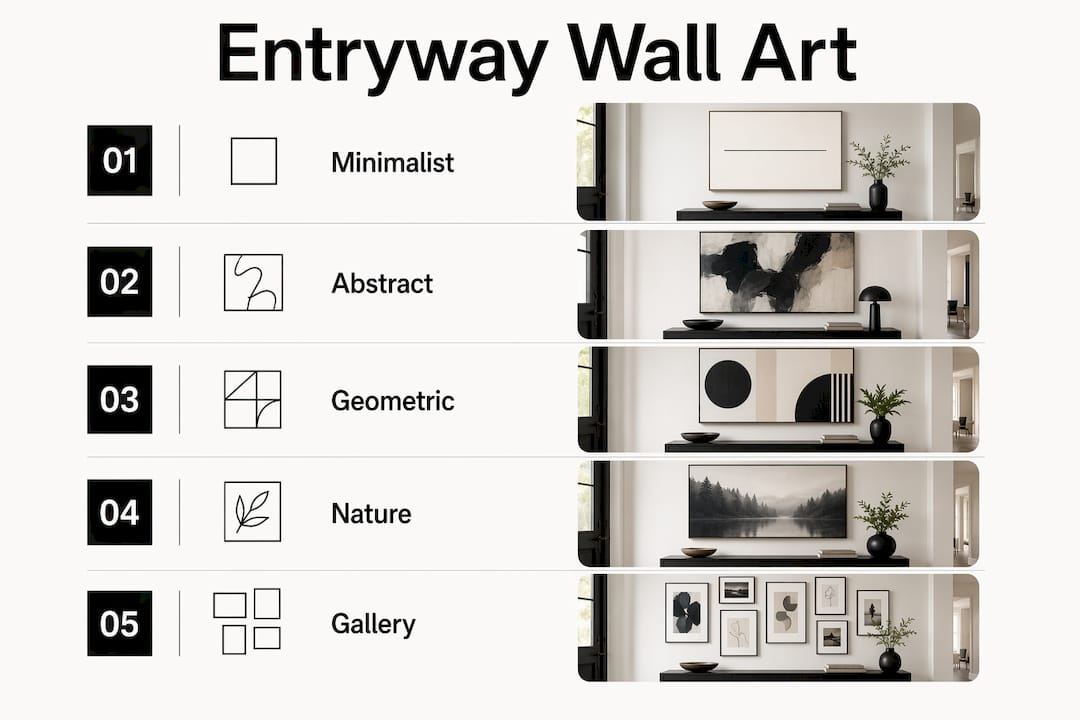
1. Minimalist line art
Clean, single-subject compositions with plenty of white space read instantly and never feel cluttered. They work across almost every architectural style, from modern condos to older craftsman homes, and they age gracefully on the wall.
2. Abstract art
Abstract pieces introduce color and movement without being literal or demanding. A well-chosen abstract in warm ochres or muted blues can set a mood in seconds, which is exactly what an entryway needs. Bold abstract work also scales up beautifully to fill a larger foyer wall.
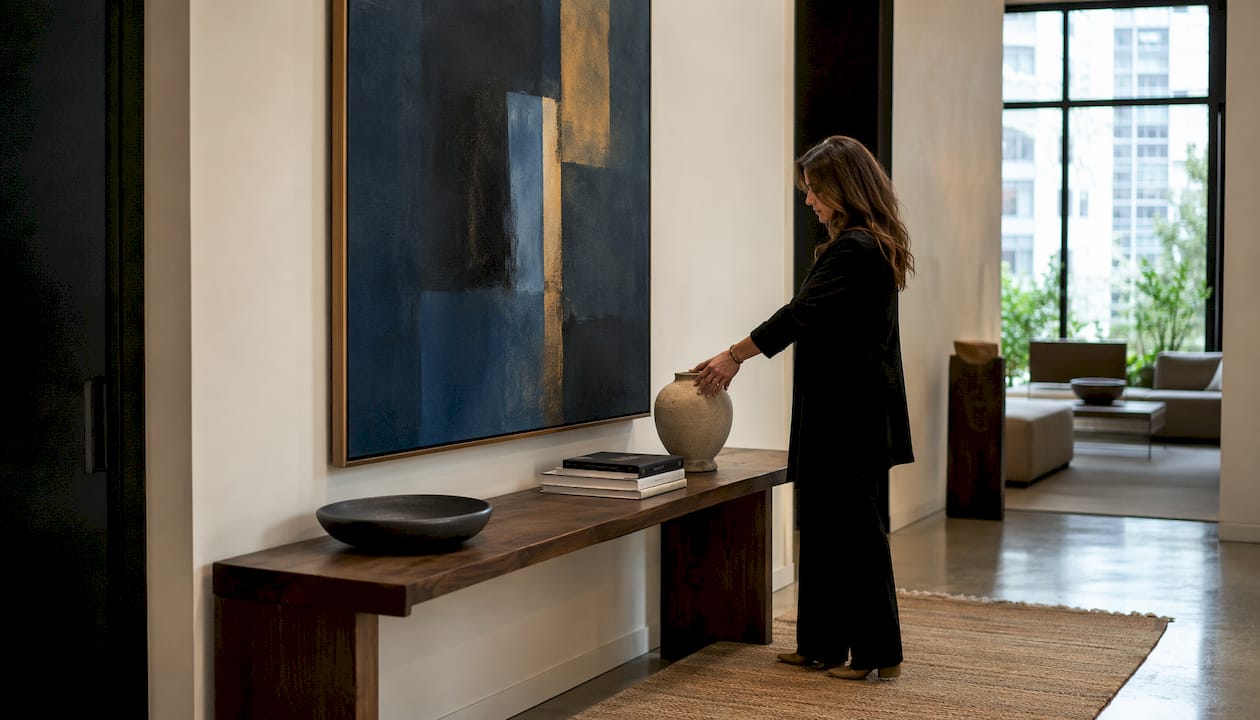
3. Geometric forms
Stable shapes, horizontal lines, and balanced compositions create a physical sense of stillness. Triangles, arcs, and horizon-like arrangements have held symbolic weight across cultures for good reason: they read as grounded and safe, which is precisely the feeling you want when you walk through the door.
4. Nature-inspired art
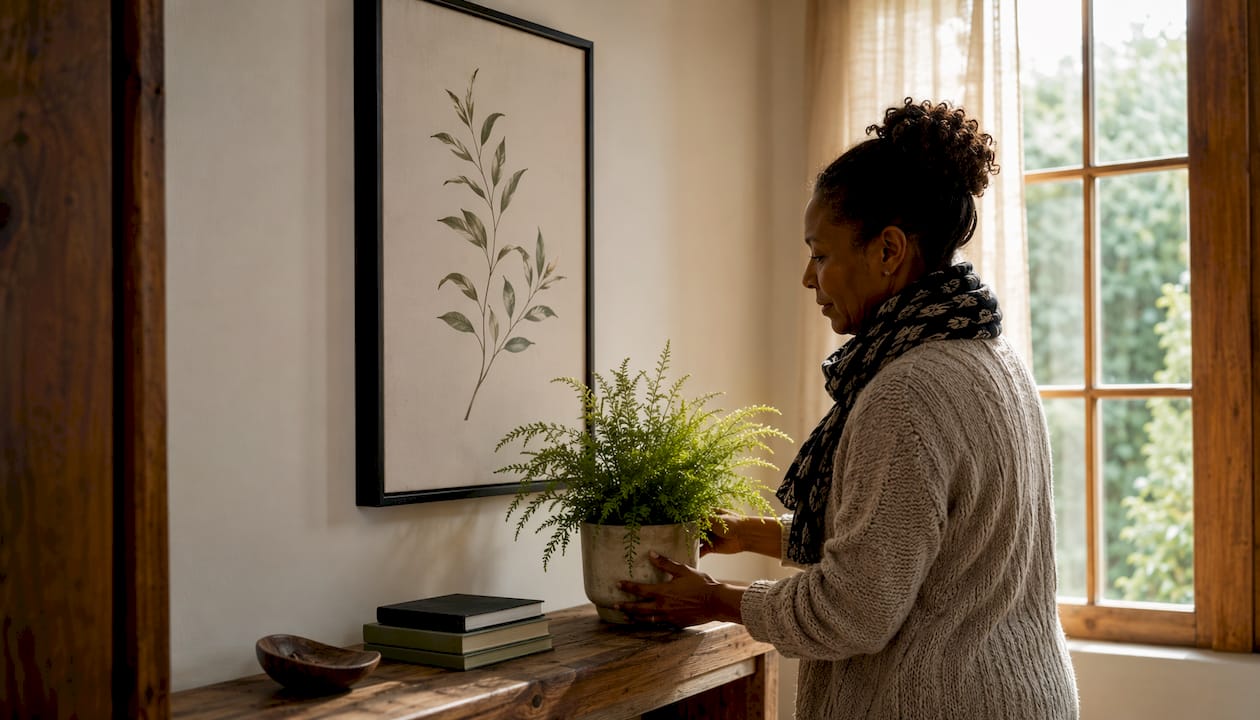
Botanical prints, landscape photography, and organic forms signal calm and openness. A nature-inspired piece in a narrow hallway can make the space feel less enclosed, drawing the eye toward something expansive even when the physical room is tight.
5. Statement graffiti and pop art
For homeowners who want their entryway to announce something rather than whisper it, bold graffiti or pop art delivers immediate visual impact. Graffiti canvas art works especially well in modern, urban, or eclectic interiors where the entryway is meant to be a conversation starter. The key is choosing one strong piece rather than layering several competing ones.
- Minimalist and geometric styles suit transitional spaces best for daily calm
- Abstract and nature-inspired work across a wide range of home aesthetics
- Graffiti and pop art make a deliberate statement and suit bolder interior personalities
Types of wall art suited for entryways and their practical benefits
6. Canvas prints
Canvas is durable, lightweight, and doesn’t require glass, which means no glare from entryway lighting. It also suits diverse home styles with ease, adapting to both warm and cool palettes. For high-traffic zones, a canvas that can handle a light wipe-down is a practical advantage.
7. Framed artwork
A frame signals permanence. In an entryway, that matters because the space is seen dozens of times daily. Frame finishes in black, white, or natural wood work across most entryway palettes. If your entryway has warm wood tones, a natural frame extends that warmth; if it’s lighter or more minimal, black or white frames give the piece clarity.
8. Gallery walls
A curated grouping of small prints can create warmth and personality in a space that might otherwise feel sparse. The risk is visual noise. Gallery walls work best when limited to 3–4 pieces with at least 3–4 inches of spacing and a shared visual language. In a narrow hallway, a gallery wall can feel claustrophobic; in a wider foyer, it earns its place.
9. Printable and customizable art
Printable art offers flexibility that fixed pieces don’t. You can resize without replacing, reprint after a move, and update your entryway’s look without committing to a new frame. For homeowners who like to refresh their spaces seasonally, this format is worth considering.
- Canvas prints: durable, glare-free, easy to maintain
- Framed artwork: signals permanence, works with most palettes
- Gallery walls: warm and personal, but require discipline in narrow spaces
- Printable art: flexible and easy to update as tastes evolve
Key considerations when choosing entryway wall art
10. Scale and proportion
Art should cover 60–75% of available wall width; a single piece between 18x24 and 24x36 inches anchors most entryways. Undersized art reads as uncertain rather than restrained. When in doubt, go larger.
11. Simplicity over complexity
Complex, high-contrast patterns contribute to visual noise in a space where viewers only engage briefly. Art with a single subject, generous negative space, and a limited palette creates the quiet register that serves an entryway well. High visual complexity activates the nervous system; balanced simplicity lets it settle.
12. Color palette alignment
Art doesn’t need to match the adjacent décor exactly, but it should feel like an introduction to what comes next. Choosing art within the same color family or emotional register as the rest of your home creates coherence as people move through the space. Art that feels like a completely different aesthetic signals disruption rather than welcome.
13. Placement height
Hang the center of the piece at roughly 57–60 inches from the floor, which is standard eye level for most adults. If a console table sits below the art, the bottom of the frame should clear the top of the furniture by about 6–8 inches. This creates a cohesive vignette rather than two separate elements competing for attention.
14. Single focal piece versus gallery wall
A single strong piece says “this home knows what it values.” A gallery wall says “this home has layers and personality.” Neither is wrong. Know which one you’re building toward before you start hanging anything.
Pro Tip: Keep the surface below your entryway art minimal. One small plant, a ceramic bowl, or a lamp with a warm bulb is enough. Anything more and the art loses its role as the focal point.
Expert insights on enhancing entryway ambiance with curated wall art
The psychological case for intentional entryway art is well established. Entryway art is processed emotionally within a very brief viewing window, so it needs to be calm, clear, and welcoming to effectively reset the mind after being outdoors. The nervous system responds differently to art with high visual complexity; stable shapes and muted palettes foster relaxation in transient settings, while busy compositions do the opposite.
“What tends to work, in a space that gets seen dozens of times daily, is art that holds rather than performs. Something quiet enough to live with but grounded enough to mean something. A piece that doesn’t demand your attention but rewards it when you pause.” — Haven & Hold
Design professionals also caution against what they call empty wall syndrome, the tendency to leave entryways bare because the space feels too small or too transitional to bother with. Treating the entryway as a miniature gallery, even with a single well-chosen piece, allows the home’s personality to emerge immediately upon arrival.
When it comes to art that includes words or phrases, the question to ask isn’t “is this inspiring?” It’s “does this feel like something my home would say?” A phrase that names the space itself, like “Sanctuary” or “You are held here,” functions as emotional architecture rather than a directive. It shapes how the space feels to be in, not how the person in it should feel.
- Prioritize art with stable geometric forms and low visual complexity
- Avoid cluttering entryways; a few intentional pieces outperform a filled wall
- Words in art should name the space, not instruct the person
- Lighting the art with a warm-toned accent lamp or picture light transforms it from background to focal point
Luxuryartcanvas brings together high-fashion influences and street art in canvas collections that translate directly to entryway design. With over 1,000 designs crafted in the USA, the range spans bold graffiti and pop art to more refined, minimal compositions, giving homeowners the flexibility to choose art that genuinely reflects their home’s character rather than defaulting to generic décor. For homeowners who want their entryway to make a real statement, oversized wall art is worth exploring as a starting point.
Wall decor trends in 2026 also reflect a broader interest in sustainable and natural materials. Bamboo wall decor, for example, offers a textured, eco-friendly complement to canvas art in entryways where warmth and organic feel are the goal.
Ready to transform your entryway?

The right piece of art changes everything about how an entryway feels. Luxuryartcanvas offers bold, gallery-quality canvases crafted in the USA, from street-inspired graffiti wall art to vibrant pop art canvases that make an immediate statement. Browse over 1,000 designs and find the piece your entryway has been waiting for.
Key Takeaways
Wall art is the most emotionally immediate element in entryway design, shaping mood, scale, and first impressions before any other detail registers.
| Point | Details |
|---|---|
| Scale is non-negotiable | Art should cover 60–75% of available wall width; a single piece between 18x24 and 24x36 inches anchors most entryways. |
| Simplicity outperforms complexity | High-contrast, busy art activates the nervous system; calm compositions with negative space help the mind settle after being outdoors. |
| Placement height matters | Hang the center of the piece at 57–60 inches from the floor; clear furniture below by 6–8 inches for a cohesive look. |
| Gallery walls need discipline | Limit groupings to 3–4 pieces with at least 3–4 inches of spacing and a shared visual language to avoid visual noise. |
| Art reflects the whole home | Choose art within the same color family or emotional register as the rest of your interior so the entryway feels like an introduction, not a disruption. |
Recommended
- Styling Entryways with Oversized Wall Art That Wows – Luxury Art Canvas
- The Psychology of Wall Art Colors: How Art Changes the Mood of a Room – Luxury Art Canvas
- Elevate Your Home Decor : Mixing and Matching Canvas Art for a Stunnin – Luxury Art Canvas
- Wall Art in Client-Facing Spaces: A 2026 Design Guide – Luxury Art Canvas
Types of Street Art Canvas Styles for Your Space
Branded Office Wall Decor: What It Is and Why It Works