
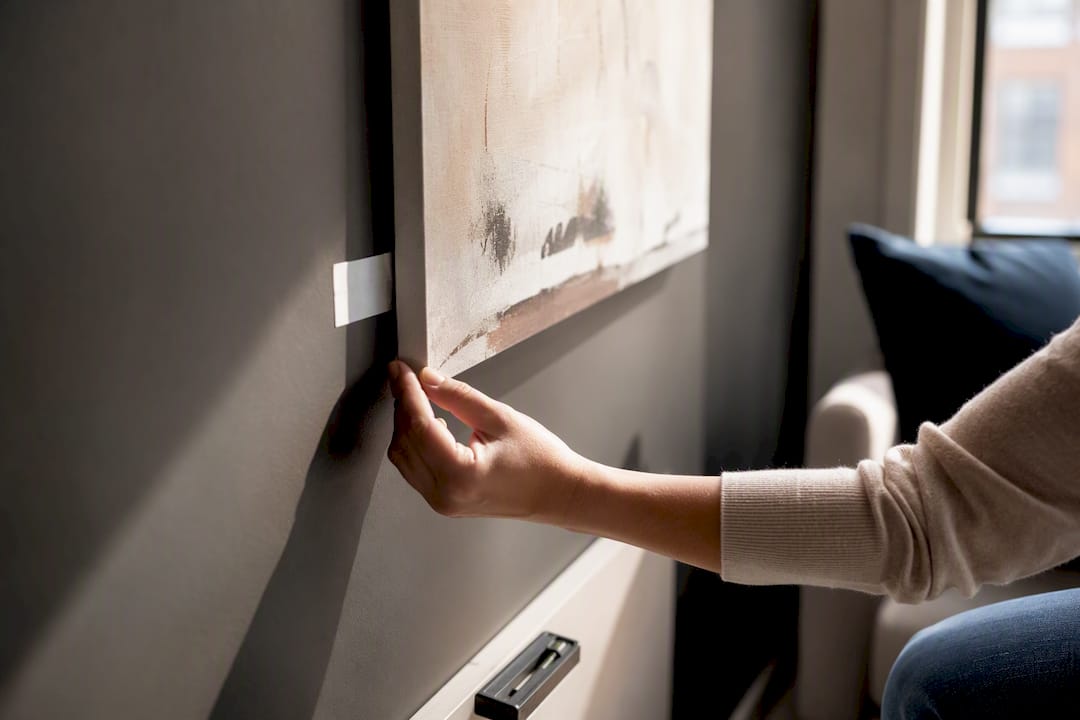
A single large statement piece or a tightly curated gallery, installed the renter-safe way, finishes an apartment faster than a handful of scattered small frames. Lean a bold canvas against the wall, or build a five-piece cluster on a picture ledge, and you get instant visual weight without a single hole beyond what’s already there. Mirrors and textile hangings round out the short list of moves that actually change how a room feels. Keep the two-thirds width rule and the 57 to 60 inch center height in mind. The whole wall reads intentional instead of thrown together.
Table of Contents
- Apartment Wall Art Ideas That Actually Work in Small Spaces
- How to Size and Place Art So It Looks Designed, Not Random
- No-Drill and Low-Damage Hanging Methods That Hold Up
- Which Materials Work Best in Rentals and Small Rooms
- Gallery Wall Formats That Don’t Require Guesswork
- Using Mirrors to Make a Small Apartment Feel Bigger
- Textiles and Plants Add the Texture Photos Can’t
- Why Your Walls Should Look Like You, Not a Showroom
- A Ready-Made Statement Piece Without the Wall-Hunting
- Sources
- FAQ
Apartment Wall Art Ideas That Actually Work in Small Spaces
Renters lose deposits over nail holes, not over bad taste. So the smartest apartment wall art ideas lean into hardware that comes off clean and layouts that flex when you move. Here are the concepts worth trying, roughly ordered from the biggest impact to the smallest commitment.
- One oversized canvas as the focal point. A single large piece anchors a living room wall better than several small mismatched prints. Lean it on a console or floor ledge instead of hanging it.
- A curated gallery of 3 to 5 pieces. Stick to a tight palette and consistent frame color so the group reads as one composition, not clutter.
- A picture ledge system. Install the ledge once with proper anchors, then swap the art on it as often as you like with zero new holes.
- A leaning floor mirror. Place it across from or beside a window to bounce daylight around a dim apartment.
- A textile or tapestry wall hanging. Woven pieces add texture and quiet down an echoey room with hard floors.
- Peel-and-stick wallpaper on one accent wall. Fully removable, and dramatic enough to replace three separate art pieces.
- A linear row of matching frames above a headboard or sofa. Keep even spacing between each piece for a clean, gallery-adjacent look.
- Adhesive-strip mounted mini prints in a cluster. Good for hallways and small nooks where drilling feels like overkill for tiny art.
- A vertical grouping in a narrow entryway. Stack two or three small pieces to draw the eye upward in tight footprints.
- A large framed mirror doubling as art. Choose an ornate or sculptural frame so it does double duty as decor.
- Wall-mounted plant shelves paired with a small print. Combine greenery and art for layered depth without extra wall damage.
- A single dramatic canvas leaned in a corner. Skip the wall entirely; a floor-leaned piece behind a chair adds height and color.
- A removable mural panel behind a bed. Big visual payoff for renters who want a real headboard-wall statement.
Most of these lean on the same principle: bigger, bolder, and fewer pieces tends to beat busy walls in small square footage, and size often wins over quantity in tight apartments. Save the hardware specifics for the sections below.
How to Size and Place Art So It Looks Designed, Not Random
Hang the center of your art around average eye level, approximately between 57 and 60 inches from the floor; this guideline works well in many rooms. Nudge it a few inches lower over a sofa or bed, since furniture pulls the eye down anyway.
Over furniture, keep your art or gallery cluster to about two thirds the width of the piece below it. A 72-inch sofa pairs best with a 48-inch-wide arrangement, whether that’s one canvas or a grouped cluster, and that two-thirds ratio is the detail that separates a curated wall from an accidental one.
Before anything touches the wall:
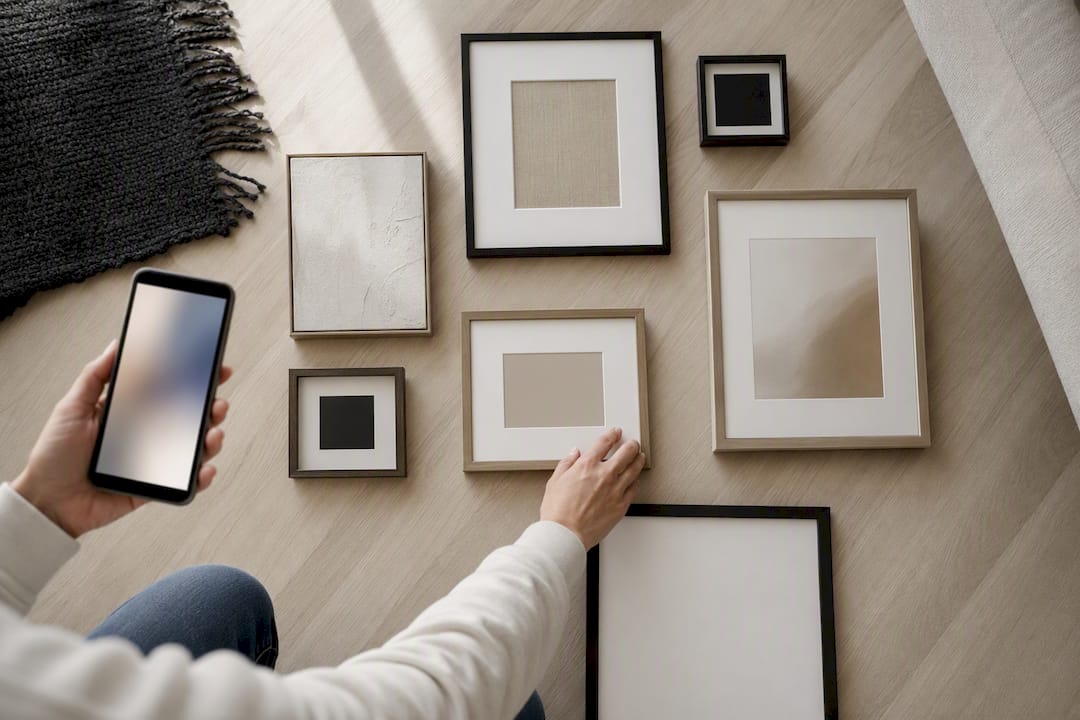
- Lay your frames out on the floor first and adjust spacing until it feels balanced.
- Cut paper templates in each frame’s exact size and tape them up to preview the layout.
- Keep gaps between gallery pieces consistent for a cohesive grid.
No-Drill and Low-Damage Hanging Methods That Hold Up
Adhesive strips rated for various weights handle most framed prints and small canvases. Always check the manufacturer’s weight rating against your actual frame weight, glass included, before trusting a strip with anything valuable.
- Adhesive strips or hooks for lightweight frames and canvases under the rated limit.
- Picture ledges for anything you want to swap out seasonally.
- Leaning for oversized mirrors, canvases, or art too heavy for adhesive products.
- A single small screw, only with landlord permission, for pieces that genuinely need wall-anchored support.
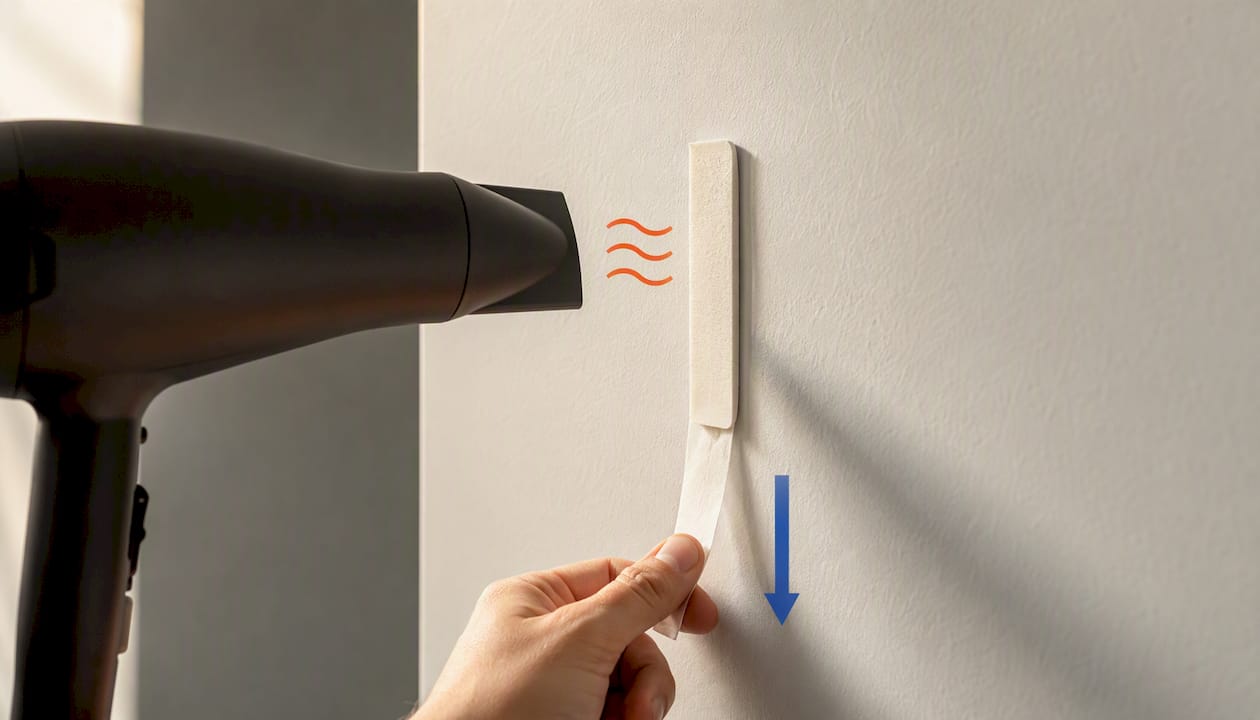
Removing adhesive strips slowly and at an angle, rather than yanking straight out, prevents paint damage almost every time. Renter-safe options like these come straight from apartment decorating guidance built around avoiding permanent holes.
Pro Tip: Warm adhesive strips slightly with a hair dryer before removal. The heat loosens the bond and makes paint damage far less likely.
Which Materials Work Best in Rentals and Small Rooms
Canvas wins for most renters simply because it’s light. A stretched canvas has no glass to shatter and usually weighs a fraction of a comparably sized framed print, which makes it far friendlier to adhesive strips and leaning setups. Our guide on decorating studio apartments with large canvases covers sizing specifics for tight floor plans.
- Canvas: lightweight, low-profile, easy to lean or hang with minimal hardware.
- Framed prints: more polished but heavier; matching mat colors or frame finishes helps unify a mixed set.
- Textiles and peel-and-stick wallpaper: reversible, large-coverage options that add pattern without weight.
Mixing finishes works when you commit to one connecting thread, whether that’s frame color, mat width, or a shared theme.
Gallery Wall Formats That Don’t Require Guesswork
A tight grid suits a small wall with clean lines. A salon-style cluster with mismatched sizes fits a bigger, more eclectic space. A linear row works best above a headboard or a long console where the furniture itself sets the boundary.
- Group everything on the floor first, arranging and rearranging until the balance feels right.
- Cut paper templates matching each frame’s dimensions and tape them to the wall to preview scale.
- Mark your center line, then hang the middle piece first and build outward, keeping spacing even.
Use adhesive strips for anything under their rated weight; switch to a single small screw only for heavier frames the strips can’t safely support.
Pro Tip: Photograph your floor layout before you touch the wall. It’s your reference if a piece shifts or you need to redo a section later.
Using Mirrors to Make a Small Apartment Feel Bigger
Position a mirror across from or beside a window and it reflects daylight back into the room, which makes a small apartment feel noticeably brighter. Large floor mirrors lean against the wall with zero hardware, making them one of the easiest renter-friendly upgrades available.
- Choose a frame finish that complements, rather than competes with, nearby art.
- Reserve adhesive strips or a wall cleat for mirrors too tall or heavy to lean safely.
- Keep mirror placement away from direct sun glare that could wash out the reflection.
Textiles and Plants Add the Texture Photos Can’t
Hang woven textiles from a slim tension rod or adhesive hooks rated for the fabric’s weight. Beyond the visual texture, textile hangings help soften sound in apartments full of hard floors and bare walls.
- Macramé or woven wall hangings soften acoustics and add warmth instantly.
- Trailing plants on a high shelf or in a wall planter bring in greenery without constant watering mess.
- Pair a textile, a small framed print, and a trailing plant together for layered depth on one wall.
Why Your Walls Should Look Like You, Not a Showroom
The biggest mistake I see in apartment decorating isn’t a bad hanging technique. It’s decorating for a hypothetical buyer instead of the person actually living there. Cohesive framing can unify a mixed collection, but cohesion should never mean erasing personality in favor of whatever looks safest on camera.
A platform exists partly because of that gap: a wide range of designs, manufactured with care, ready-to-hang out of the box, and supported by numerous customer reviews. If you want a fast, low-risk project this weekend, pick one bold canvas for your main wall, lean it against a console, and build everything else around that single choice.
— James
A Ready-Made Statement Piece Without the Wall-Hunting
If you’ve read this far and still don’t have a focal piece picked out, that’s the one step worth skipping the guesswork on. The company ships ready-to-hang canvases available in a broad range of designs, from bold graffiti and pop art to pieces referencing high-fashion houses, printed on archival materials built to hold color for years.

Every canvas arrives ready to lean against a console or mount with renter-safe hardware, no framing shop and no guessing on weight ratings. Sizes run from apartment-friendly small formats up to full statement pieces built for a living room’s main wall. Browse the graffiti canvas collection for a bold entry point, or explore pop art canvases if you want something graphic and colorful. Pick your size, check it against the two-thirds width rule for your sofa, and order the piece that finally makes that blank wall feel finished.
Sources
- Apartment wall decor ideas (No holes, renter-safe) — Tucked Nook
- Top small apartment wall art ideas — SoliaAvenue
FAQ
How do I decorate my apartment walls without damaging them?
Use adhesive strips rated to your frame’s weight, picture ledges you install once and restyle often, or simply lean large art and mirrors against the wall.
What is the two-thirds rule for wall art?
Art or a gallery cluster hung above furniture should span roughly two-thirds the width of that furniture piece, which keeps the arrangement visually balanced above a sofa or bed.
What are the current apartment wall decor trends?
Oversized single canvases, removable peel-and-stick murals, and textile wall hangings are all gaining ground as renters look for high-impact, damage-free options.
What are good wall decor ideas for a small apartment?
One large canvas, often outperforms several small scattered pieces in a tight room, while a leaning mirror and a picture ledge gallery both add impact without eating floor space.
How high should I hang art in my apartment?
Center your art around 57 to 60 inches from the floor, which matches average eye level, then adjust slightly lower when it’s hanging directly above a sofa or bed.
Skip Murals: Buy Ready to Hang Graffiti Wall Art Decor, USA Made
60–75% Sofa Rule for Homeowners & Renters: Clean Canvas Art That Calms