
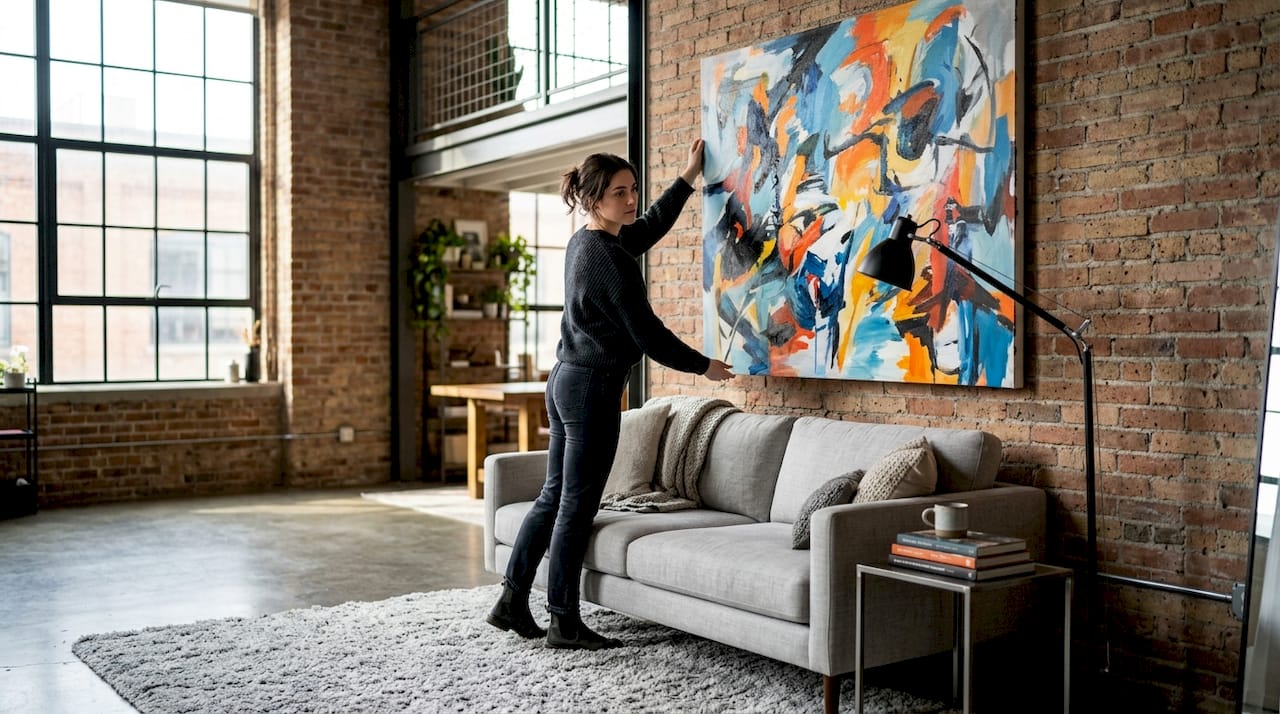
Large canvas art is the single most effective tool for making a studio apartment feel intentional, spacious, and personal. Decorating studio apartments with large canvases works because one bold piece does what a dozen small frames cannot: it creates a focal point that anchors the entire room. Interior designers call this approach “statement art placement,” and it applies whether your space is 300 square feet or 600. The right canvas ties your furniture, color palette, and zones together without adding clutter. This guide walks you through size selection, hanging techniques, design integration, and common mistakes to avoid.
What size and style of large canvases work best for studio apartments?
Canvas sizing follows a clear rule. Artwork above furniture should take up roughly two-thirds of the furniture’s width for balanced scale. That means a 60-inch sofa calls for a canvas at least 40 inches wide. Going smaller makes the art look lost. Going much larger can feel aggressive, but in a studio, bold scale almost always wins.
Style matters as much as size. Large canvas art feels softer and more modern than framed prints, and it works especially well unframed. That clean, borderless look suits the minimal, open aesthetic most studio renters want. Bold graphics, pop art, and abstract compositions read well from across a small room. Subtle texture pieces work in bedrooms or sleeping zones where you want calm rather than energy.
The styles that perform best in compact spaces include:
- Bold graphic prints: High contrast, simple composition, strong from a distance
- Abstract color fields: Add warmth or cool tones without competing with furniture
- Pop art and street art: Personality-forward, works with both modern and eclectic furniture
- Minimalist line art: Clean, airy, and never visually heavy
- Single-subject photography: Landscapes or architectural shots create depth on a flat wall
Pro Tip: Pick a canvas that pulls one color from your existing rug or throw pillow. You do not need to match exactly. Tone and texture connections create a curated feel without looking forced.
Canvas art for small spaces also has a practical advantage over framed art: the finished edges mean no frame is needed, which keeps the look clean and the installation simple.
How to prepare your studio space and hang large canvases properly
Preparation prevents the most common hanging mistakes. Before you touch a wall, assess two things: where your natural light falls and where your eye lands when you walk through the door. Those two spots are your prime hanging locations. A canvas placed in direct, harsh sunlight will fade over time. A canvas placed at the entry sightline creates an immediate impression.
The tools you need depend on whether you own or rent. Most studio renters need damage-free solutions. Adhesive strips rated for 16+ pounds handle most large canvases without holes. For heavier pieces, a single anchor hook into a stud is the most secure option.
| Tool | Best for | Limitation |
|---|---|---|
| Adhesive strips (16+ lb rated) | Renters, lightweight canvases | Weight limit per strip |
| Single anchor hook | Heavy canvases, permanent installs | Leaves a small hole |
| Picture rail hooks | Older apartments with molding | Not available in all units |
| Leaning on shelves or floor | Flexible, damage-free display | Requires stable surface |
Key steps before hanging:
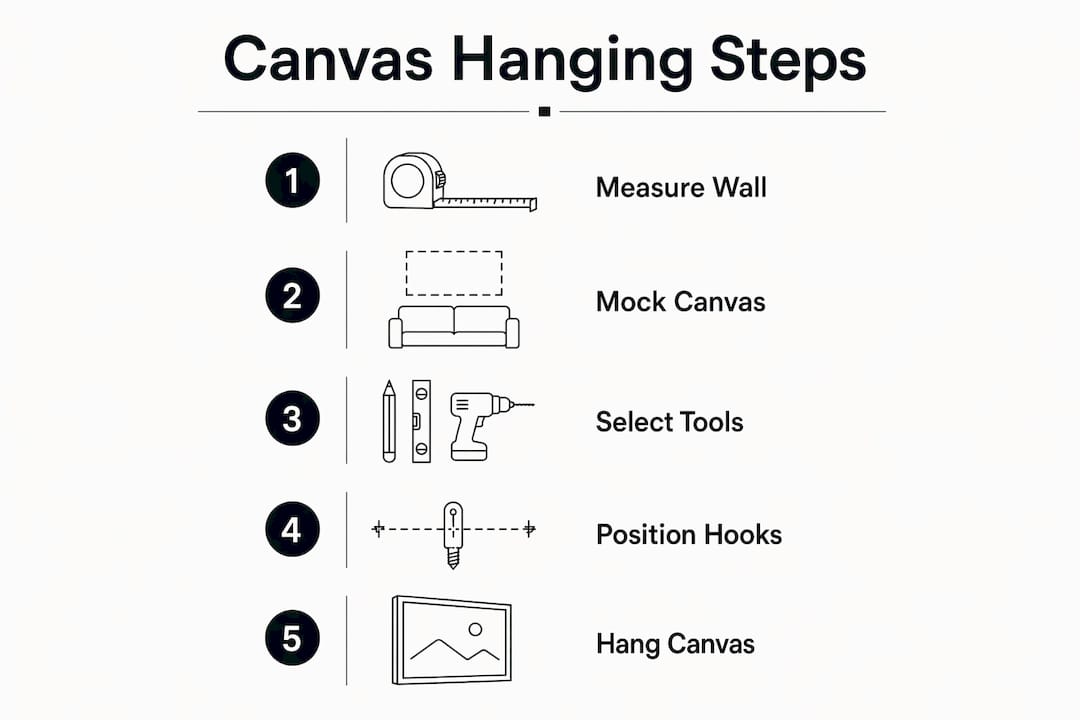
- Measure the wall width and calculate two-thirds of your sofa or bed width
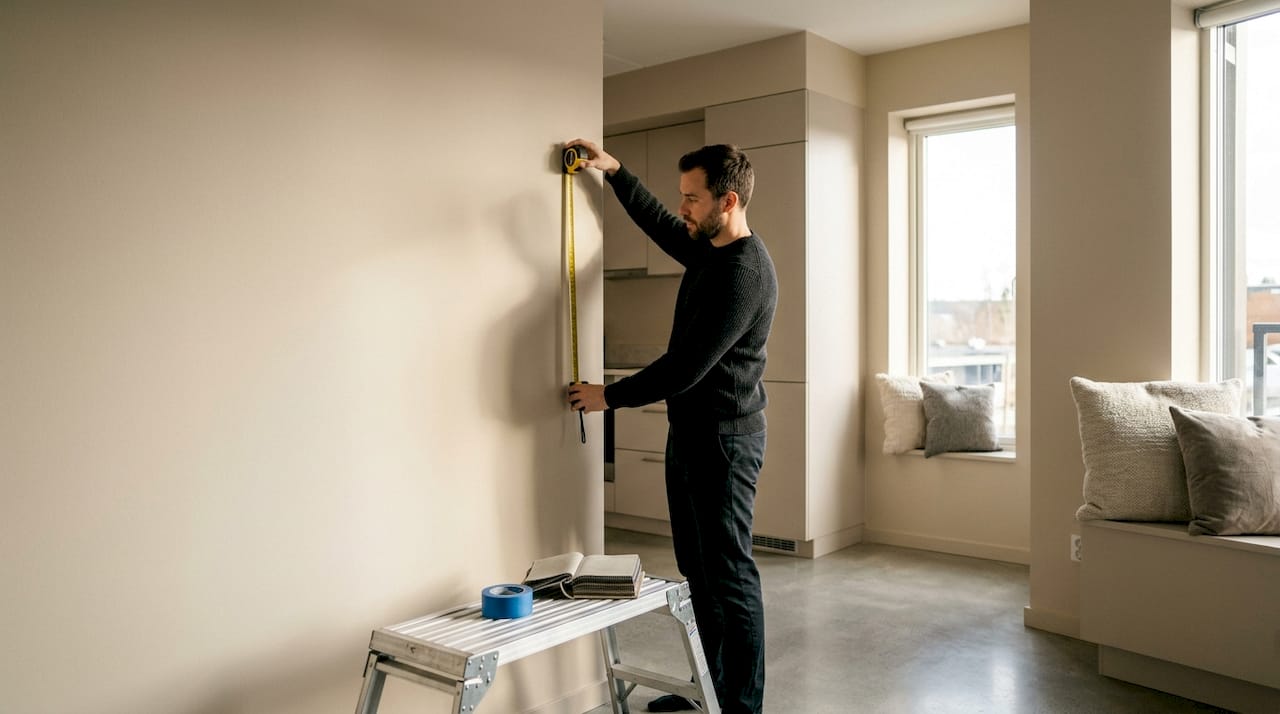
- Mark the center point of the wall section with painter’s tape
- Identify stud locations if using hooks (a basic stud finder costs under $20)
- Check ceiling height: in rooms under 8 feet, hang the canvas lower to avoid a cramped look
- Test the adhesive strip on a small hidden area of your wall before committing
Pro Tip: Use painter’s tape to mock up the canvas size on your wall before buying. Cut tape to the exact dimensions and live with it for a day. You will immediately know if the scale feels right.
Step-by-step process for hanging and arranging large canvases
Follow these steps in order and you will avoid the most common placement errors.
-
Measure and mark your center point. Find the midpoint of the wall section or furniture piece below. Mark it lightly with a pencil.
-
Set your hanging height. The center of the canvas should sit at roughly 57–60 inches from the floor. That is the standard eye-level range used in galleries. Above a sofa, aim for 6–8 inches of space between the top of the sofa and the bottom of the canvas.
-
Account for the hanging hardware. Measure from the top of the canvas to the wire or hook on the back. Subtract that number from your desired center height to find where the nail or strip goes.
-
Use vertical space deliberately. Drawing the eye upward makes small spaces feel more open. A tall, vertical canvas in a corner or beside a window adds perceived height to any room.
-
Hang the canvas and step back. Check from across the room, not up close. Small adjustments matter more at a distance.
-
For multiple canvases, plan on paper first. Lay them on the floor in the arrangement you want before putting anything on the wall. Spacing between pieces should stay consistent, typically 2–3 inches.
-
Consider leaning as an alternative. Leaning large canvases on shelves or against a wall creates a casual, layered look that is also renter-friendly and easy to rearrange.
Common mistakes to avoid:
- Hanging the canvas too high (above eye level feels disconnected from the furniture)
- Using art that is too small for the wall (a 12x12 canvas on a 10-foot wall disappears)
- Overcrowding with multiple small pieces instead of committing to one large statement
- Ignoring the relationship between the canvas and the furniture below it
Oversized prints placed strategically above a bed or sofa consistently make the room feel larger and more finished than a gallery wall of small frames.
How to integrate large canvases into studio apartment design themes
Art belongs at the end of your decorating process, not the beginning. Establish your furniture layout and define your zones first, then select art that finishes the look. Choosing art before furniture often leads to clashes in scale, color, or mood.
In a studio, large canvases serve a second function beyond decoration: they define zones. A bold canvas above the bed signals the sleeping area. A graphic print above a console or behind a desk anchors the workspace. This zoning effect matters in open-plan spaces where walls and doors cannot do that work.
Color and tone coordination is the most misunderstood part of this process. Matching art through tone and texture rather than exact color creates a sophisticated result. A warm-toned abstract canvas works beside a tan leather sofa not because the colors match, but because the warmth connects them. Exact color matching reads as forced.
“A single large canvas creates a focal point and sense of scale, making a small room feel bigger and more intentional. Multiple small pieces create visual noise that shrinks the space further.”
Practical coordination strategies:
- Pull one accent color from your canvas into a throw pillow or small object on a shelf
- Use a canvas with a dark background on a light wall to create depth
- In a white or neutral studio, a single bold pop art or graffiti canvas adds all the personality the room needs
- Avoid placing two canvases of equal size side by side. One dominant piece and one smaller accent creates better visual hierarchy
Pop art decor works particularly well in studios because the bold, graphic nature of the style reads clearly from across a small room without requiring multiple pieces.
Troubleshooting common decorating challenges with large canvases
Wall color clashes are the most frequent problem. If your canvas feels off against your wall, the issue is usually undertone. A canvas with cool blue tones on a warm beige wall will always feel slightly wrong. The fix is either repainting an accent wall in a neutral tone or choosing a canvas with warmer tones. You do not need to repaint the whole apartment.
If a canvas feels overwhelming, the problem is usually placement, not size. Moving it to a larger wall section or raising it slightly often resolves the issue. Choosing fewer, larger pieces over multiple small artworks reduces clutter and improves how the room feels overall.
Other common fixes:
- Visual clutter from too many pieces: Remove all but one or two canvases and reassess. Less is almost always better in a studio.
- Wall damage concerns: Switch to adhesive strips or lean the canvas on a shelf or dresser top.
- Canvas fading: Move the piece away from direct sunlight or use UV-protective glass on any framed pieces.
- Canvas feels too casual: Add a simple floating shelf below it to ground the piece and give it context.
Renter-friendly canvas options that come ready to hang with finished edges solve most installation problems before they start.
Key takeaways
Large canvas art is the most effective single change you can make to a studio apartment: one well-placed piece creates scale, defines zones, and ties the entire room together.
| Point | Details |
|---|---|
| Follow the two-thirds rule | Choose a canvas roughly two-thirds the width of the furniture below it for balanced scale. |
| Art comes last | Set your furniture layout and zones before selecting any canvas art. |
| Tone over exact color | Match artwork to furniture through warmth and texture, not identical color. |
| Use vertical space | Hang canvases at eye level or slightly above to draw the eye up and add perceived height. |
| One large piece beats many small ones | A single statement canvas reduces visual clutter and makes the room feel larger. |
Why I think most studio renters are thinking about art backwards
Most people I talk to buy art first and figure out placement later. That approach almost always leads to a canvas that feels random, too small, or disconnected from the room. The furniture has to come first. Once your sofa, bed, and any rugs are in place, the right canvas size and position become obvious. The room tells you what it needs.
The styles I keep coming back to for studios are bold pop art and graffiti-inspired pieces. They carry enough visual weight to anchor a room on their own, and they work with almost any furniture style. A clean white sofa with a large Chanel-inspired graffiti canvas above it looks intentional and personal in a way that a generic landscape never will.
My advice for renters specifically: do not treat art as something you will “deal with later.” A well-chosen large canvas is portable, damage-free when hung correctly, and moves with you. It is one of the few decorating investments that works in every apartment you will ever live in. Start with one piece that genuinely excites you, place it correctly, and let it do the work.
— James
Large canvas art for your studio, ready to hang
Luxuryartcanvas carries over 1,000 designs crafted in the USA, built specifically for renters and apartment dwellers who want bold, personal art without the hassle of custom framing or complicated installation.

Every canvas ships ready to hang with finished edges, so you can go from unboxing to styled wall in under an hour. The collection spans graffiti art wall decor with street-culture energy, large graffiti wall art sized for maximum impact, and pop art canvases that bring color and personality to any neutral studio. More than 10,000 satisfied customers have used Luxuryartcanvas to make their spaces feel like home. Browse the full collection and find the piece that fits your wall and your style.
FAQ
What size canvas works best above a studio apartment sofa?
Choose a canvas that is roughly two-thirds the width of your sofa. For a standard 60-inch sofa, that means a canvas at least 40 inches wide.
How do I hang a large canvas without damaging rental walls?
Use adhesive strips rated for 16+ pounds or lean the canvas on a shelf or dresser. Both methods are damage-free and easy to reverse when you move out.
Does large canvas art make a small studio feel bigger?
Yes. A single large canvas creates a focal point and sense of scale that makes a small room feel more open. Multiple small pieces create visual noise that has the opposite effect.
Should I frame a large canvas in a studio apartment?
Framing is not necessary. Canvas prints with finished edges hang cleanly without a frame, which suits the minimal, modern look most studios call for.
What art style works best for a studio apartment?
Bold graphics, pop art, and graffiti-style canvases work best because they carry enough visual weight to anchor a room on their own. Minimalist line art is a strong second choice for renters who prefer a quieter aesthetic.
How Canvas Art Shapes Mood in Your Space
Blue and White Decor Ideas That Always Look Fresh