
Choosing canvas art for high-end rooms is the act of matching scale, material quality, and visual style to create a deliberate focal point on your walls. The right piece does not just fill space. It anchors furniture, sets the room’s mood, and signals design intent. Interior designers rely on rules like the 60/75 sizing heuristic and the 57-inch hanging standard to make those decisions precise. This guide covers every step, from sizing and material selection to placement and cohesive styling, so you can approach luxury canvas art selection with confidence.
How to determine the right size of canvas art for luxury rooms
Scale is the single most common mistake in high-end wall decor. Art that is too small looks like an afterthought. Art that is too large overwhelms the room. The professional standard is the 60/75 sizing rule: your canvas should span 60%–75% of the width of the furniture it sits above. For an 80-inch sofa, that means art between 48 and 60 inches wide.
Visual weight matters as much as physical size. In open-plan rooms with vaulted ceilings, a single large canvas reads as intentional and confident. In intimate spaces like a study or bedroom, a piece that fills 60% of the wall above a headboard creates warmth without crowding.

Spacing between furniture and art is equally precise. Art hung 6 to 8 inches above a sofa, console, or bed creates a visual connection between the piece and the furniture below. More than 8 inches and the art starts to float, losing its anchor.
| Room size | Suggested canvas width |
|---|---|
| Small room (under 150 sq ft) | 24–36 inches |
| Medium room (150–300 sq ft) | 36–48 inches |
| Large room (300–500 sq ft) | 48–60 inches |
| Grand room (over 500 sq ft) | 60 inches and above |
Pro Tip: When a single oversized piece is not an option, grouping multiple smaller canvases creates a unified visual presence that reads as one large artwork. Treat the group’s outer boundary as your sizing guide, not each individual piece.
What materials and finishes work best for upscale interiors?
Canvas art outperforms paper prints in every condition that matters in a luxury home. Canvas resists warping in humid environments like bathrooms, kitchens, and covered outdoor spaces. It is also lightweight, which means large pieces do not require heavy glass framing. That absence of glass removes glare, which is critical in rooms with strong directional lighting.
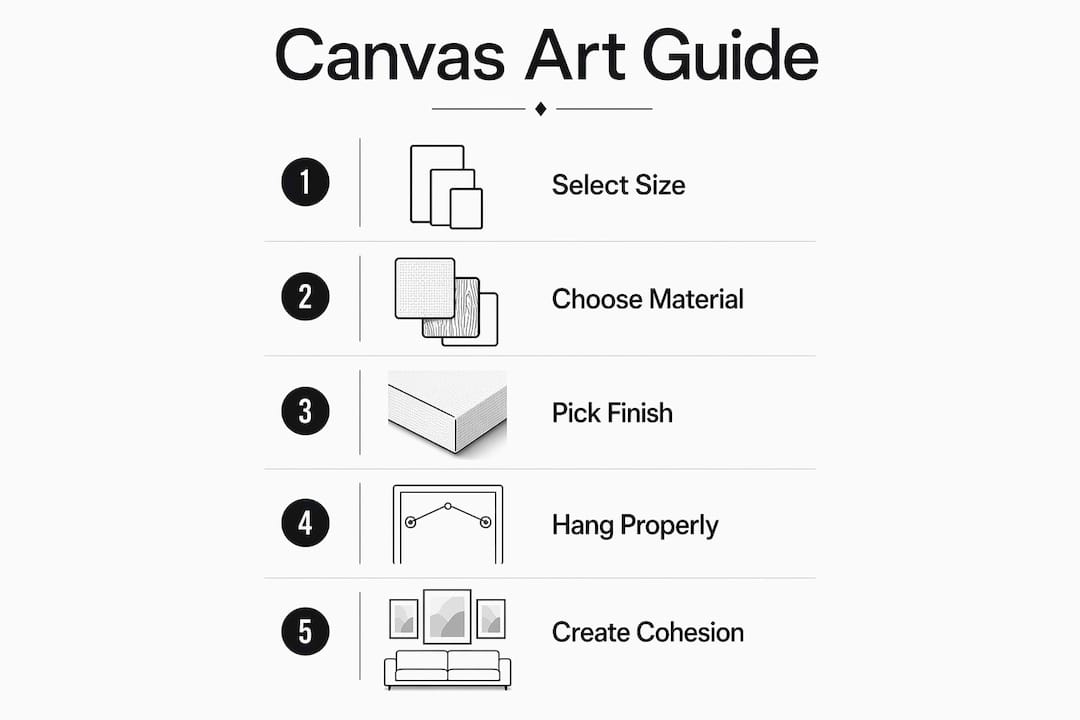
The finish you choose signals the room’s design register. Gallery-wrapped canvas, where the image wraps around the frame’s sides, reads as contemporary and clean. It works well in modern and minimalist rooms. Floater frames create a gallery-like look by mounting the canvas with a visible shadow gap between the art and the frame. That gap emphasizes craftsmanship and is the preferred choice for formal luxury interiors.
Matching canvas finish to room texture is a principle most homeowners overlook. Canvas pairs naturally with linen, wood, and matte surfaces, while framed prints with polished glass suit rooms dominated by metal and reflective surfaces. A canvas in a room full of brushed brass and marble needs a floater frame to bridge those textures.
Here is a quick breakdown of canvas finish options:
- Gallery-wrapped canvas: Clean edges, no frame needed, suits contemporary and minimalist rooms
- Floater frame: Shadow gap creates depth, signals craftsmanship, best for formal or transitional spaces
- Traditional framed canvas: Adds architectural weight, works in classic or period-style rooms
- Unframed stretched canvas: Casual and relaxed, less suited to formal luxury settings
Pro Tip: For rooms with canvas art in high-traffic areas, choose a UV-resistant coating on the print surface. It prevents color fade from both natural and artificial light, which is a real concern in rooms with floor-to-ceiling windows.
How to hang canvas art in upscale settings
Hanging height determines whether art looks intentional or accidental. The gallery standard places the vertical center of the artwork at 57–60 inches from the floor. That height aligns with average eye level and is the same standard used by museums and galleries worldwide. It works in most rooms regardless of ceiling height.
For rooms with ceilings above 10 feet, or for oversized pieces, the center can rise to 65 inches. The goal is always eye-level engagement, not filling vertical space. Pushing art too high to “use” a tall wall is one of the most common mistakes in luxury interiors.
Follow this procedure for precise placement:
- Measure the artwork’s height and divide by two to find its visual center.
- Mark 57 inches from the floor on the wall at the intended horizontal center.
- Measure the distance from the top of the canvas to the hanging wire or bracket when taut. This is the wire drop.
- Subtract the wire drop from the visual center measurement. That number is where your nail or hook goes.
- Measure the visual center on the canvas itself, not the top edge, to avoid misalignment.
- Confirm at least 12 inches of blank wall remain between the top of the frame and the ceiling.
Maintaining 12 inches of clearance between the frame’s top and the ceiling prevents the room from feeling vertically compressed. This is especially critical in rooms where art hangs above tall furniture like armoires or bookshelves.
| Ceiling height | Recommended art center height |
|---|---|
| Standard (8–9 ft) | 57 inches from floor |
| Tall (10–12 ft) | 60–65 inches from floor |
| Vaulted (12 ft and above) | 65 inches, adjusted by visual balance |
Pro Tip: Always use the wire drop measurement, not the hook position on the back of the frame. Hooks shift. Wire tension is consistent. This single adjustment eliminates most hanging errors.
How does canvas art fit into a cohesive luxury design scheme?
Canvas art functions as a visual anchor when it is scaled and placed correctly. A single oversized piece covering 60–75% of unoccupied wall space makes a room feel intentional. Multiple small frames on the same wall create visual noise, which works against the calm authority that defines luxury interiors.
The mood-over-match principle is the most important concept in selecting elegant art for luxury interiors. Art does not need to repeat the room’s colors. It needs to reinforce the room’s emotional register. A cool, minimal living room benefits from a bold Louis Vuitton canvas art piece precisely because the contrast creates tension and interest. Art that simply matches the sofa color reads as timid.
Orientation carries meaning. Vertical canvases draw the eye upward, making rooms feel taller. They work well in narrow hallways, beside tall windows, or flanking a fireplace. Horizontal canvases expand perceived width and suit low-profile furniture like platform beds and long consoles. Matching orientation to room geometry is a detail that separates professional installations from amateur ones.
Here are the core principles for integrating canvas art into a luxury scheme:
- Scale first: Choose art size before style. A correctly scaled piece in the wrong style still reads better than a beautiful piece that is too small.
- Limit the wall: Aim for 60–75% wall coverage, not 100%. Negative space is part of the composition.
- Anchor to furniture: Art should relate to what is below it, not float independently on the wall.
- Layer for depth: Leaning a smaller canvas in front of a larger hung piece adds dimension and a curated, gallery feel.
Key takeaways
Choosing canvas art for high-end rooms requires matching scale to furniture width, selecting finishes that suit room textures, and hanging at precise eye-level height to create a deliberate visual anchor.
| Point | Details |
|---|---|
| Apply the 60/75 rule | Canvas width should span 60%–75% of the furniture it anchors above. |
| Match finish to room texture | Gallery-wrapped suits modern rooms; floater frames suit formal luxury spaces. |
| Hang at 57 inches center | Place the artwork’s visual center at 57–60 inches from the floor for gallery-standard placement. |
| Anchor art to furniture | Hang 6–8 inches above sofas or consoles to prevent the floating effect. |
| Prioritize scale over style | A correctly sized piece always reads better than a beautiful piece that is too small. |
What I have learned from placing art in high-end rooms
After years of working with homeowners and designers on luxury interiors, one pattern stands out. Most clients arrive focused on style and color. They want art that matches the sofa or repeats the accent wall. That instinct produces safe rooms, not memorable ones.
The rooms that genuinely impress are built around scale decisions made first. I have seen a single oversized graffiti canvas transform a formally furnished living room into something with real personality. The contrast between the bold street-art aesthetic and the tailored furniture is exactly what makes the space feel curated rather than assembled.
The trend toward gallery-wrapped canvas and floater frames is not going away. Both finishes remove the visual clutter of traditional molding frames, which suits the clean architectural lines of modern luxury homes. What I find underused is layering: leaning a smaller canvas against the wall in front of a hung piece adds depth that no single piece achieves alone.
The most common client misconception is that expensive art automatically looks right. Placement and proportion matter more than price. A $200 canvas hung at the correct height, above the right furniture, at the right scale, will outperform a $2,000 piece hung too high and too small every single time. Get the rules right first. Then invest in the piece.
— James
Luxuryartcanvas: canvas art built for statement rooms
Luxuryartcanvas specializes in bold, fashion-forward canvas art that brings real visual authority to high-end rooms. Every piece is crafted in the USA with materials built for lasting impact, and the catalog spans over 1,000 designs across graffiti, pop art, and luxury brand-inspired themes.

For homeowners and designers who want art that commands attention rather than blends in, Luxuryartcanvas offers graffiti wall art and pop art canvas pieces sized for statement walls. Backed by more than 10,000 satisfied customers and free shipping, the collection makes it straightforward to find a piece that fits the scale and style principles covered here. Browse the full range at Luxuryartcanvas.
FAQ
What is the 60/75 rule for canvas art sizing?
The 60/75 rule states that canvas art should span 60%–75% of the width of the furniture it hangs above. For an 80-inch sofa, that means selecting a canvas between 48 and 60 inches wide.
How high should canvas art be hung in a luxury room?
The vertical center of the artwork should sit 57–60 inches from the floor, which aligns with average eye level. In rooms with ceilings above 10 feet, the center can rise to 65 inches.
Is canvas better than framed prints for upscale interiors?
Canvas outperforms paper prints in durability, resisting warping in humid conditions and eliminating the glare that comes with glass framing. Floater-framed canvas is the preferred choice for formal luxury rooms.
What canvas finish suits a modern luxury interior?
Gallery-wrapped canvas suits contemporary and minimalist rooms with clean architectural lines. Floater frames work best in formal or transitional spaces where craftsmanship details matter.
How do I prevent canvas art from looking like it is floating on the wall?
Hang the canvas 6–8 inches above the furniture directly below it. That spacing creates a visual connection between the art and the furniture, grounding the piece rather than leaving it isolated on the wall.
Bedroom Wall Art Style: Your Complete Guide for 2026
Why Art Lighting Enhances Canvas Display at Home