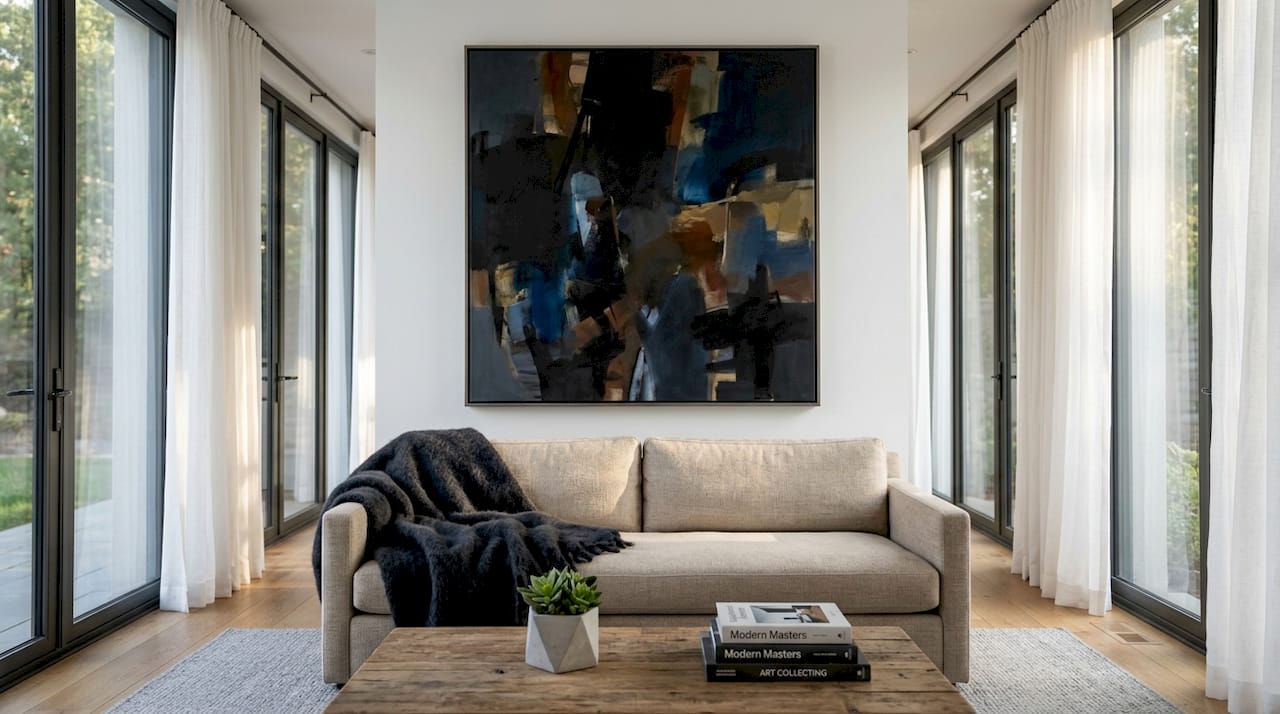
Transforming blank walls with canvas art is defined as the deliberate selection, sizing, and placement of canvas pieces to convert empty wall space into a focal point that reflects personality, reinforces atmosphere, and enhances the visual weight of any room. Canvas art works equally well in a renter’s apartment, a homeowner’s living room, or a business lobby because it requires no permanent structural changes and delivers immediate visual impact. The right piece does more than fill space. It adds personality, warmth, and style that furniture and architecture alone cannot provide. Whether you are drawn to bold graffiti prints, luxury fashion-inspired designs, or abstract compositions, the principles for making canvas wall decor work are consistent across every space type.
How do you choose the right canvas art size and arrangement?
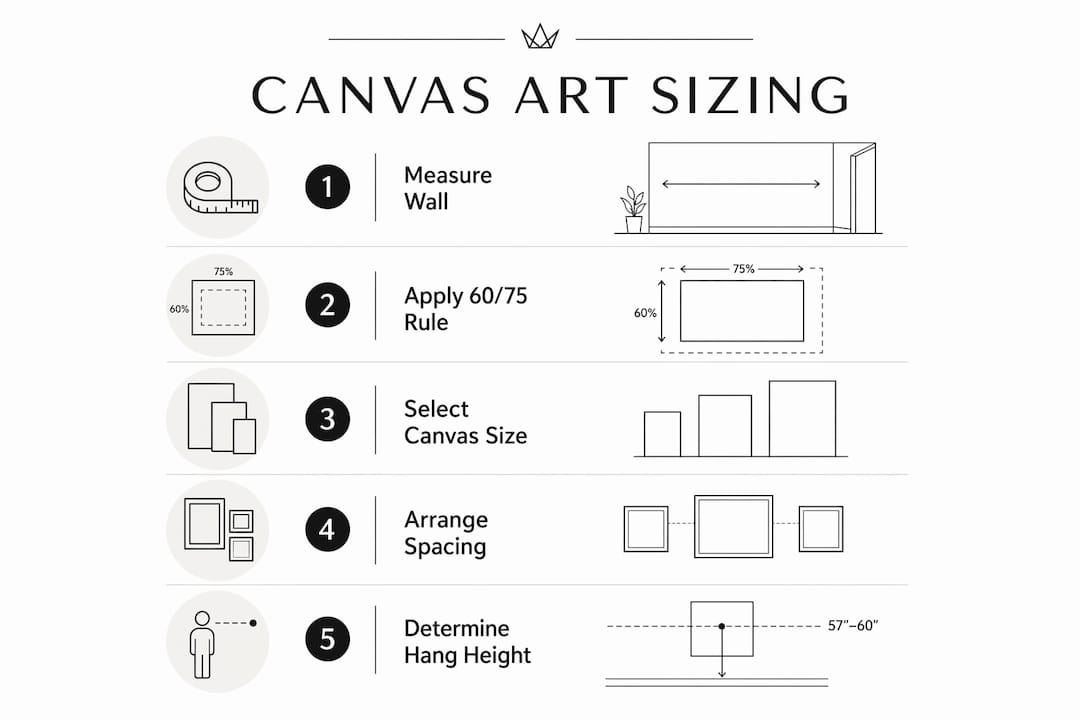
Sizing is the single decision that determines whether canvas art looks intentional or accidental. The 60/75 rule states that your artwork or grouping should span 60% to 75% of the width of the furniture anchoring it. For an 80-inch sofa, that means selecting a canvas or arrangement between 48 and 60 inches wide. This rule prevents the two most common sizing errors: a canvas so small it floats awkwardly above the furniture, and one so large it overwhelms the wall entirely.
Hanging height matters just as much as width. Center your canvas at 57 to 60 inches from the floor, which corresponds to average eye level. Leave 6 to 10 inches of clearance between the bottom edge of the art and the top of the furniture beneath it. This gap keeps the art visually connected to the furniture grouping rather than drifting toward the ceiling.
| Arrangement type | Best use case |
|---|---|
| Single large canvas | Statement walls, above sofas, above beds |
| Diptych or triptych | Wide walls with limited vertical space |
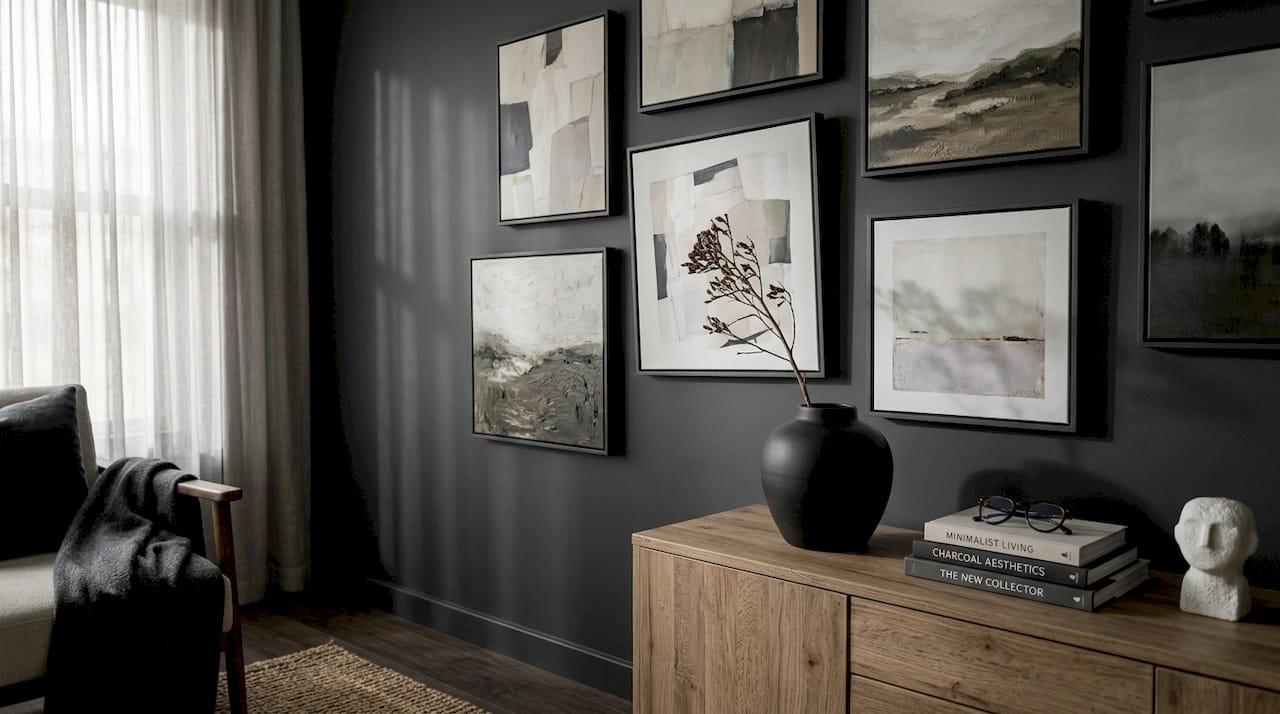
| Gallery wall grouping | Stairwells, hallways, accent walls with varied content |
| Grid arrangement | Symmetrical rooms, offices, modern interiors |
For gallery walls, 2 to 3 inches between frames creates a connected, curated look. Spacing beyond 4 inches starts to feel disconnected, as if the pieces belong to separate rooms rather than one intentional arrangement. On very large walls, up to 4 inches is acceptable, but anything wider requires larger individual pieces to compensate.
Large canvases create immediate focal points and make rooms feel larger and more deliberate. Interior staging professionals have shifted toward oversized single pieces over clusters of smaller frames precisely because a single bold canvas reads as confident rather than collected. If you are decorating a living room with a 10-foot wall, one 60-by-40-inch canvas will outperform six 12-by-12-inch prints every time.
Pro Tip: Before buying, cut kraft paper to your intended canvas dimensions and tape it to the wall. Live with it for 24 hours. You will immediately see whether the scale works or needs adjustment.
What are renter-friendly ways to hang canvas art without damage?
Renters face a real constraint: most leases prohibit wall damage, and a single nail hole can cost you part of your security deposit. The good news is that damage-free mounting technology has improved significantly. Products like FrogTape reMOVEables™ adhesive strips hold up to 12 lbs with four pairs and remove cleanly from smooth painted surfaces without leaving residue or pulling paint.
Here is how to install adhesive strips correctly for the best result:
- Clean the wall surface with isopropyl alcohol and let it dry completely before applying strips.
- Press the strips firmly to the back of the frame for at least 60 seconds to activate the adhesive bond.
- Press the frame against the wall for one full minute with steady, even pressure across the entire surface.
- Wait one hour before hanging anything on the frame to allow the adhesive to cure fully.
- When removing, pull the tab straight down slowly rather than pulling the strip away from the wall at an angle.
Adhesive strips are not suitable for textured walls, wallpaper, brick, or any porous surface. On those surfaces, the adhesive cannot form a proper bond, and the canvas will eventually fall. For textured walls, your best alternatives are leaning large canvases against the wall on the floor or on a narrow console table, using a freestanding easel, or placing smaller canvases on floating shelves installed with minimal hardware.
Pro Tip: Always check the weight of your canvas before choosing a mounting method. Most canvas prints under 8 lbs work well with two pairs of medium adhesive strips. Heavier pieces need traditional hardware or a floor-leaning approach.
How can business owners use canvas art to enhance commercial spaces?
Canvas art in a commercial setting does two things simultaneously: it reinforces brand identity and shapes how clients and employees feel the moment they walk in. A law firm with abstract, muted-tone canvases signals calm authority. A creative agency with bold wall pop art canvas pieces signals energy and originality. The art you choose communicates your brand values before anyone speaks a word.
The specific benefits for commercial spaces include:
- Branding reinforcement: Art that reflects your brand’s color palette and aesthetic creates visual consistency across your space.
- Employee mood and productivity: Canvas wall art improves atmosphere in offices by adding warmth that sterile corporate environments typically lack, which directly affects how long employees feel comfortable working in a space.
- Client impression management: Reception areas and conference rooms with curated art signal professionalism and attention to detail.
- Scalability: Large commercial walls, such as those in hotel lobbies or restaurant dining rooms, require canvases in the 48-by-72-inch range or larger to avoid looking underdressed.
- Flexibility: Canvas art can be rotated seasonally or updated as your brand evolves without the cost of repainting or structural changes.
For offices specifically, abstract art and nature-inspired prints are the most broadly appealing choices because they avoid political or cultural associations that might alienate clients or staff. Pop art and fashion-inspired designs work particularly well in retail environments, salons, boutique hotels, and creative studios where bold visual statements align with the brand experience.
What are common mistakes to avoid when decorating blank walls?
Most wall art errors fall into one of five categories, and each one is preventable with a small amount of planning before you buy or hang anything.
- Art that is too small: A 16-by-20-inch canvas above a king-size bed looks like a postage stamp. Scale up aggressively. When in doubt, go larger.
- Hanging too high: Art hung at ceiling height instead of eye level is the most common mistake in both homes and offices. The 57-to-60-inch center rule exists for a reason.
- Chaotic gallery wall spacing: Inconsistent gaps between frames make a gallery wall look accidental. Consistent spacing and frame finishes are what separate a curated gallery wall from a cluttered one. Mixing two or three frame sizes adds variety without chaos.
- Over-decorating: Treating every blank surface as something to fill is a design error. Negative space is not wasted space. It gives the eye a place to rest and makes your chosen pieces stand out more.
- Ignoring hanging hardware drop: Measuring the drop from the canvas top to the hanging point is the step most people skip, and it is why canvases end up hanging 3 inches lower than intended. Measure the distance from the top edge of the canvas to the taut hanging wire or bracket, then subtract that number from your target height to find the exact nail placement.
“Restraint is the mark of a confident decorator. One well-chosen canvas on a large wall says more than eight small ones competing for attention.”
Crooked hanging is almost always caused by skipping a level. A $10 bubble level or a free smartphone level app eliminates this problem entirely. For gallery walls, use painter’s tape to map out the full arrangement on the wall before committing a single nail. This lets you adjust spacing and composition without leaving unnecessary holes.
Key takeaways
Transforming blank walls with canvas art requires correct sizing, consistent spacing, and installation methods matched to your wall type and living situation.
| Point | Details |
|---|---|
| Follow the 60/75 sizing rule | Choose art that spans 60 to 75 percent of the furniture width beneath it. |
| Hang at eye level | Center your canvas at 57 to 60 inches from the floor for correct viewing height. |
| Use damage-free strips for rentals | Adhesive strips hold up to 12 lbs on smooth surfaces and remove without wall damage. |
| Embrace negative space | Leaving some walls bare makes your chosen art pieces more visually powerful. |
| Match art style to space purpose | Bold pop art suits creative and retail spaces; abstract or nature art works in offices and homes. |
Why I stopped treating blank walls as problems to solve
I spent years advising clients to fill every empty wall, and I was wrong. The shift happened when I walked into a minimally decorated apartment where a single oversized Chanel canvas dominated one wall in the living room. Nothing else competed with it. The room felt curated, intentional, and genuinely luxurious. That one piece did more for the space than a dozen smaller prints would have.
What I have learned from working across home, rental, and commercial spaces is that the biggest mistake is not under-decorating. It is buying art before understanding the wall. The 60/75 rule and the eye-level hanging height are not arbitrary guidelines. They are the result of how human vision naturally processes a room. When art is sized and placed correctly, it feels like it belongs. When it is not, even expensive pieces look wrong.
The trend toward oversized canvases is not just aesthetic preference. It reflects a broader understanding that one strong visual anchor is more effective than multiple competing elements. I have also seen renters transform their spaces completely using nothing but leaned canvases and adhesive strips, which proves that wall damage is never a valid excuse for living with bare walls.
My honest recommendation: start with one wall, choose one piece that genuinely excites you, size it correctly, and hang it at eye level. The room will tell you what it needs next.
— James
Find your statement piece at Luxuryartcanvas

Luxuryartcanvas carries over 1,000 canvas designs crafted in the USA, spanning bold graffiti wall art and vibrant pop art canvas prints to luxury fashion-inspired pieces featuring iconic brands like Chanel, Louis Vuitton, and Supreme. Every canvas is built for visual impact and long-term durability, whether you are decorating a living room, a rental apartment, or a commercial space. The catalog includes sizes suited to both single statement placements and full gallery wall arrangements, so you can apply every sizing and spacing principle from this guide with confidence. With more than 10,000 satisfied customers, Luxuryartcanvas is the starting point for anyone ready to stop living with blank walls.
FAQ
What size canvas art works best above a sofa?
For a standard 80-inch sofa, choose a canvas or grouping between 48 and 60 inches wide, following the 60/75 sizing rule. Hang the center of the piece at 57 to 60 inches from the floor, with 6 to 10 inches of clearance above the sofa back.
Can renters hang canvas art without damaging walls?
Yes. Adhesive mounting strips like FrogTape reMOVEables™ hold up to 12 lbs on smooth painted surfaces and remove cleanly. For heavier pieces or textured walls, leaning canvases against the wall or using a freestanding easel are equally effective options.
How far apart should frames be in a gallery wall?
2 to 3 inches between frames is the standard for a connected gallery wall look. Spacing beyond 4 inches makes the arrangement feel fragmented rather than intentional.
What type of canvas art works best in an office?
Abstract, nature-inspired, and motivational canvas art are the most broadly effective choices for office environments because they improve atmosphere without creating cultural or political associations. Bold pop art works well in creative studios and retail spaces where visual energy aligns with the brand.
How do I hang a canvas at exactly the right height?
Measure the distance from the top edge of the canvas to the taut hanging hardware, then subtract that number from your target center height of 57 to 60 inches. Measuring the hardware drop is the step that prevents canvases from ending up lower than intended.
Types of Art for Office Environments: 2026 Guide
Why Office Art Reflects Company Culture: A Leader's Guide