
Bedroom wall art style is defined as the curated visual approach that combines subject matter, media, scale, and placement to support a bedroom’s restful and personal atmosphere. Unlike living room or office art, bedroom wall decor styles prioritize calm over stimulation. The right art style and energy matter more than decoration alone. Softer forms, balanced compositions, and restrained contrast support rest instead of competing for attention. Whether you lean toward nature-inspired prints, muted abstracts, or bold pop art, the goal is the same: art that feels chosen, not placed.
What is bedroom wall art style, and why does it matter?
Bedroom wall art style is a consistent visual approach that ties together subject matter, color tone, and composition to support the bedroom’s mood. It is not about picking a single painting you like. It is about building a visual language that speaks to how you want the room to feel. A bedroom styled around Japandi minimalism calls for different art than one designed around warm, maximalist layers.
The distinction matters because bedrooms function as personal sanctuaries. Architectural Digest notes that designers consistently treat wall art as an emotional anchor, not just decoration. When art is chosen with intention, it transforms a functional sleeping space into a reflection of identity and comfort. When it is chosen randomly, it creates visual noise that works against rest.
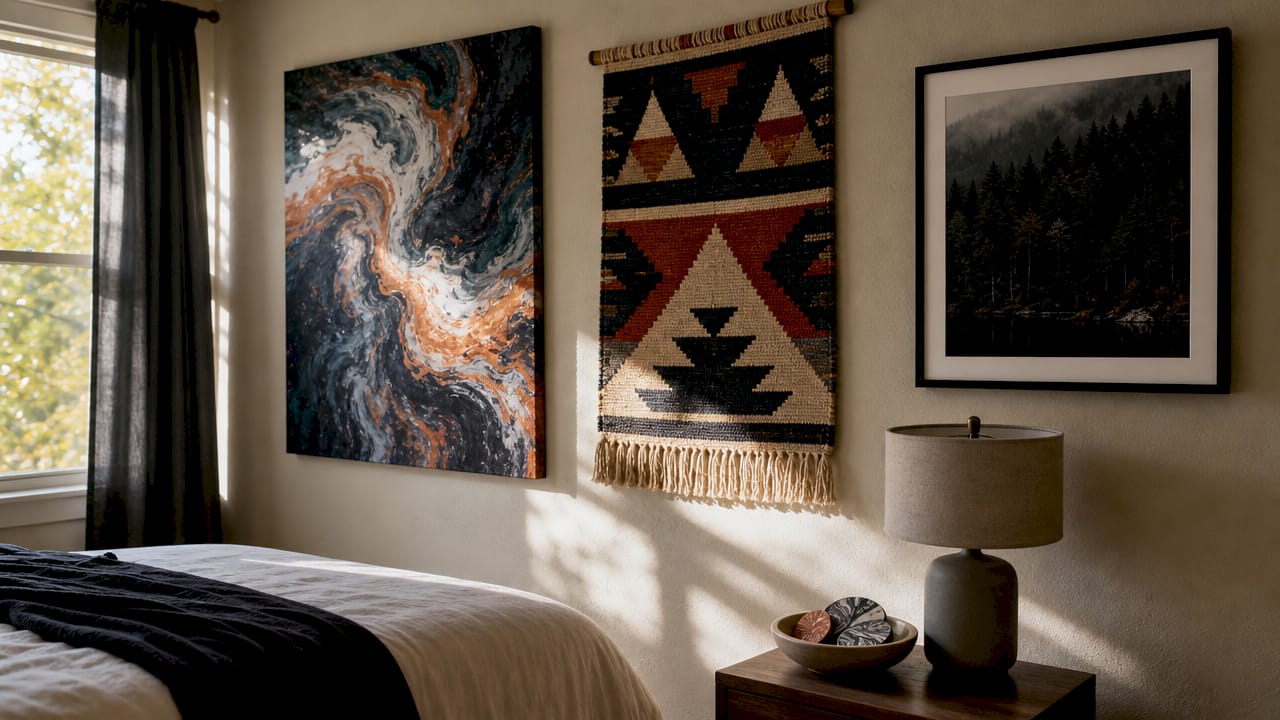
Popular bedroom wall art styles and themes explained
The most widely used bedroom art style ideas fall into five clear categories. Each one has a distinct character and works best in specific room types.
- Nature-inspired art uses calming landscapes, botanicals, and organic forms. Think soft watercolor florals, misty forest prints, or single-stem botanical studies. This style works in almost any bedroom because it reads as universally restful.
- Muted abstracts rely on soft shapes and restrained contrast. They add visual interest without demanding attention. A large canvas in warm cream, dusty rose, and sage reads as art without overpowering the room.
- Minimalist and Japandi styles favor clean lines, gentle palettes, and negative space. Minimalist wall art in this vein often features a single line drawing or a spare geometric form. The Japandi aesthetic, a blend of Japanese and Scandinavian design, pairs this restraint with natural materials.
- Personal and sentimental art includes family photography, travel prints, or meaningful imagery. This category turns a bedroom into a genuinely personal space rather than a styled showroom.
- Gallery walls can be symmetrical with matching frames or asymmetrical with mixed sizes. Gallery wall spacing of 2–3 inches between frames creates a polished look. Asymmetrical arrangements feel more eclectic and relaxed.
Media variety matters here too. Canvas prints deliver color depth and a modern look. Tapestries and textile wall hangings add softness. Mirrors reflect light and make smaller rooms feel larger. Mixing media within a single bedroom is acceptable as long as the color palette and mood stay consistent.
How to choose the right size and placement for bedroom wall art
Sizing is where most people make their biggest mistakes. Art that is too small looks like a postage stamp on a large wall. Art that is too large overwhelms the furniture beneath it.
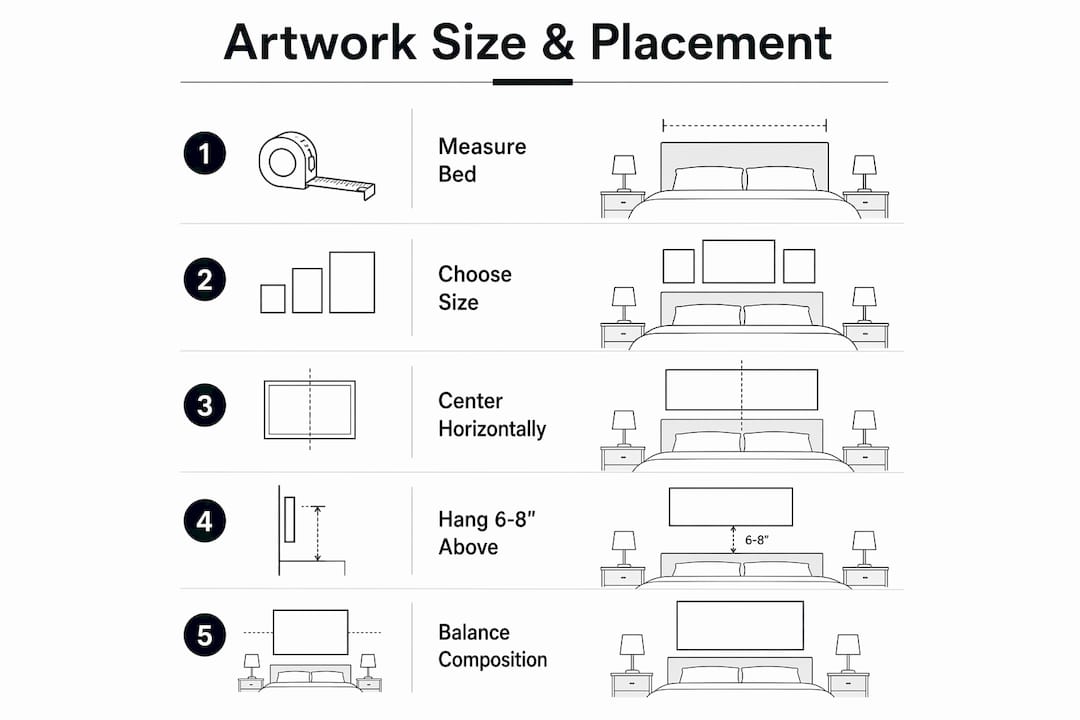
- Apply the two-thirds rule. The artwork width should be 60–75% of the bed or headboard width. For a queen bed, that means roughly 30–50 inches of total art width. This applies to a single piece or the combined footprint of a gallery wall.
- Position art at the right height. Hang artwork 6–8 inches above the headboard. This creates a visual connection between the art and the bed without leaving an awkward gap.
- Think beyond the bed wall. Dressers, side walls, and corners are all valid locations. A gallery wall on a side wall adds depth without competing with the bed as the room’s focal point.
- Scale art to the room, not just the furniture. A large room with high ceilings can carry a single oversized canvas. A smaller room benefits from a cluster of smaller pieces or one medium-scale print.
- Measure before you hang. Cut paper templates to the exact size of your planned art and tape them to the wall. Live with the placement for a day before committing to nails.
Pro Tip: Center artwork above the bed both horizontally and vertically. Centered placement creates visual stability that is directly conducive to relaxation, especially when paired with symmetrical nightstands or lamps.
What media types work best for bedroom wall decor?
The medium you choose shapes the mood of the room as much as the image itself. Each type brings a different texture and energy.
- Canvas prints and paintings deliver rich color and a contemporary feel. They work well in modern, eclectic, and maximalist bedrooms. A large canvas above the bed becomes an immediate focal point.
- Photographs and posters carry a personal or narrative quality. Black-and-white photography reads as timeless. Color photography works best when the tones align with the room’s palette.
- Textile wall hangings and tapestries add softness and dimension. They are particularly effective in bohemian, Japandi, or organic modern bedrooms where texture is a design priority.
- Mirrors serve a dual purpose. They function as wall art while reflecting light and making the space feel larger. An ornate mirror above a dresser reads as a design statement.
Texture acts as a style bridge: pairing the texture of your wall art with the room’s existing fabrics makes the art feel integrated rather than added as an afterthought. A linen canvas print next to linen bedding creates cohesion. A woven textile hanging above a rattan headboard reinforces the organic modern theme.
Pro Tip: If your bedroom already has strong texture in the bedding or rugs, choose wall art with a flatter finish like a framed print. Too many competing textures create visual clutter.
How to match bedroom wall art style to your room’s color and mood
The most reliable workflow for choosing bedroom wall art follows a clear sequence: mood first, then style, then size, then color, then placement. Matching art to the room’s visual family is the key step that prevents art from feeling like an afterthought.
Start by defining the mood you want. Calm and airy calls for soft blues, whites, and greens with nature or abstract themes. Warm and cozy calls for terracotta, amber, and deep neutrals with organic or sentimental imagery. Bold and expressive calls for high-contrast art, including pop art or graffiti-inspired pieces, paired with a room that can absorb the energy.
- For neutral rooms: introduce subtle contrast through art. A single warm-toned abstract on a white wall creates a focal point without disrupting the calm.
- For colorful rooms: choose muted or tonal art. Art that fights the wall color creates tension rather than harmony.
- For dark rooms: use lighter art to balance the depth. A pale botanical print on a deep navy wall creates a striking but restful combination.
- For small rooms: choose one statement piece rather than multiple small ones. A single well-scaled canvas reads as intentional. A cluster of mismatched small frames reads as cluttered.
The color in your art does not need to match the room exactly. It needs to belong to the same family. A dusty sage in the art echoes a sage green pillow. A warm ochre in a print connects to a honey-toned wood floor. These relationships are what make a room feel designed rather than assembled.
Key Takeaways
Bedroom wall art style works best when every decision, from media to placement, supports the room’s intended mood rather than competing with it.
| Point | Details |
|---|---|
| Define mood before choosing art | Decide how the room should feel before selecting any style, size, or color. |
| Apply the two-thirds rule | Art width should be 60–75% of the bed width for visual balance above the headboard. |
| Hang art at the right height | Position artwork 6–8 inches above the headboard to connect art with the bed. |
| Use texture as a design tool | Match art texture to room fabrics so the piece feels integrated, not placed. |
| Follow the style workflow | Move from mood to style to size to color to placement for cohesive results. |
Why intentionality is the only rule that actually matters
Most bedroom art mistakes come from the same place: buying art you love in isolation and hoping it fits. I have seen beautifully framed prints shrink to nothing on a large wall because no one measured. I have seen bold, high-contrast canvases hung above beds in rooms designed for rest, and the result is a space that feels like it is arguing with itself.
The sizing rules, the placement guides, the texture advice — all of it exists to serve one principle. Art should feel like it was always meant to be there. When you walk into a bedroom and the art feels inevitable, that is intentional design. When it feels like it could be swapped out for anything, that is decoration.
Personal connection matters more than trend alignment. A photograph that means something to you will always outperform a trendy print that leaves you cold. That said, the emotional pull of a piece does not override scale. A meaningful 8x10 photo still disappears on a king-sized wall. Print it large, frame it properly, and hang it at the right height. Then it does both jobs at once.
The one thing I push back on most is the idea that bedrooms should only hold quiet, muted art. Bold graffiti-inspired pieces and pop art canvases absolutely work in bedrooms when the room is designed to carry them. The constraint is not style. It is coherence.
— James
Luxuryartcanvas has the bedroom art styles you are looking for
Luxuryartcanvas carries over 1,000 designs across styles that range from clean minimalism to bold urban art, all crafted in the USA on high-quality canvas. Whether your bedroom calls for a quiet minimalist art print or a statement-making graffiti canvas, the collection covers the full range of bedroom wall decor styles. Every piece ships ready to hang, backed by reviews from more than 10,000 satisfied customers.

Luxuryartcanvas also offers pop art canvases and fashion-inspired designs from iconic brands like Chanel and Louis Vuitton for bedrooms that lean toward bold, expressive style. Browse the full collection at Luxuryartcanvas to find the piece that fits your room’s mood, scale, and personality.
FAQ
What is bedroom wall art style?
Bedroom wall art style is the consistent visual approach that combines subject matter, color tone, media, and placement to support a bedroom’s mood and atmosphere. It prioritizes calm, personal, and cohesive choices over random decoration.
What are the most popular types of wall art for bedrooms?
The most popular types include nature-inspired prints, muted abstracts, minimalist line drawings, personal photography, and gallery walls. Each style supports a different bedroom mood, from serene and airy to warm and personal.
How do I choose the right size of wall art for above my bed?
Use the two-thirds rule: art width should be 60–75% of the bed or headboard width, hung 6–8 inches above the headboard. For a queen bed, that means roughly 30–50 inches of total art width.
Can bold or colorful art work in a bedroom?
Bold art works in a bedroom when the room is designed to carry it. High-contrast or graffiti-inspired pieces suit bedrooms with strong, intentional color schemes. The key is coherence between the art and the room’s overall visual family.
What media type is best for bedroom wall decor?
Canvas prints deliver color depth and a modern look. Textile hangings add softness and texture. Mirrors reflect light and enlarge the space visually. The best choice depends on the room’s existing textures and the mood you want to create.
Wall Art in Client-Facing Spaces: A 2026 Design Guide
Choosing Canvas Art for High-End Rooms: Expert Guide