
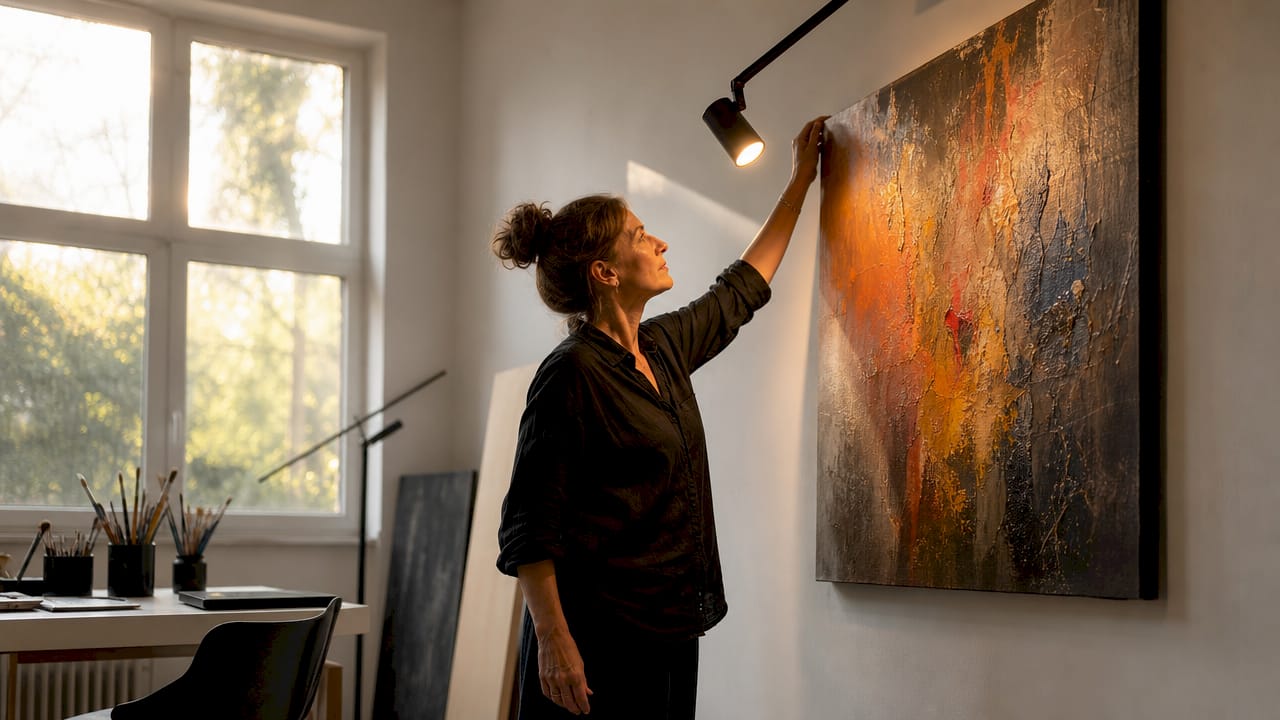
Art lighting is the deliberate use of directional, high-quality illumination to reveal the true colors, textures, and dimensionality of canvas artworks. Without it, even a striking piece loses its depth and emotional pull. Why art lighting enhances canvas display comes down to one principle: light shapes what you see and how you feel about what you see. The right fixture, angle, and color temperature can make a bold graffiti canvas or a pop art print look like it belongs in a gallery. Get it wrong, and the same piece looks flat, dull, and forgettable.
How lighting reveals true color and texture in canvas art
The single most important technical factor in art lighting is Color Rendering Index, or CRI. CRI measures how accurately a light source renders colors compared to natural daylight, on a scale of 0 to 100. For canvas art, a CRI of 95 or above is the professional benchmark. Paired with an R9 value above 80, this combination keeps deep reds vibrant and prevents warm tones from looking muddy. Low R9 lighting is why some red-heavy canvases look brownish or lifeless under standard household bulbs.
Angle matters just as much as CRI. The industry standard is 30 degrees from vertical, which highlights surface texture without bouncing glare back at the viewer. Canvas has a naturally matte, woven surface. Directional light at this angle catches the raised grain of the weave and the impasto brushwork, creating visible depth. Flat overhead lighting eliminates those shadows entirely, turning a textured painting into something that looks printed.
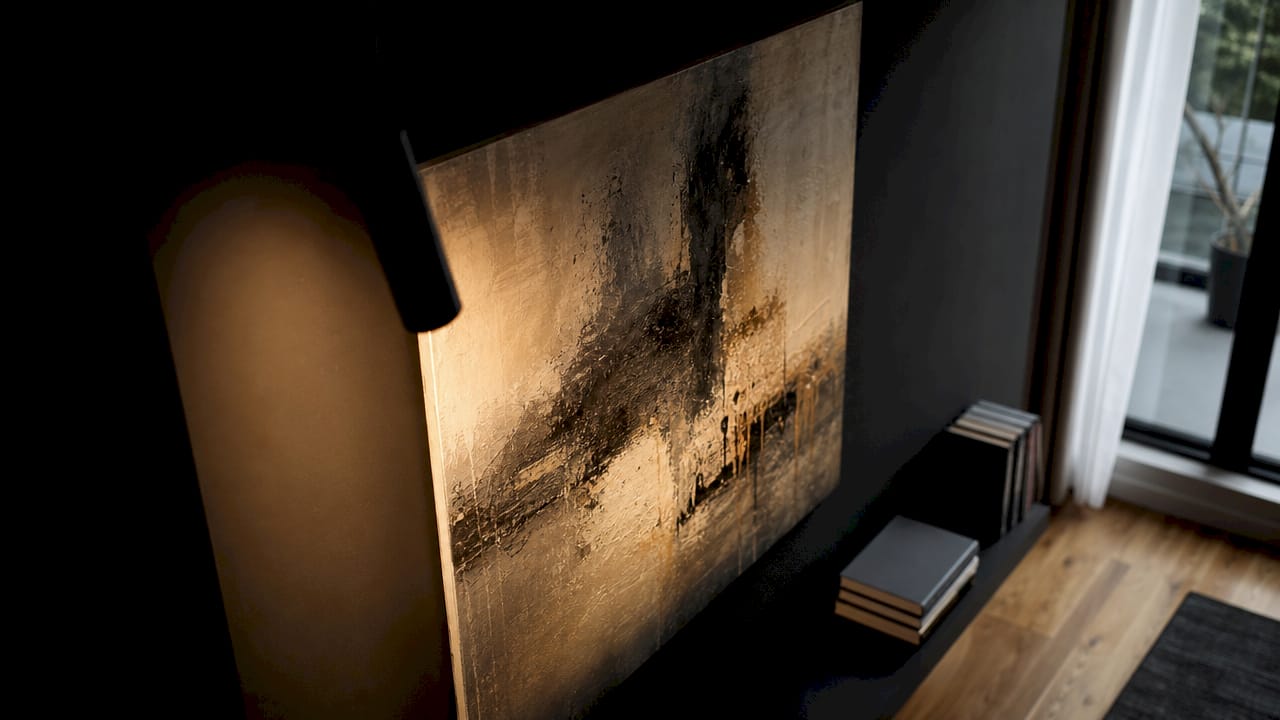
Color temperature also shapes how paint hues read. Warm white light around 3000K enhances the natural warmth of oil and acrylic pigments, making golds, oranges, and earth tones glow. Neutral white light around 4000K works better for cool-toned pieces with blues and grays. Choosing the wrong temperature does not ruin a painting, but choosing the right one makes it sing.
Key factors for revealing color and texture:
- CRI 95+ and R9 80+ for accurate color rendering, especially reds and warm tones
- 30-degree angle from vertical to catch surface texture and avoid glare
- Warm white (3000K) for warm-toned canvases; neutral white (4000K) for cool-toned pieces
- Matte canvas surface responds best to soft, directional light rather than broad ambient light
- Diffusion softens harsh beams without losing directionality
Pro Tip: Never aim a bare, undiffused spotlight directly at a canvas from less than 18 inches away. The concentrated heat and intensity will wash out color and can accelerate pigment fading over time.
Which lighting fixtures work best for canvas displays?
Not all fixtures deliver the same results. The type of light source you choose determines color accuracy, heat output, beam control, and long-term cost. Here is how the main options compare.
| Fixture type | Key benefit | Limitation | Best use |
|---|---|---|---|
| LED track lighting | Cool operation, precise beam control, high CRI available | Higher upfront cost | Most canvas displays, adjustable walls |
| Incandescent picture lights | Warm, flattering tone | High heat output, short lifespan | Small, single paintings in low-traffic rooms |
| Fluorescent | Energy efficient | Poor CRI, color distortion, flicker | Not recommended for art display |
| Fiber optic | Zero UV and heat at the light point | Complex installation, expensive | Museum-grade conservation setups |
| Wall-wash fixtures | Even coverage across large walls | Reduces shadow depth, less drama | Gallery-style multi-piece arrangements |
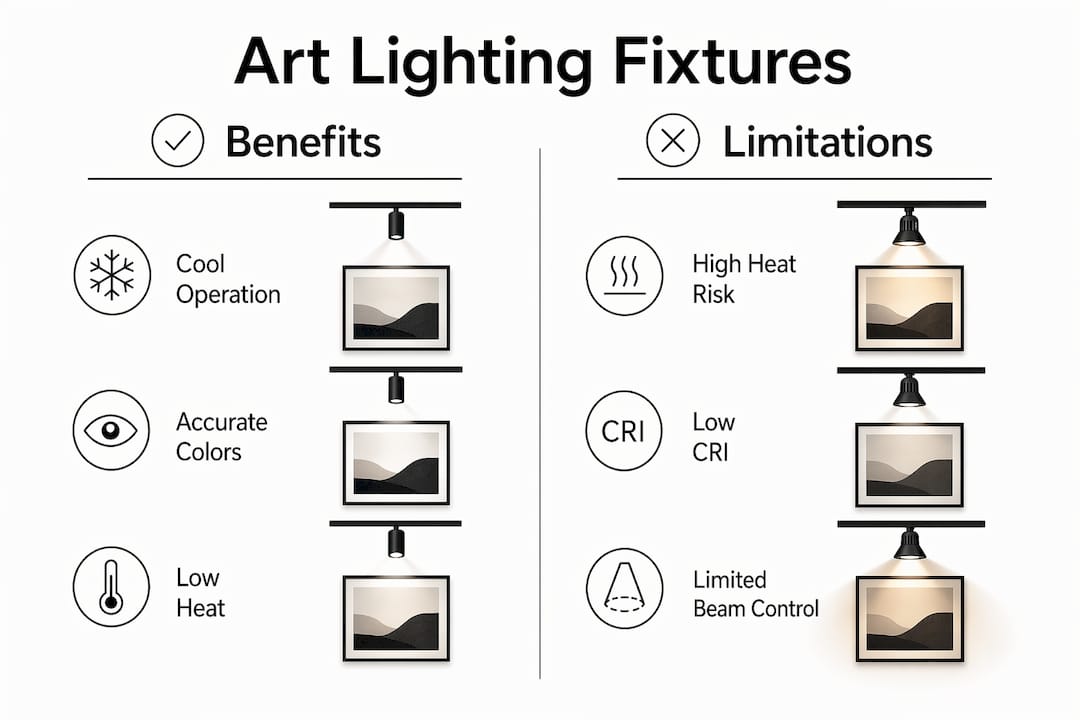
LED lighting is the clear winner for most homeowners. LEDs run cool, which protects canvas and pigments from heat damage. They offer precise beam angles, which means you can dial in that 30-degree position without guessing. High-CRI LED options are widely available and increasingly affordable. The ability to customize beam spread also lets you spotlight a single canvas or wash a full wall depending on the effect you want.
Incandescent picture lights have a nostalgic appeal and produce genuinely warm, flattering light. The problem is heat. Mounted close to a canvas, an incandescent bulb raises the surface temperature of the painting over time. That accelerates fading and can cause canvas to warp or crack. For a small piece in a low-traffic room, the risk is manageable. For a large statement canvas or a piece you care about preserving, LED is the better call.
Fluorescent lighting is the worst option for canvas art. Its CRI is typically too low to render colors accurately, and the cool, flat output flattens texture rather than revealing it. Avoid it entirely for display purposes.
Wall-washing versus spotlighting is a real design decision. Spotlighting creates drama and visual hierarchy. It pulls the eye directly to the canvas and creates the shadow contrast that makes texture visible. Wall-washing spreads light evenly across a surface, which works well for a curated gallery wall with multiple pieces but reduces the three-dimensional impact of any single canvas.
What lighting mistakes flatten or damage canvas displays?
Over-lighting is the most common mistake homeowners make. Excess light bleaches colors and reduces contrast, turning a lively canvas into a bland, two-dimensional surface. The goal is not maximum brightness. The goal is the right amount of light, from the right direction.
Multiple light sources pointed at the same canvas from different angles create a second common problem. Multiple fixtures eliminate shadows, and shadows are exactly what reveal texture and depth in a painted surface. A single, well-positioned adjustable fixture almost always produces a more dramatic and authentic result than three lights trying to cover the same piece.
Mistakes to avoid:
- Over-bright fixtures that wash out contrast and flatten perceived texture
- Multiple light sources aimed at the same canvas from different angles
- Wrong beam angle (too steep or too flat) that creates glare or fails to catch texture
- No diffusion on a bare spotlight, which creates harsh hot spots on the canvas surface
- Fixed, non-dimmable fixtures that cannot adapt to changing natural light or viewing conditions
Glare is a specific problem with canvas art. Canvas is less prone to glare than glass-framed prints, but it is not immune. A bare spotlight aimed too directly creates a bright hot spot that draws the eye away from the painting itself. Adjusting the beam angle slightly and adding a diffuser to the fixture solves this in most cases without sacrificing the directional quality of the light.
Pro Tip: Install dimmable lighting systems for every canvas display. Dimming when the room is not in use reduces cumulative light exposure and extends the life of your pigments. This is standard practice in museums and rarely used at home, but the benefit is real.
The principle that guides professional lighting designers is that lighting should be invisible. The viewer should focus entirely on the art, not notice the light source. If someone walks into your room and comments on the lamp before the painting, the lighting is doing the wrong job.
How to integrate art lighting into your home decor
Effective home art lighting starts with assessing the room before buying a single fixture. Note where natural light enters, at what time of day, and how it changes. Natural daylight variations require adjustable artificial lighting to maintain a consistent appearance throughout the day. A canvas that looks perfect at noon under window light may look completely different at 8 PM under fixed artificial light.
Follow this sequence when planning your setup:
- Map your natural light. Identify which walls receive direct sun, indirect light, or no natural light at all. Place canvases on walls with controlled or no direct sunlight to prevent fading.
- Choose your lighting layer. Accent lighting for the canvas itself, ambient lighting for the room, and task lighting for seating areas should each serve a distinct purpose. Do not ask one fixture to do all three jobs.
- Select a color temperature. For most living spaces with warm-toned canvases, 3000K to 3500K produces an inviting, gallery-like result. Cooler spaces or modern interiors with abstract or cool-toned art can go up to 4000K.
- Position the fixture at 30 degrees. Measure from the wall, not from the ceiling. Adjustable track lighting or a picture light with a tilting head makes this straightforward.
- Install a dimmer. This is non-negotiable for both conservation and ambiance. A dimmer lets you shift from a bright, focused display setting to a softer evening mood without changing the fixture.
- Test before committing. Live with a temporary setup for a few days before mounting anything permanently. The way light interacts with your specific wall color, ceiling height, and canvas finish will surprise you.
Room color affects how lighting reads on a canvas. Dark walls absorb light and require slightly brighter fixtures to achieve the same perceived brightness. Light or white walls reflect ambient light back onto the canvas, which can reduce the contrast that makes a piece dramatic. Knowing this helps you calibrate output rather than just defaulting to the brightest available option.
For homeowners who want to see how canvas art suits different home styles, the relationship between wall color, room scale, and lighting is worth studying before making final placement decisions.
Key Takeaways
Art lighting enhances canvas display by combining high CRI values, a 30-degree beam angle, and warm color temperature to reveal true color, surface texture, and emotional depth.
| Point | Details |
|---|---|
| CRI and R9 values matter | Use CRI 95+ and R9 80+ to render colors accurately, especially warm and red tones. |
| 30-degree angle is standard | Position fixtures at 30 degrees from vertical to reveal texture and minimize glare. |
| LED is the best fixture choice | LEDs run cool, offer precise beam control, and protect pigments from heat damage. |
| Avoid multiple light sources | Single, well-positioned lighting creates shadow depth that reveals canvas texture. |
| Dimmable systems protect art | Reducing light exposure when not viewing preserves pigments, a museum-standard practice. |
The fourth dimension most homeowners overlook
Light is described as the fourth dimension in architecture, and after years of watching homeowners hang beautiful canvases under terrible lighting, I believe that completely. The painting is only half the display. The light is the other half.
What surprises most homeowners is how much the R9 value matters. They buy a high-CRI bulb, feel satisfied, and never realize their deep reds are still looking dull because R9 was never specified. A CRI of 90 with a low R9 is not the same as CRI 95 with R9 80+. The difference shows up immediately on any canvas with warm or red-heavy tones.
The other thing I have noticed is that restraint is harder than it sounds. Homeowners tend to add more light when something looks off, when the real fix is usually repositioning the single fixture they already have. A 5-degree adjustment in beam angle can do more than doubling the wattage. Precision beats intensity every time.
My honest recommendation: treat your lighting setup as part of the art purchase, not an afterthought. A bold graffiti canvas or a vibrant pop art piece deserves the same attention to light that a gallery would give it. The emotional payoff of getting it right is immediate and lasting.
— James
Luxuryartcanvas: canvas art built for bold displays
The canvas you choose determines how much lighting can do for a space. Bold, high-contrast pieces respond most dramatically to proper lighting because there is more texture, color depth, and visual energy to reveal.

Luxuryartcanvas specializes in exactly this kind of art. From large-format graffiti canvases that reward directional spotlighting to vibrant pop art prints that come alive under warm white light, every piece is crafted in the USA with materials built for visual impact. With over 1,000 designs and more than 10,000 satisfied customers, Luxuryartcanvas offers the kind of art that makes proper lighting worth the effort. Browse the full graffiti canvas collection and find the piece your wall has been waiting for.
FAQ
What is the best angle for lighting a canvas painting?
The industry standard is 30 degrees from vertical. This angle highlights surface texture and brushwork while reducing glare and reflections on the canvas.
What CRI rating do I need for art lighting?
A CRI of 95 or above, paired with an R9 value of 80 or higher, accurately renders colors including deep reds. Lower ratings cause warm tones to appear dull or muddy.
Are LED lights good for canvas art?
LED lights are the best choice for canvas displays. They run cool, offer precise beam control, and are available in high-CRI versions that protect pigments from heat damage.
Why does my canvas look flat under normal room lighting?
Flat overhead or multi-source lighting eliminates the shadows that reveal texture and depth. A single adjustable fixture positioned at 30 degrees restores the three-dimensional quality of the canvas.
What color temperature works best for home canvas displays?
A color temperature of 3000K to 3500K produces warm, gallery-quality light that enhances most painted canvases. Cooler or more abstract pieces can tolerate up to 4000K without losing vibrancy.
Choosing Canvas Art for High-End Rooms: Expert Guide
Refreshing Home Aesthetic with New Wall Art in 2026