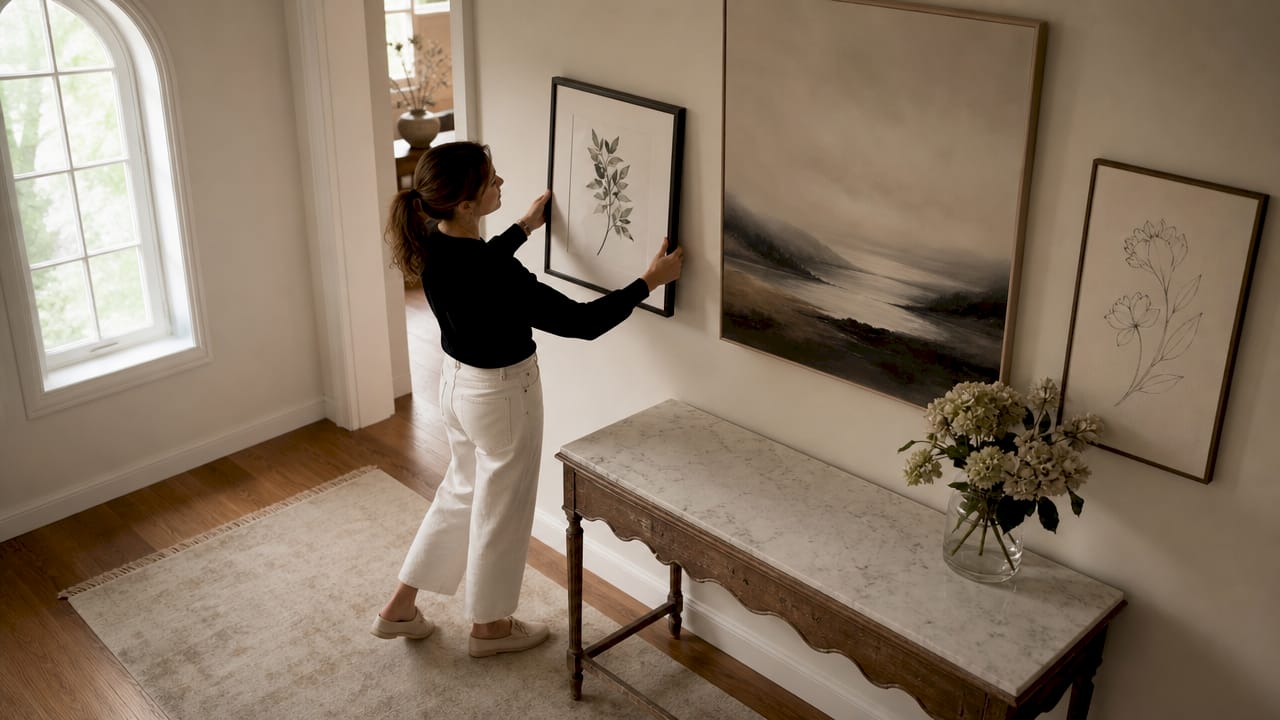
Refreshing home aesthetic with new wall art is defined as the deliberate process of updating a room’s visual identity by changing, rearranging, or reframing the art on your walls. Interior designers call this practice “art curation,” and it produces a faster mood shift than repainting or buying new furniture. The 60-30-10 color rule guides professional art selection: 60% of room color is dominant, 30% secondary, and 10% bold accent. That ratio tells you exactly where a new canvas should land in your color scheme before you buy it. Luxuryartcanvas offers over 1,000 distinct designs, so you can apply this rule with precision from day one.
What do you need before refreshing home aesthetic with new wall art?
The right materials make the difference between a refresh that takes one afternoon and a project that stalls for weeks. Gather these before you start.
Core materials:
- Existing art pieces you already own (these become your permanent anchors)
- Three replacement prints aligned to your seasonal palette
- Spray paint in a neutral or accent color for optional frame updates
- A level, picture hooks, and painter’s tape for layout planning
- A color swatch or photo of your room’s dominant wall color
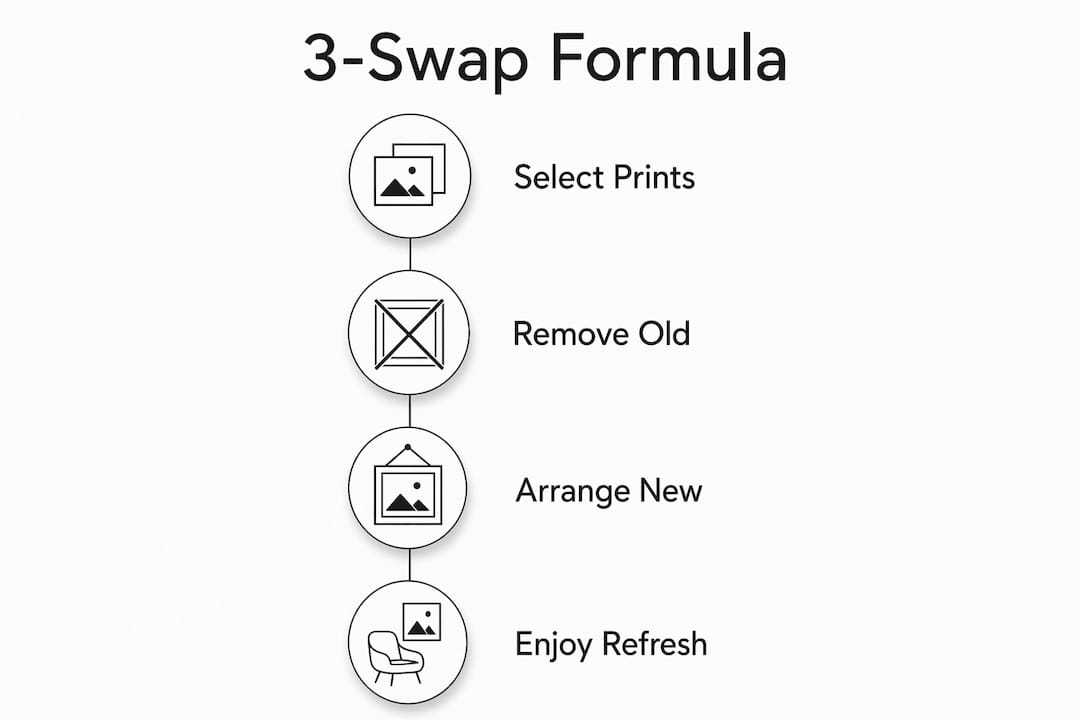
The 3-Swap Formula is the most budget-friendly method available. It replaces exactly three prints on a gallery wall: one botanical, one abstract, and one typography piece. The total cost runs from $0 to $8 when you print new designs at home and repaint one existing frame with spray paint.
Pro Tip: Photograph your current wall layout before removing anything. That photo becomes your reference grid when you rehang, saving you from guessing where each piece belongs.
Sourcing prints does not require a large budget. Free printable art sites, local print shops, and online canvas retailers all offer options at different price points. For homeowners who want a bold, contemporary statement rather than a subtle seasonal swap, pop canvas art from Luxuryartcanvas delivers high-impact visuals crafted in the USA with gallery-grade materials.
| Material | Purpose | Estimated cost |
|---|---|---|
| Replacement prints (3) | Core of the 3-Swap Formula | $0–$8 |
| Spray paint (1 can) | Frame refresh | $4–$6 |
| Picture hooks and level | Accurate rehang | $3–$5 |
| Painter’s tape | Floor layout planning | $2–$4 |
How do you select the right wall art for your home?
Art selection is the step most homeowners rush, and it shows. A piece that ignores the room’s existing palette creates visual noise instead of calm. The 60-30-10 rule applied to art means your new canvas should carry your room’s secondary color (the 30%) as its dominant tone, with the bold accent (the 10%) appearing in details like brushstrokes or typography.
Art categories that work best for swaps:
- Botanical prints: Soft greens and warm neutrals that work in any season
- Abstract canvases: Flexible enough to shift mood without clashing with furniture
- Typography pieces: Add personality and anchor a gallery wall with readable focal points
- Pop art and graffiti canvases: High contrast, bold color, and cultural references that make a room feel current
Mixing art styles creates texture and visual interest. A single-style gallery wall reads as flat. Pair a large abstract with a smaller botanical and a typography piece, and the eye moves naturally across the wall. Oversized statement artwork anchors a room more effectively than several small pieces clustered together. One strong canvas in a living room or entryway simplifies the visual language and makes a bigger impact than five medium prints.
Scale matters as much as style. Art that is too small for a wall looks like an afterthought. The standard rule: the art should cover 60–75% of the wall width above a sofa or console. For a typical 84-inch sofa, that means a canvas or grouping between 50 and 63 inches wide.
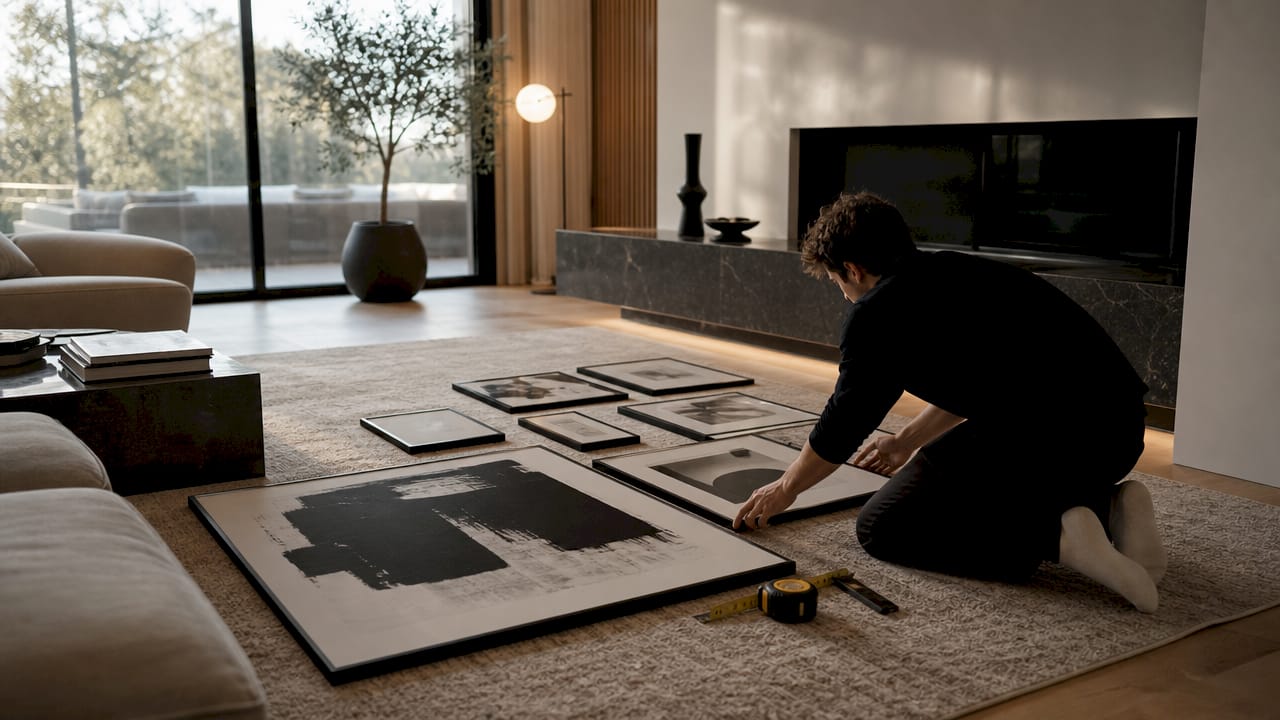
Pro Tip: Before hanging anything, lay your pieces on the floor in the arrangement you plan to use on the wall. Adjust spacing and scale there, where mistakes cost nothing.
Color temperature is the detail most guides skip. Warm-toned art (reds, oranges, yellows) advances visually, making a large room feel cozier. Cool-toned art (blues, greens, grays) recedes, making a small room feel larger. Choose based on what the room needs, not just what you like in isolation.
How does the 3-Swap Formula work step by step?
The 3-Swap Formula is a structured method for updating a gallery wall without dismantling it entirely. It works because it targets the three print types most responsible for a wall’s seasonal mood while leaving permanent anchor pieces in place.
-
Identify your three swap candidates. Look for the botanical, abstract, and typography prints currently on your wall. These are the pieces most tied to a specific season or trend. If you do not have all three types, the missing category is your first purchase.
-
Choose replacement prints aligned to your target palette. For a spring or summer refresh, move toward lighter botanicals, soft watercolor abstracts, and clean sans-serif typography. For fall and winter, shift to deeper tones, textured abstracts, and serif or script typography.
-
Update one frame with spray paint. This step costs under $6 and delivers a disproportionate visual return. A matte black frame on a previously gold piece changes the entire register of a gallery wall. Apply two thin coats and let each dry fully before rehanging.
-
Keep your permanent anchor pieces in place. The anchor is typically your largest or most meaningful piece. Moving it resets the entire composition and forces you to rehang everything. Leave it where it is and build the swap around it.
-
Rehang using your reference photo. Spacing between frames should stay consistent, typically 2–3 inches. Use painter’s tape on the wall to mark frame positions before driving any hooks.
Refreshing a gallery wall costs as little as $0 to $8 using this method. That figure matters because it removes the financial barrier that stops most homeowners from updating their walls more than once a year. A wall that changes with the seasons feels alive in a way that a static arrangement never does.
Rearranging existing artwork or rotating pieces between rooms produces equivalent impact for free. Moving a canvas from a bedroom to a hallway gives both spaces a new focal point without spending anything.
What are creative ways to display wall art beyond hanging?
Hanging art flat against a wall is the default, but it is not always the best choice. Leaning art against a wall creates a relaxed, sophisticated look that works especially well in living rooms and bedrooms. It also makes seasonal rotation effortless because no hooks are involved. For large or heavy pieces, use museum-grade non-slip pads at the base to prevent sliding.
Creative display methods worth trying:
- Gallery groupings with identical frames: When a single piece feels too small for a wall, surround it with matching frames holding complementary prints. The uniform frames create visual unity and make the grouping read as one large installation.
- Shelf layering: Place art on floating shelves and lean smaller pieces in front of larger ones. This creates depth and lets you swap individual pieces without touching the wall.
- Textile and sculptural elements: Mix woven wall hangings, ceramic wall pieces, or metal sculptures with canvas art. Natural finishes and organic textures soften a wall’s atmosphere and serve as a backdrop that makes painted canvases pop.
- 3D wall art: Modern resin and dimensional pieces add tactile interest that flat prints cannot. Modern 3D wall art is growing in popularity for dining and living rooms where a focal point needs to hold attention from across the room.
- Seasonal rotation without buying new: Move pieces from storage, rotate art between rooms, or flip a reversible textile. The wall changes; your budget does not.
The best wall decor creates a dialogue between materials, eras, and textures. Restraint with a few intentional pieces outperforms a cluttered wall every time. Three well-chosen canvases with breathing room between them carry more visual weight than ten pieces packed together.
Key takeaways
Refreshing your home’s look with wall art works best when you apply the 3-Swap Formula, follow the 60-30-10 color rule, and prioritize intentional curation over buying more pieces.
| Point | Details |
|---|---|
| Use the 3-Swap Formula | Replace one botanical, one abstract, and one typography print to shift mood for $0–$8. |
| Apply the 60-30-10 rule | Match new art to your room’s secondary color (30%) for a balanced, professional result. |
| Anchor pieces stay put | Keep your largest or most meaningful canvas in place and build swaps around it. |
| Lean art for flexibility | Leaning canvases against walls makes seasonal rotation fast and damage-free. |
| Curation beats quantity | Three intentional pieces with breathing room outperform a crowded gallery wall. |
Why I think most people overcomplicate a wall art refresh
Most homeowners I talk to assume they need to buy everything new to see a real change. That belief costs them money they do not need to spend and delays a refresh that could happen this weekend.
The honest truth is that your existing art is probably doing more work than you realize. The problem is usually arrangement, not inventory. A canvas that looks dull in a bedroom often becomes a focal point in a hallway, simply because the light and surrounding colors changed. I have seen a single move like that shift the entire feel of two rooms at once.
Where I do think buying new art pays off is when you want a genuine style shift, not just a seasonal update. If your current collection is all neutral botanicals and you want something with energy and edge, rearranging what you have will not get you there. That is the moment to invest in a piece with real visual authority: bold color, strong composition, and a point of view. One statement canvas does more than a dozen safe prints ever will.
The shortcut most guides miss: decide on your anchor piece first, then build everything else around it. That single decision eliminates 80% of the confusion about what to buy, where to hang it, and how much to spend.
— James
Luxuryartcanvas: bold art for a real style shift
When rearranging what you own is not enough, the right canvas makes the difference. Luxuryartcanvas specializes in graffiti and pop art canvases that merge street culture with high-fashion references, including designs inspired by Chanel and Louis Vuitton. Every piece is crafted in the USA with gallery-grade materials built to hold color and detail for years.
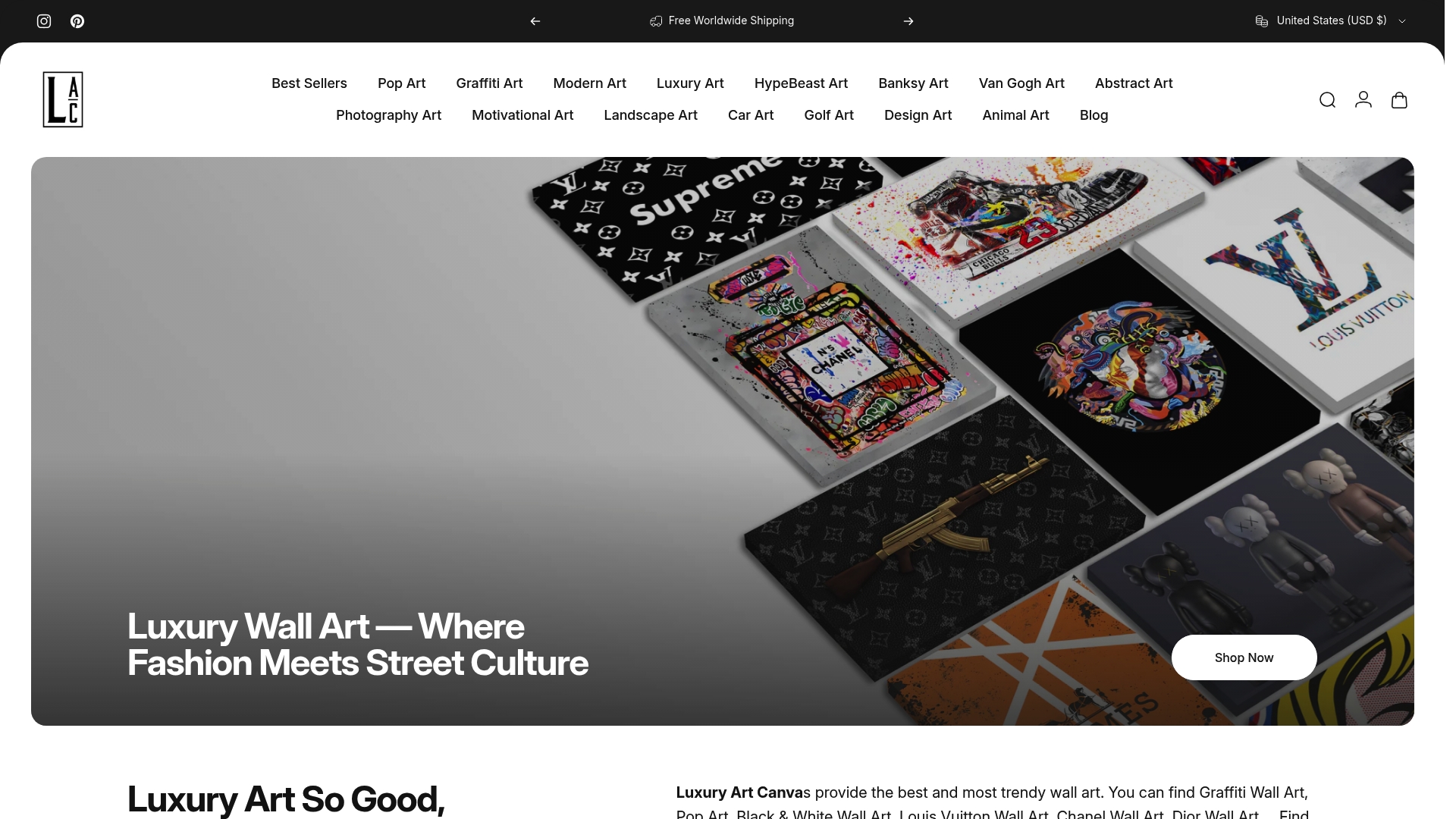
Over 10,000 satisfied customers have used Luxuryartcanvas to make a strong aesthetic statement in living rooms, entryways, and offices. The catalog covers more than 1,000 designs, from graffiti wall art with raw urban energy to vibrant pop art canvases that anchor a room instantly. Browse the full collection and find the piece your wall has been waiting for.
FAQ
How much does a wall art refresh typically cost?
A gallery wall refresh using the 3-Swap Formula costs as little as $0 to $8 when you print new designs at home and repaint one existing frame with spray paint. Buying new canvas art raises the cost but delivers a more permanent style shift.
What is the 60-30-10 rule in wall art selection?
The 60-30-10 rule states that 60% of a room’s color is dominant, 30% secondary, and 10% bold accent. New wall art should carry the room’s secondary color as its dominant tone to integrate naturally with the existing palette.
Do I need to buy new art to refresh my walls?
No. Rearranging existing artwork, rotating pieces between rooms, or reframing current prints often delivers equivalent visual impact at no cost. Buying new art makes sense when you want a genuine style change rather than a seasonal update.
What size art works best above a sofa?
Art or a grouping above a sofa should cover 60–75% of the sofa’s width. For a standard 84-inch sofa, that means a canvas or arrangement between 50 and 63 inches wide.
What art styles work best for a contemporary home refresh?
Abstract canvases, bold pop art, and graffiti-style pieces are the strongest choices for a contemporary refresh. These styles carry enough visual weight to anchor a room and hold attention without relying on seasonal trends.
Why Art Lighting Enhances Canvas Display at Home
Pop Art Decor Ideas for Small Spaces That Work