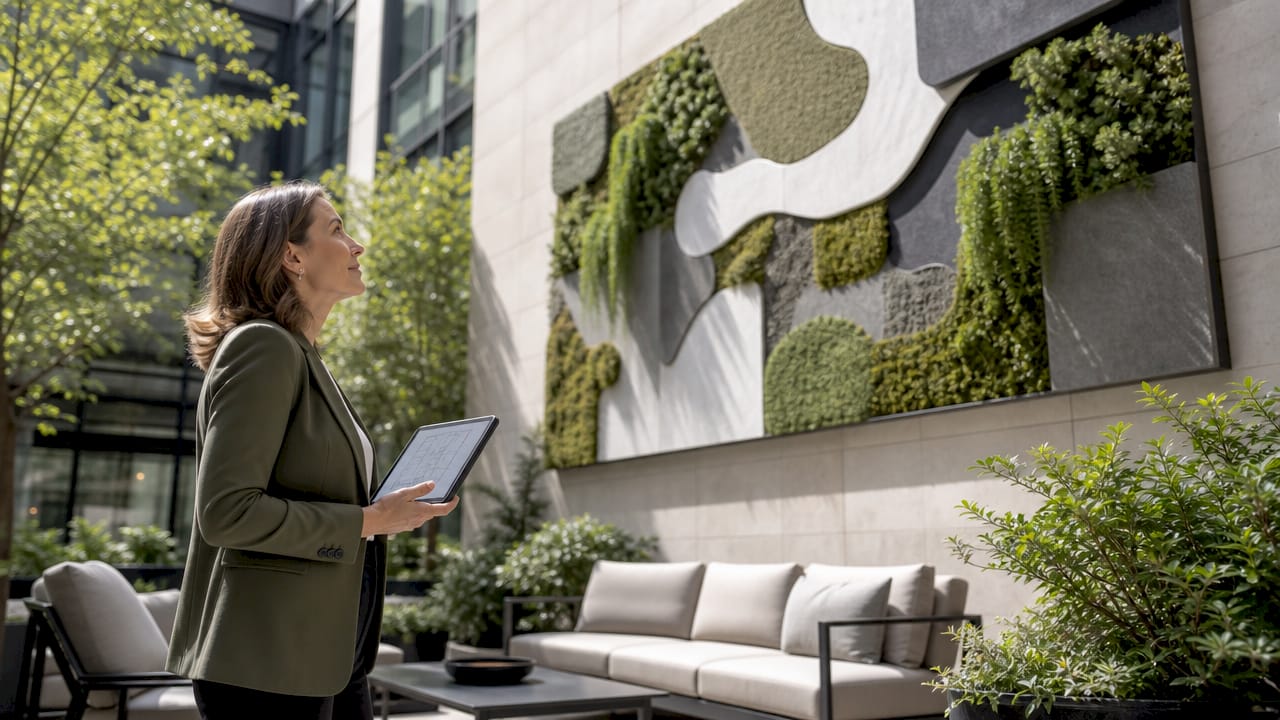
Wall art is defined as a primary design tool that shapes client perception, brand identity, and psychological comfort in commercial environments. Interior designers and brand managers who treat it as decoration miss its real function. The role of wall art in client-facing spaces is to communicate values, set emotional tone, and drive measurable behavior before a single word is spoken. Research now confirms what experienced designers have long observed: the right art on the right wall produces outcomes you can track.
How does wall art influence client perception and behavior?
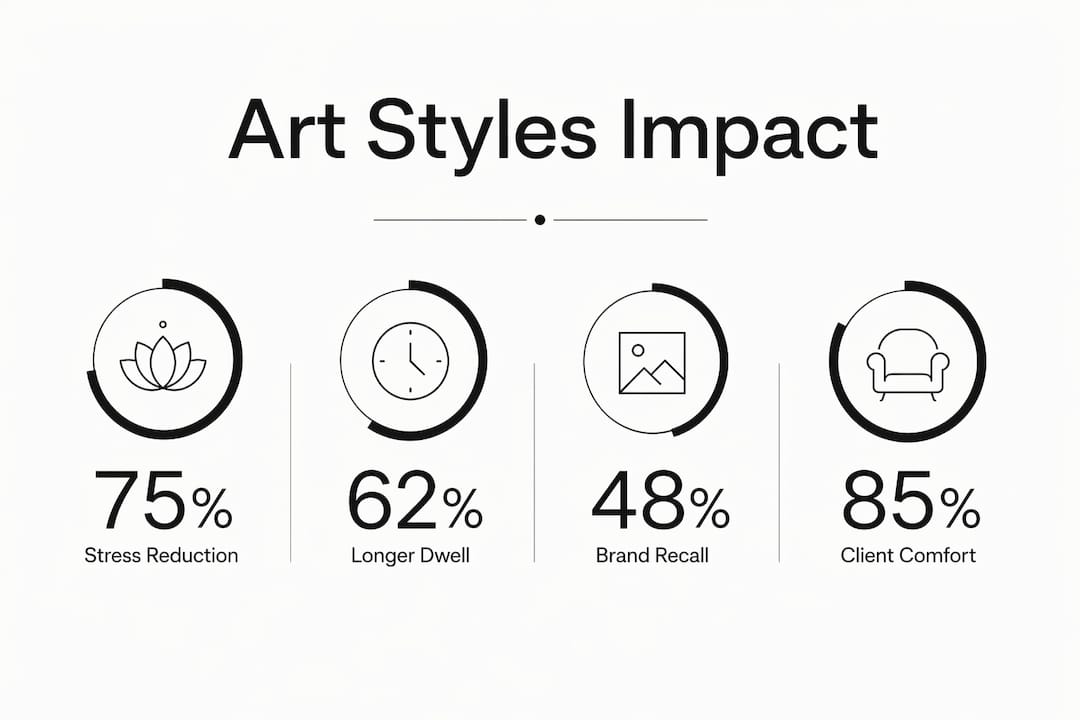
Art changes how clients feel in a space, and that feeling changes what they do. Public art improves perceived restorative capacity in commercial environments, particularly when it uses figurative elements and themes drawn from architecture and the natural world. Restoration here means the psychological shift from stress to calm. A client who feels calm is more open, more trusting, and more likely to engage.
The behavioral evidence is equally direct. 62% of consumers stayed longer or spent more time in hospitality environments because they enjoyed the atmosphere, including visual elements like wall art. Mood Media’s 2026 survey of 1,000 U.S. adults tied this directly to revenue potential. Longer dwell time is not a soft metric. It correlates with higher spend and stronger brand recall.
“Slow-looking at art for 15 minutes guided viewing enhances perceived beauty and understanding versus free-looking, encouraging deeper client engagement.” — Psychology Today, 2026
The concept of slow-looking deepens client engagement by increasing compassion, absorption, and what researchers call edification. Spaces designed to invite that kind of attention, through scale, placement, and subject matter, produce clients who feel genuinely connected to the environment. That connection transfers to the brand.
Practical implications for designers include:
- Place anchor pieces at natural pause points: reception desks, waiting areas, and elevator lobbies.
- Choose art with enough visual complexity to reward a second look without creating confusion.
- Avoid rotating art too frequently. Familiarity builds comfort, and comfort builds trust.
- Use art to reinforce the emotional promise of the brand, not just its color palette.
What art styles maximize impact in client-facing lobbies?
Style selection is not a matter of personal taste. It is a design decision with documented psychological consequences. A 2026 MDPI study found that art form has a stronger effect on restorative perception than subject matter. Composition, structure, and visual coherence matter more than whether the piece depicts a landscape or an abstract shape. That finding should reorder how designers brief artists and curators.
Biophilic art, which integrates nature motifs, calm palettes, and organic forms, produces the strongest documented psychological outcomes. Urban biophilic art environments showed significant improvements in depression and anxiety symptoms over 12 months in a BMC Psychology longitudinal study. The mechanism is attention restoration: nature-based imagery gives the brain a low-effort processing task that reduces stress. For client-facing spaces in healthcare, finance, or legal services, this is not a minor consideration.
| Art Style | Key Psychological Effect | Best Application Context |
|---|---|---|
| Biophilic / nature-integrated | Stress reduction, attention restoration | Healthcare, wellness, financial services |
| Graffiti / street art | Energy, cultural relevance, brand edge | Retail, creative agencies, hospitality |
| Pop art | Optimism, familiarity, visual impact | Fashion, lifestyle brands, co-working spaces |
| Figurative / architectural | Trust, credibility, restorative perception | Law firms, corporate lobbies, hotels |
| Minimalist prints | Calm, focus, spatial clarity | Tech companies, luxury retail, executive suites |
Graffiti and pop art, the categories Luxuryartcanvas specializes in, perform well in environments where brand energy and cultural relevance are part of the value proposition. A Louis Vuitton canvas or a bold Chanel street art piece communicates luxury fluency without a single word of copy. That is visual storytelling doing the work of brand positioning.
Pro Tip: Select art style based on the emotional state you want clients to arrive in, not the one they bring through the door. A law firm lobby should calm anxiety. A creative agency lobby should spark curiosity. Let the psychological target drive the style choice.

How to strategically select and place wall art for client spaces
Placement determines whether art performs or simply occupies space. The 70/30 rule in art composition applies directly here: 70% of a wall’s visual weight should anchor one dominant piece or zone, with 30% left as breathing room. Crowded walls signal chaos. Sparse walls signal neglect. The ratio creates visual hierarchy without requiring a design degree to read.
Follow these steps when planning art placement in a client-facing environment:
- Map the client journey. Identify every point where a client pauses, waits, or transitions. These are your primary placement zones.
- Scale to the wall, not the room. Art that is too small for its wall reads as an afterthought. A piece should fill at least 60% of the wall width it occupies.
- Align art with brand language. A company’s art choices reflect its culture. Bold graffiti signals creative confidence. Minimalist prints signal precision and restraint. Neither is wrong. Both must be intentional.
- Use branded elements without over-branding. Wall decals, murals, and digital art canvases can carry brand colors and iconography without turning the space into a trade show booth.
- Test before committing. Use high-resolution mockups or temporary prints before installing permanent pieces. Client-facing spaces rarely allow for visible trial and error.
Pro Tip: Avoid the most common pitfall in commercial art selection: choosing pieces that are generically inoffensive. Art that no one dislikes is art that no one remembers. A single bold piece creates more brand recall than a gallery wall of safe choices.
The spatial design around art matters as much as the art itself. Brand environments influence client perception at every stage of the relationship, from first visit to long-term retention. Art that disrupts foot traffic flow or competes with wayfinding signage creates friction. Art that guides, calms, or energizes at the right moment creates connection.
What measurable business benefits does wall art produce?
Art in commercial environments is performance infrastructure, not decoration. Experience-driven design treats art as a tool that influences client emotions and behavior beyond aesthetics. That framing shifts the conversation from “what looks good” to “what works.”
The business case is grounded in documented outcomes. Mood Media’s 2026 hospitality survey found that atmosphere elements, including visual art, directly correlate with guest behavior and revenue. Clients who enjoy a space return to it. Clients who return spend more. The art on the wall is part of that retention mechanism.
| Business Metric | Art’s Contribution | Evidence Basis |
|---|---|---|
| Client dwell time | Longer stays in visually engaging environments | Mood Media 2026 survey |
| Brand perception | Consistent visual identity builds credibility | All In Pro Solutions analysis |
| Client well-being | Reduced anxiety and stress in biophilic environments | BMC Psychology 2026 study |
| First impression quality | Strong art installations create positive initial perception | Brand environment research |
| Client confidence | Cohesive design signals professionalism and care | All In Pro Solutions analysis |
Consistent branding through art also builds credibility over time. Wall wraps and branded installations in reception areas create strong first impressions that carry through the entire client relationship. A client who enters a space that looks considered and intentional assumes the work produced there is equally considered. That assumption is worth protecting.
Integrating nature motifs and calm palettes produces measurable psychological comfort that outperforms purely abstract or decorative choices. For businesses where client decision-making is part of the service, a calmer client is a better client. That is not a soft benefit. It is a competitive advantage.
Key Takeaways
Wall art in client-facing spaces is a measurable performance tool that shapes client behavior, brand perception, and psychological comfort when selected and placed with intent.
| Point | Details |
|---|---|
| Art form over subject matter | Composition and visual structure drive psychological outcomes more than what the art depicts. |
| Dwell time and revenue | 62% of consumers stayed longer in spaces with strong visual atmosphere, linking art directly to revenue. |
| Biophilic art for well-being | Nature-integrated art reduces client stress and anxiety, improving openness and decision-making. |
| Placement follows the client journey | Anchor pieces at pause points: reception, waiting areas, and transition zones for maximum impact. |
| Style must match brand intent | Graffiti signals creative energy; minimalist prints signal precision. Neither works without intentionality. |
Why I think most businesses are still getting this wrong
Most client-facing spaces I encounter treat art as the last line item in a fit-out budget. It gets selected after the furniture is ordered and the paint is dry. That sequence guarantees mediocrity. Art chosen under deadline pressure and budget constraints ends up generic, and generic art is worse than no art because it signals that no one was paying attention.
The research has caught up to what good designers have always known. Art functions as neuro-responsive experience infrastructure, shaping well-being and placemaking at a level that furniture and lighting cannot reach alone. A waiting room chair tells a client nothing about your values. A well-chosen canvas tells them everything.
What I have seen work consistently is treating the art brief the same way you treat the brand brief. Define the emotional outcome first. What should a client feel when they walk in? Calm? Energized? Impressed? Curious? Then select art that produces that state, using the empirical evidence on form, theme, and biophilic content as your filter. The types of art suited to office environments vary significantly by industry and client type, and that variation is worth mapping before you buy a single canvas.
The businesses that will win on client experience in the next five years are the ones that stop treating art as decoration and start treating it as design infrastructure. The evidence is there. The tools are available. The only thing missing is the decision to prioritize it.
— James
Curated wall art for your client-facing spaces
Luxuryartcanvas offers over 1,000 designs built for spaces that need to make a statement. The catalog spans bold graffiti wall art, pop art canvases, and minimalist prints, covering the full range of styles that perform in client-facing environments. Every canvas is crafted in the USA with materials built for durability and visual impact.
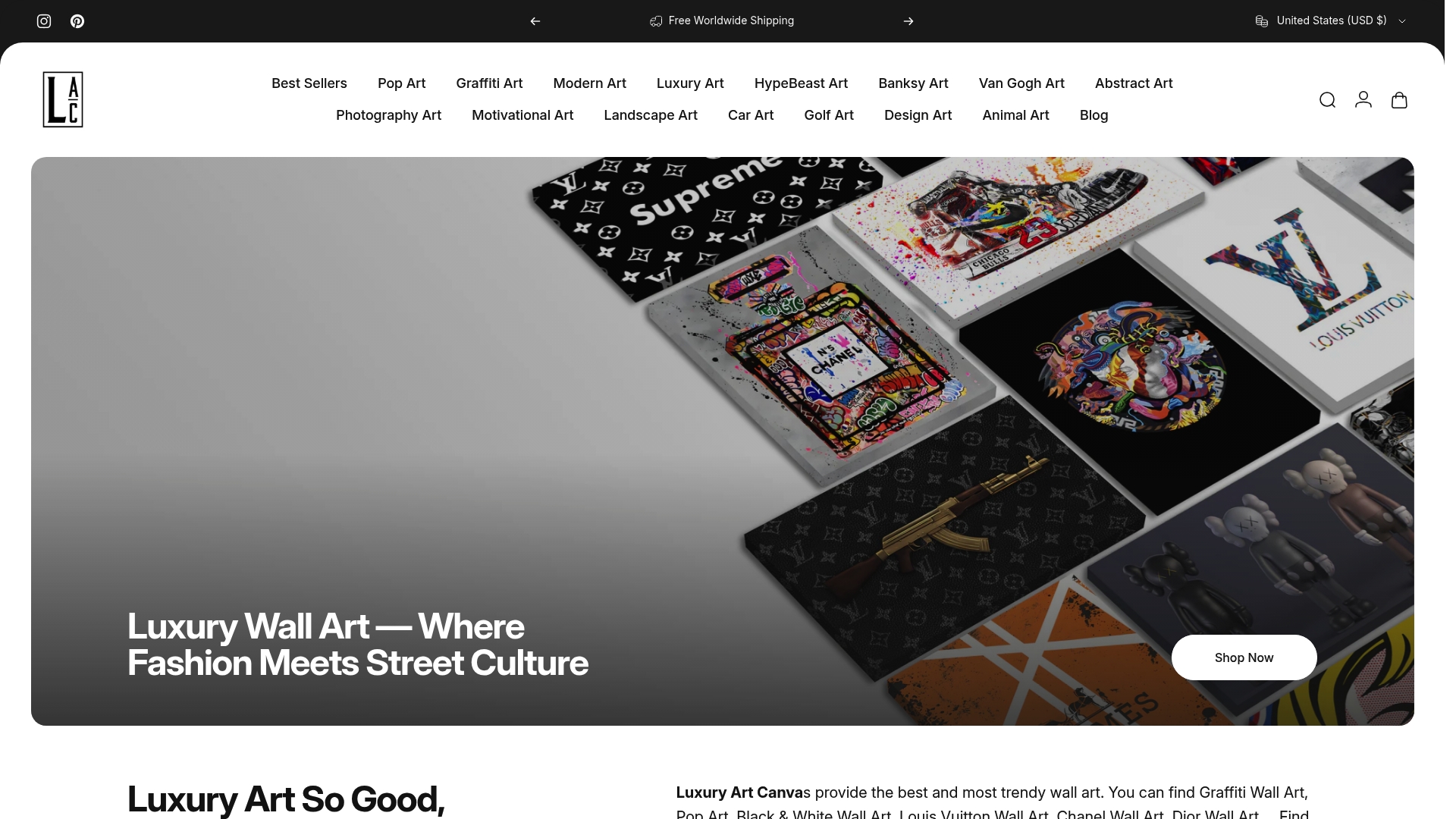
For brand managers who need art that carries cultural weight, the collections include iconic designs referencing Chanel, Louis Vuitton, and Versace. For designers who need flexibility, the range includes pieces scaled for large lobby walls and smaller accent zones. Browse the full Luxuryartcanvas collection to find pieces that match your client experience goals and brand identity.
FAQ
What is the role of wall art in client-facing spaces?
Wall art shapes client perception, emotional state, and brand impression before any conversation begins. Research confirms it influences dwell time, psychological comfort, and overall satisfaction in commercial environments.
Which art styles work best in client-facing lobbies?
Biophilic and figurative art produce the strongest restorative psychological effects, while graffiti and pop art deliver energy and cultural relevance. Style choice should match the emotional outcome the brand needs to create.
Does wall art actually affect client behavior?
Yes. Mood Media’s 2026 survey found 62% of consumers stayed longer in environments with strong visual atmosphere, including wall art. Longer dwell time correlates directly with higher engagement and spending.
How does art form differ from art theme in design impact?
Art form refers to composition, structure, and visual coherence. Art theme refers to subject matter. A 2026 MDPI study found that form has a stronger effect on psychological restoration than theme, meaning how art is structured matters more than what it depicts.
How should businesses integrate brand identity through wall art?
Use branded murals, wall decals, and curated canvases that carry brand colors and iconography without overwhelming the space. Consistent visual identity through art builds client credibility and trust at every stage of the relationship.
Types of Modern Wall Art Styles for Your Home
Bedroom Wall Art Style: Your Complete Guide for 2026