Choosing the right wall art for your living room is genuinely harder than it looks. Most people either grab something too small, hang it too high, or collect a random mix that never quite gels. The types of wall art for living rooms span everything from oversized abstract canvases to woven fiber hangings, and each one creates a different mood, fills space differently, and works better with certain furniture styles. This guide cuts through the confusion with a practical framework covering scale, orientation, texture, and style fit so you can make decisions with confidence rather than guesswork.
Table of Contents
- Key takeaways
- 1. Understanding scale and placement first
- 2. Canvas art
- 3. Framed prints and posters
- 4. Abstract art
- 5. Landscape and nature art
- 6. Portrait and figurative art
- 7. Textile and fiber art
- 8. Metal wall sculpture
- 9. Carved wood panels
- 10. Gallery walls
- 11. Graffiti and pop art canvases
- Comparing wall art types by use case
- My honest take on choosing living room wall art
- Find your statement piece at Luxuryartcanvas
- FAQ
Key takeaways
| Point | Details |
|---|---|
| Scale determines cohesion | Art width should cover 2/3 to 3/4 of your furniture width to look intentional rather than lost. |
| Orientation shapes perception | Horizontal art widens a room visually; vertical art makes ceilings feel taller. |
| Texture adds depth without clutter | Woven, carved, or mixed-media pieces create dimension that flat prints cannot. |
| Gallery walls need a single center point | Treat a grouping as one unit with its center at 57–60 inches from the floor. |
| One strong piece beats many weak ones | Fewer, bolder choices create more visual impact than overcrowding a wall with small frames. |
1. Understanding scale and placement first
Before you even think about style, get scale right. Artwork width covering roughly 2/3 to 3/4 of your sofa or media console width is the baseline rule that most people ignore. An 84-inch sofa pairs best with art spanning 56 to 63 inches. Go narrower and the piece looks accidental, like you hung whatever was handy.
Height matters just as much. The standard guideline is to hang the center of your art at 57 to 60 inches from the floor, which aligns with average eye level. Leave 6 to 8 inches of space between the top of your sofa and the bottom of the frame so the two elements feel connected rather than floating independently.
For open-plan living spaces, scale becomes the primary design decision. One oversized focal piece or a set of three vertically aligned works does more to anchor a large room than six small prints scattered across the wall. Small rooms benefit from restraint too. Fewer, stronger choices beat visual noise every time.
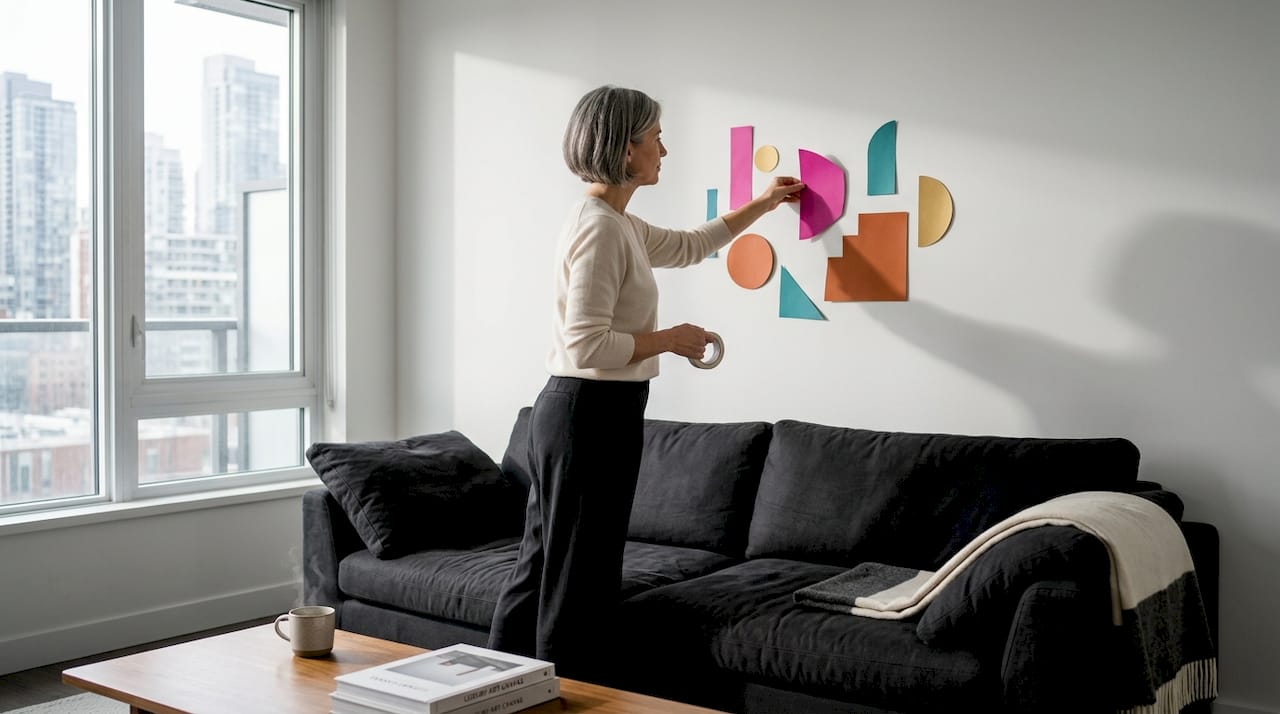
Pro Tip: Before buying, tape paper cutouts to your wall in the exact dimensions of the art you’re considering. Live with it for a day. You’ll immediately see whether the scale works with your furniture and room proportions.
Here’s a quick reference for art sizing relative to common furniture widths:
| Furniture width | Recommended art width | Hang center height |
|---|---|---|
| 60 inches (small sofa) | 40–45 inches | 57–60 inches |
| 84 inches (standard sofa) | 56–63 inches | 57–60 inches |
| 96 inches (large sectional) | 64–72 inches | 57–60 inches |
| 48 inches (console table) | 32–36 inches | 57–60 inches |
2. Canvas art
Canvas art is the workhorse of living room decor ideas. It suits nearly every style from bohemian to minimalist, comes in almost any size, and holds color beautifully over time. Stretched canvas with gallery-wrapped edges looks clean without a frame, which makes it particularly strong in modern and contemporary rooms.
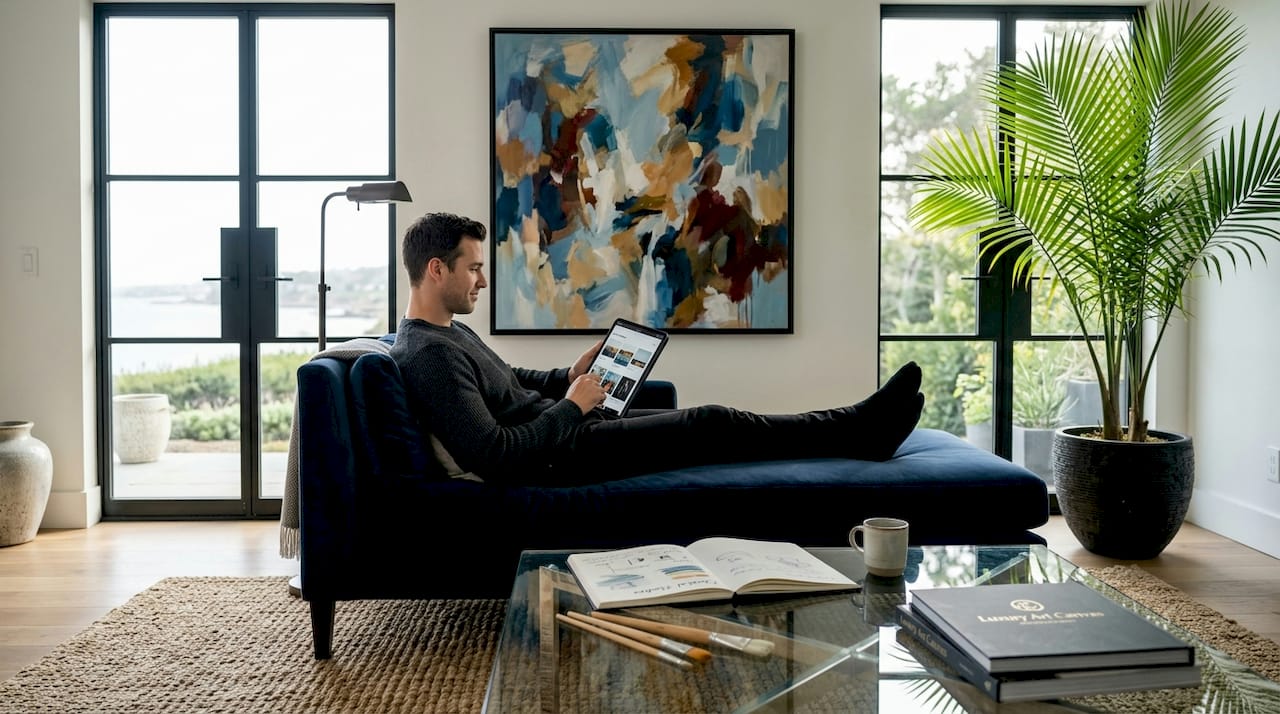
One underrated advantage of canvas is weight. A large canvas is significantly lighter than a framed piece of the same size, which means you can go bigger without worrying as much about wall anchoring. That makes canvas the go-to format when you want a statement piece for large open-plan rooms.
3. Framed prints and posters
Framed prints give you maximum flexibility at accessible price points, making them one of the most popular affordable wall art styles available. You can swap the print without replacing the frame, so your wall art can evolve as your taste does. A well-chosen frame, particularly in black, warm wood, or brushed gold, does much of the heavy lifting in terms of making a print look considered and finished.
The trap with posters and prints is going too small. A single 18x24 print hung alone above a sofa almost always looks underpowered. Either go larger (at least 24x36 for solo hanging) or commit to grouping several prints together into a cohesive arrangement.
4. Abstract art
Abstract art is the most adaptable category in the living room. Because it doesn’t depict a literal subject, it tends to work across many different interior styles without clashing. You’re not worried about whether a geometric abstract painting “matches” your coastal-themed cushions the way a seascape might.
What abstract art does demand is scale and intentional color selection. A small abstract piece reads as decoration. A large one reads as a statement. The color palette you choose should pull from or complement existing tones in your room rather than introduce an entirely new palette that fights with everything else.
5. Landscape and nature art
Landscape and nature art brings a grounding, calming quality to living rooms that purely abstract or graphic work sometimes lacks. There’s real psychological research behind the connection people feel to natural imagery, and in a room where you want to unwind, that matters.
Photography-based landscape prints have become a strong category here. A large-format black and white forest photograph or a color-saturated desert panorama can serve as both art and mood-setter. The key is image resolution. A low-resolution photo blown up to 40x60 inches will show every pixel and undercut the whole effect.
6. Portrait and figurative art
Portraits add intimacy and focal interest in a way that abstract work rarely achieves. A single large portrait, whether classical, pop art, or photographic, immediately draws the eye and gives a room a distinct personality. This is why you see portrait-based art used consistently in spaces that want to feel bold and collected rather than generically decorated.
Pop art portraits in particular, such as Warhol-influenced takes on icons or high fashion figures, blend well with contemporary furniture and work especially well in high-contrast rooms with clean architectural lines.
7. Textile and fiber art
Woven hangings, macramé panels, and tapestries bring something no flat print can: physical texture. Fiber-based wall art adds warmth and an organic quality that works particularly well in rooms with hard surfaces like concrete floors, metal furniture, or glossy cabinetry.
Textile art also absorbs sound slightly, which is a genuine functional benefit in open-plan rooms with high ceilings and lots of hard materials. It’s one of those wins where aesthetics and practicality line up.
Pro Tip: When your room already has heavy pattern in upholstery or rugs, choose textile art in a neutral or tone-on-tone palette. The texture reads without adding more visual complexity.
8. Metal wall sculpture
Metal wall art occupies a unique space between sculpture and flat art. Geometric metal pieces with clean lines work particularly well in modern and industrial interiors. They catch light differently throughout the day, creating subtle shadow play that changes the feel of a wall without any added effort on your part.
Oversized abstract art in metal form can anchor open contemporary spaces in a way that canvas alone cannot match, because the dimensional quality adds weight and presence even from across a large room. The downside is weight. Large metal pieces require proper wall anchoring with studs or heavy-duty hardware.
9. Carved wood panels
Carved or laser-cut wood panels sit in the category of textured wall art that adds natural structure and dimension. They work particularly well in transitional interiors that blend modern furnishings with natural materials. A large geometric wood panel above a neutral sofa adds warmth and handcraft quality without competing with color-forward furniture.
Wood panels also photograph beautifully, which matters if you care about how your living room looks in images. The depth and shadow created by carved surfaces creates natural contrast that flat art cannot replicate.
10. Gallery walls
A gallery wall is one of the strongest creative wall decor options available, but it’s also one of the most commonly executed poorly. The core principle: treat the grouping as a single visual unit with one center height of 57 to 60 inches from the floor. When individual frames climb too high or drift too low, the whole arrangement looks chaotic rather than curated.
Spacing is the other major variable. Keep 2 to 3 inches between frames for a tight, intentional look. Go wider and the grouping starts to feel like individual pieces rather than a cohesive installation. Mixing frame sizes such as 8x10, 11x14, and 16x20 with consistent mat colors and frame finishes creates visual interest while maintaining calm.
The most popular gallery wall layouts break down like this:
- Grid arrangement. Identical or near-identical frames in a precise row and column pattern. Works best in contemporary and minimal spaces.
- Linear row. A single horizontal line of frames at consistent center height. Clean, simple, and strong above a long sofa or console.
- Organic cluster. Varied sizes grouped asymmetrically around a center anchor piece. Suits eclectic and maximalist rooms.
- Staircase arrangement. Frames follow the angle of a staircase wall. Not common in living rooms but effective in entry spaces connecting levels.
Pro Tip: Lay your gallery wall arrangement out on the floor before touching the wall. Photograph it from above. Adjust until it looks right at a distance, then transfer the layout using paper templates taped to the wall.
11. Graffiti and pop art canvases
Graffiti and pop art represent the boldest category of modern wall art designs, and they’re the types that transform a room most dramatically. A large-scale graffiti canvas or a Warhol-style pop art print brings energy, color, and a cultural reference point that purely decorative art rarely achieves.
These styles work especially well in rooms with neutral furniture, because the art carries the color story rather than competing with it. A gray sofa, white walls, and a large graffiti street art canvas creates a room that feels deliberately styled rather than assembled by accident. Choosing wall art for open-plan living spaces often comes down to finding one piece with enough visual weight to hold the entire zone together. Bold graphic art does that job better than almost anything else.
Comparing wall art types by use case
When figuring out how to choose wall art for your specific room, style compatibility and budget usually narrow the field fast. Here’s how the main categories stack up:
| Art type | Best style fit | Budget range | Key strength |
|---|---|---|---|
| Canvas (abstract/pop) | Modern, contemporary, eclectic | Low to high | Scale flexibility, color impact |
| Framed prints | Any style | Low to mid | Swappable, wide variety |
| Textile/fiber art | Bohemian, Scandinavian, transitional | Mid | Physical texture, warmth |
| Metal sculpture | Industrial, minimalist, modern | Mid to high | Dimensional, light-reactive |
| Carved wood panel | Transitional, organic modern | Mid to high | Natural texture, handcraft quality |
| Graffiti/pop art canvas | Urban, contemporary, eclectic | Low to high | Bold statement, cultural energy |
| Gallery wall grouping | Eclectic, traditional, maximalist | Variable | Storytelling, personalization |
Mixing types works well when you tie them together with a consistent color palette or material thread. A metal sculpture alongside a fiber hanging alongside a canvas can look intentional if all three share the same tone family.
My honest take on choosing living room wall art
I’ve watched people overthink wall art for years, and the single most common mistake I see is going too small. Not slightly too small. Dramatically too small. A piece that looks generous in a gallery or on a product page shrinks to nothing once it’s competing with a large sofa and 10-foot ceilings.
My advice is always to buy one size larger than feels comfortable. Then hang it lower than feels natural. Those two adjustments fix about 70% of the wall art problems I’ve ever encountered.
The second thing I’d push back on is the instinct to fill every wall. Overcrowding creates visual noise that exhausts you without you even knowing why. One wall with a genuinely considered piece is more powerful than four walls cluttered with things you sort of like.
Texture is the most underused tool in the whole category. A woven hanging or a carved panel does something in a room that you feel before you consciously register it. That physicality is worth pursuing.
Finally, wall art serves a design function anchoring your seating area and setting the emotional tone of the space. When you start treating it as functional design rather than decoration, your choices get sharper immediately.
— James
Find your statement piece at Luxuryartcanvas
If you’ve landed on the idea of one bold canvas as your living room anchor, Luxuryartcanvas is worth a serious look. The collection brings together graffiti wall art and pop art canvases in formats sized specifically for living room walls, including oversized options designed to hold large and open-plan spaces. Every piece is printed and crafted in the USA with materials built to last.

With over 1,000 designs spanning fashion-inspired pop art, bold street culture graphics, and large-format abstract canvases, the catalog covers a range of room styles and scales. You can filter by size to match the 2/3 furniture-width rule from earlier in this guide and find something that fits your wall and your aesthetic from the start. Browse the large graffiti art collection to see what a single statement piece can do for a room.
FAQ
What size art should hang above a sofa?
Art should span 2/3 to 3/4 of the sofa’s width with the center hung at 57 to 60 inches from the floor and the bottom of the frame 6 to 8 inches above the sofa back.
What are the best types of wall art for large living rooms?
Large-scale abstract canvases and oversized graffiti or pop art prints work best, as they have enough visual weight to anchor spacious or open-plan rooms without getting lost.
How many pieces should a gallery wall have?
There’s no fixed number, but groupings of 5 to 9 pieces typically create the best balance. Keep 2 to 3 inches between frames and treat the entire grouping as one visual unit centered at eye level.
Can you mix different types of wall art in one room?
Yes, mixing types like canvas, textile, and metal works well when you connect them with a consistent color palette or material tone. The variety in texture and format adds depth without looking random.
What wall art works best for a contemporary living room?
Art that complements architectural proportion and natural light works best. Large monochromatic canvases, geometric metal pieces, and fiber art all suit contemporary interiors by adding texture and scale without competing with clean lines.
Affordable Canvas Art for Renters: 9 Smart Picks
What Is Pop Art Decor Style: A Designer's Guide