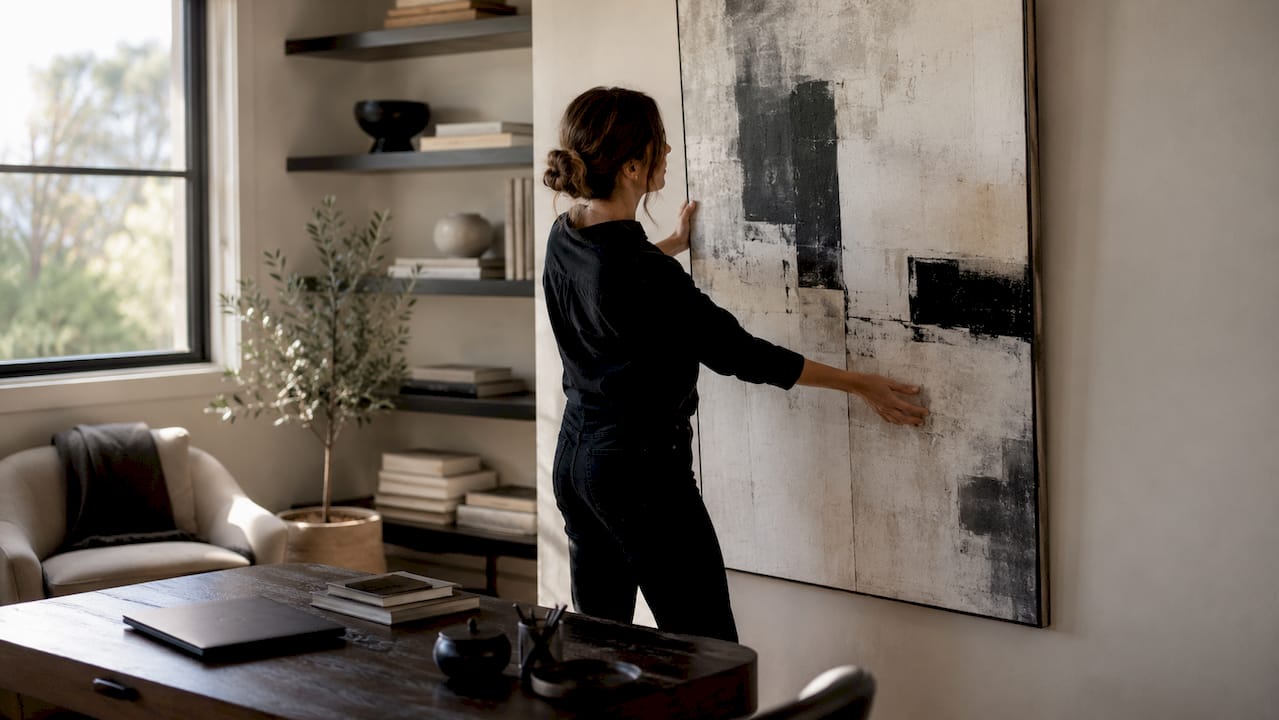
Statement wall art is defined as a bold, oversized, or visually commanding piece of artwork that serves as the deliberate focal point of a room. Unlike decorative filler, it anchors the entire design of a space and expresses the personality of the person who lives there. Interior designer Kit Kemp describes the ideal statement piece as one you cannot stop looking at, something that feels irresistible rather than merely trendy. Platforms like Artfully Walls and Luxuryartcanvas have built entire catalogs around this principle, offering everything from large abstract canvases to bold graffiti prints designed to command a wall.
What is statement wall art and why does it matter?
Statement wall art is the industry term for any artwork that functions as a room’s visual anchor. The phrase “focal point art” or “hero piece” is also used by interior designers, but statement wall art has become the widely accepted term among decorators and retailers alike.
A statement piece does more than fill empty space. Art reveals personal identity and tells a story about the people who chose it, which is why blank walls feel impersonal no matter how well the furniture is arranged. The right piece pulls a room together the way a well-chosen rug does, giving every other element something to respond to.
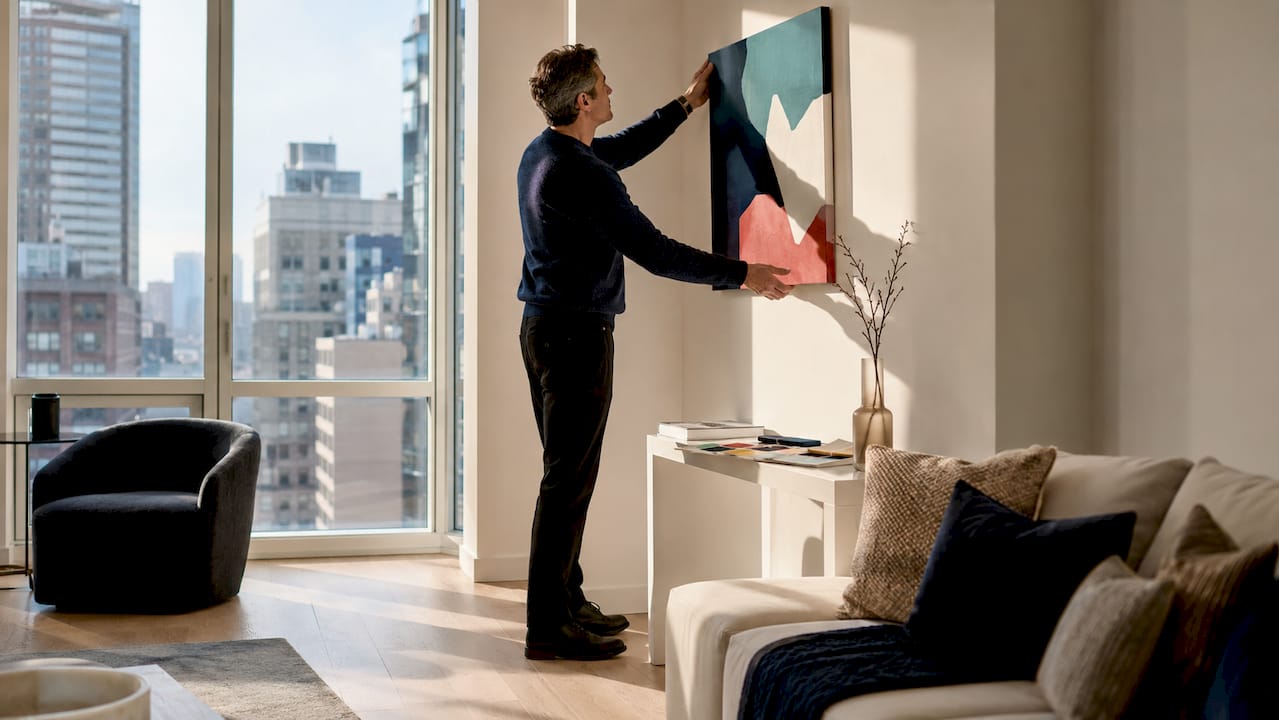
The importance of wall art in interior design goes beyond aesthetics. Statement art transforms plain walls into eye-catching focal points that reflect personality and set the emotional tone of a space. A living room with a large graffiti canvas reads completely differently than the same room with a soft watercolor, even if the furniture is identical.
What are the common types and styles of statement wall art?
Statement wall art spans a wide range of mediums, styles, and scales. Understanding the categories helps you match the right piece to the right room.
By medium:
- Canvas prints are the most popular format for statement art. They are durable, lightweight, and work in nearly every room.
- Murals and wallpaper panels cover entire walls and create immersive environments, popular in dining rooms and entryways.
- Tapestries add texture and warmth, particularly effective in bedrooms and bohemian-style spaces.
- Metal and sculptural wall art introduces dimension and works well in modern or industrial interiors.
- Framed photographic prints suit minimalist and editorial aesthetics.
By style:
| Style | Description | Best Setting |
|---|---|---|
| Abstract | Non-representational shapes and color fields | Living rooms, offices |
| Pop art | Bold graphics drawn from consumer culture | Kitchens, studios, modern living rooms |
| Graffiti | Street art imagery, often large scale | Urban lofts, teen rooms, creative spaces |
| Photographic | High-resolution images, editorial or fine art | Hallways, bedrooms, minimalist spaces |
| Graphic/illustrative | Flat design, typography, or pattern-based | Home offices, nurseries, kitchens |
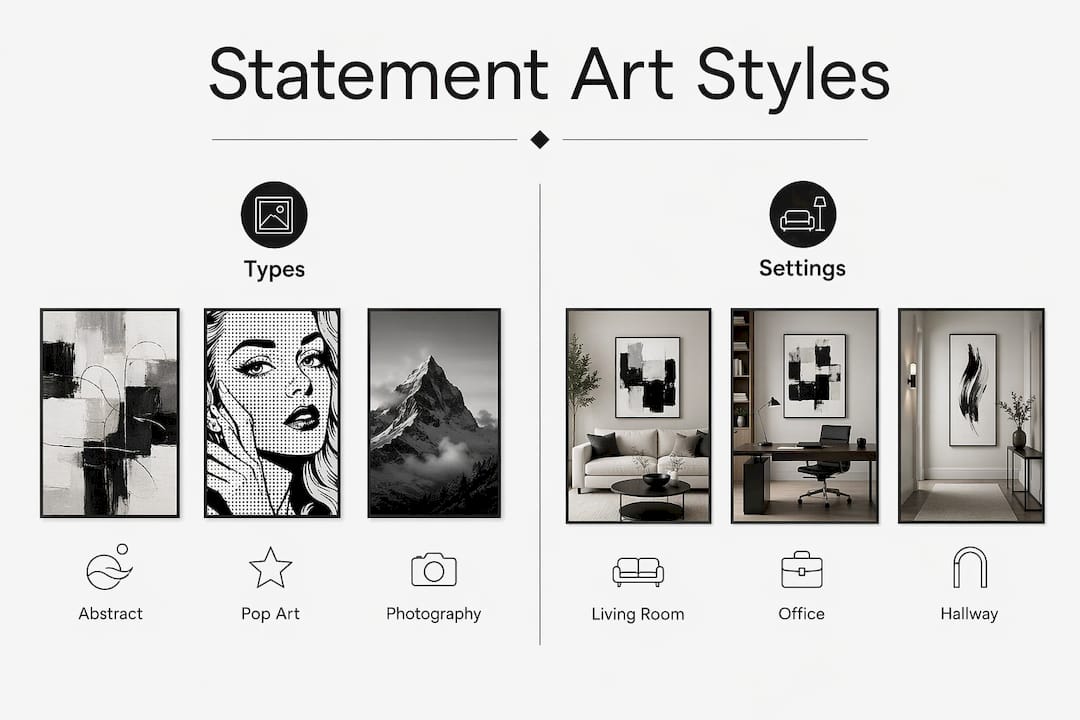
Diverse styles and mediums give homeowners the flexibility to suit varying tastes and room types, from traditional framed paintings to edgy street art canvases. Scale matters as much as style. Oversized pieces anchor rooms, while small prints can appear lost on large walls. Grouping several smaller pieces together can mimic the visual weight of a single large work.
The distinction between a statement wall and an accent wall is also worth knowing. Statement walls use art to add drama and personal narrative, going beyond the color-only approach of a traditional accent wall. A painted accent wall changes the room’s tone. A statement art piece changes its story.
How to choose the right statement wall art for your home
Choosing statement art starts with personal resonance, not room measurements. Kit Kemp’s principle is direct: choose art that feels irresistible and timeless rather than trendy or mass-produced. If you walk past a piece without stopping, it is not a statement piece for you.
Once you have identified pieces that genuinely move you, apply these practical filters:
- Room size and wall scale. A piece that is too small for a wall reads as an afterthought. For a sofa wall, the artwork should span roughly two-thirds of the sofa’s width as a starting point.
- Color palette. The art does not need to match the room, but it should speak to it. Pull one or two colors from the piece and echo them in pillows, rugs, or accent furniture.
- Room function. A bedroom calls for different energy than a home office. Calmer compositions suit sleep spaces; bolder, more energetic pieces work in creative or social rooms.
- Lighting conditions. Natural sunlight can irreversibly degrade paper-based works over time. For bright rooms, choose textured canvases or pieces with UV-protective glazing.
- Frame style. A heavy ornate frame suits traditional interiors. A thin black or natural wood float frame suits contemporary spaces. Unframed gallery-wrap canvases work in casual or modern rooms.
Pro Tip: Before committing to a permanent hang, tape paper cutouts of the artwork’s dimensions to the wall and live with them for a few days. The scale often looks very different in person than it does on a screen.
Placement height is a common error. The center of a piece should hang at roughly 57–60 inches from the floor, which aligns with average eye level. Hanging art too high is the single most frequent mistake decorators correct in client homes.
What are stylish ideas for incorporating statement art into different rooms?
Statement art works in every room, but the approach changes by space. These placements consistently deliver strong results:
-
Living room sofa wall. This is the most natural home for a large canvas or bold statement piece. A single oversized work creates immediate impact. A gallery wall of three to five coordinated pieces works equally well if the pieces share a color story or frame style.
-
Bedroom headboard wall. Art above the bed grounds the room. A horizontal canvas or diptych that spans the width of the bed creates a finished, intentional look. Avoid pieces with sharp or aggressive imagery in sleep spaces.
-
Hallways and entryways. These transitional zones are often ignored. Statement art in hallways turns a pass-through into an inspiring moment. A single vertical canvas or a row of coordinated prints works well in narrow spaces.
-
Kitchen and dining areas. Art above a dining table or on a kitchen wall adds personality to a functional space. Pop art and graphic prints suit kitchens particularly well because their bold colors hold up against the visual noise of appliances and cabinetry.
-
Home office. A single powerful piece behind a desk creates a strong visual backdrop for video calls and daily work. Graffiti art or abstract canvases with strong directional energy work well here.
-
Unexpected spaces. Above kitchen cabinets, inside a reading nook, or on a bathroom wall are all underused opportunities. Treating every wall as a potential composition opens up the whole home.
Mixing frame styles is acceptable if the artwork itself shares a common thread, such as color palette, subject matter, or scale. When in doubt, unify with consistent framing for a cleaner result.
What common mistakes to avoid when selecting statement wall art?
Most display failures come down to a handful of predictable errors. Knowing them in advance saves time and money.
- Choosing art that does not resonate personally. Buying a piece because it matches the sofa color produces a room that looks decorated but feels empty. Art should tell a story rather than serve as neutral filler.
- Selecting pieces that are too small. A single 8x10 print on a large wall looks like a mistake. When in doubt, go larger.
- Ignoring lighting. Bright windows placed directly opposite artwork accelerate fading. UV-protective glazing or textured canvas materials protect pieces in high-light rooms.
- Overcrowding walls. More art does not mean more impact. A single strong piece almost always outperforms a cluttered arrangement.
- Hanging art too high. Eye-level placement at 57–60 inches from the floor is the professional standard. Art hung near the ceiling disconnects from the furniture and the viewer.
- Choosing slogan-heavy or mass-produced pieces that lack depth. Motivational quote prints and generic stock art date quickly and rarely build the character a space needs.
- Clashing with room colors without intention. A piece can contrast boldly with a room’s palette, but that contrast should be deliberate. Accidental clashing reads as an error.
Pro Tip: Live with a new piece for 48 hours before hanging it permanently. Lean it against the wall in its intended spot and observe it at different times of day and under different lighting conditions. What looks right in the morning may feel wrong at night.
Key takeaways
Statement wall art is the single most effective tool for anchoring a room’s design, expressing personal identity, and transforming a space from decorated to genuinely inhabited.
| Point | Details |
|---|---|
| Definition of statement art | A bold, visually commanding piece that serves as a room’s deliberate focal point. |
| Personal resonance comes first | Choose art you cannot stop looking at, not art that simply matches your furniture. |
| Scale determines impact | Artwork should be proportional to the wall; oversized pieces anchor, small pieces disappear. |
| Protect art from light damage | Use UV-protective glazing or textured canvas in rooms with strong natural light. |
| Avoid common display errors | Hang at eye level (57–60 inches), avoid overcrowding, and skip mass-produced slogan prints. |
Why statement art is a long-term relationship, not a purchase
I have spent years watching people redecorate the same rooms repeatedly because they bought art to match a trend or fill a gap. The pieces that last, the ones that still feel right five or ten years later, are always the ones chosen for personal reasons rather than practical ones.
The most powerful statement art I have seen in homes is rarely the most expensive. It is the piece that makes the owner stop and explain why they chose it. That story is what gives a room its energy. A large graffiti canvas from a brand like Luxuryartcanvas carries a different kind of weight than a generic print from a big-box store, not because of price, but because it reflects a specific point of view.
My honest advice is to treat your walls the way you treat your wardrobe. Buy fewer pieces, buy them with intention, and give them room to breathe. A single bold canvas print on a clean wall will always outperform a wall covered in pieces that individually mean nothing. Boldness with restraint is the formula that holds up over time.
— James
Discover statement wall art that transforms your space
Luxuryartcanvas specializes in exactly the kind of art that earns its place on a wall. The collection merges high fashion with street culture, featuring bold graffiti canvas art, vibrant pop art canvases, and designs inspired by iconic brands like Chanel and Louis Vuitton. Every piece is crafted in the USA with high-quality materials built to last.

With over 1,000 distinct designs and more than 10,000 satisfied customers, Luxuryartcanvas offers the range and quality to find a piece that genuinely stops you in your tracks. Browse the full collection at Luxuryartcanvas and find the statement piece your walls have been waiting for.
FAQ
What is the definition of statement wall art?
Statement wall art is a bold, visually dominant artwork chosen to serve as the focal point of a room. It anchors the space’s design and expresses the personality of the person who lives there.
What makes a piece of art a statement?
A piece becomes a statement when it commands attention, resonates personally, and shapes the mood of the entire room around it. Interior designer Kit Kemp defines it as art you simply cannot stop looking at.
How do I choose the right statement wall art for my room?
Start with personal resonance, then apply practical filters: wall scale, room function, color palette, and lighting conditions. Avoid pieces that are too small for the wall or chosen purely to match existing furniture.
What are the most popular types of statement art?
The most popular types include large abstract canvases, bold pop art prints, graffiti-style street art, and oversized photographic works. Each suits different room styles and personal aesthetics.
How is a statement wall different from an accent wall?
An accent wall uses paint or wallpaper to add color contrast. A statement wall uses art to add drama, narrative, and personal expression, going well beyond a color change alone.
Why Oversized Canvas Art Makes Such a Big Impact
Types of Modern Wall Art Styles for Your Home