
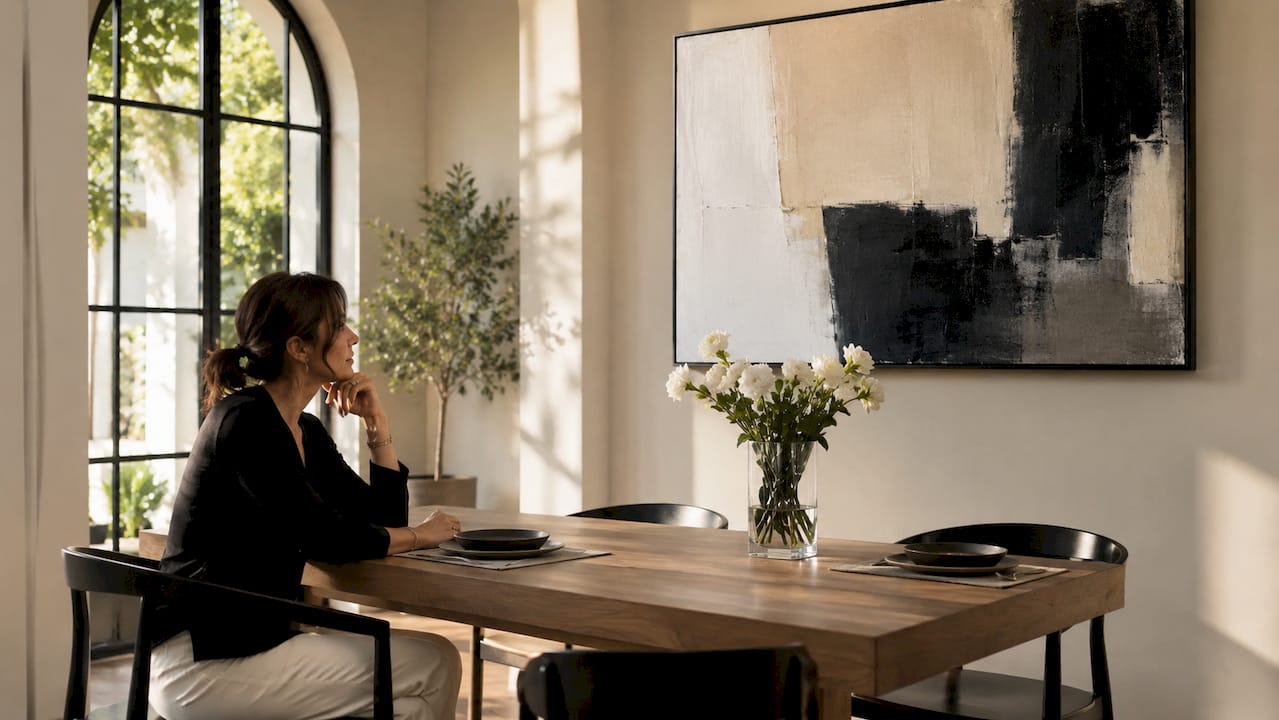
Oversized canvas art is defined as large-scale wall art, typically measuring 40 inches or more on the shortest side, that functions as the primary visual anchor of a room. This is the concept interior designers call “scale as serenity,” a philosophy that treats a single commanding piece as more powerful than a collection of smaller works. The impact of large canvas art goes beyond decoration. It shapes how a room feels, how large it appears, and how much mental energy you spend processing the space. Understanding why oversized canvas art makes impact means understanding the psychology of scale, proportion, and visual calm.
Why does oversized canvas art make such a visual impact?
Oversized canvas art dominates a room because the human eye naturally seeks a focal point. When a single large piece fills a wall, the eye lands there first and stays. That visual anchoring effect organizes the entire room around one clear center of gravity.
Scale interacts directly with architecture. A canvas that stretches across a sofa or balances a tall ceiling creates one continuous plane of color and texture. That continuity reads as calm and intentional, not busy or cluttered. Smaller pieces scattered across the same wall create the opposite effect: the eye jumps between them, and the room feels restless.
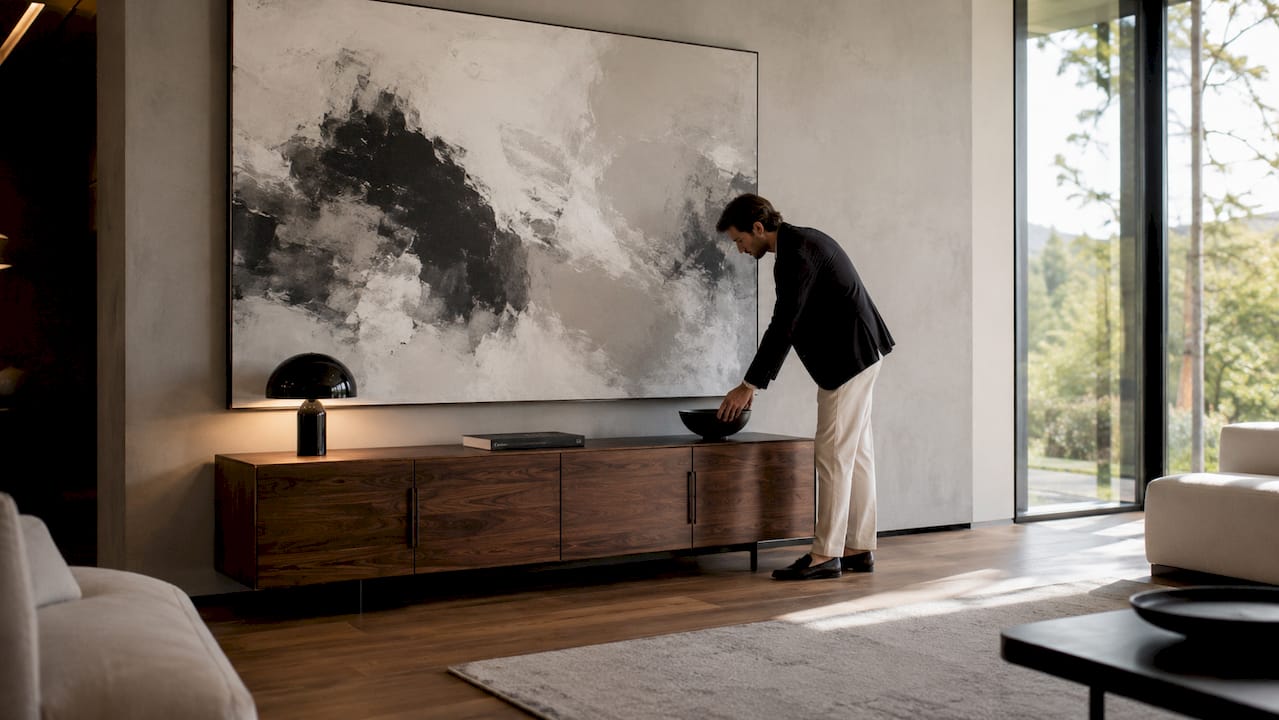
The importance of scale in art also shows up in spatial perception. A 2.5-meter minimalist artwork increased perceived room size by 20% compared to a multi-piece collage in the same living room. That is not a minor shift. A room that feels 20% larger without a single structural change is a meaningful design outcome.
Lighting amplifies the effect further. A large canvas catches ambient light across its full surface, creating subtle gradations of tone that shift through the day. A small piece cannot do this. The physical size creates a living, breathing quality that smaller art simply cannot replicate.
- Visual anchoring: One large piece gives the eye a clear destination, reducing scanning fatigue.
- Architectural balance: Oversized art aligns with ceiling height, window spans, and furniture scale.
- Spatial expansion: Large pieces make rooms read as bigger and more open.
- Light interaction: A wide canvas surface catches and reflects light dynamically throughout the day.
Pro Tip: Hang oversized art so its center sits at eye level, roughly 57–60 inches from the floor. This is the standard used by most galleries and keeps the piece feeling grounded rather than floating.
How does oversized art affect emotional atmosphere?
Visual clutter increases cognitive load. That is not a design opinion. It is a measurable psychological effect. When a room presents too many competing visual elements, the brain works harder to process the space. That effort registers as low-level stress, even when you are not consciously aware of it.
A single large-scale artwork reduces cognitive load by replacing that visual noise with one resolved statement. The room becomes easier to read. The atmosphere shifts from busy to settled. This is the core of the “scale as serenity” design philosophy: one dominant piece creates more emotional calm than a wall covered in smaller works.
Color and texture carry this effect further. A large abstract canvas in muted blues and warm grays does not just look calm. It makes the room feel calm. The emotional resonance of color operates at scale. A small version of the same painting delivers a fraction of that effect because the color field is too limited to envelop the viewer’s peripheral vision.
“Oversized canvas art is not just a design choice. It is a spatial philosophy that redefines proportion and emotion, replacing clutter with calm and chaos with architectural resolution.” — Design philosophy insight, 2026
A minimalist triptych installation in a narrow hallway demonstrates this well. Three large panels in a single color family transform a tight corridor into something that feels considered and spacious. The same hallway with six small framed prints feels crowded. The art is not the problem. The scale is.
Interior studies recorded a 41% increase in demand for large canvas paintings with neutral palettes and abstract expressionist styles in 2025. That shift reflects a broader move toward interiors that feel quieter and more intentional. Homeowners and renters are choosing fewer, larger pieces because the emotional payoff is greater.
What are the best strategies for placing oversized canvas art?
Effective placement turns a large canvas from a statement into a complete design decision. The art does not exist in isolation. It works with furniture, color, and light to create a unified room.
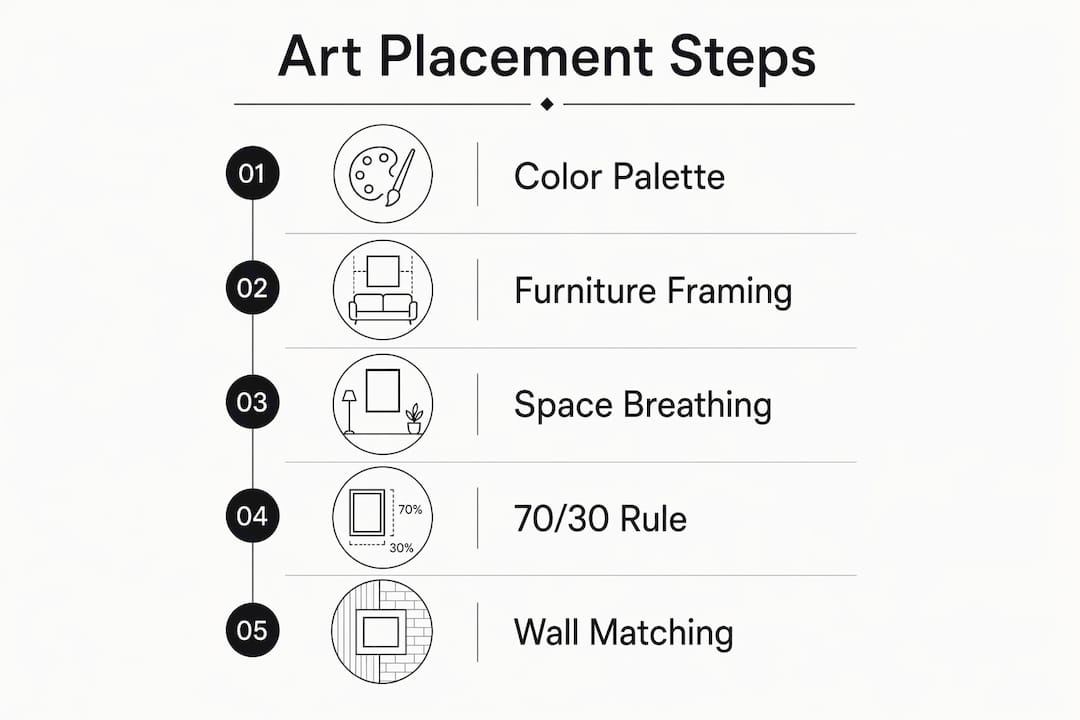
1. Coordinate your color palette first. Coordinating color palettes with oversized art prevents visual chaos. Subdued tones create a peaceful atmosphere. Bold colors add energy without overwhelming the space. Pull one or two colors from the canvas into your soft furnishings, such as throw pillows or a rug, to tie the room together.
2. Frame the art with furniture, not walls. Low consoles or sideboards placed beneath a large canvas anchor its visual weight. A sofa positioned in front of the art creates a natural frame. The furniture directs attention upward and inward toward the piece.
3. Let the art breathe. Avoid placing other wall decor within two feet of an oversized canvas. Competing elements dilute the focal point effect. One large piece needs open space around it to read as intentional rather than accidental.
4. Apply the 70/30 rule. The 70/30 rule in art states that 70% of a composition should be dominated by a unifying element, with 30% as contrasting accents. Apply this to your room: let the oversized canvas be the 70% dominant element, and use smaller accents like plants, lamps, or sculptures as the 30% contrast.
5. Match scale to the wall, not just the room. A canvas should cover roughly two-thirds of the wall width it hangs on. A piece that is too small for its wall reads as an afterthought. Measure before you buy. The room-by-room scaling guide from Luxuryartcanvas is a practical reference for getting this right.
Pro Tip: Use painter’s tape on the wall to mock up the canvas dimensions before ordering. This takes five minutes and eliminates the most common sizing mistake.
Oversized canvas art vs. gallery walls: which creates more impact?
The gallery wall trend produced beautiful results in many homes, but it also introduced a problem: visual administration. Managing the spacing, framing, and cohesion of 10 to 15 small pieces requires constant visual effort from anyone in the room.
Oversized art reduces this “visual admin” by replacing multiple small pieces with one resolved statement. The visual experience simplifies. The room feels more cohesive. Maintenance is also simpler: one canvas to dust, one hanging point to check, one piece to reposition if you rearrange furniture.
| Feature | Oversized canvas art | Gallery wall |
|---|---|---|
| Visual impact | High, immediate focal point | Moderate, requires cohesive curation |
| Cognitive load | Low, one resolved statement | Higher, multiple competing elements |
| Room cohesion | Strong, single unifying piece | Variable, depends on curation skill |
| Maintenance | Simple, one piece | Complex, multiple frames and alignments |
| Cost | Single investment | Accumulates across many pieces |
| Flexibility | Easy to reposition | Requires repatching and rehinging |
The gallery wall works well in specific contexts, such as a staircase wall or a dedicated display room. For living rooms, bedrooms, and open-plan spaces, a single oversized canvas delivers stronger spatial and emotional results with less effort.
The benefits of oversized art extend to cost efficiency as well. One well-chosen large canvas often costs less than assembling a gallery wall of comparable quality frames and prints. The investment concentrates into one piece that carries the entire room.
My take: scale changes everything
I have watched clients agonize over gallery walls for weeks, buying frames, printing photos, rearranging layouts. Then I have watched the same clients hang a single large canvas and feel the room resolve in minutes. The difference is not subtle.
The rooms that stay with me are always the ones anchored by one commanding piece. A large abstract in warm ochre above a linen sofa. A bold graffiti-style canvas from Luxuryartcanvas in a home office that made the whole space feel intentional. A Chanel-inspired print in a bedroom that turned a plain white wall into a personality. Scale did the work in every case.
What I find most interesting is how resistant people are to going large before they try it. The instinct is to play it safe with a medium-sized piece. But medium-sized art on a large wall is the worst of both worlds: not small enough to disappear, not large enough to anchor. It just floats there, unresolved.
My honest advice is to measure your wall, calculate two-thirds of its width, and then buy at that size or slightly larger. You will not regret going bigger. You will almost always regret going smaller. The design philosophy behind oversized prints is not about excess. It is about giving a room one clear, confident statement.
— James
Transform your space with Luxuryartcanvas
Luxuryartcanvas specializes in oversized canvas art that merges bold design with genuine visual impact. The collection spans large graffiti wall art, vibrant pop wall art, and minimalist prints built for rooms that need a strong focal point. Every canvas is crafted in the USA with materials designed to hold color and texture over time.

With over 1,000 designs and more than 10,000 satisfied customers, Luxuryartcanvas makes it straightforward to find a piece that fits your wall, your palette, and your personality. Whether you want a quiet abstract or a bold fashion-inspired statement, the full collection at Luxuryartcanvas is the place to start.
Key takeaways
Oversized canvas art makes impact by anchoring a room visually and emotionally in a way that smaller pieces, regardless of quantity, cannot replicate.
| Point | Details |
|---|---|
| Scale creates calm | A single large canvas reduces cognitive load and makes rooms feel more spacious and settled. |
| Perceived size increases | A 2.5-meter artwork increased perceived room size by 20% compared to a multi-piece collage. |
| Placement drives results | Hang at eye level, frame with low furniture, and leave open space around the canvas. |
| One piece beats many | Oversized art eliminates visual admin, simplifies maintenance, and creates stronger room cohesion. |
| Color coordination matters | Pulling palette colors from the canvas into soft furnishings ties the room together without effort. |
FAQ
What size counts as oversized canvas art?
Oversized canvas art generally starts at 40 inches on the shortest side. For most living rooms and bedrooms, pieces measuring 60 inches or wider deliver the strongest focal point effect.
Does oversized art work in small rooms?
A single large canvas in a small room creates depth and draws the eye outward, making the space feel larger. The key is choosing one piece and leaving the surrounding walls clear.
How high should I hang oversized canvas art?
Hang the center of the canvas at 57–60 inches from the floor. This matches standard gallery height and keeps the piece visually grounded rather than floating near the ceiling.
Is oversized canvas art better than a gallery wall?
For most living spaces, oversized canvas art delivers stronger visual impact and lower cognitive load than a gallery wall. It simplifies the room, reduces maintenance, and creates a clearer focal point.
What style of oversized art works best for modern interiors?
Abstract expressionist and minimalist styles with neutral or bold palettes are the most popular choices for modern interiors. Graffiti-inspired and pop art canvases work especially well in spaces that call for energy and personality.
Canvas Wall Art Quotes to Inspire Your Space
What Is Statement Wall Art? Your Complete Design Guide