
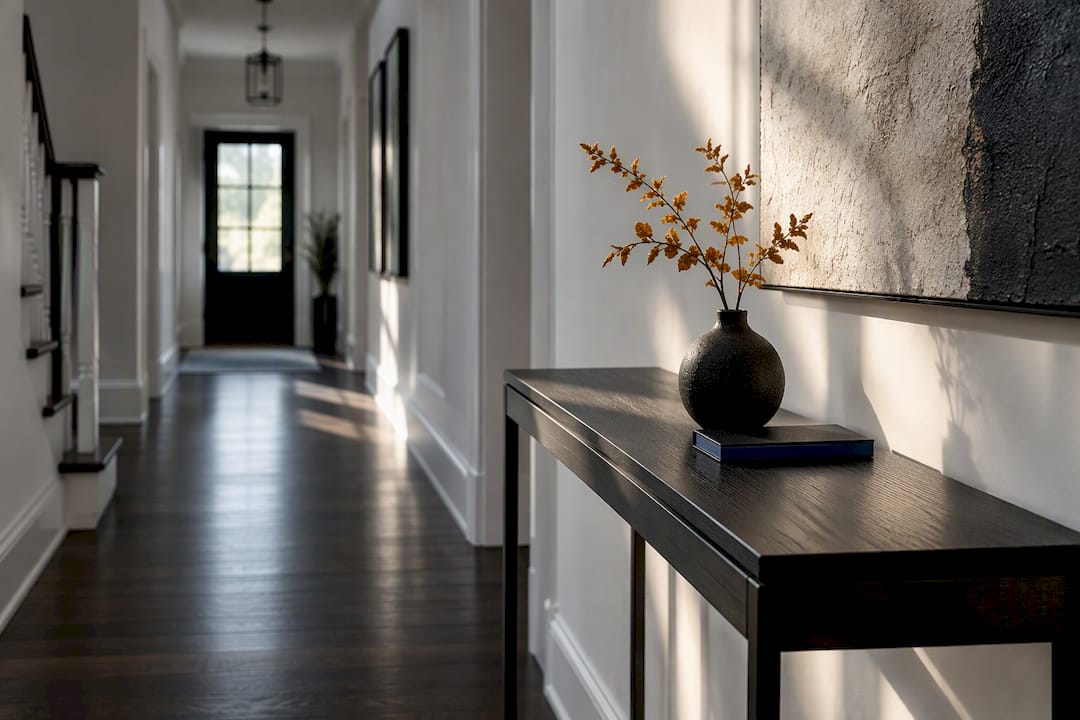
For most entryways, skip the scattered decor and commit to one intentional move: a single statement piece sized to your wall, or a tight, uniform gallery grid. Either works because it respects the two-thirds rule and typical foyer widths, both covered below. Sizing and placement rules come next, along with where a US-made canvas from Luxury Art Canvas fits if you want a fast, ready-to-hang option.
Table of Contents
- Entryway Wall Art Ideas by Layout and Style
- Sizing and Scale: What the Two-Thirds Rule Actually Means
- Where to Hang Entryway Art (and Why Height Matters More Here)
- Materials That Hold Up Near Doors and Weather
- Pairing Art with Consoles, Lighting, and Mirrors
- How to Mock Up and Hang Your Entryway Art
- Why US-Made, Ready-to-Hang Canvases Fit Entryways So Well
- Seasonal and Rotating Entryway Art Ideas
- Personalizing Your Entryway Art
- Budget-Friendly Entryway Wall Art Options
- Lighting That Makes Entryway Art Actually Visible
- Why the Easy Route Isn’t the Wrong Route
- Ready to Shop? Start with Ready-to-Hang Canvases
- Sources
- FAQ
Entryway Wall Art Ideas by Layout and Style
The right idea depends less on your taste and more on your wall’s shape. New single-family homes have smaller foyers than they used to, which is exactly why a deliberate layout choice matters more than an ambitious one.
A single large statement piece works best on walls at least 36 inches wide, hung centered above a console or on its own. Tight, uniform gallery grids suit narrow corridors where a big canvas would feel cramped. Identical frames, evenly spaced, read as one cohesive shape instead of clutter.
Vertical triptychs solve a specific problem: a tall, slim wall segment (think beside a staircase or between two doorways) where a single wide piece would never fit. Oversized canvases, on the other hand, belong on wide landings or in double-height foyers with the square footage to support scale.
- Single statement piece: one large canvas, 60 to 90% of wall width, for entries with a clear focal wall
- Tight gallery grid: 4 to 9 same-size frames spaced 2 to 3 inches apart, for narrow hallways
- Vertical triptych: three tall, slim panels for cramped, high-ceiling gaps
- Oversized single canvas: for wide landings or foyers with 9-foot-plus ceilings
- Mirror as art: for dim or windowless entries needing light, not just decoration
- Mixed-media or textured pieces: woven wall hangings or dimensional art for tactile interest
Mirrors deserve special mention. In an entry with no natural light, a large mirror does double duty as decor and as a light bouncer, and it’s one of the few “art” choices that solves a functional problem too.
Sizing and Scale: What the Two-Thirds Rule Actually Means
The most reliable sizing shortcut in entryway design: your artwork should measure roughly two-thirds the width of the console table beneath it. A 48-inch console pairs well with a 30 to 34-inch-wide canvas. Go much narrower and the piece looks like an afterthought; go wider and it overwhelms the furniture.
For walkways, width dictates your ceiling. A hallway 36 inches wide or narrower should stay under 24 inches of protruding art depth, which rules out deep gallery frames and favors flat canvas or slim moldings.
Before buying anything, measure your actual usable wall, not the wall’s total length:
- Subtract door swing radius (typically 30 to 36 inches) from any wall a door opens into
- Subtract space for light switches, thermostats, or outlet covers
- Note ceiling height if you’re considering a vertical piece over 40 inches tall
- Round down, not up, when a piece is borderline for the space
When usable width is tight, choose vertical formats over horizontal ones. A tall, narrow canvas adds visual height without eating into the walking path, which matters more in entryways than almost anywhere else in the house.
Where to Hang Entryway Art (and Why Height Matters More Here)
Standard gallery height puts the center of a piece at 57 to 60 inches from the floor, matching average eye level. Entryways break that rule slightly: in high-traffic zones, raising the center to 62 to 64 inches keeps shoulders, bags, and coat hooks from clipping the frame during the daily rush in and out.
- Measure and mark 57 to 60 inches from the floor for standard walls; adjust to 62 to 64 inches near doors or narrow pinch points
- Leave 6 to 8 inches of clearance above any console table so the art doesn’t crowd the furniture
- Test the layout with painter’s tape or paper templates before drilling a single hole
- Choose anchors rated for at least twice the frame’s actual weight, especially in older plaster walls
Pro Tip: Trace your frame onto craft paper, tape it to the wall at your target height, and live with it for a day. It’s the cheapest insurance against a wall full of patched holes.
Materials That Hold Up Near Doors and Weather
Entryways take more abuse than any other wall in the house: temperature swings, direct sun through sidelights, the occasional bumped shoulder. Canvas prints skip the glazing altogether, which removes both the maintenance and the shatter risk that framed prints under glass carry near a front door.
- Canvas holds up to daily bumps better than glass-fronted frames
- Giclée printing on archival substrates resists fading from window light
- Acrylic glazing, where used, weighs less and resists shattering better than glass
- Sealed backing and weight-rated anchors keep frames flush and dust-free over time
Roughly a third of framed-print complaints in high-traffic zones trace back to glazing damage or glare, one more reason canvas has become the default recommendation for entry walls specifically.
Pairing Art with Consoles, Lighting, and Mirrors
A console table and its art should feel like they were chosen together, not stacked as an afterthought. Keep accessories minimal: one lamp, a shallow tray, maybe a small plant, so the art stays the visual anchor rather than competing with clutter.
- Match art width to two-thirds of the console, then let a single lamp break up the negative space
- Hang mirrors opposite the front door when possible to bounce incoming daylight deeper into the space
- Choose slim or frameless mirrors in narrow entries to maximize reflective surface without eating wall width
- Layer a picture light or a warm sconce above the piece so it reads clearly after dark
- Mix textures, wood console, metal frame, a woven runner, to add depth without adding more objects
Modern foyers increasingly combine layered lighting, statement mirrors, and neutral palettes with warm accents, and that combination works because each element does one job well instead of everything competing for attention.
How to Mock Up and Hang Your Entryway Art
Skip the guesswork and follow the same sequence professional installers use. Lay every piece on the floor first in your intended arrangement, then trace or tape paper templates onto the wall to confirm scale and spacing before anything touches drywall.
- Arrange pieces on the floor exactly as planned, checking sightlines from the front door
- Cut paper templates to match each frame and tape them to the wall
- Space grid pieces 2.5 to 3 inches apart for a cohesive, gallery-style look
- Confirm anchor type matches wall material and frame weight
- Level, hang, and add bump guards on any frame near a door swing path
Pro Tip: A 2-inch #6 screw driven into a stud can hold roughly 50 pounds, more than enough for most canvases, but always confirm stud location before skipping a wall anchor.
Why US-Made, Ready-to-Hang Canvases Fit Entryways So Well
Entryways don’t forgive fragile materials or complicated installs, which is exactly the gap Luxury Art Canvas was built to close. Many pieces ship ready-to-hang and are produced domestically, so there’s no framing shop, no glass to worry about, and no waiting on custom orders. The catalog spans a wide variety of designs, from bold graffiti and pop art to minimalist black-and-white photography, covering many idea categories without a special order.
Canvas construction sidesteps the glazing risk that framed prints carry in a busy entry, and positive customer reviews suggest that durability claims hold up in real homes.
Seasonal and Rotating Entryway Art Ideas
A foyer is one of the easiest rooms in the house to refresh seasonally, precisely because it usually holds only one or two pieces. Swapping out a single canvas takes minutes and instantly changes how the whole entry feels.
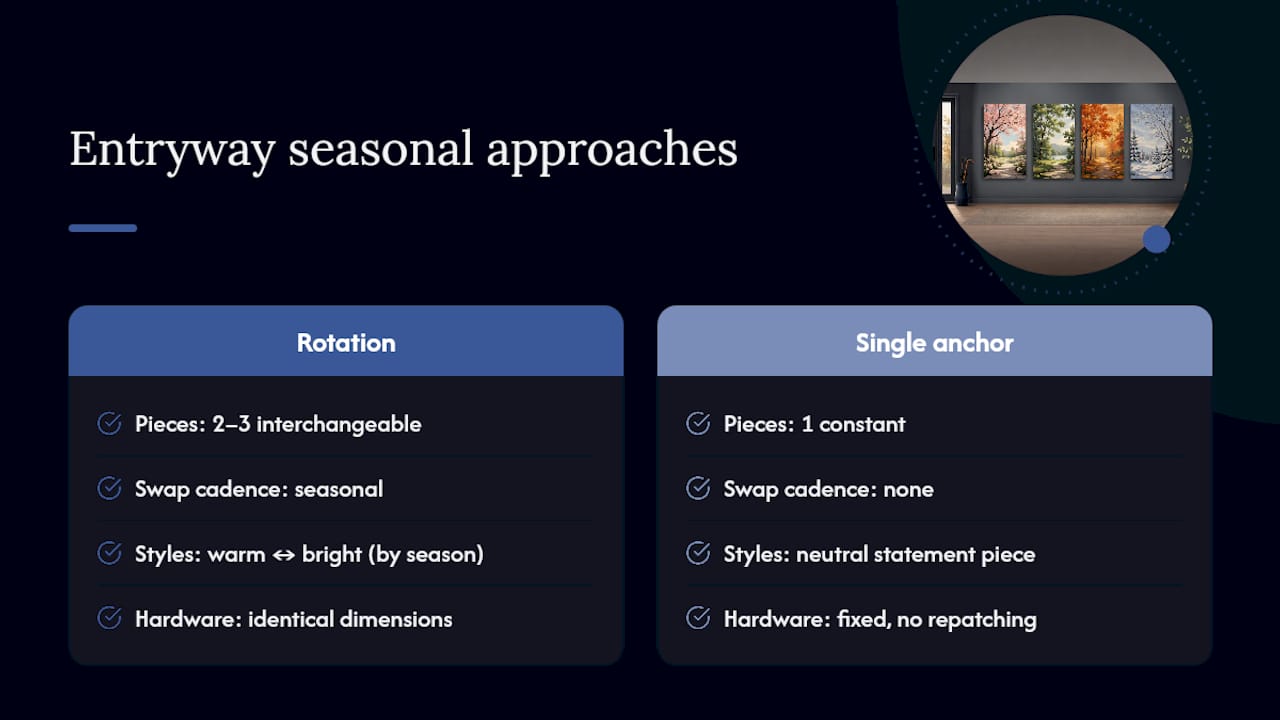
Consider a rotating system built around two or three interchangeable pieces rather than buying new art four times a year. A warm, saturated abstract or landscape canvas can anchor fall and winter, while a brighter pop art or graphic print takes over for spring and summer. Keep the frame or canvas dimensions identical across your rotation so you’re not repatching holes every season, just swapping the piece on the same hardware.
Holiday decorating works the same way on a shorter cycle: a neutral, year-round anchor piece stays up, while a small accent print or seasonal wreath layers in front of or beside it temporarily. This keeps the wall from feeling overdecorated while still marking the season.
If committing to a rotation feels like too much upkeep, choose one versatile, color-neutral statement piece, black and white photography or a muted abstract, and let seasonal touches (a bench throw, a fresh doormat, a bowl of seasonal greenery on the console) do the seasonal work instead. The art stays constant; everything around it shifts.
Personalizing Your Entryway Art
Family photos and DIY pieces turn a foyer from a showroom into a home, but they need the same sizing discipline as any statement canvas. A cluster of family photos in mismatched frames can look intentional or chaotic depending entirely on whether you commit to a grid.
Pick one frame color and one of two sizes, then arrange photos in a tight grid using the same 2.5 to 3 inch spacing that works for any gallery wall. Black-and-white photo printing tends to unify a mixed set of images better than color, since it removes the visual noise of clashing backgrounds and outfits.
DIY art works best when it’s confident rather than fussy. A single bold abstract painting, a large-format map of a meaningful place, or a framed textile can hold its own as a focal piece without needing a whole wall of supporting pieces around it. If you’re mixing DIY or family photos with a purchased canvas, let the purchased piece anchor the composition and treat personal items as supporting elements around it, not the other way around.
Budget-Friendly Entryway Wall Art Options
You don’t need a large budget to make an entryway feel finished. A single well-sized print, framed or on canvas, at a modest price point will beat a wall of small, cheap pieces every time, because scale and placement matter more than material cost.
Print-on-demand canvases and photo prints tend to be the most affordable route for a statement piece, especially when a plain white mat and a simple black or wood frame do the visual heavy lifting. For those willing to DIY, a large canvas painted in one bold color block, or a framed textile remnant, costs a fraction of commissioned art and still reads as intentional.
Thrifted mirrors and frames are another budget lever. A vintage mirror frame, cleaned up and rehung opposite the front door, delivers the same light-bouncing benefit as a new one at a fraction of the price. Gallery grids also stretch a budget further than a single large piece, since several small, inexpensive frames often cost less combined than one oversized custom canvas, while still filling the same amount of wall.
Lighting That Makes Entryway Art Actually Visible
Most entryways get poor natural light, which means the art you hang is only as good as the light hitting it. A picture light mounted directly above a canvas solves this cleanly, casting even light across the surface without the glare a ceiling fixture often creates.
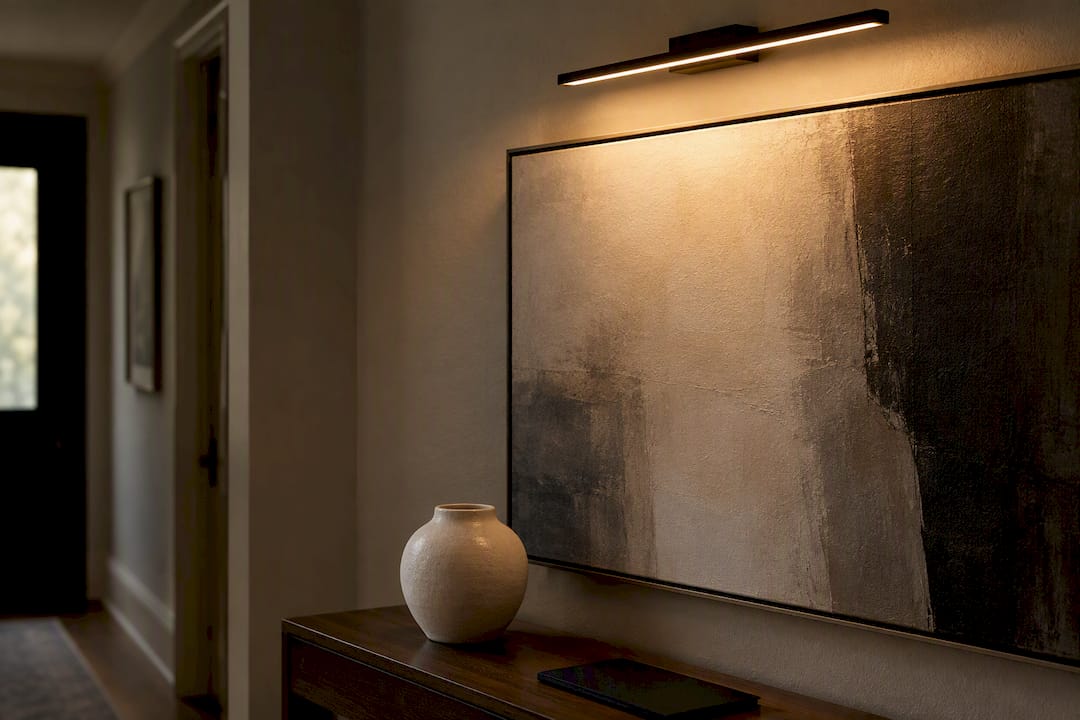
Wall sconces flanking a piece work well in wider entries and double as ambient lighting for the whole space, not just the art. In narrower hallways, a single adjustable spotlight recessed into the ceiling and aimed at the centerpiece does the same job with a smaller footprint.
Warm-toned bulbs (around 2700K to 3000K) flatter most canvas colors better than cool white light, which can wash out warmer tones in pop art or photography pieces. If your entry has any natural light at all, a mirror positioned to catch it, as covered earlier, will do more for visibility than any bulb, reflecting daylight directly onto adjacent walls and reducing how much artificial lighting you need during the day.
Why the Easy Route Isn’t the Wrong Route
Most entryway advice treats art selection like a design puzzle to be solved with taste and inspiration boards. That’s backwards. The real constraint in almost every entry is physical: door swing, walkway width, and the sheer number of times a day people pass through with bags, coats, and kids in tow.
What gets underestimated is how much a single well-sized, durable piece outperforms an ambitious multi-piece arrangement that never quite gets mocked up properly. Homeowners overthink the art and underthink the measuring tape. The two-thirds rule and a raised hanging height in high-traffic zones matter more to how a space feels than whether the art itself is trendy.
If there’s one thing worth prioritizing first, it’s material durability. An entry sees more temperature swings, sunlight, and bumps than any other wall in the house, and a piece that can’t handle that will look tired within a year regardless of how well it was chosen.
— James
Ready to Shop? Start with Ready-to-Hang Canvases
Once you know your wall’s usable width and target hanging height, the fastest way to finish the job is skipping the custom framing shop entirely. Ready-to-hang canvases shipped directly, with many design options spanning various styles, offer convenient solutions without glazing or wait times.

If you’re leaning toward a bold statement piece, the pop art canvas prints collection covers vivid, gallery-ready options sized for everything from narrow hallways to wide landings. Prefer something edgier and street-inspired to match a modern, minimalist entry? Browse the graffiti wall art and street art canvas collection for pieces built to anchor a high-traffic foyer without fading or cracking. Measure your wall, pick your size using the two-thirds rule, and order the piece that fits.
Sources
FAQ
What Art Should You Put in an Entryway?
A single statement piece sized to two-thirds of your console’s width, or a tight uniform gallery grid, works for most entryways. Canvas prints from collections like Luxury Art Canvas hold up well against daily foot traffic and don’t require glazing maintenance.
What Are Some Creative Wall Decor Ideas for a Foyer?
Vertical triptychs suit tall, narrow gaps, while oversized canvases work in wide landings or double-height foyers. Mirrors hung opposite the front door double as decor and a light source in dim entries.
What Are Good Decorative Items for an Entryway?
A console table paired with proportional art, a slim mirror, and one or two accessories like a lamp or small tray cover the essentials without cluttering the space. Layered lighting, a picture light or warm sconces, makes whatever art you choose actually visible.
How Do You Style an Entryway Wall?
Measure your usable wall width after accounting for door swing, then apply the two-thirds rule if you’re pairing art with a console. Hang the center at 57 to 60 inches, or 62 to 64 inches in high-traffic zones, and mock up the layout with paper templates before drilling any holes.
Boutique Closet in an Afternoon: Renter Friendly Closet Wall Art Ideas
Mantel Math for Homeowners: Exact Art Widths for 48, 60, 72 in Mantels