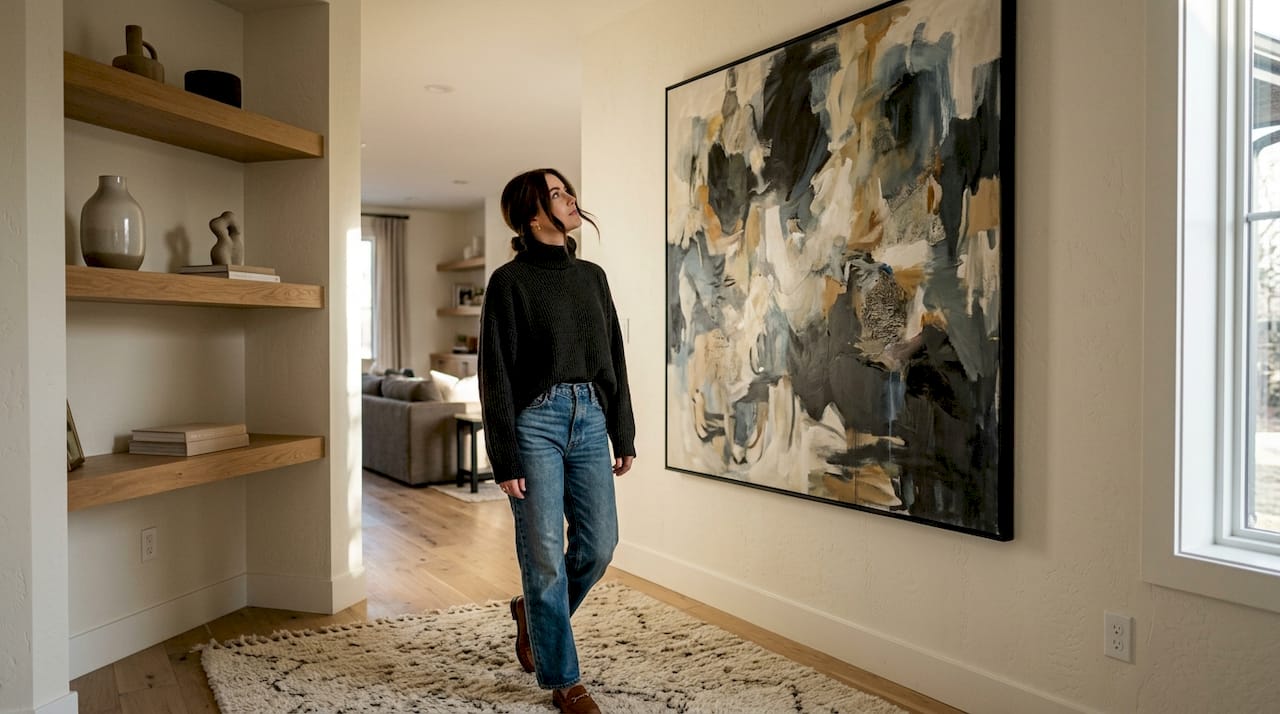
Styling entryways with oversized wall art is the fastest way to turn a forgettable foyer into a space that stops guests cold. A single large canvas acts as the room’s primary decorative anchor, setting the mood before anyone takes another step inside. Interior designers call this approach “Oversized Clarity,” a design principle that resolves a wall’s visual tension using one boldly scaled piece instead of a cluttered gallery arrangement. Whether you own your home or rent it, the right piece of large wall art changes everything about how a space feels.
How to choose the right oversized wall art for your entryway
The most important decision in decorating a foyer with art is choosing the correct size. Art that is too small reads as an afterthought, no matter how beautiful the piece. The standard rule is that art should cover at least two-thirds of the wall’s width. On an 8-foot wide wall, that means selecting a piece between 48 and 60 inches wide.
Art types that work best in entryways
Not every medium suits a foyer. Canvas prints hold up well in high-traffic areas because they resist humidity and minor bumps. Sculptural wall pieces add dimension but require more wall clearance. For renters who want maximum impact with minimal commitment, a single large canvas print is the most practical choice.
Color and theme matter as much as size. Bold colors and warm themes in entryway art evoke comfort and welcome guests effectively. A canvas with deep burgundy, warm terracotta, or rich navy signals warmth the moment someone walks through the door. Cooler palettes in blues and grays read as calm and contemporary, which suits modern entryway designs well.
Style alignment is the third factor. A graffiti-style canvas from Luxuryartcanvas fits perfectly in an urban loft or a home with an eclectic, street-culture edge. A pop art piece with bold graphic lines works in mid-century or contemporary spaces. The art should feel like it belongs, not like it was placed there by accident.
Here are the key selection criteria to keep in mind:
- Size: Cover at least two-thirds of the wall’s width for visual balance.
- Medium: Canvas prints are durable and renter-friendly.
- Color: Warm tones welcome; cool tones calm. Match the mood you want to set.
- Style: Align the art’s aesthetic with your existing furniture and decor.
- Theme: Choose imagery that reflects your personality, since the entryway is the first thing guests see.
Pro Tip: Before buying, tape newspaper or kraft paper to the wall in the exact dimensions of the art you are considering. Live with the mock-up for a day. You will immediately know if the scale feels right.
What are the best placement and hanging techniques for entryway art?
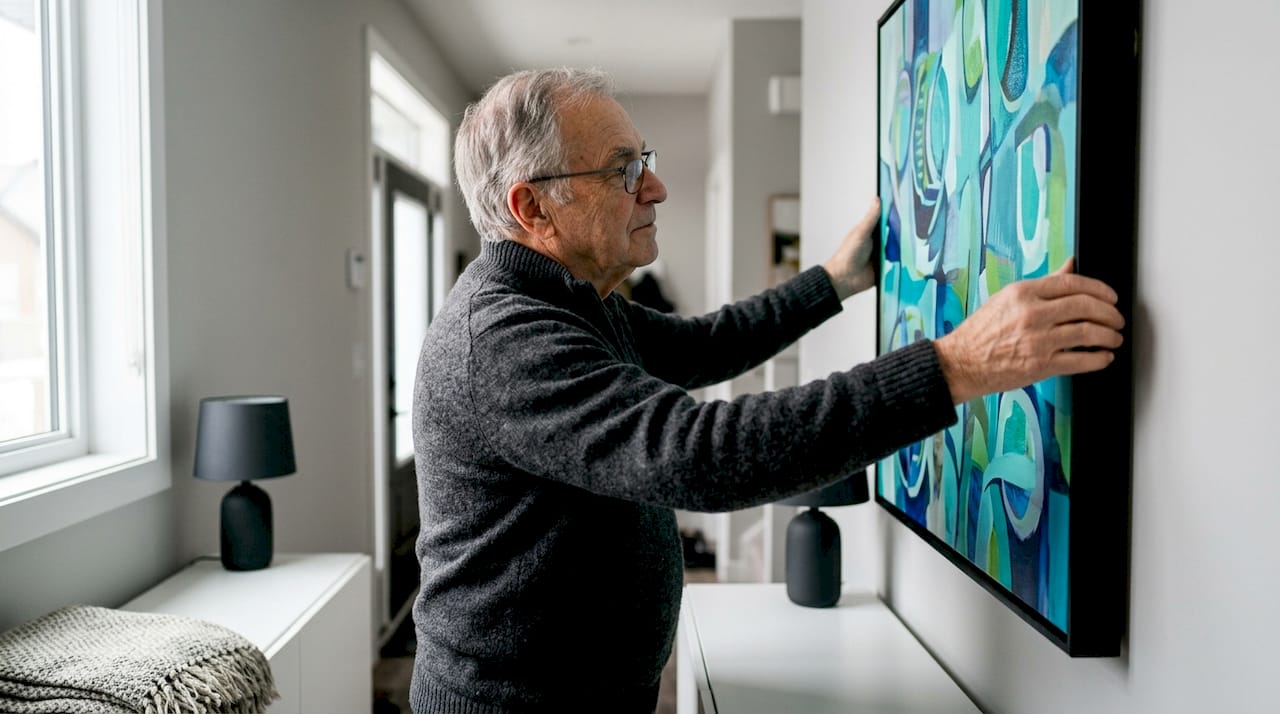
Placement determines whether oversized art looks intentional or accidental. The museum hang height of 57–60 inches from the floor to the center of the artwork is the standard that professional installers use. This height aligns the art with the average adult eye level, making it feel connected to the room rather than floating above it.
Follow these steps for a professional result:
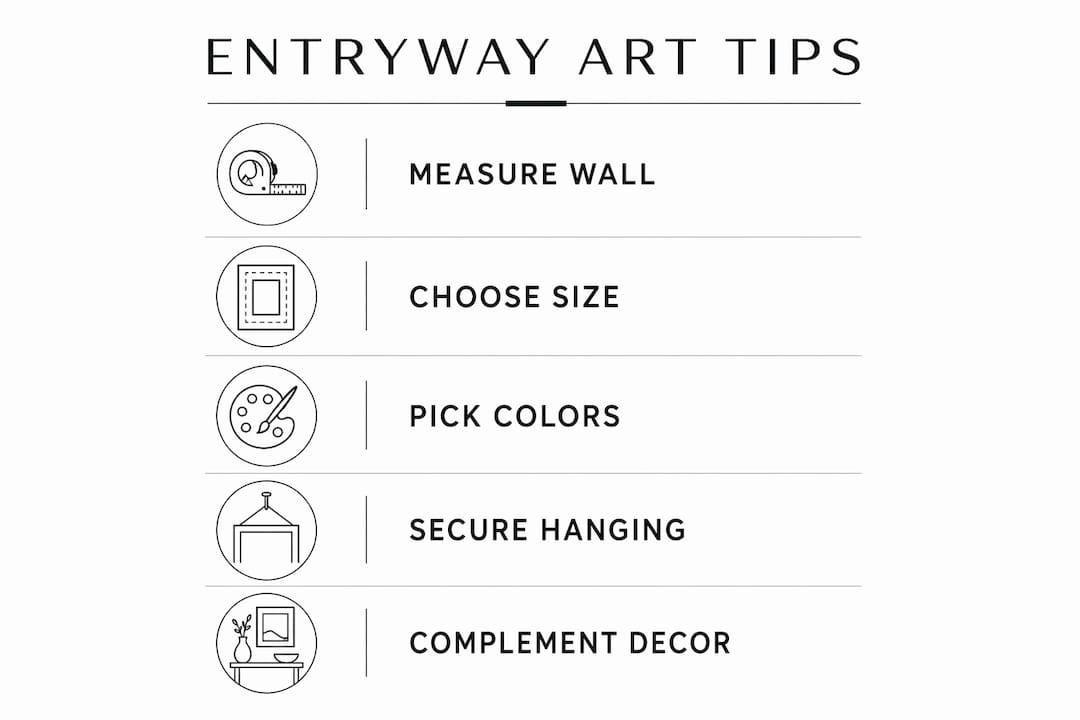
- Measure the wall. Note the total width and height of the available wall space before selecting or ordering art.
- Mark the center point. Find the midpoint of the wall horizontally, then mark 57–60 inches up from the floor. This is where the center of your art will sit.
- Use painter’s tape to mock the size. Tape out the art’s dimensions on the wall before drilling. This prevents the most common decorating mistake: hanging art that is too small or too high.
- Account for furniture below. If a console table sits under the art, leave 6–8 inches of space between the top of the console and the bottom of the frame. This connects the two elements visually.
- Install proper hardware. Oversized canvases are heavy. Use wall anchors rated for the piece’s weight, and always locate studs when possible.
- Add lighting last. Position a 45-degree angled lamp above or beside the art to highlight texture and depth. Adjustable picture lights and dimmable cordless options deliver museum-quality illumination without major electrical work.
Pro Tip: For renters, adhesive picture-hanging strips rated for heavy loads work on most painted drywall. Check the weight rating on the package against your canvas weight before committing.
The single most common mistake is hanging art too high. People instinctively push art up toward the ceiling, which disconnects it from the furniture below and makes the room feel off-balance. Stick to the 57–60 inch center rule and the art will always feel grounded.
How do you complement oversized art with furniture and decor?
Oversized wall art does not exist in isolation. The furniture and accessories around it either reinforce the statement or undercut it. Getting this pairing right is what separates a polished entryway from a room that just has a big painting on the wall.
The console table is the most important supporting element. Consoles placed under oversized entryway art should be at least half the wall’s width to ground the art visually. A narrow console under a wide canvas creates a top-heavy look that feels unstable.
Accessories on the console surface follow the rule of odd numbers. Groups of three or five objects convey a curated, natural look. A single vase, a stack of books, and a small sculptural object create visual rhythm without competing with the art above. Keep the objects low so they do not block the lower portion of the canvas.
Consider these pairing principles:
- Lighting fixtures: A pair of sconces flanking the art frames it like a gallery installation. A single floor lamp angled toward the canvas works in tighter spaces.
- Mirrors: A round or oval mirror placed to one side of the art adds depth without competing for attention. Avoid placing a mirror directly opposite the art, since it doubles the visual noise.
- Texture contrast: If the art is graphic and flat, add texture through a woven runner, a ceramic vase, or a linen-covered book. Contrast makes both elements more interesting.
- Color echo: Pull one color from the art and repeat it in a small accessory on the console. This ties the whole vignette together without being heavy-handed.
Pairing oversized art with properly scaled furniture and lighting creates an entryway that feels curated, not cluttered. The goal is a vignette where every element earns its place.
Troubleshooting common challenges when styling entryways
Even well-planned entryway decor runs into problems. Knowing the most common pitfalls saves time, money, and frustration.
Art that is too small is the number one mistake. A piece that looked large in a store or online can disappear against a real wall. Always measure and mock up with tape before purchasing.
Narrow or small entryways present a real scale challenge. The instinct is to go small, but that usually makes the space feel more cramped. A single tall, vertical canvas in a narrow hallway draws the eye upward and makes the ceiling feel higher. For art in small entryways, vertical formats consistently outperform horizontal ones.
Poor lighting flattens even the most striking canvas. If natural light is limited, a dedicated picture light or a track light aimed at the art makes a significant difference. Reflective art pieces and well-lit canvases deepen the visual impact in foyers.
Seasonal decor conflicts are easy to solve. Neutral-toned oversized pieces work as permanent anchors when you rotate seasonal accessories around them. Swap out the console objects, the runner, and the small decorative items with the seasons while leaving the main canvas in place.
“The art on your entryway wall is the first sentence of your home’s story. Make it a strong one. A single oversized piece with confident placement says more than a dozen small frames ever could.”
Overcrowding is the other extreme. Resist the urge to add more once the main piece is hung. The power of oversized art comes from what surrounds it: open space.
Key takeaways
Oversized entryway art works best when it covers at least two-thirds of the wall’s width, hangs at 57–60 inches to center, and is supported by properly scaled furniture and intentional lighting.
| Point | Details |
|---|---|
| Size rule | Art should cover at least two-thirds of the wall’s width to avoid visual imbalance. |
| Hang height | Center the artwork 57–60 inches from the floor to align with average eye level. |
| Furniture scale | Place a console that is at least half the wall’s width beneath the art to ground it. |
| Lighting | Use a 45-degree angled lamp or picture light to highlight texture and depth. |
| Seasonal flexibility | Keep a neutral large piece as a permanent anchor and rotate smaller accessories seasonally. |
Why I think most people are playing it too safe with entryway art
Most homeowners I talk to are afraid of going too big. They worry a large canvas will overwhelm the space. After years of watching people style their entryways, I can tell you the opposite is almost always true. The rooms that feel off are the ones with art that is too small, hung too high, and surrounded by too many competing objects.
The single most transformative thing I have seen people do is commit to one large piece and then stop. No gallery wall. No cluster of frames. Just one canvas, hung correctly, with a well-chosen console below it. The result is always more confident and more welcoming than anything a complicated arrangement produces.
Renters especially tend to hold back, assuming they cannot make a real impact without permanent changes. A large canvas on proper adhesive strips, paired with a freestanding console, creates the same effect as a built-in installation. You do not need to own the walls to own the room’s aesthetic.
If you are considering a bold graffiti piece or a high-fashion pop art canvas from Luxuryartcanvas, I would say go for it. The visual impact of large canvas art in a foyer is something you feel the moment you walk through the door. Scale and simplicity, chosen with confidence, beat complexity every time.
— James
Bold entryway art, ready to hang
Luxuryartcanvas carries over 1,000 designs built for exactly this kind of statement. The collections merge high fashion with street culture, pulling from graffiti traditions and pop art iconography to create pieces that command attention the moment they go up.

If your entryway needs a focal point that guests will actually remember, the large graffiti wall art collection is a strong starting point. Each canvas is crafted in the USA with materials built for long-term visual impact. For something with a fashion-forward edge, the pop art canvas collection brings bold color and graphic energy that works beautifully against a neutral foyer wall. Every piece ships ready to hang, backed by reviews from more than 10,000 satisfied customers.
FAQ
What size art works best for an entryway?
Art should cover at least two-thirds of the wall’s width to avoid looking undersized. On an 8-foot wide wall, that means selecting a piece between 48 and 60 inches wide.
How high should I hang oversized wall art in a foyer?
Hang art so its center sits 57–60 inches from the floor. This aligns the piece with average adult eye level and connects it visually to any furniture below.
Can renters hang oversized art without damaging walls?
Yes. Adhesive picture-hanging strips rated for heavy loads work on most painted drywall surfaces. Always check the weight rating on the package against your canvas weight before installing.
What furniture should go under entryway wall art?
A console table works best. It should be at least half the wall’s width to ground the art above it. Style the surface with odd-numbered accessory groupings for a natural, curated look.
How do I light oversized art in a foyer with no natural light?
Position a picture light or adjustable lamp at a 45-degree angle to the canvas surface. This highlights texture and depth, giving the piece the same presence it would have in a well-lit gallery.
Premium Canvas Materials: Their Role in Fine Art
Why Bold Canvas Art Transforms Spaces and Rooms