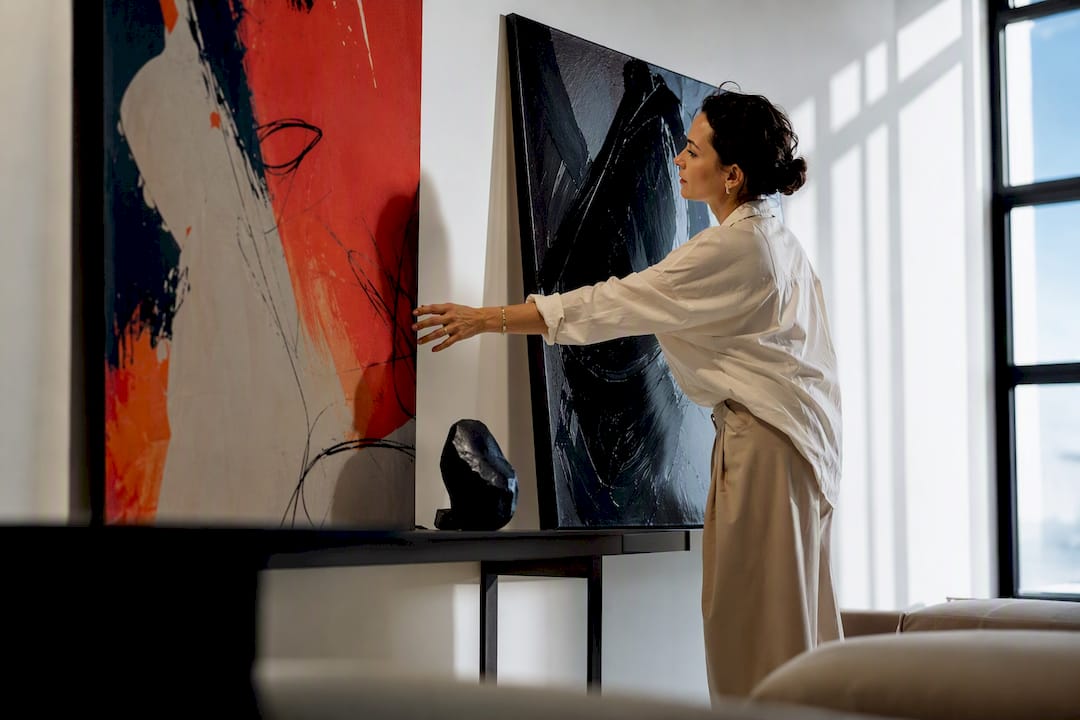
For fashion-inspired, designer-style walls, a ready-to-hang canvas or framed editorial print is the smartest buy because it demands zero setup skill and holds color for years. One suitable option is a retailer offering a large and varied collection spanning pop art, graffiti, and designer-inspired designs, fabricated in the USA on archival materials. Start by browsing curated fashion collections before committing to a size or finish.
TL;DR:
- Designer-inspired canvases manufactured in the USA with archival inks offer the best balance of quality, durability, and style for fashion wall art.
- Proper sizing follows the 2/3 rule, with a single statement piece typically measuring 48 to 60 inches over a bed or sofa, depending on furniture width.
- Editorial and Vogue covers are best used as focal points in living rooms, while black and white photography suits shared spaces for flexible tastes.
- Authenticity depends on asking if the art is licensed, limited, or an open-reproduction, with licensed and limited editions including certificates or numbering.
- Reliable sellers openly disclose material specifics, production methods, and clear return and shipping policies; avoiding sites with vague descriptions or no contact info.
Table of Contents
- What Fashion-Inspired Wall Art Styles Should You Consider?
- How Do You Choose the Right Size, Material, and Finish?
- Where Should You Place and Style Fashion Wall Art?
- Where Can You Buy Fashion-Inspired Wall Art and What Should You Expect?
- Brand Spotlight: What Luxury Art Canvas Actually Offers
- How Do You Tell Authentic Art From Mass-Produced Prints?
- What Should You Ask a Seller Before You Buy?
- What Actually Drives the Price of Fashion Wall Art?
- How Do You Spot a Reliable Seller and Avoid Red Flags?
- What Is a Realistic Delivery Timeline for Fashion Wall Art?
- Styling Like a Fashion Editor: An Editorial Perspective
- Browse Fashion-Inspired Collections Built for Real Walls
- Sources
- FAQ
What Fashion-Inspired Wall Art Styles Should You Consider?
Not every fashion-themed print reads the same way on a wall, and picking the wrong aesthetic for your room is the most common mistake buyers make. Editorial and Vogue-cover style pieces carry high visual drama with bold typography and saturated color; they work best as a single statement piece over a console or bed, not scattered across a gallery wall. Designer-inspired canvases (think logo-driven Chanel or Louis Vuitton motifs) lean glossy and graphic, and they read especially well in entryways or home offices where you want an immediate style signal.
Black and white model photography softens the same drama into something more timeless, which makes it the safer pick for shared spaces like a living room where taste needs to be flexible. Vintage fashion illustration brings a slower, hand-drawn feel that pairs naturally with antique furniture or a reading nook. Glam illustration, with its loose brushwork and metallic accents, tends to suit dressing areas and powder rooms. Pop and graffiti-inflected fashion art sits at the boldest end of the spectrum and works best in creative offices, lofts, or a teen’s room where energy matters more than restraint.
A quick way to sort them by room fit:
- Editorial/Vogue covers: living rooms, above sofas, statement walls
- Designer-inspired (Chanel, Louis Vuitton, Dior): entryways, closets, home offices
- Black and white photography: bedrooms, hallways, shared family spaces
- Vintage illustration: reading nooks, studies, transitional spaces
- Glam illustration: dressing rooms, vanities, powder rooms
- Pop/graffiti: creative studios, lofts, gaming or media rooms
Pinterest’s fashion wall art boards show just how much these editorial and designer-inspired looks dominate current mood boards, which is a useful way to check before you commit to a style.
How Do You Choose the Right Size, Material, and Finish?
Size mistakes ruin more rooms than bad color choices. The 2/3 rule is the fastest fix: your art (or your gallery wall as a group) should occupy roughly two thirds the width of the furniture it hangs above. A single statement canvas over a queen bed usually needs 48 to 60 inches wide; a console table calls for something narrower, in the 24 to 36 inch range.
Material changes both look and lifespan:
- Canvas (gallery wrap): lightweight, no glass glare, closest to an editorial print’s texture, and easiest to hang without professional help.
- Framed print: adds a formal edge and works well for smaller pieces in tighter groupings.
- Poster: the cheapest option but the most vulnerable to fading and warping over time.
- Metal or acrylic: durable and glossy, suited to pop art and graffiti styles that benefit from a hard sheen.
For fashion canvases specifically, a gallery-wrapped canvas printed with fade-resistant pigment inks generally gets closest to that glossy editorial look while staying light enough to hang on a standard wall anchor.
Pro Tip: Before you buy, check the product page for shipping windows and the return policy in writing. Reputable sellers publish both clearly, similar to how any legitimate retailer states its shipping and return terms upfront rather than burying them in fine print.
Where Should You Place and Style Fashion Wall Art?
Placement decisions matter more than most buyers expect. A statement fashion print earns its keep in an entryway (the first thing guests see), above a console table, over a headboard, or inside a dressing area where the mood should feel elevated. Insight from Pinterest’s fashion-art trends suggests editorial pieces perform best as focal points rather than as one of many competing images, so resist the urge to crowd a bold Vogue-style print with too much else nearby.
Gallery walls need more restraint. Mix one or two editorial or designer-inspired prints with neutral abstracts or black and white photography to keep the eye moving without visual fatigue. Keep spacing between pieces consistent, usually two to three inches, and anchor the arrangement around one larger piece rather than scattering equal-sized prints.
A quick installation checklist before you hang anything:
- Measure wall width and apply the 2/3 rule before ordering
- Confirm hanging hardware included (wire, sawtooth, or French cleat)
- Check lighting; warm accent lighting flatters black and white photography, while cooler light suits glossy designer-inspired pieces
- Leave 57 inches from the floor to the center of the piece, the standard museum-height guideline
- Photograph the space before and after to confirm scale worked as planned
Framing choice also shifts the mood: thin black frames read modern and gallery-like, while frameless canvas keeps the focus entirely on the image itself.
Where Can You Buy Fashion-Inspired Wall Art and What Should You Expect?
Three main channels dominate this category. Direct-to-consumer specialty retailers like Luxury Art Canvas curate designs specifically around fashion and street-culture themes. Editorial-licensed collections, sourced through fashion media brands, offer officially sanctioned reproductions but usually at a premium. Print marketplaces aggregate thousands of independent artists, which means wildly inconsistent quality and shipping times.
Before checking out anywhere, verify these on the product page:
- Material specs: canvas weight, ink type, and whether its archival or standard
- Close-up images: texture shots reduce the odds you’re surprised by print quality on arrival
- Shipping time: standard canvas orders typically ship faster than custom framed pieces
- Return policy: confirm whether custom sizes or personalized designs are returnable at all
Price generally scales with size, material, and exclusivity. A basic 16x20 canvas costs far less than a 40x60 statement piece, and licensed or limited-edition runs almost always carry a premium over open-run prints. Luxury Art Canvas’s designer-inspired product pages show how pop, graffiti, and designer categories are typically organized so you can compare sizing and finish options side by side.
Brand Spotlight: What Luxury Art Canvas Actually Offers
Certain retailers build their catalogs around canvases fabricated in the USA, offer a large library of designs, and focus on fashion, designer-inspired, and pop/graffiti aesthetics that general art retailers rarely stock together in one place.
US fabrication paired with archival inks tends to matter more than shoppers realize. Canvases that fade within a year usually skipped this step entirely, which is why material specs deserve a second look before checkout.
That combination translates into practical value three ways. Consistent US production means sizing and color calibration stay predictable across orders. A catalog this size means you can build a themed gallery wall entirely from one seller instead of piecing it together from five different shops with inconsistent print quality. Ready-to-hang framing removes the guesswork of sourcing separate hardware.
Buyers should still verify specifics on individual product pages, including close-up texture shots, listed dimensions, and any customer reviews attached to that specific design before finalizing a purchase.
How Do You Tell Authentic Art From Mass-Produced Prints?
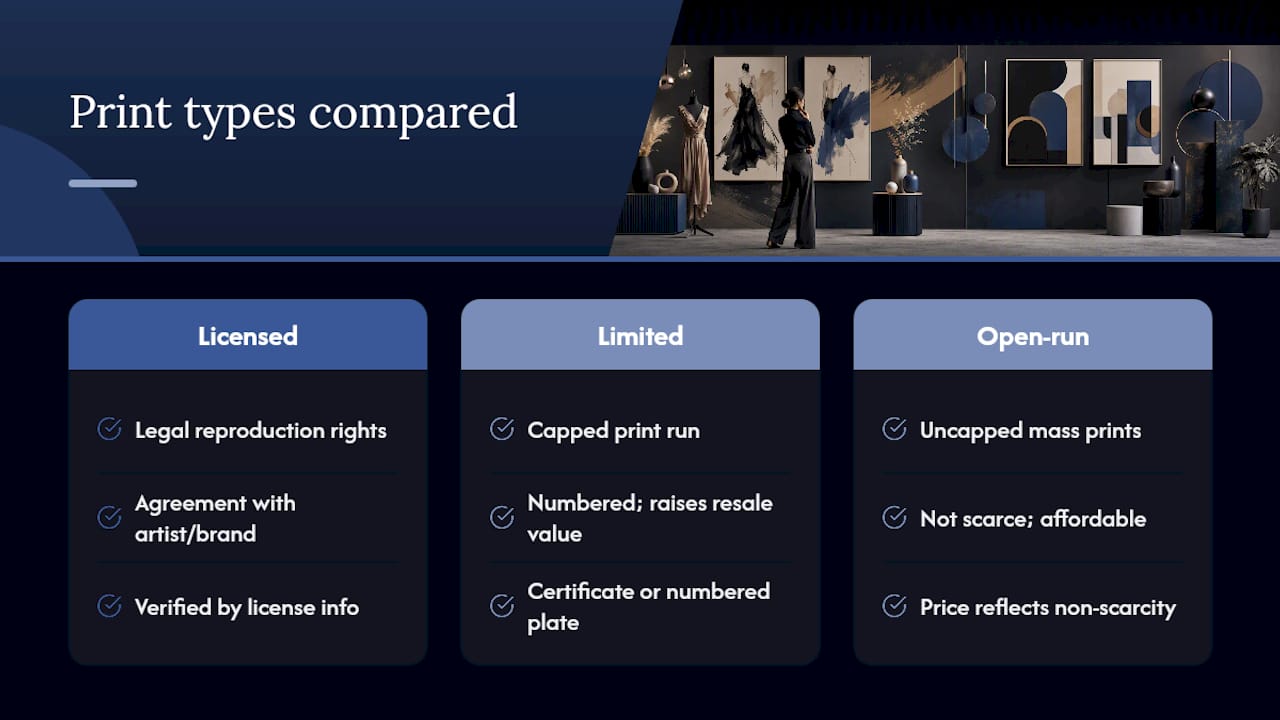
The word “original” gets misused constantly in this category, so it helps to know exactly what you’re paying for. A licensed reproduction means the seller has legal rights to reproduce a designer’s or artist’s imagery, often through an agreement with the fashion house or photographer. A limited edition means a capped print run, usually numbered, which raises resale value and scarcity. Neither is the same as an “original,” a term that technically only applies to a one-of-a-kind physical piece, not a printed reproduction.
Most fashion-inspired wall art on the market, including designer-inspired canvases featuring Chanel, Dior, or Louis Vuitton motifs, falls into a gray zone: it’s art inspired by those brands’ visual identity rather than an officially licensed collaboration. That’s not a red flag by itself. It’s simply a different category from a signed, numbered gallery print, and reputable sellers are upfront about which one you’re buying.
Ask a seller directly whether a piece is licensed, limited, or an open-run reproduction. A seller who can’t answer clearly, or who uses the word “exclusive” without defining what that means (capped print run? single retailer? handmade element?), is worth a second look before you buy. Genuine limited editions usually come with a certificate of authenticity or a numbered plate on the back of the canvas. Open-run reproductions, which make up the bulk of affordable fashion wall art, are perfectly legitimate purchases as long as the pricing reflects that they’re not scarce.
What Should You Ask a Seller Before You Buy?
A few pointed questions separate a reliable seller from a risky one, and most of them take thirty seconds to ask through a chat widget or contact form.
Start with provenance: where is the piece actually printed, and on what equipment? A seller who can name the printing method (giclée, UV flatbed, dye sublimation) and the ink type is usually more trustworthy than one who just says “high quality.” Ask about the artist or design source directly. If a piece is “designer-inspired,” find out whether it’s an in-house illustration or a reproduction of existing photography, since that affects both legality and originality.
Customization matters just as much for fashion-inspired pieces, since sizing is rarely one-size-fits-all for a specific wall. Ask whether custom dimensions are available, whether the seller offers split panels for larger walls, and what the turnaround time looks like for a non-standard order compared to a stock size. Also ask about color accuracy guarantees. Screens render color differently than a printed archival canvas will, and a seller confident in their process should be able to explain how they calibrate for that gap.
Finally, ask what happens if the piece arrives damaged. A seller with a clear, specific answer (not a vague “contact us”) is signaling that this happens rarely enough to have a real process for it.
What Actually Drives the Price of Fashion Wall Art?
Material and size explain part of the price tag, but three other factors move the number more than most buyers expect. Artist or brand reputation is the biggest lever: a design tied to a recognizable fashion house or a known illustrator commands a premium even on the exact same canvas material as a generic piece.
Exclusivity is the second driver. A capped print run of 50 numbered canvases costs more per unit than an open-run design precisely because scarcity is part of what you’re buying, not just the image itself. If a seller can’t explain why a “limited” piece costs more than a similar unlimited one, the exclusivity claim may be more marketing than fact.
Framing adds a third, often underestimated cost. A raw canvas print might run a fraction of the cost of the same image finished in a solid wood frame with museum glass. Shipping cost for framed pieces also increases substantially because of weight and breakage risk, which is worth factoring in before comparing two sellers’ prices side by side.
Volume discounts are worth watching for if you’re building a gallery wall rather than buying one piece. Sellers with large catalogs, including designer-inspired specialists, sometimes offer multi-canvas pricing that brings the per-unit cost down meaningfully compared to buying each piece individually.
How Do You Spot a Reliable Seller and Avoid Red Flags?
Customer reviews remain the single fastest gut check. A seller with a large volume of specific, detailed reviews (not just star ratings with no text) is showing you real proof of consistent quality. Feedback from a substantial number of customers can be a useful component of a seller’s track record, often more meaningful than a handful of five-star reviews on a brand-new storefront.
Return policy clarity is the second signal. Every legitimate retailer should publish shipping windows and return rights clearly on the site rather than making you dig through a contact form to find them, a standard reflected in how established companies structure their site policies. If a seller’s return policy excludes custom or personalized orders, that’s normal, but it should be stated plainly before you check out, not discovered afterward.
A few concrete red flags to watch for:
- No physical business address or verifiable contact information anywhere on the site
- Reviews that all read identically or appeared within the same short window
- Vague material descriptions (“premium canvas”) with no ink type, weight, or fabrication location listed
- Prices that seem drastically below the category average with no explanation
- No customer service response within a reasonable window when you test it with a pre-sale question
Customer service responsiveness before you buy is actually one of the most reliable predictors of how a seller will treat you after a problem arises.
What Is a Realistic Delivery Timeline for Fashion Wall Art?
Standard stock-size canvases typically ship faster than custom orders, since there’s no cutting or framing customization involved. Expect a few business days for production plus standard shipping transit on a stock size, though exact windows vary by seller and should be listed clearly on the product page before checkout.
Custom sizes, split-panel pieces for larger walls, or framed orders generally take longer, since framing and precise cutting add production steps that stock canvases skip entirely. If you’re working toward a specific deadline (a move-in date, a holiday gift, a home staging appointment), ask the seller directly for a production timeline rather than assuming standard shipping estimates apply.
Limited editions and licensed collaborations sometimes carry their own timeline quirks too, particularly if a design is printed in batches rather than on-demand. A seller who can tell you exactly which batch your order falls into, and when the next one prints, is demonstrating the kind of process transparency worth paying for. If a site gives no timeline information anywhere on the product page, treat that as a reason to ask before ordering rather than a detail to overlook.
Styling Like a Fashion Editor: An Editorial Perspective
Fashion editors think in three priorities: impact, cohesion, scale. Pick one before you shop, because trying to satisfy all three with a single purchase usually results in a piece that’s too safe to matter.
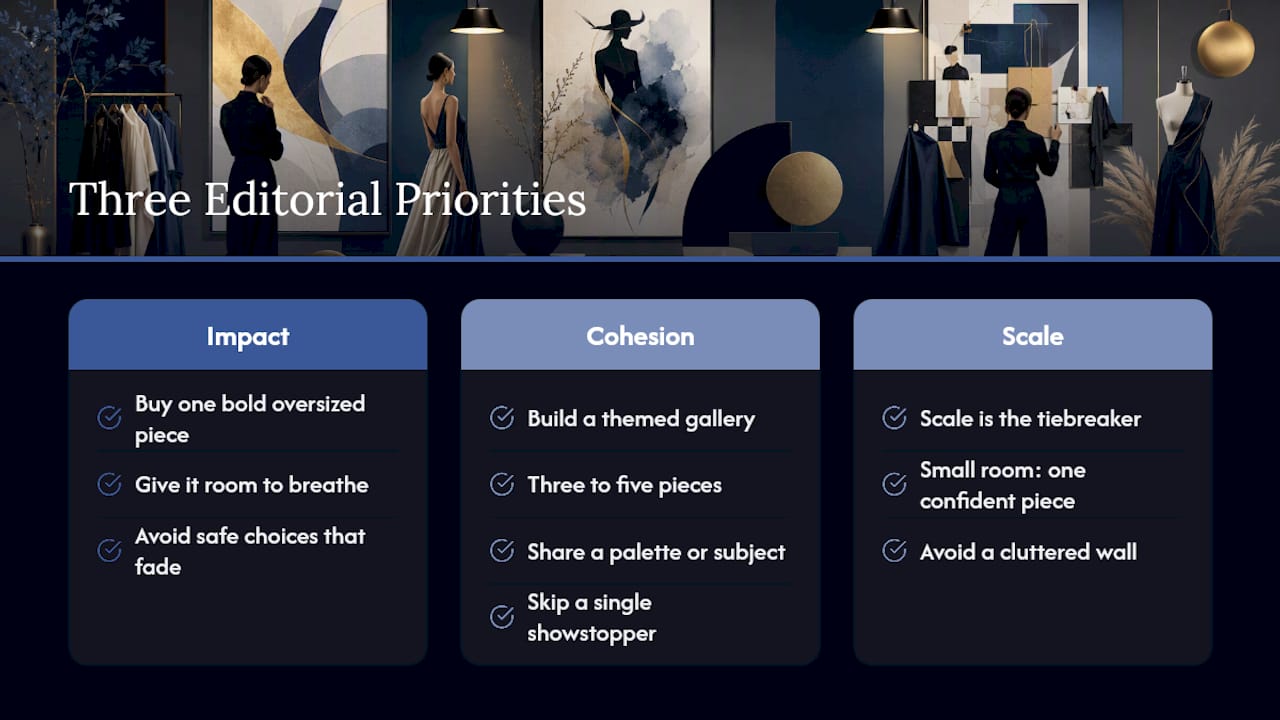
If you want impact, buy one bold, oversized statement piece and give it room to breathe. If you want cohesion, skip the single showstopper and build a themed gallery instead, three to five pieces sharing a palette or subject. Scale is the tiebreaker: a small room rewards one confident piece over a cluttered wall.
My actual advice? Buy the piece that makes you a little nervous. The safe choice rarely gets noticed.
— James
Browse Fashion-Inspired Collections Built for Real Walls
Luxury Art Canvas gives you a specific advantage over piecing together a fashion wall from five different sellers: one catalog, US fabrication, and consistent print quality across styles instead of gambling on a new vendor for every piece. If bold editorial energy is the goal, the Pop Art Canvas Prints collection delivers that graphic punch without needing framing.
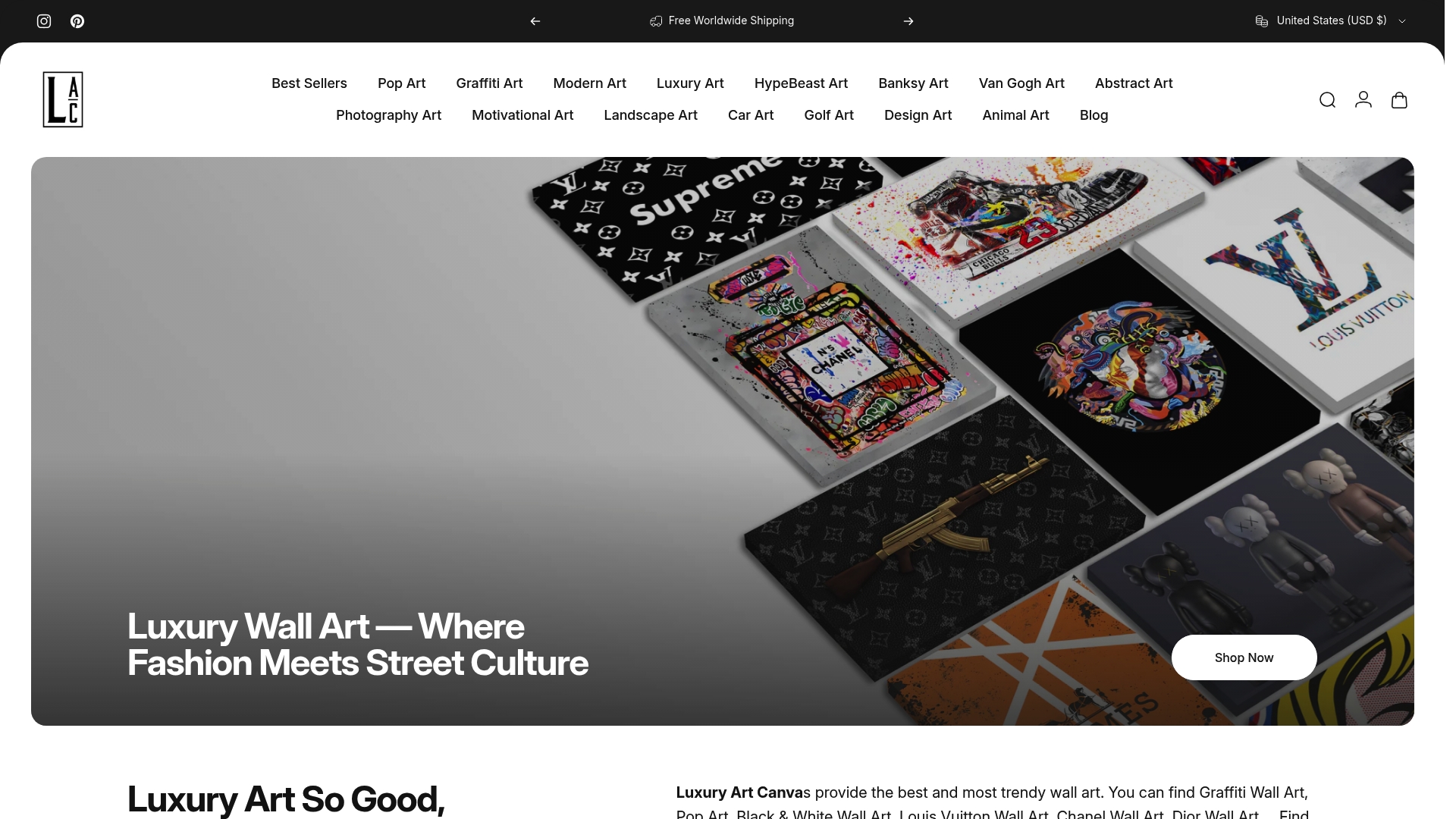
Want something with more street edge? The Graffiti Wall Art & Street Art Canvas line blends fashion sensibility with raw urban texture, ideal for creative offices or lofts. For a designer-inspired look closer to a Vogue spread, Vogue canvas wall art and pieces like the Louis Vuitton wall decor canvas offer that glossy, editorial finish ready to hang straight out of the box.
Every piece ships ready to hang, no framing shop required. Browse the full catalog or reach out directly if you need a custom size for a specific wall.
Sources
This guide draws on Pinterest’s fashion wall art trends, standard retail privacy and shipping policy practices, and product data from Luxury Art Canvas. Browse the full catalog at Luxuryartcanvas.
FAQ
What Kind of Wall Art Is Trending Right Now?
Editorial and designer-inspired fashion prints, black and white model photography, and pop or graffiti-influenced pieces are currently the most popular fashion wall art styles, according to trending Pinterest boards. Collections blending high fashion with street culture, like those at Luxury Art Canvas, reflect this crossover directly.
What Is the 2/3 Rule for Wall Art?
The 2/3 rule means your artwork, or a gallery wall grouping, should span roughly two thirds the width of the furniture beneath it. For example, a console table calls for art in the 24 to 36 inch range.
Where Can You Buy Aesthetic Wall Art?
You can buy fashion-inspired wall art through specialty retailers, editorial-licensed collections, or open print marketplaces, each with different quality and pricing. Direct-to-consumer sellers like Luxury Art Canvas focus specifically on fashion and street-culture themed canvases with US fabrication.
What Are Some Popular Fashion Art Styles?
Popular fashion art styles include editorial or Vogue-cover inspired prints, designer-inspired motifs (Chanel, Louis Vuitton, Dior), black and white photography, vintage illustration, glam illustration, and pop or graffiti-influenced designs. Each style suits a different room, from bold statement pieces in living rooms to softer black and white photography in bedrooms.
How Do You Know if Fashion Wall Art Is Licensed or Just Inspired?
Ask the seller directly whether a piece is an official licensed collaboration or a design inspired by a brand’s visual identity, since most designer-inspired canvases fall into the second category. Legitimate sellers state this clearly on the product page rather than implying an official partnership that doesn’t exist.
12 Ready to Hang Black and White Canvas Ideas That Look Curated