
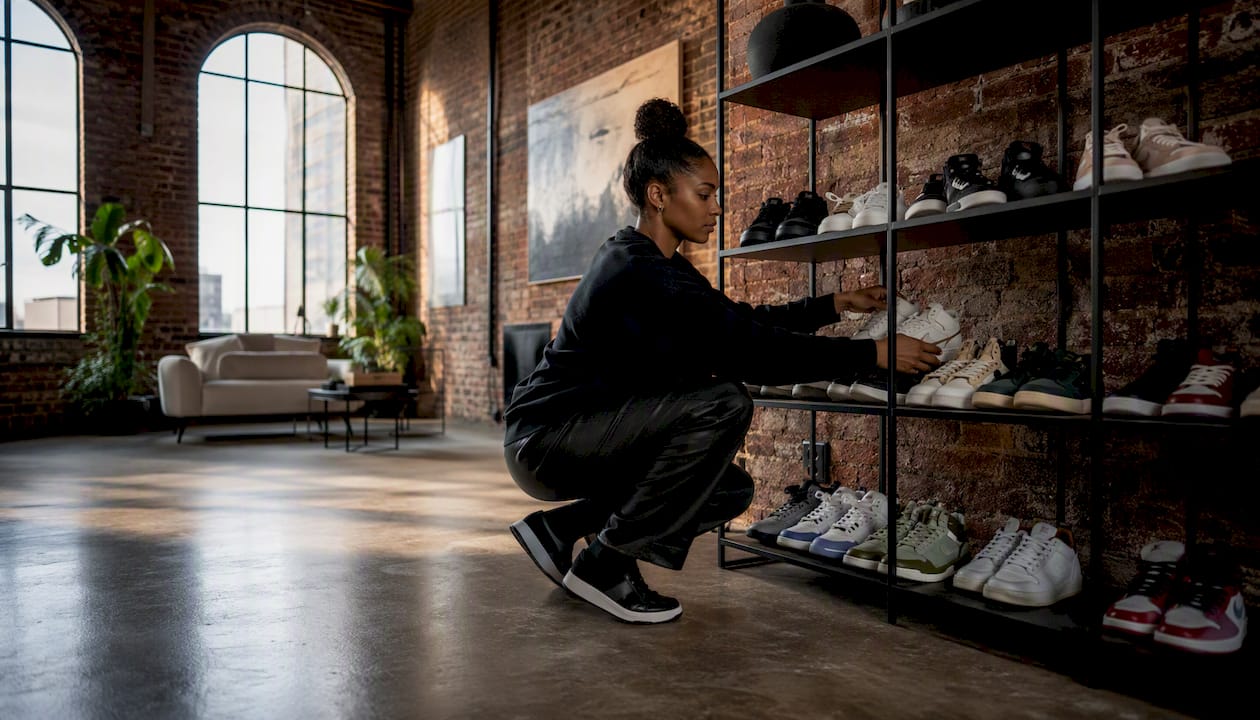
Streetwear-inspired home decor is the interior translation of streetwear culture: collector-driven, graphic, and built on the same high-low remix logic that made limited-edition sneakers and graphic tees into cultural currency. The look borrows directly from drop culture, bold iconography, and the scarcity mindset that define the fashion movement, then applies them to walls, shelves, and furniture. The result is a room that reads like a personal gallery, not a showroom.
Three signals tell you a room has it right:
- Curated sneaker or collectible displays treated with museum logic, not storage logic
- Culture-forward wall art — graffiti canvases, pop prints, or brand iconography — as the room’s primary voice
- Statement lighting and a restrained palette that keep focus on the pieces that matter
Table of Contents
- What is streetwear-inspired home decor, really?
- Five elements that make a room feel streetwear-inspired
- What colors and textures define the look?
- How should you arrange furniture for a curated, not cluttered, look?
- How do you choose and place wall art that reads like streetwear culture?
- What accessories and lighting make a space look photographable?
- Room-by-room styling: bedroom, living room, and studio
- Where do you find streetwear-friendly decor?
- What does a room refresh actually cost, and how long does it take?
- Quick DIY projects that add instant streetwear character
- Key Takeaways
- Why streetwear decor is more than a trend
- Ready-to-hang streetwear wall art from Luxuryartcanvas
- Useful sources and further reading
What is streetwear-inspired home decor, really?
The term gets used loosely, so it helps to anchor it. Streetwear as a cultural movement grew from youth culture, music, skate, and localized community styles. The interior version applies the same taste logic: you are curating a collection, not decorating a room. Every object earns its place the way a grail sneaker earns shelf space.
That collector-driven sensibility is what separates this aesthetic from generic “urban” or “industrial” design. Industrial design borrows raw materials from warehouses. Streetwear-inspired decor borrows the mindset from the culture: limited, intentional, personal, and always evolving.
Five elements that make a room feel streetwear-inspired
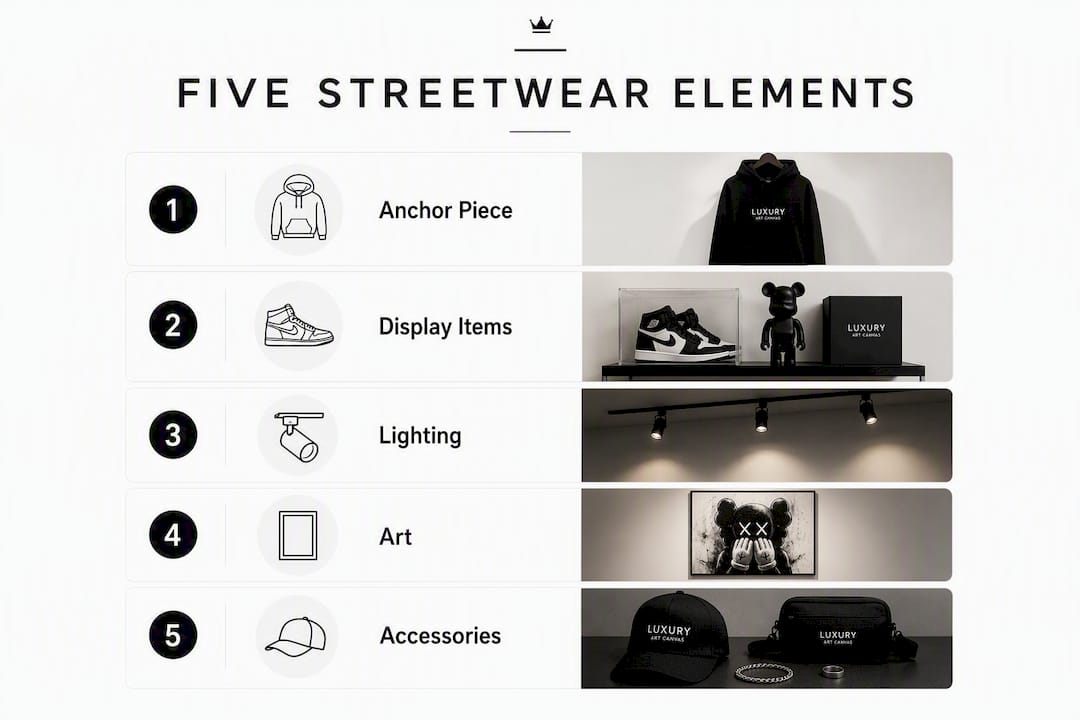
The structure of a well-executed streetwear room follows a clear hierarchy. Get these five pillars right and the rest fills in naturally.
- Low-profile platform bed or sofa as anchor. The anchor piece sets the room’s center of gravity. Everything else orbits it. A platform bed in matte black or charcoal, or a low-slung sectional in a living room, signals the aesthetic before a single collectible is in sight.
- Dedicated sneaker or collectible display. This is the room’s personality. Floating acrylic shelves, shadowboxes for grails, or a backlit wall section all work. The display should read as intentional, not accidental.
- Statement lighting. Neon signs, dimmable LED strips, and industrial pendants do double duty: they set mood and make the room photographable. Lighting is the fastest way to shift a space from “bedroom” to “editorial.”
- Culture-forward wall art. Large graffiti canvases, oversized pop prints, or brand-iconography pieces function as the room’s loudest statement. One strong piece beats five weak ones.
- Intentional minimalist furniture placement. Breathing space around statement pieces is not emptiness — it is framing. The room should feel curated, not crowded.
Build in this order: anchor first, then display, then lighting, then art, then accessories. Buying everything at once usually produces a room that looks like a storage unit with good taste.
Pro Tip: Cap your visible collection at 4–6 statement clothing items and rotate monthly. A room that shows everything at once reads as a closet. A room that shows a selection reads as a gallery.
What colors and textures define the look?
The palette discipline is strict, and that strictness is what gives the style its photographic quality. The three-color rule keeps visual focus where it belongs: on the pieces, not the walls.
The three-color structure:
- Dominant base: black, deep charcoal, or concrete gray covers the majority of the room (walls, large furniture, flooring)
- Neutral secondary: off-white, warm cream, or raw wood breaks the darkness and adds warmth
- Single bold accent: one color only — neon red, electric blue, or acid green — carried by one or two objects (a neon sign, a grail sneaker, a framed print)
The accent color should live on your most important piece. If your grail sneaker is a Jordan 1 Chicago, the red in that shoe is your accent. Everything else defers to it.
Textures that work: exposed brick, poured concrete, brushed metal, glossy acrylic, matte black powder-coat, distressed rugs, and plush throws. The contrast between hard industrial surfaces and soft textiles is what keeps the room from feeling cold. Raw concrete walls paired with a chunky knit throw or a shag rug is a classic streetwear-room move — the warmth makes the industrial edge feel intentional rather than unfinished.
How should you arrange furniture for a curated, not cluttered, look?
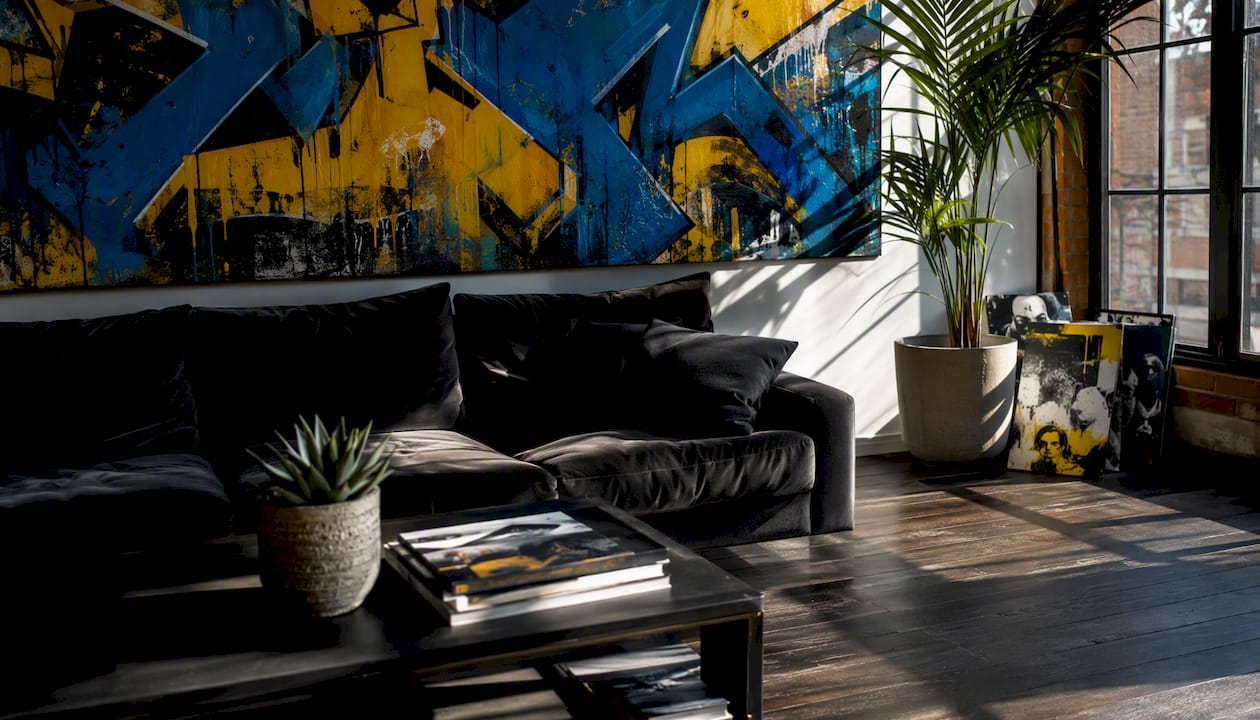
Furniture silhouette matters as much as color. Low-profile pieces keep the visual horizon open and make wall displays the dominant feature. Tall, bulky furniture competes with the art; low furniture frames it.
Furniture choices that work:
- Platform beds with integrated storage (keeps the floor clear)
- Compact lounge chairs or a two-seat sofa as a “second act” seating zone
- Simple desks or consoles that double as display surfaces for small collectibles
- Open shelving units in matte black or raw wood for curated vignettes
Layout logic: anchor the main wall first. That is your culture wall — the one that holds the hero art piece or the sneaker display. Leave at least 18–24 inches of breathing room around any statement piece. Reserve one wall entirely for culture; keep the others quieter.
Pro Tip: Center artwork at roughly 57 inches from the floor to the center of the piece — the standard gallery height. For a hero canvas, let it fill about two-thirds of the wall for correct visual weight. A piece that is too small for its wall reads as an afterthought.
How do you choose and place wall art that reads like streetwear culture?
Wall art is the room’s loudest voice. In a streetwear-inspired space, that means graffiti canvases, pop art prints, brand iconography (Chanel, Louis Vuitton, Dior), or large-format pieces inspired by artists like Banksy. The art should feel like it belongs in a gallery, not a dorm room.
Sizing for impact:
- A single hero piece should fill roughly two-thirds of its wall
- For groupings, use odd numbers — three or five pieces — with 2–3 inches of spacing between frames
- Consistent frame finishes (all matte black, all natural wood) unify a grid; mixed frames fragment it
Placement options:
- Single hero piece centered on the culture wall at gallery height
- Triptych or five-piece grid with uniform spacing and a shared color thread
- Mixed-scale grouping: one large anchor flanked by two smaller pieces at varying heights
For street art canvas styles that work as hero pieces, look for archival-ink prints on gallery-wrapped canvas — they hang flush without additional framing and hold color over time. Matte finishes read more editorial; glossy finishes pop under direct lighting.
Luxuryartcanvas carries over 1,000 designs in graffiti, pop art, and high-fashion iconography, all produced in the USA with archival inks. Their graffiti street art canvases are ready to hang and sized for feature walls, which removes the framing and installation guesswork entirely.
What accessories and lighting make a space look photographable?
The difference between a room that looks good in person and one that photographs well usually comes down to lighting and display discipline.
Display systems that work:
- Floating clear acrylic shelves for sneakers (keeps the focus on the shoe, not the hardware)
- Single-item shadowboxes for grails or limited-edition collectibles
- Acrylic risers to create height variation on flat shelves
- Neon signs as both lighting and art (custom text or brand logos)
- LED accent strips behind shelving or along baseboards for ambient depth
Installation notes: sneaker shelves should be spaced at least 10–12 inches apart vertically to allow proper display without crowding. For neon signs, use a dedicated outlet and keep cords managed with cable clips or channels. Check wall-mount weight ratings before installing heavy acrylic or glass shelving — most drywall anchors support moderate weight per anchor, but verify for your specific wall type.
For a finishing touch, crystal or metallic accessories can soften the industrial edge of a streetwear room without breaking the palette.
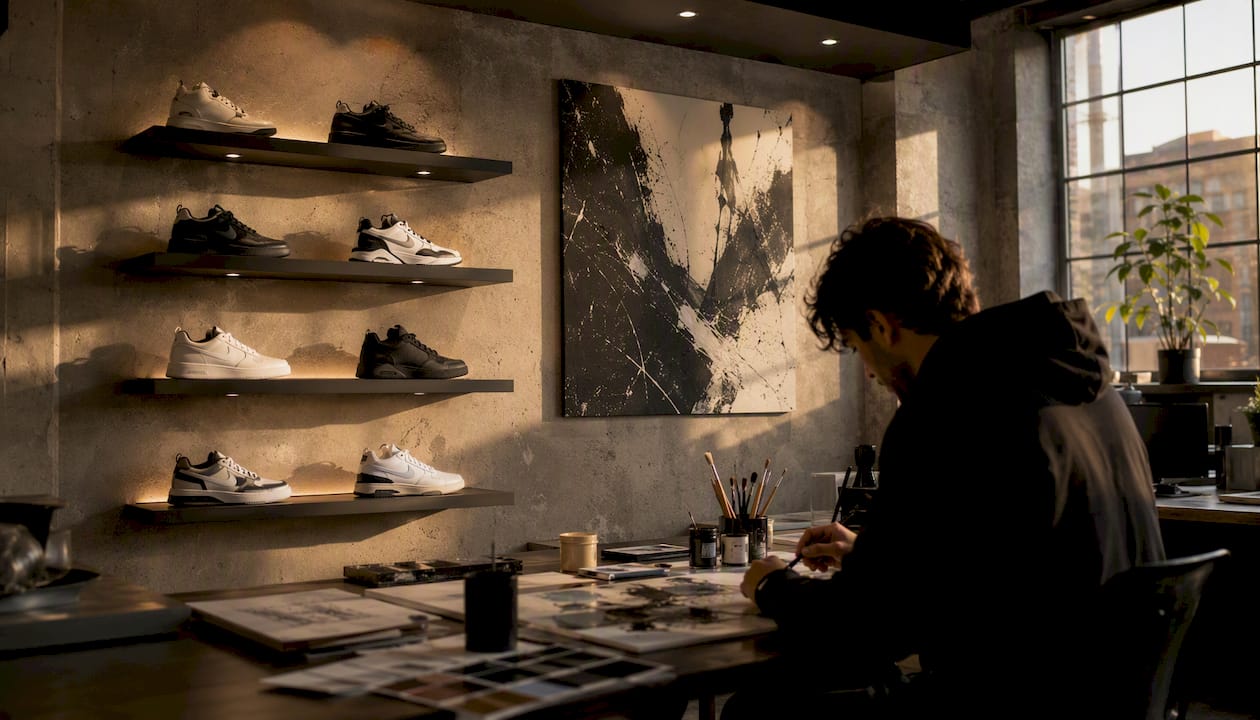
Pro Tip: Layer three light sources: a neon or backlit hero piece for drama, dimmable floor or table lamps for warmth, and LED accent strips for depth. That combination gives you full mood control and makes any corner of the room camera-ready.
Room-by-room styling: bedroom, living room, and studio
Bedroom checklist
- Anchor the room with a low-profile platform bed in black, charcoal, or raw wood
- Build the culture wall directly opposite or adjacent to the bed — this is the first thing you see when you wake up
- Install a sneaker display (floating shelves or shadowboxes) on a side wall, displaying a moderate number of pairs only
- Add a lounge corner: a single chair, a floor lamp, and a small side table
- Set the lighting dial: neon sign or LED strip as hero, dimmable lamp for reading, accent strip for depth
Living room checklist
- Choose a bold sofa or accent chair as the room’s anchor (low-profile, solid color in the base palette)
- Hang a large statement canvas on the primary wall — graffiti, pop art, or brand iconography
- Build a curated shelf vignette: 3–5 objects maximum, mixed heights, one accent-color piece
- Style the media console as a display zone: one or two collectibles, clean cable management, no clutter
Studio or dorm checklist
- Use a compact platform bed or low-profile futon to keep floor space open
- Go vertical: wall-mounted shelves for sneakers and collectibles free up floor area
- Turn the desk into a dual-purpose display zone with a small acrylic riser and one framed print
- Use portable lighting: a clip-on LED, a small neon sign, or a USB-powered LED strip requires no installation and moves with you
Where do you find streetwear-friendly decor?
Sourcing is where most people either nail the look or dilute it. The goal is to mix street style with home decor pieces that hold up over time, not fast-fashion equivalents that fade or warp.
Vendor types worth knowing:
- Direct-to-consumer canvas shops for hero art — prioritize archival inks and gallery-wrapped canvas over poster prints
- Specialty lighting boutiques and online neon sign makers for custom neon or LED pieces
- Vintage and thrift stores for rugs, textiles, and distressed wood pieces that add warmth and authenticity
- Custom acrylic display makers for sneaker shelves and shadowboxes (search “custom acrylic sneaker display” on Etsy or specialty display sites)
- Artist marketplaces (Society6, Redbubble) for limited or independent prints as secondary accent pieces
Pro Tip: Spend on the hero art and the statement lighting — these are the pieces that define the room. Save on pillows, throws, and secondary rugs. Investing more in a quality hero art piece and a statement lighting element will impact the aesthetic more than spending the same amount across many small accessories.
For graffiti canvas wall art specifically, verify that the seller uses archival inks and gallery-wrapped canvas before ordering. Cheap poster prints on canvas look flat under direct light and fade within a year or two.
What does a room refresh actually cost, and how long does it take?
| Budget Band | Art | Lighting | Shelving | Rug/Textiles | Estimated Total |
|---|---|---|---|---|---|
| Entry ($300) | One or two framed posters or small canvases, basic LED strip and lamp, floating shelves, and a thrifted or budget rug can create an entry-level refresh | ||||
| Mid ($600) | A large canvas plus accent prints, neon sign with lamps, acrylic sneaker shelves, and mid-range textiles can create a mid-level refresh | ||||
| Premium ($1,500) | Museum-quality hero canvas and custom lighting, with custom acrylic displays and designer textiles, create a premium refresh |
Timeline by approach:
- Quick refresh (1 day): swap lighting, hang one hero canvas, add a rug. Immediate visual impact with no construction.
- Phased edit (2–4 weeks): order art and shelving, install over two weekends. Allows time for shipping and proper placement decisions.
- Full redo (4–8 weeks): new furniture, custom displays, full lighting overhaul. Budget extra lead time for limited-edition art pieces, which can carry 2–4 week production windows.
The investment angle is real for certain pieces: limited-run decor items from known artists or brands can appreciate on the secondary market, so the premium tier is not purely a style expense.
Quick DIY projects that add instant streetwear character
You do not need a renovation budget to shift a room’s energy. These projects take a weekend or less.
- Install floating sneaker shelves. Use a level, stud finder, and appropriate wall anchors. Space shelves appropriately apart to allow proper display without crowding. Clear acrylic brackets keep the focus on the shoes.
- Create a framed tee or jacket wall. Shadow-box frames (available at most craft stores) turn a graphic tee or vintage jacket into wall art. Group three or five for a grid.
- Hang a neon sign. Most plug-in neon signs require only a single outlet and a wall hook. Position it above a desk, behind a bed, or as a shelf backdrop.
- Stencil an accent stripe or simple mural. Painter’s tape and a single contrasting color on one wall costs under $30 and takes two hours. A horizontal stripe at baseboard height adds architectural interest without permanent commitment.
- Repurpose shoeboxes as display pedestals. Stack two or three limited-edition boxes as a riser for a collectible. It is a direct nod to sneaker culture and costs nothing.
Safety note: always use the correct wall anchor for your wall type (drywall, plaster, or concrete). For neon or LED signs, keep cords away from flammable materials and never exceed the fixture’s rated wattage. Floating shelves holding more than 15 lbs need stud-mounted screws, not just drywall anchors.
Pro Tip: Install your statement lighting before you buy a single new object. Changing the light in a room changes everything — the same furniture reads completely differently under a warm neon glow versus overhead fluorescents. Light first, shop second.
Key Takeaways
Streetwear-inspired home decor works because it applies collector logic to interior space: anchor first, layer intentionally, and let each piece earn its place.
| Point | Details |
|---|---|
| Start with the anchor piece | A low-profile platform bed or sofa sets the room’s center of gravity before anything else is added. |
| Use the three-color rule | One dominant base, one neutral secondary, and one bold accent keep visual focus on the pieces that matter. |
| Gallery height for art | Center artwork at roughly 57 inches from the floor; let a hero piece fill about two-thirds of its wall. |
| Rotate, don’t expose everything | Cap visible clothing at 4–6 statement items and rotate monthly to maintain a gallery-like feel. |
| Luxuryartcanvas for hero art | Ready-to-hang graffiti and pop canvases produced in the USA with archival inks serve as strong culture-wall anchors. |
Why streetwear decor is more than a trend
The conventional take on streetwear-inspired interiors frames it as a phase — something young renters do before they “grow into” a more mature aesthetic. That reading misses the point entirely.
What makes this style endure is the same thing that makes sneaker collecting endure: it is about identity, not decoration. The room is a record of what you care about, who influenced you, and what you were willing to hunt for. That is closer to how a museum curator thinks than how an interior designer thinks. The best streetwear rooms I have seen are not the most expensive ones. They are the ones where every object has a story — a canvas that references a specific era of hip-hop, a sneaker that took six months to find, a neon sign that quotes something the owner actually believes.
Generic trends age because they are built on aesthetics borrowed from somewhere else. Streetwear decor ages well because it is built on personal collecting logic. The room changes as the collector changes. That is not a flaw in the style. It is the whole point.
Ready-to-hang streetwear wall art from Luxuryartcanvas
If the culture wall is the room’s loudest statement, the art you put on it needs to hold up. Luxuryartcanvas produces museum-quality graffiti and pop canvases in the USA using archival inks, gallery-wrapped on solid frames that hang flush without additional framing hardware.
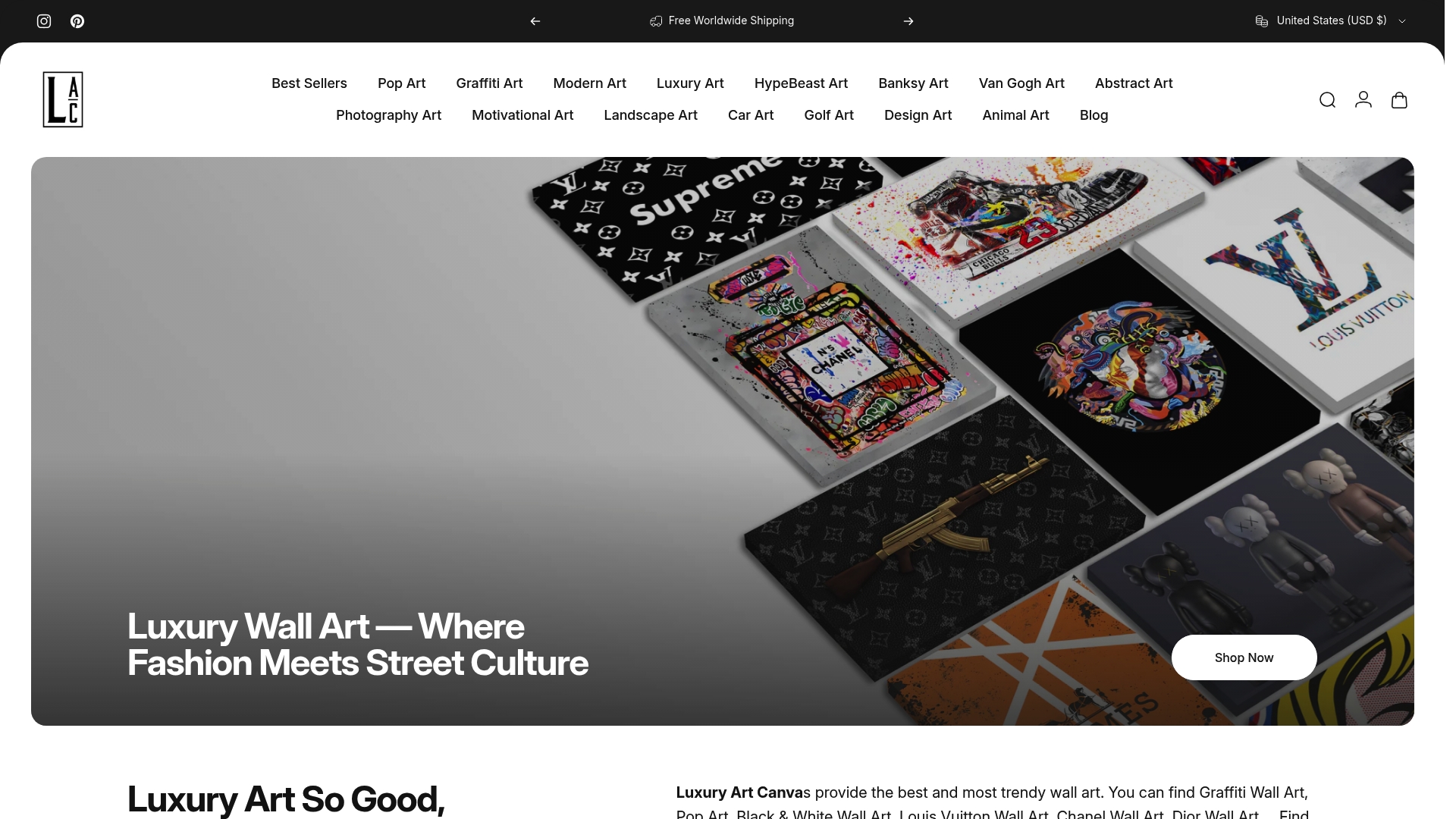
The catalog covers over 1,000 designs — bold graffiti pieces, high-fashion iconography (Chanel, Louis Vuitton, Dior), Banksy-inspired prints, and sneaker-themed canvases that tie directly into a collector room. Whether you are building a single hero wall, a five-piece grid, or a statement piece for a studio, the sizing options cover everything from compact accent pieces to large-format graffiti canvases sized to fill about two-thirds of a feature wall.
Browse the full graffiti wall art collection to find your hero piece, or use the site’s sizing guide to match canvas dimensions to your specific wall.
Useful sources and further reading
- Types of Street Art Canvas Styles for Your Space — Luxuryartcanvas Blog: canvas style guide explaining which formats work best for different room types and wall sizes
What Does a Statement Piece Mean in Home Decor?
What Does Commercial Art Installation Mean for Offices?