
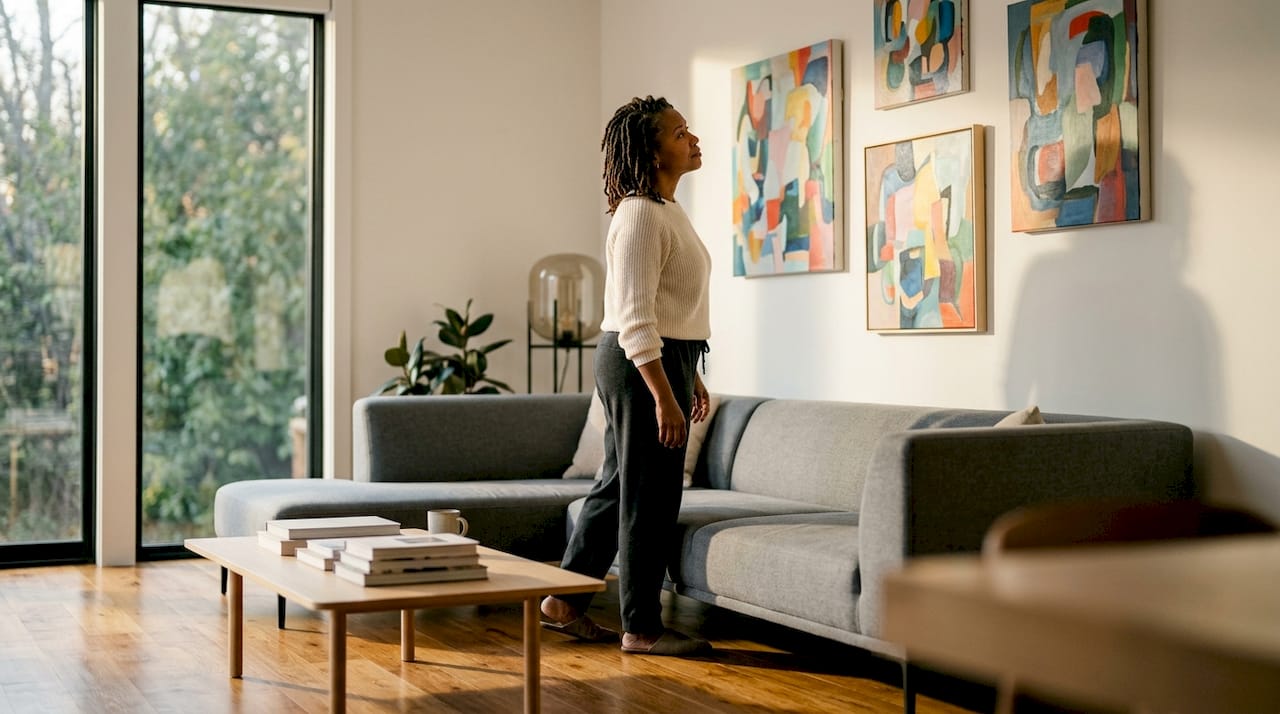
Art is the primary visual anchor of any living room, shaping ambiance, spatial cohesion, and personal identity before a single piece of furniture earns a second glance. The role of art in defining living room style goes far beyond decoration. It organizes color, establishes mood, and creates the visual hierarchy that makes a room feel intentional rather than assembled. Interior designers in 2026 treat wall art as a structural element, not an afterthought. Whether you rent a studio apartment or own a sprawling open-plan home, the art you choose tells the room’s story first.
How art defines living room style through cohesion and zoning
Art provides cohesion by establishing a visual starting point in living rooms, unifying color, mood, and style across every other element in the space. That means your sofa, rug, throw pillows, and lighting all take their cues from the art on the wall. Without that anchor, even well-chosen furniture reads as a collection of individual purchases rather than a designed room.
This structural function becomes most visible in open-concept layouts. In open-concept spaces, art visually marks zones helping define the living area without physical partitions. A large canvas above a sectional sofa signals “this is the living zone” just as clearly as a wall would, without blocking light or flow. That perceptual boundary is something furniture arrangement alone cannot achieve.
The most effective approach for open-plan rooms is one anchor piece per zone rather than scattering unrelated art across the space. Scattered art creates visual noise. A single, confident statement piece creates mood punctuation. Think of it the way a paragraph break works in writing: it tells the eye where one idea ends and another begins.
Placement matters as much as selection. The most common and effective positions are:
- Above the sofa, centered and scaled to the seating group
- Above a fireplace mantel, where art reinforces the room’s natural focal point
- On a console wall opposite the main seating, creating a visual destination across the room
- On an entry-facing wall, so art is the first thing seen when entering the space
Architectural Digest quotes designers recommending statement art for sofa and mantel walls specifically to set visual hierarchy. That recommendation reflects how the eye moves through a room: it seeks a dominant element first, then organizes everything else around it.
What are the right sizing rules for living room wall art?
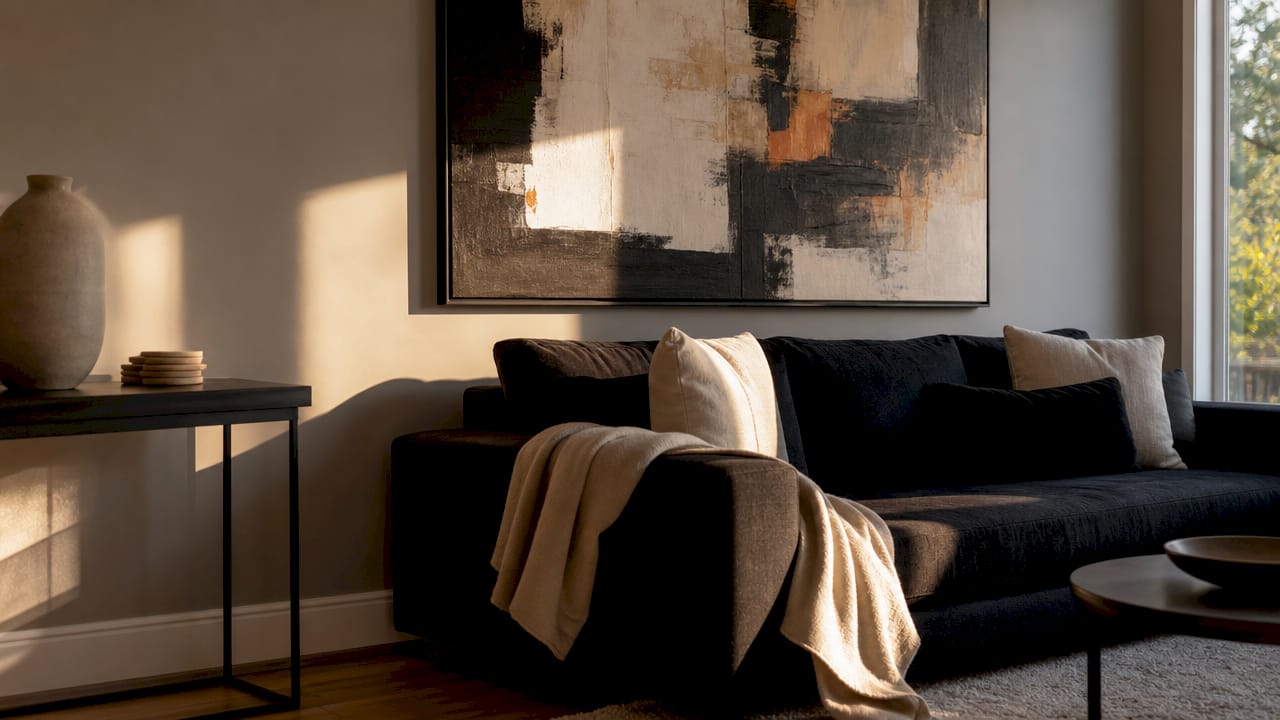
The 2/3 sofa rule is the most reliable sizing guideline for living room art. Artwork should be roughly 60 to 75% the width of the sofa it hangs above, with the bottom edge sitting 6 to 10 inches above the sofa back. For an 84-inch sofa, that means selecting a piece approximately 56 inches wide. This ratio creates visual balance without making the art feel like it is floating disconnected above the furniture.
Most people get this wrong in one of two directions. They either choose art that is too small, which creates the “postage stamp” effect where a tiny frame disappears on a large wall, or they hang art too high, creating what designers call “skyscraper syndrome” where the piece floats near the ceiling with no visual relationship to the furniture below. Both mistakes break the spatial connection that makes a room feel cohesive.
Here is a practical process for getting sizing right before you commit to a purchase:
- Measure your sofa width and calculate 60 to 75% of that number to find your target art width.
- Cut kraft paper or newspaper to those dimensions and tape it to the wall to preview the scale.
- Mark the bottom edge of the paper 6 to 10 inches above the sofa back to confirm vertical placement.
- Step back and assess from the room’s main seating position, not from directly in front of the wall.
- Adjust the mock-up before purchasing. Changing paper is free. Returning oversized canvas art is not.
The 2/3 sofa rule prioritizes the relationship between art and furniture over standard museum-height hanging, which is the critical distinction most guides miss. Museum height (center of art at 57 to 60 inches from the floor) works in galleries where art stands alone. In living rooms, art must relate to the furniture beneath it.
Pro Tip: When in doubt between two sizes, choose the larger one. Art that is slightly too big reads as confident and intentional. Art that is slightly too small reads as an oversight.
For renters working with restrictions on wall anchors, leaning oversized art against the wall on a console or shelf achieves the same visual weight. The oversized art placement guide from Luxuryartcanvas covers both hung and leaned configurations in detail.
Does art reflect personal style, or just match the decor?
Art reflects personal style far more than it matches decor, and conflating the two is the most common mistake homeowners make when decorating with wall art. Times of India stresses emotional resonance over trend-following, positioning art as visual language that expresses identity and warmth rather than a coordinating accessory.
The practical implication is significant. Choosing art to match your sofa color produces a room that looks coordinated but feels impersonal. Choosing art that genuinely moves you, challenges you, or represents something meaningful produces a room that feels inhabited. That distinction is what separates a styled space from a home.
“Art transforms a room from a decorated space into a home with personal identity and warmth.” — Times of India, 2026
Art types communicate different emotional registers, and understanding that vocabulary helps you select with intention:
- Bold graffiti and street art communicate energy, cultural awareness, and a refusal to take interiors too seriously. They work in spaces where the occupant wants the room to feel alive.
- Pop art featuring iconic brand imagery (Chanel, Louis Vuitton, Andy Warhol-influenced pieces) signals fashion literacy and a taste for high-low contrast.
- Abstract large-format canvases create emotional openness. They invite interpretation rather than dictating a mood.
- Figurative or portrait-based work adds warmth and human presence, making large rooms feel less cavernous.
Decorilla’s 2026 personalized design guidance confirms that bespoke interior design starts from occupant habits and lived experience, not from aesthetic trends alone. Art selection follows the same logic. The question is not “does this match my room?” but “does this reflect how I actually live and what I genuinely value?”
Choosing art for emotional connection transforms living rooms from showroom-ready spaces into environments with real character. That transformation is the entire point of the exercise.
How do different art styles compare for living room aesthetics?
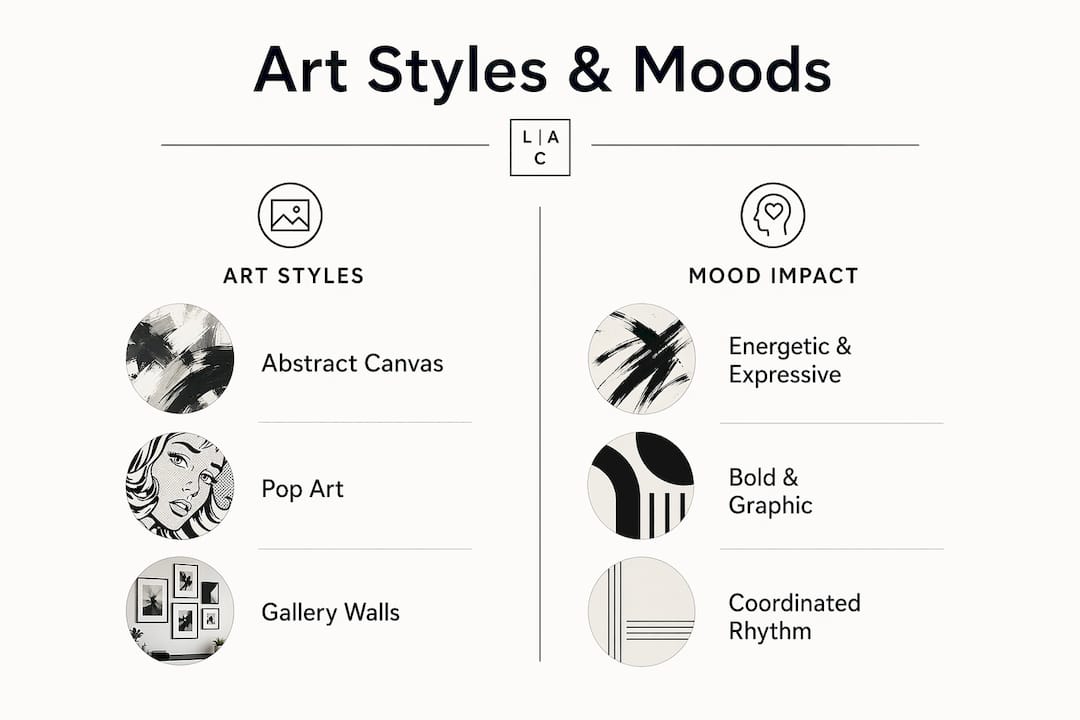
Different art genres produce measurably different effects on living room mood, and matching the genre to your intended aesthetic is as important as sizing and placement. Abstract and large statement art inject vibrancy, texture, and bold color that elevate living room mood in ways that smaller or more literal work cannot replicate. Architectural Digest highlights abstract art’s transformative power specifically in high-traffic seating spaces, where the art must hold up to daily scrutiny.
The table below maps the most relevant 2026 art styles to their living room impact:
| Art style | Mood impact | Best suited for |
|---|---|---|
| Large abstract canvas | Energetic, open, expressive | Modern, contemporary, and eclectic rooms |
| Pop art (brand-inspired) | Bold, fashion-forward, confident | Urban apartments, maximalist interiors |
| Graffiti and street art | Raw, cultural, dynamic | Industrial, loft-style, and youth-oriented spaces |
| Minimalist line art | Calm, refined, understated | Scandinavian, japandi, and neutral-palette rooms |
| Figurative or portrait work | Warm, personal, narrative | Traditional, transitional, and family-centered spaces |
Canvas art suits diverse home styles more consistently than framed prints or photography because the texture of the medium adds depth regardless of subject matter. A canvas graffiti piece reads differently than the same image printed on paper: the physical surface contributes to the visual weight.
For gallery walls, the principle is to mix subjects but unify framing or compositional rhythm to prevent the display from appearing chaotic. Consistent framing or rhythm is what separates a curated gallery wall from a collection of things that happened to end up on the same surface. Black frames with varied subject matter, or matching canvas depths with varied styles, both achieve that cohesion.
Pop art deserves specific mention for 2026 living rooms. The pop art decor style uses bold color, graphic clarity, and cultural references to set a room’s visual hierarchy faster than almost any other genre. One oversized pop art canvas above a neutral sofa does more to define the room’s character than three months of accessory shopping.
Key takeaways
Art is the structural and emotional anchor of a living room, and every sizing, placement, and selection decision should treat it that way rather than as a finishing touch.
| Point | Details |
|---|---|
| Art as structural anchor | Art organizes color, mood, and furniture into a unified room rather than decorating a finished space. |
| The 2/3 sofa rule | Choose art that is 60 to 75% of your sofa’s width and hang it 6 to 10 inches above the sofa back. |
| One anchor per zone | Open-concept rooms need one dominant piece per living zone to define space without physical walls. |
| Emotional resonance over matching | Select art for personal meaning and identity, not to coordinate with existing furniture colors. |
| Style genre shapes mood | Pop art, graffiti, abstract, and minimalist work each produce distinct emotional registers in a room. |
Why most people are still treating art as an afterthought
I have seen hundreds of living rooms where the art was clearly chosen last. The sofa arrived, the rug was sourced, the throw pillows were agonized over, and then someone bought a canvas at a home goods store because the wall looked empty. The result is always the same: a room that looks complete but feels hollow.
The shift I keep advocating is to start with the art. Choose a piece that genuinely excites you, then build the room’s color palette, furniture scale, and accessory choices around it. Furniture, color, texture, and art should work together so the living room feels like a coherent environment, not a showroom. That coherence only happens when art leads the conversation rather than joining it late.
The other mistake I see constantly is undersizing. People are afraid of commitment, so they choose a piece that is “safe” in scale. Safe means small. Small means invisible. A piece that commands the wall is not aggressive; it is confident. Confidence is exactly what a living room needs to feel like it belongs to someone.
Art is also the easiest element in a room to change. Furniture is expensive and heavy. Paint requires prep and drying time. A canvas swap takes twenty minutes and transforms the entire room’s character. That flexibility makes art the highest-leverage design decision most people are underusing.
If you are a renter, the urban apartment art guide from Luxuryartcanvas addresses the specific constraints of leasing situations without sacrificing visual impact.
— James
Transform your living room with statement art from Luxuryartcanvas
Luxuryartcanvas carries over 1,000 designs that treat art as the room-defining statement it should be, not as a decorative placeholder. The collection spans bold graffiti canvases and pop art statement pieces that align directly with 2026’s emphasis on personality-driven, visually confident interiors. Every canvas is crafted in the USA with materials built for durability and long-term visual impact.

Whether you are anchoring an open-plan living zone, replacing a piece that never quite worked, or starting a room from scratch with art as the foundation, the Luxuryartcanvas gallery gives you the scale, style range, and quality to do it right. Browse the full collection and find the piece that defines your space on your terms.
FAQ
What is the role of art in a living room?
Art serves as the primary visual anchor of a living room, organizing color, mood, and furniture into a cohesive space. It establishes focal hierarchy and defines the room’s personality before any other element does.
How big should art be above a sofa?
Art above a sofa should be 60 to 75% of the sofa’s width, with the bottom edge 6 to 10 inches above the sofa back. For an 84-inch sofa, that means a piece approximately 56 inches wide.
Should living room art match the furniture?
Art should reflect the homeowner’s personal identity and emotional connection rather than simply matching furniture colors. Coordinating art to existing decor produces a polished but impersonal result.
What art style works best for a modern living room?
Abstract large-format canvases and pop art both perform strongly in modern living rooms, injecting bold color and visual energy that define the space’s character. The best choice depends on whether you want an expressive or graphic-driven aesthetic.
How do you use art to define zones in an open-concept space?
Place one dominant anchor piece per living zone to create perceptual boundaries without physical walls. A large canvas above the main seating group signals the living area clearly and prevents the open space from feeling undefined.
Bold Wall Art Statement Piece Examples for Any Room
Collecting Graffiti-Inspired Canvas Art: A Collector's Guide