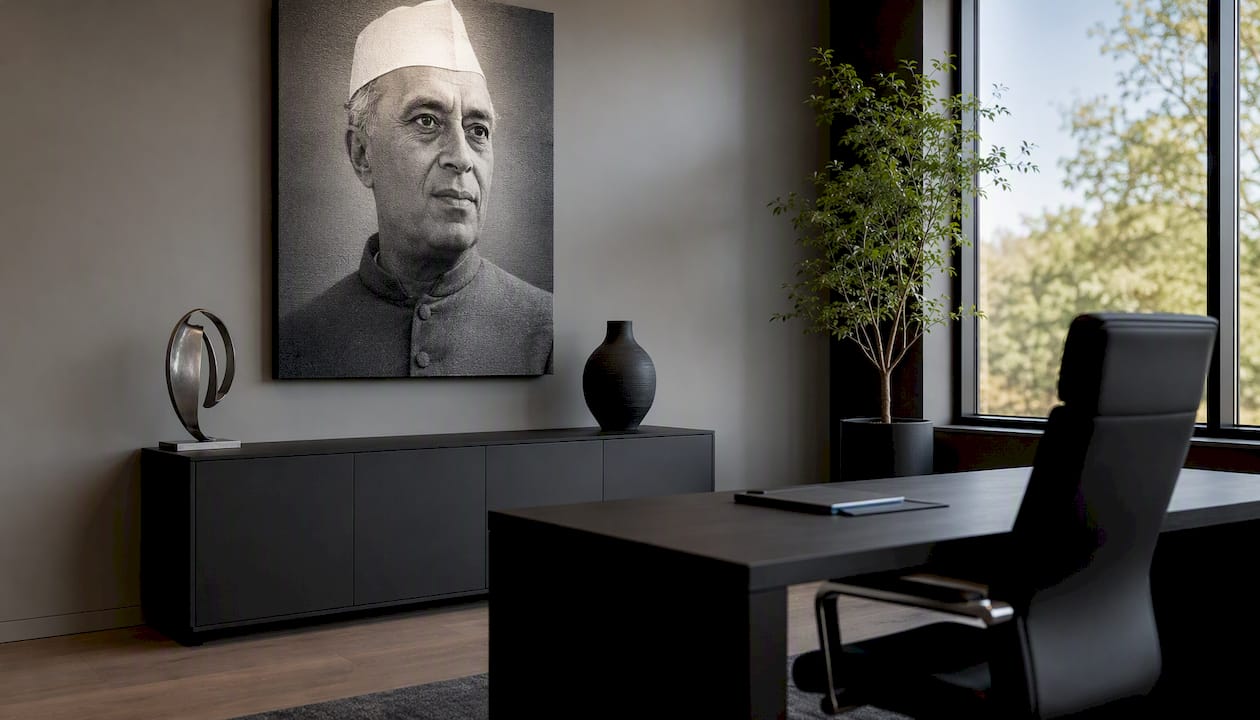
If you want ready-to-hang leadership artwork that reads professional the moment a client walks in, start with a museum-quality canvas from Luxuryartcanvas. Each piece ships from the USA, uses archival pigment inks on gallery-wrapped canvas, and arrives ready to hang. The collection covers motivational typography, bold pop and graffiti interpretations, and monochrome portraits — every major style a leader’s office truly needs.
Three pieces worth shortlisting first:
- A minimalist quote canvas with high-contrast typography on a dark ground — clear values, zero clutter
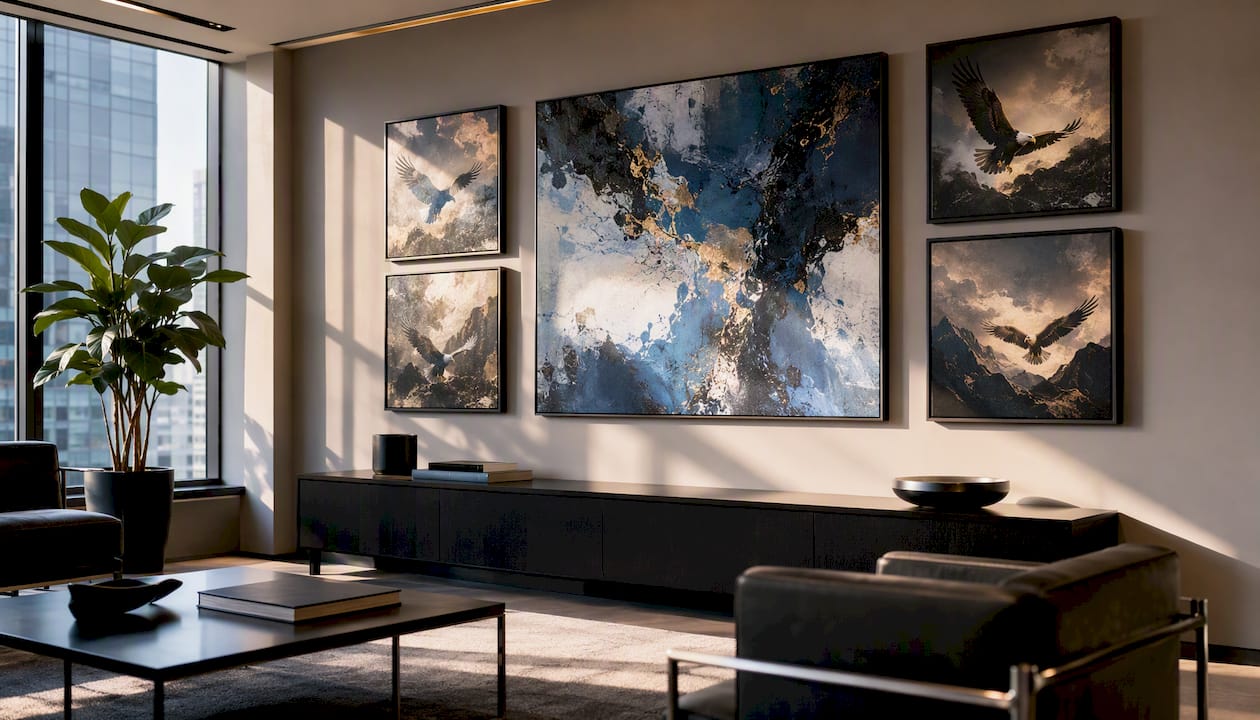
- A symbolic abstract featuring upward motion or an eagle in flight — projects ambition without spelling it out
- A monochrome portrait reproduction of a historical figure — authority and tradition in a single frame
Pro Tip: Hold your phone up and squint at a product photo. If the focal subject and its contrast read clearly at arm’s length, it will command a wall at ten feet. If it dissolves into texture, it won’t.
Key Takeaways
The single most important decision in buying leadership artwork for an office is matching the piece’s visual language to the message the space needs to send — style, scale, and material quality all follow from that.
| Point | Details |
|---|---|
| Match style to message | Quotes signal explicit values; abstracts invite projection; portraits communicate authority and tradition. |
| Size to 60–70% of wall width | A single focal piece should cover 60–70% of the wall it anchors; hang center at 57"–60" from the floor. |
| Prioritize archival materials | Pigment inks on acid-free canvas with UV protection are the baseline for pieces that hold color in office lighting. |
| Verify IP before buying | Confirm the vendor holds reproduction rights; get a written agreement for any commissioned original work. |
| Luxuryartcanvas for ready-to-hang | U.S.-made, archival-ink canvases across motivational, pop, graffiti, and portrait styles — ships ready to hang. |
Table of Contents
- What does each leadership artwork style actually communicate?
- How do you size and place leadership artwork in an office?
- What materials and finishes hold up best in an office environment?
- What should you expect to pay for leadership artwork?
- How do you hang and care for a canvas once it arrives?
- Why Luxuryartcanvas stands out for leadership-themed office art
- How do you match artwork to your office culture and brand values?
- What IP rights and licensing issues apply when buying leadership artwork?
- How do you verify authenticity and quality before buying a limited edition piece?
- How do you match leadership artwork with existing office décor and color schemes?
- Luxuryartcanvas brings leadership art and office-ready quality together
- The piece that actually changes the room
- Sources
What does each leadership artwork style actually communicate?
Style is not decoration — it is a message. The wrong piece in a client-facing conference room can undercut the authority you spent years building.
Motivational typography is the most explicit choice. A quote from Churchill or Mandela states your values in plain language. Visitors read it once and know exactly where you stand. The risk is that it can feel prescriptive; canvas wall art quotes work best when the words are genuinely yours, not borrowed inspiration.
Symbolic animals — eagles, lions, wolves — carry archetypal weight without a single word. An eagle in ascent reads as vision and independence. A lion at rest reads as calm authority. These pieces tend to age well because the symbolism is pre-verbal; no one needs to explain it.
Historical leader portraits anchor a space in tradition. Titian’s mid-1500s portrait of Alfonso d’Avalos addressing his troops is an early example of leadership rendered as public address: the general elevated, the soldiers attentive. Willem van de Velde’s 1666 Council of War aboard a flagship frames leadership as deliberation and coordination. Both show how the genre has always been about communicating power through composition.
Abstract movement and ascension pieces are the most psychologically flexible. According to Linda Naiman writing for Inc., abstract or symbolic art lets leaders and teams project shared meaning onto the work — which is exactly why a well-chosen abstract can anchor a strategy session better than a motivational poster ever could.
Pop and graffiti leadership interpretations bring energy and cultural currency. A Banksy-influenced piece or a bold street-art portrait signals that your organization values creativity alongside authority.
For client-facing spaces, lean toward symbolic animals or bold abstracts — they invite interpretation without demanding agreement. For private offices, a portrait or a quote piece works well because the audience is smaller and the message more personal.
Pro Tip: Match the piece’s energy to the room’s function. A high-contrast, large-scale abstract energizes a brainstorming room. A calm monochrome portrait steadies a negotiation space.
How do you size and place leadership artwork in an office?
Getting the size wrong is the most common mistake — and the most visible one. A piece that is too small on a large wall reads as an afterthought.
The standard rule: a single focal piece should cover 60–70% of the wall width it anchors. Behind a desk, that typically means a 36"–48" wide canvas for a standard 8-foot wall. For a conference room’s primary wall, 48"–72" is more appropriate.
Hang the center of the piece at 57"–60" from the floor — the standard gallery eye level. Above furniture (a credenza, a sofa), keep the bottom edge 6"–8" above the surface.
| Room type | Suggested size range | Common aspect ratio | Mounting note |
|---|---|---|---|
| Private office (focal wall) | 24"–36" wide | 3:2 or square | Single piece, centered |
| Conference room (primary wall) | 48"–72" wide | 16:9 aspect ratio | Single large or triptych |
| Reception / lobby | 36"–60" wide | 3:2 or 4:3 | Gallery wrap, no frame needed |
| Open plan (accent wall) | 60"–72" wide | Panoramic or multi-panel | Linear sequence or gallery wall |
For multi-panel arrangements, keep gaps between panels consistent at 2"–3". A triptych reads as one unified piece; a gallery wall of five or more reads as a collection. Both work — just decide which message you want before you order.
Pro Tip: Before ordering, tape paper cutouts to the wall at the exact dimensions you’re considering. Live with them for a day. What looks right on a screen often reads differently at scale in the actual room. This step alone prevents most returns.
For bold statement pieces in open-plan offices, go larger than feels comfortable. Open space swallows art.
What materials and finishes hold up best in an office environment?
Canvas printed with pigment-based archival inks on an acid-free backing is the baseline for any piece you expect to look good in five years. Dye-based inks fade faster under office lighting, particularly fluorescent. Pigment inks resist UV degradation significantly better — a meaningful difference when a piece hangs near windows.
Key attributes to verify before buying:
- Canvas type: cotton or cotton-poly blend holds ink more evenly than synthetic alone
- Archival/acid-free backing: prevents yellowing and canvas degradation over time
- Pigment vs. dye inks: pigment inks offer superior color stability
- UV-protective varnish or coating: adds a physical barrier against light and dust
- Finish: matte reduces glare under office lighting; satin balances vibrancy and glare control; glossy maximizes color pop but shows reflections in brightly lit rooms
Gallery-wrapped canvas (the image wraps around the stretcher bars) looks clean without a frame. A float frame adds a formal edge that suits traditional or executive settings. Both are valid — the choice depends on the office’s existing aesthetic.
U.S.-made production matters for one practical reason: quality control is easier to verify, and return logistics are straightforward if something arrives damaged.
Pro Tip: For offices with large windows, request a matte or satin finish. Glossy surfaces create distracting reflections under natural light, especially in afternoon sun.
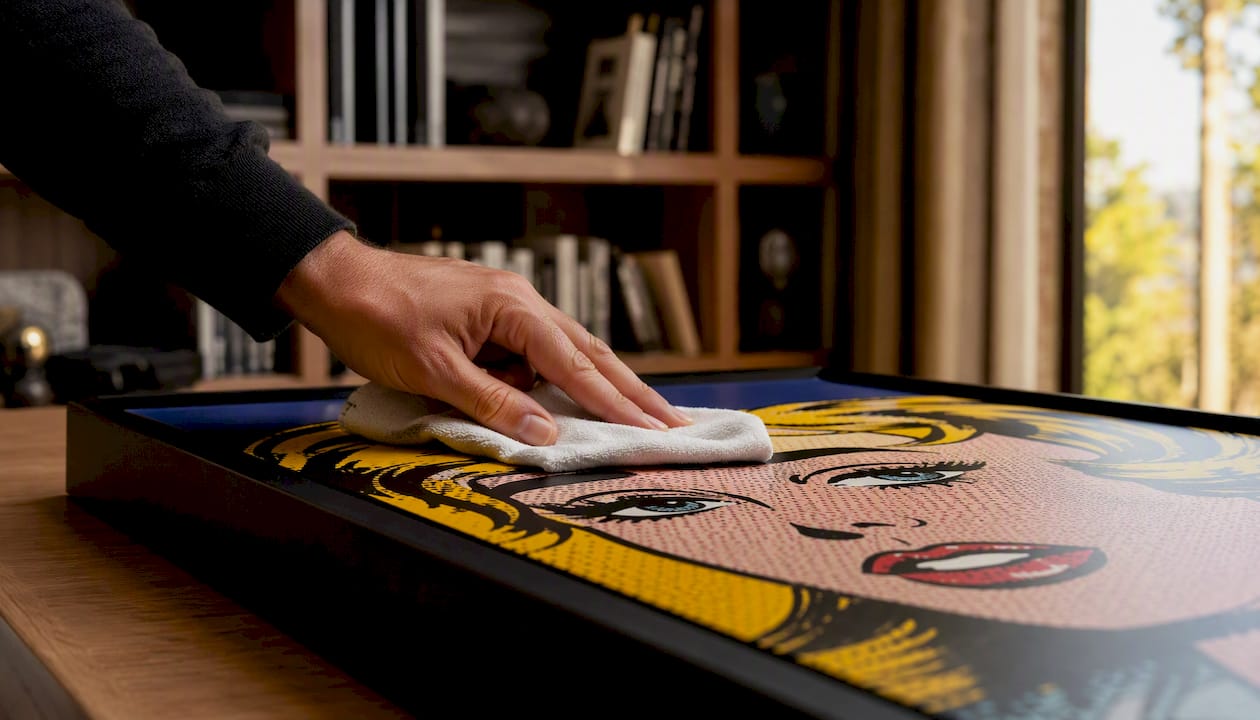
Maintenance is simple: dust with a dry microfiber cloth. Avoid water on unvarnished surfaces. Keep pieces away from HVAC vents, which dry out canvas over time.
What should you expect to pay for leadership artwork?
Price in this category is driven by four variables: size, framing, production origin, and whether the image carries a licensing fee.
- Unframed posters (small to medium): $15–$60. Lowest cost, least durable, requires separate framing.
- Ready-to-hang canvas prints (medium, 18"–24"): $80–$200. The practical sweet spot for most office buyers.
- Large canvas prints (36"–60"): $200–$600. Appropriate for conference rooms and reception areas.
- Limited edition or artist-signed prints: $300–$2,000+. Value tied to edition size and artist recognition.
- Original commissioned work: $500–$10,000+. Fully custom, longest lead time, highest IP complexity.
Licensing fees apply when an image reproduces a protected work — a contemporary artist’s portrait, a branded logo, or a living public figure. Museum reproductions of pre-1928 works are generally in the public domain in the U.S., but verify with the vendor. Commissioned pieces require a clear written agreement covering usage rights, reproduction limits, and resale terms.
Ready-to-hang canvases from a direct vendor typically include framing labor in the price, which makes the per-piece cost more competitive than it first appears against a raw print that still needs custom framing at $50–$150 extra.
How do you hang and care for a canvas once it arrives?
Most ready-to-hang canvases ship with hardware attached. For drywall, use a 1.5"–2" screw into a stud, or a drywall anchor rated for the piece’s weight. Canvases over 30 lbs benefit from a French cleat, which distributes weight across a wider wall section and makes leveling easier.
For rented spaces or temporary installations, adhesive picture strips (3M Command strips rated for the weight) work for pieces under 16 lbs. Above that, use a picture rail system if the space has one.
At delivery, inspect before signing:
- Check all four edges for printing alignment and canvas tension
- Look for any dents or creases in the frame
- Verify the image matches what you ordered (color, orientation, size)
- Test the hanging hardware before mounting
For care: dust monthly with a dry microfiber cloth. If the canvas develops a minor dent from impact, a light misting of water on the back of the canvas (not the front) and gentle heat from a hair dryer on low can re-tension the fabric. For anything more significant, contact the seller — most reputable vendors have a clear process for damage claims within a defined window after delivery.
Why Luxuryartcanvas stands out for leadership-themed office art
The case for Luxuryartcanvas comes down to three things that are harder to find together than they should be: U.S.-made production, archival materials, and a collection that actually covers the leadership motifs offices need.
Every canvas is produced in the USA using archival pigment inks and acid-free materials. The collection spans motivational canvases, bold pop and graffiti pieces, and monochrome portraits — the three style categories most relevant to professional spaces. Over 10,000 customers have reviewed the brand’s pieces, and lifestyle mockups on product pages show exactly how each piece reads in a real room.
Art practice cultivates leadership habits — pause, revision, reflection, improvisation — and a well-chosen piece keeps those habits visible in the room where decisions get made. A practicing artist who advises C-suite executives has documented how studio processes translate directly into strategic leadership work — which is exactly the kind of thinking a strong piece of office art can anchor.
Suggested product types to explore:
- Quote canvases: high-contrast typography for values-forward spaces
- Bold pop leadership pieces: street-art energy for creative or tech-forward offices
- Monochrome portraits: authority and restraint for executive and legal settings
Pro Tip: For formal executive offices, a gallery-wrapped canvas with a hidden float frame reads cleaner than a traditional frame. For client-facing reception areas, a framed print signals permanence and investment.
Office art reflects company culture in ways that furniture and paint color cannot — it is the one element visitors actively look at and remember.
How do you match artwork to your office culture and brand values?
The most useful question is not “what looks good?” but “what does this space need to communicate?” A law firm and a design agency can both hang leadership art — but the right piece for each is almost opposite.
Start with your organization’s core values and translate them into visual language. Innovation maps to abstract movement and bold color. Integrity maps to monochrome restraint and clean typography. Collaboration maps to multi-figure compositions or interconnected abstract forms. Resilience maps to natural symbols — mountains, eagles, lone figures in wide landscapes.
Then consider the audience. A piece in a client-facing conference room is read by people who do not know your culture yet — it needs to communicate without context. A piece in a private office or team workspace can be more personal and specific, because the audience already shares the reference.
Color alignment with your brand palette is worth one pass, but do not over-engineer it. A piece that clashes slightly with the wall color is usually fine; a piece that clashes with the brand’s values is a problem every time someone sits in that room.
What IP rights and licensing issues apply when buying leadership artwork?
Licensing is the part of the buying process most people skip until it becomes a problem. Three scenarios carry real risk.
Reproducing a living artist’s work without a license is copyright infringement, regardless of whether the reproduction is for commercial or personal use. This applies to prints, canvases, and digital reproductions. Always verify that the vendor holds the reproduction rights for the specific image.
Using a public figure’s likeness in a commercial context — a portrait of a CEO, a politician, or a celebrity — can trigger right-of-publicity claims in most U.S. states, even when the underlying artwork is original. Historical figures (pre-20th century) carry no such risk.
Public domain works (generally, works published before 1928 in the U.S.) can be reproduced freely, but a vendor’s specific photograph or scan of a public domain painting may carry its own copyright. The Rijksmuseum, for example, releases high-resolution scans of its collection under open licenses — a useful source for historical leadership portraits.
When commissioning original work, get a written agreement that specifies: who owns the copyright (you or the artist), whether the artist retains the right to reproduce the piece, and whether you can use the image in marketing materials. Without that agreement, the artist owns the copyright by default under U.S. law.
How do you verify authenticity and quality before buying a limited edition piece?
For limited edition prints, four things establish legitimacy: a certificate of authenticity (COA) signed by the artist or publisher, a visible edition number (e.g., 12/50), documentation of the printing process and materials, and a provenance trail if the piece has changed hands.
A COA from a reputable publisher is more reliable than one self-issued by an unknown seller. For higher-value pieces, request the print run documentation — how many editions exist, whether any artist proofs were made, and whether the edition is now closed.
For canvas reproductions, quality verification is simpler: request close-up photos of the print surface, check that the vendor specifies ink type (pigment vs. dye) and canvas material, and read reviews that specifically mention color accuracy and material quality. A vendor who cannot answer those questions directly is not worth the risk.
How do you match leadership artwork with existing office décor and color schemes?
The practical approach is to pull one or two colors from the artwork and verify they appear somewhere else in the room — in upholstery, a rug, or a decorative object. This creates visual coherence without requiring a full redesign.
For neutral offices (white walls, gray furniture, wood tones), almost any palette works. High-contrast black-and-white pieces are the safest choice because they read as intentional against any background. Bold color pieces work when the room has at least one other warm or saturated element to echo them.
For offices with strong existing color (a navy accent wall, a burgundy sofa), choose artwork with a complementary or analogous palette rather than a competing one. A warm-toned abstract next to a cool blue wall creates tension; a cool-toned piece with silver or gray tones reads as unified.
Frame and finish choices also affect how a piece integrates. A natural wood float frame warms a cool-toned room. A black metal frame sharpens a modern, minimal space. When in doubt, a gallery-wrapped canvas with no frame is the most neutral option and works in nearly any setting. For guidance on designer choices that affect how a room reads, the same principle applies: every surface element either reinforces or competes with the room’s overall tone.
Luxuryartcanvas brings leadership art and office-ready quality together
Ready-to-hang leadership artwork that actually holds up in a professional space is harder to find than it should be. Most marketplaces offer volume without curation; most custom options require weeks of lead time and a framing budget on top.
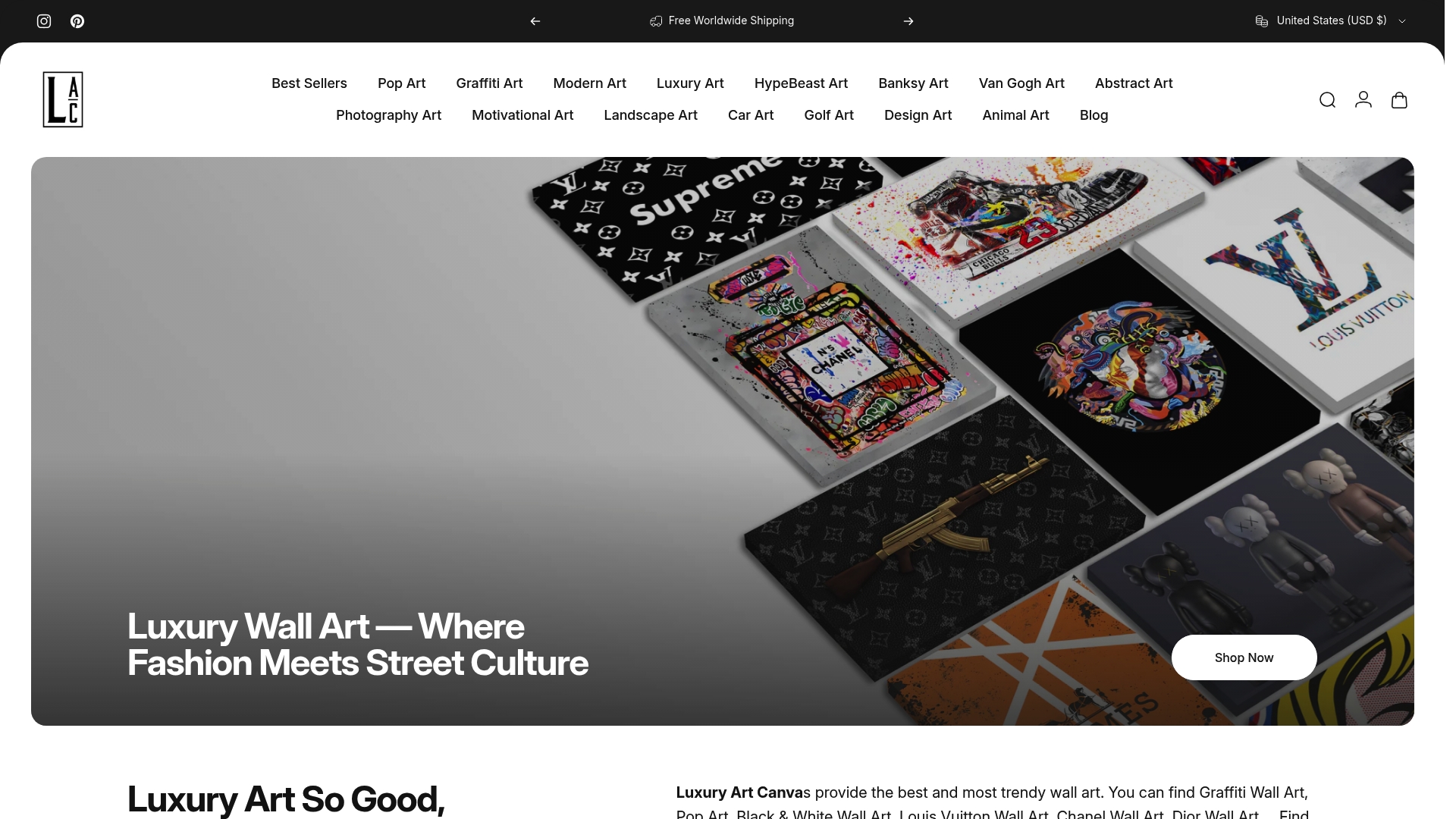
Luxuryartcanvas solves both problems. The collection covers every major leadership motif — motivational typography, bold pop art canvases, street-art energy from graffiti wall art, and monochrome portraits — all produced in the USA with archival inks on gallery-wrapped canvas. Every piece arrives ready to hang, with sizing options that cover private offices through large conference rooms. More than 10,000 customers have bought and reviewed these pieces. Browse the success wall art collection, pick your size, and have a professional-grade piece on the wall within days.
The piece that actually changes the room
Most advice on office art stops at “pick something that reflects your values.” That is not wrong, but it misses the more interesting question: what do you want the room to do to the people in it?
The conventional wisdom treats leadership artwork as a signal — a badge that says “we value excellence” or “we think big.” That framing is too passive. The stronger case, supported by researchers and executives who work at the intersection of art and strategy, is that the right piece actively shapes how people think in a space. An upward-moving abstract in a strategy room primes expansive thinking. A calm monochrome portrait in a negotiation room anchors deliberation. These are not decorating choices; they are environmental design choices.
Where most buyers go wrong is optimizing for what looks impressive in a photo rather than what works in the room over time. A piece that photographs beautifully but creates visual noise in daily use is a bad investment. The better filter is simpler: does this piece make you pause, even briefly, every time you walk past it? If yes, it is doing its job. If it disappears into the background after a week, it was the wrong choice regardless of how much it cost.
Buy for the room’s function first, the brand’s aesthetic second, and your personal taste third. In that order, you will almost never regret the choice.
Sources
- Lessons From Art That Will Inspire You to Lead, Create, and Innovate — Linda Naiman (Inc.)
- Alfonso d’Avalos Addressing his Troops (Spanish: Alocución del Marqués del Vasto) — Titian
- Council of War aboard “The Seven Provinces”, the Flagship of Michiel Adriaenszoon de Ruyter, 10 June 1666, preceding the Four Days’ Battle: episode from the Second Anglo-Dutch War — Willem van de Velde (I)
- Leadership Paintings — Fine Art America
- EP4: Bridging Art and Strategy🎨 - The Leadership Story Podcast | Listen Notes
Vintage Office Decor: Luxury Canvas Art for High-End Spaces
How to Make Every Room a Statement: The Interior Design Approach to Art-Forward Spaces