
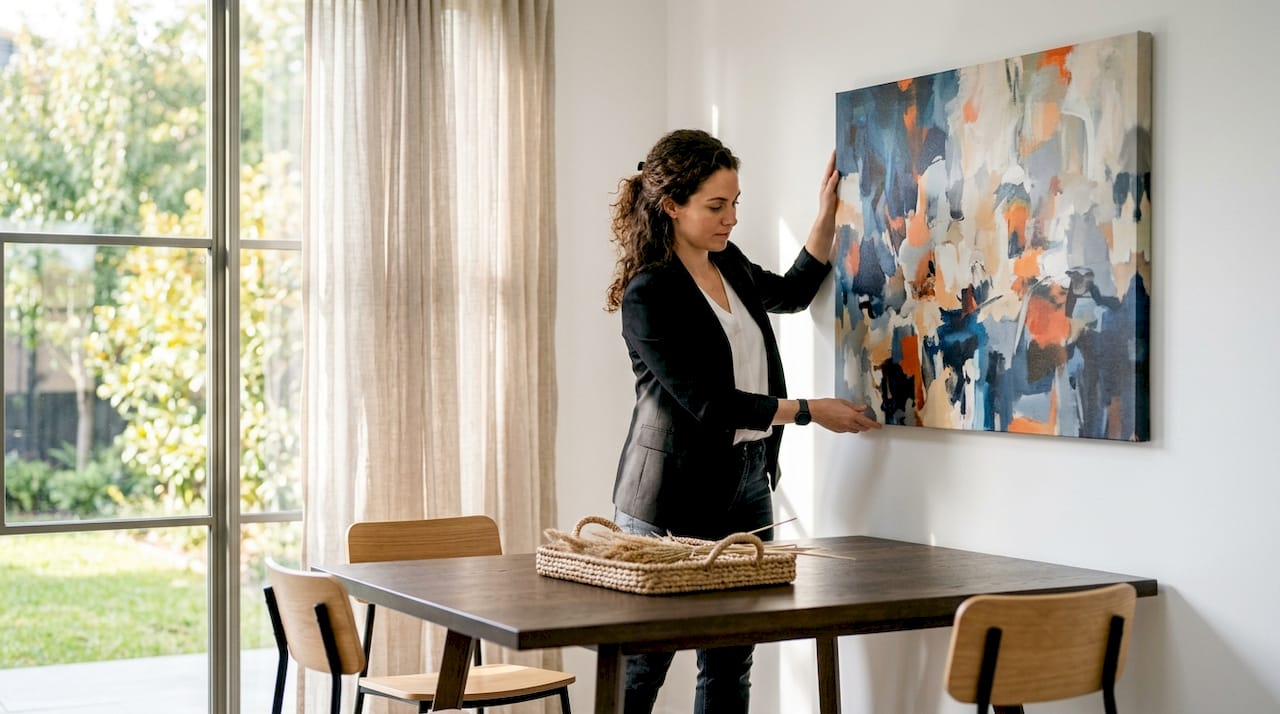
Staging homes with contemporary canvas art is defined as the deliberate use of canvas prints to anchor rooms, shape buyer perception, and signal property value during the sales process. Professional stagers call this approach “art-led staging,” and it works because art does more than decorate. It communicates lifestyle, creates emotional cues, and gives buyers a reason to remember a specific property. The core rules are simple: 60–75% furniture width for sizing, 57 inches from the floor for center height, and strict color discipline that limits artwork to one or two tones linked to the home’s palette.
How to choose the right size and placement for canvas art in staging homes
Size is the single most common mistake in home staging with artwork. A canvas that is too small reads as an afterthought. A canvas that is too large overwhelms the wall and competes with the furniture below it.
The standard sizing rule states that canvas art should span 60–75% of furniture width to create visual balance. For a 90-inch sofa, that means a canvas between 54 and 67 inches wide. This proportion anchors the art to the furniture and prevents the wall from feeling disconnected from the room.
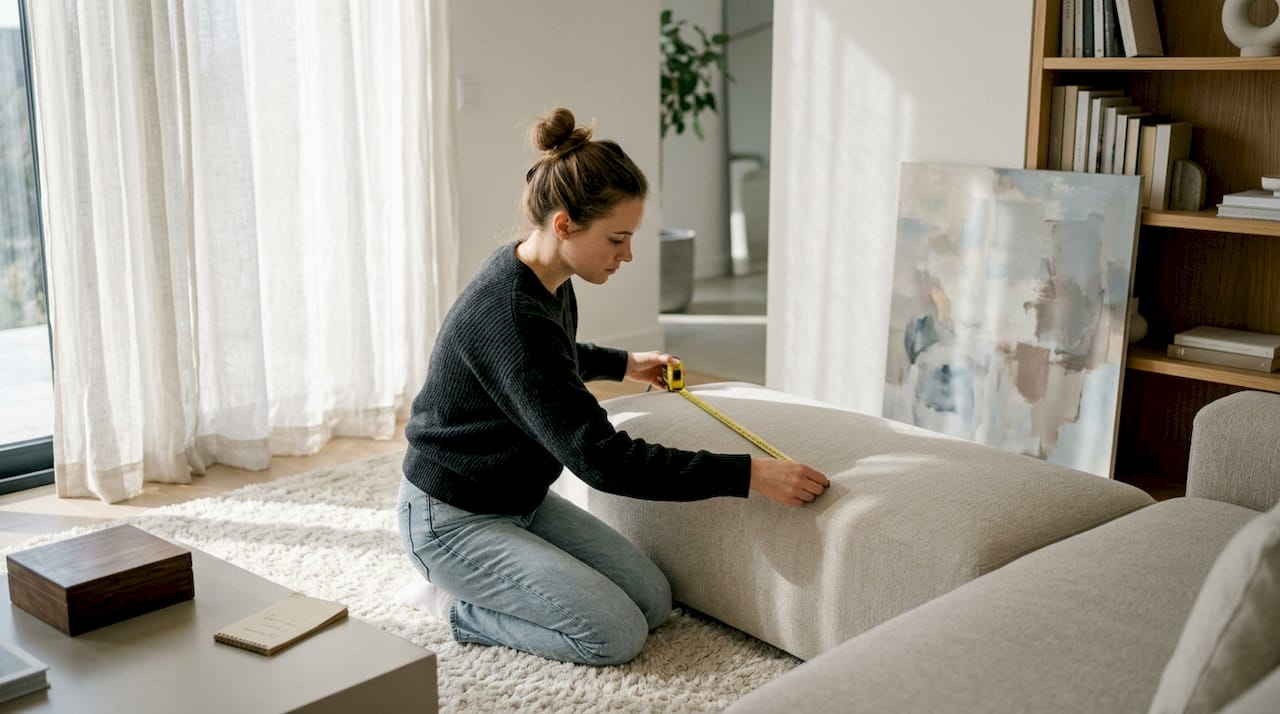
Height placement follows an equally clear standard. The center of the canvas should sit approximately 57 inches from the floor. That measurement aligns with average human eye level, which means viewers experience the art intuitively rather than craning up or looking down. It also connects the artwork visually to the furniture beneath it.
Negative space matters as much as the art itself. Leaving 3 to 8 inches of breathing room around wall art prevents visual clutter and keeps the composition ordered. Crowding a canvas against adjacent furniture or architectural features creates tension that buyers register subconsciously.
Key placement guidelines for staging:
- Furniture width rule: Canvas spans 60–75% of the furniture piece below it
- Center height: 57 inches from floor to the middle of the canvas
- Negative space: 3–8 inches of clear margin on all sides
- Eye-level alignment: Art connects visually to furniture, not floating above it
- Groupings: If using multiple smaller pieces, treat the cluster as one unit and apply the same sizing rules to the group
Pro Tip: Tilt the canvas very slightly forward at the top when hanging. This reduces ceiling-light glare in listing photography and keeps the surface flat to the camera lens.
What canvas art styles work best for property appeal?
Art style selection starts with the home’s architecture, not personal taste. Artwork that matches architectural lines and materials makes staged spaces feel curated rather than generic. A mid-century modern home benefits from geometric abstraction. A contemporary open-plan space reads well with large-scale tonal or architectural prints. Matching style to structure reduces the chance that buyers mentally discount the property.
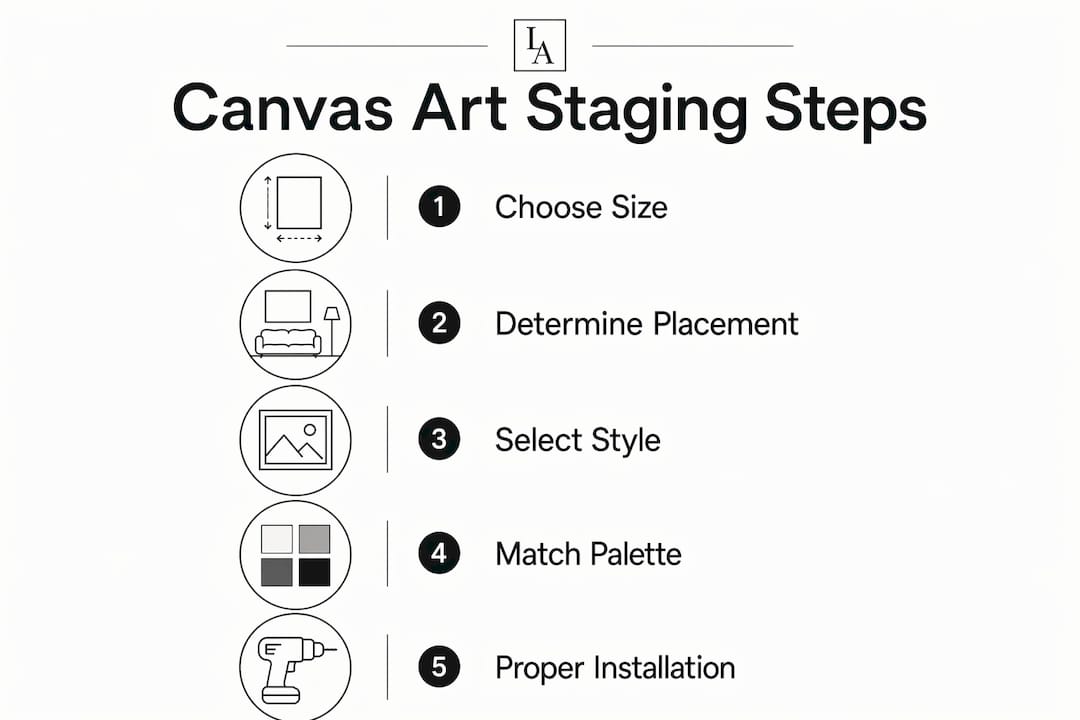
Color discipline is non-negotiable. Limiting artwork to one or two colors linked to the home’s existing palette avoids the retail-clutter impression that kills perceived luxury. A canvas with five competing colors pulls the eye in too many directions. One that echoes the sofa’s gray or the kitchen’s warm white reads as intentional and considered.
Abstract and tonal art performs particularly well in staging because it suggests lifestyle without prescribing it. A buyer can project their own story onto a large abstract canvas in a way they cannot with a figurative landscape. Pieces from Luxuryartcanvas that draw on fashion-forward references, such as bold graphic prints inspired by Chanel or Louis Vuitton iconography, add cultural weight without alienating buyers who may not recognize the reference explicitly.
Style selection checklist for using canvas art in staging:
- Match architecture: Geometric for modern homes, organic forms for transitional spaces
- Color discipline: One or two colors that echo the home’s palette
- Scale over detail: Large, simple compositions photograph better than busy, detailed ones
- Matte surface: Canvas matte finishes absorb light and reduce glare in listing photos
- Avoid literal themes: Seascapes in landlocked properties or seasonal motifs date the staging quickly
- Texture adds depth: Canvas texture reads well in photography and adds tactile quality to in-person tours
For guidance on matching art to home styles, the architectural fit principle applies across property types from urban condos to suburban family homes.
How to install and arrange canvas art step by step
Good installation is invisible. Buyers should notice the art, not the hardware or the crooked hang. Lightweight canvas prints are easier to handle and flexible for both vacant and occupied homes, which reduces damage risk during property turnover.
Tools needed: measuring tape, pencil, level, picture-hanging hardware appropriate for wall type (drywall anchors for heavy pieces), and a step stool.
Step-by-step installation process:
- Measure the furniture width and calculate 60–75% to determine the ideal canvas width
- Mark the center point of the wall space above the furniture at 57 inches from the floor
- Find the hanging point by measuring from the top of the canvas to the wire or bracket, then subtract that distance from 57 inches to locate where the nail goes
- Use a level to confirm horizontal alignment before committing the nail
- Step back 10 feet and assess the composition from a standing position, not from directly in front of the wall
- Photograph the wall with your phone to check how the art reads in a flat image before the professional photographer arrives
For groupings of smaller canvases, treat the cluster as a single unit. Map the arrangement on the floor first, then transfer it to the wall starting from the center piece outward.
| Room type | Recommended approach | Canvas size guidance |
|---|---|---|
| Living room | Single large canvas above sofa | 60–75% of sofa width |
| Primary bedroom | Centered above headboard | 2/3 of headboard width |
| Corridor | Vertical canvas or staggered series | 12–18 inches wide per piece |
| Dining room | One statement piece on the main wall | Scaled to table length |
| Home office | Single mid-size canvas at desk eye level | 24–36 inches wide |
Pro Tip: Photograph each room before and after hanging the art. The camera reveals proportion issues that the naked eye misses, especially in wide-angle shots used for listings.
How does canvas art influence buyer perception and emotional connection?
Art functions as a behavioral cue. Strategic art selection shapes buyer perception beyond decoration, signaling investment level and expected lifestyle before a buyer consciously processes what they are looking at. A well-scaled canvas in a living room tells buyers this is a home where considered choices were made. That signal justifies price.
“Art in staging communicates expected lifestyle and investment, influencing buyer emotional connection and willingness to pay. The success of staging with art depends more on scale and placement than the subject matter of the artwork itself.”
Larger pieces anchor luxury spaces more effectively than multiple smaller pieces and simplify the visual story a room tells. A single 60-inch canvas above a sofa creates one clear focal point. Four small prints in the same space create four competing ones. Buyers remember rooms with a clear focal point. They forget rooms that feel scattered.
How to stage homes creatively for maximum buyer impact:
- Prioritize key sightlines: Place the strongest canvas on the wall buyers see first when entering a room
- Create focal points, not galleries: One statement piece per room outperforms a collection in staging contexts
- Use art to define zones: In open-plan spaces, a canvas above a sofa signals “living area” without walls
- Match art energy to room purpose: Calm tonal pieces in bedrooms, bolder graphic prints in living and dining spaces
Pro Tip: Walk through the home as a buyer would, starting at the front door. Note the first wall you see in each room. That wall gets your best canvas.
Key Takeaways
Staging homes with contemporary canvas art succeeds when size, placement, and color discipline work together to create a clear, memorable focal point that buyers connect with emotionally.
| Point | Details |
|---|---|
| Size rule | Canvas should span 60–75% of the furniture width below it for visual balance. |
| Center height | Hang art so its center sits 57 inches from the floor to align with eye level. |
| Color discipline | Limit artwork to one or two colors that echo the home’s existing palette. |
| Matte canvas advantage | Canvas matte surfaces reduce glare in listing photography compared to glass-framed art. |
| Focal point strategy | Place the strongest canvas on the first wall buyers see when entering each room. |
What I’ve learned from watching art staging go wrong
Most staging mistakes I see are not about taste. They are about scale. Agents and homeowners consistently hang art that is too small, too high, and too colorful for the space. A 24-inch canvas above a 96-inch sofa does not just look wrong. It actively undermines the room by making the wall feel empty and the furniture feel oversized.
The 57-inch center height rule solves more problems than people realize. I have walked into staged homes where every canvas was hung at 72 inches or higher, presumably because someone thought “higher means more prominent.” The result is a room that feels like a hotel corridor. Art hung at eye level connects to the furniture and the viewer. Art hung near the ceiling connects to nothing.
Color is where I see the most well-intentioned mistakes. A homeowner picks a canvas they genuinely love, with five or six colors, because it is beautiful in isolation. In a staged room, that same canvas competes with the rug, the throw pillows, and the paint color simultaneously. The room stops reading as a cohesive space and starts reading as a collection of objects. One or two colors, linked to what is already in the room, always wins.
The shift I find most interesting in 2026 is how much listing photography has changed the rules. Art that looks fine in person can destroy a listing photo if it creates glare or visual noise. Canvas lighting considerations matter more now than they did five years ago. Matte canvas surfaces photograph cleanly. Glass-framed prints reflect light sources and create hot spots that distract from the room. For agents who are serious about digital presentation, the format of the art is as important as the image on it.
— James
Contemporary canvas art for staging from Luxuryartcanvas
Luxuryartcanvas offers over 1,000 canvas designs crafted in the USA, sized and finished specifically for high-impact wall presentation. Each piece uses a matte canvas surface that reduces glare in listing photography, making them practical for professional staging as well as visually striking in person.

For luxury property staging, the Louis Vuitton wall art collection delivers bold, fashion-forward prints that signal cultural sophistication without overwhelming a room’s palette. Agents staging contemporary open-plan spaces will also find strong options in the Luxury Chanel wall art range, where graphic elegance meets the kind of color discipline that staging demands. All pieces ship ready to hang, which keeps installation fast between property turnovers.
FAQ
What size canvas art works best for home staging?
Canvas art should span 60–75% of the width of the furniture below it. For a standard 84-inch sofa, that means a canvas between 50 and 63 inches wide.
How high should canvas art be hung in a staged home?
The center of the canvas should sit approximately 57 inches from the floor. This aligns with average eye level and connects the art visually to the furniture beneath it.
Why are canvas prints better than framed art for staging?
Canvas matte surfaces absorb light rather than reflecting it, which reduces glare in listing photography. They are also lightweight and easier to reposition between properties.
How many pieces of art should be in a staged room?
One well-scaled canvas per room outperforms multiple smaller pieces in staging. A single focal point is easier for buyers to remember and creates a cleaner visual story.
What art colors work best for staging a home?
Limit artwork to one or two colors that echo the home’s existing palette. Color discipline prevents the retail-clutter impression and reinforces a sense of intentional, luxury design.
Bold Color Canvas Art Benefits for Your Space
What Is Accent Wall Art? A Guide for Homeowners