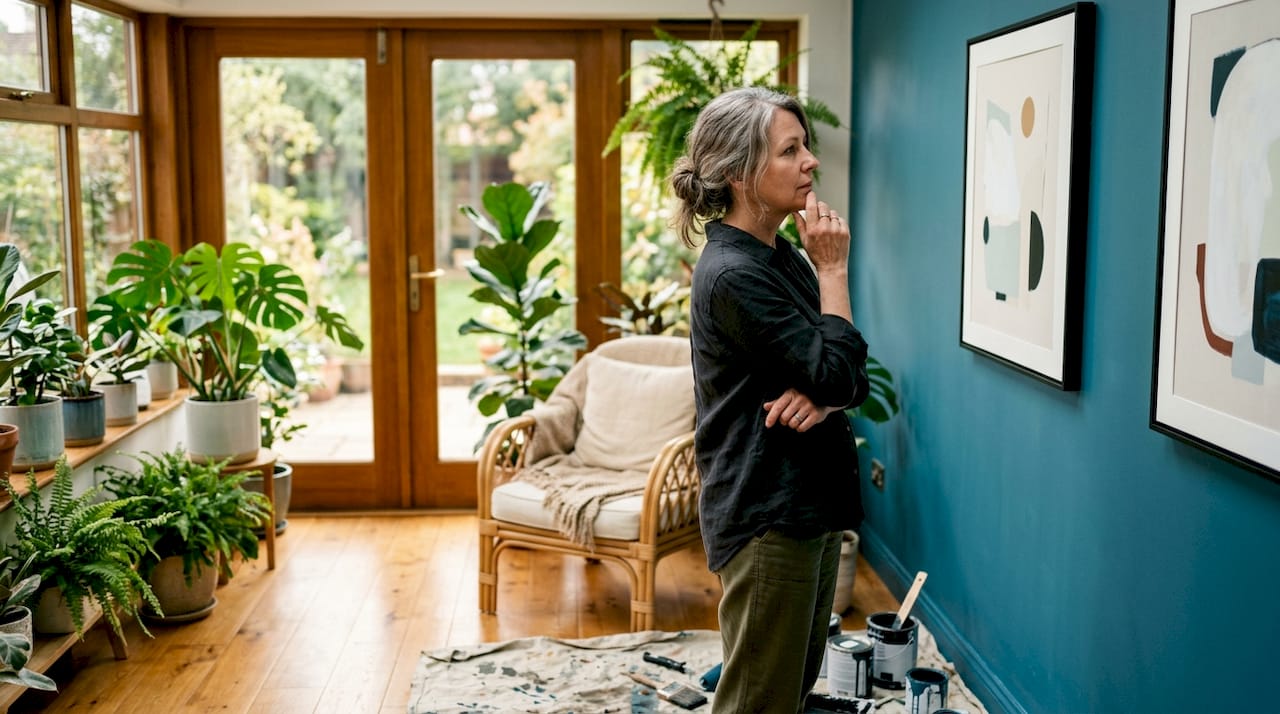
Accent wall art is defined as artwork or decorative treatment applied to a single interior wall to create a focal point that draws the eye and anchors a room’s design. This approach, also called a feature wall in professional interior design, gives homeowners and renters a high-impact result without repainting or renovating an entire space. Luxuryartcanvas offers over 1,000 canvas designs specifically suited for this purpose, from bold graffiti prints to pop art inspired by Chanel and Louis Vuitton. Whether you own your home or rent an apartment, accent wall art is one of the most flexible and affordable ways to define a space and express your personal style.
What is accent wall art and why does it matter?
An accent wall is a single interior surface finished with a different color, texture, or design element from the surrounding walls. That contrast creates a focal point, adds visual depth, and gives a room a clear sense of direction. Without one, rooms can feel flat and undefined, especially open-plan spaces where furniture alone cannot establish zones.
The concept works because the human eye naturally moves toward contrast. A single wall treated differently from the rest pulls attention immediately. Interior designers use this principle to solve spatial problems: making low ceilings feel taller, making narrow rooms feel wider, or making a large room feel more intimate.

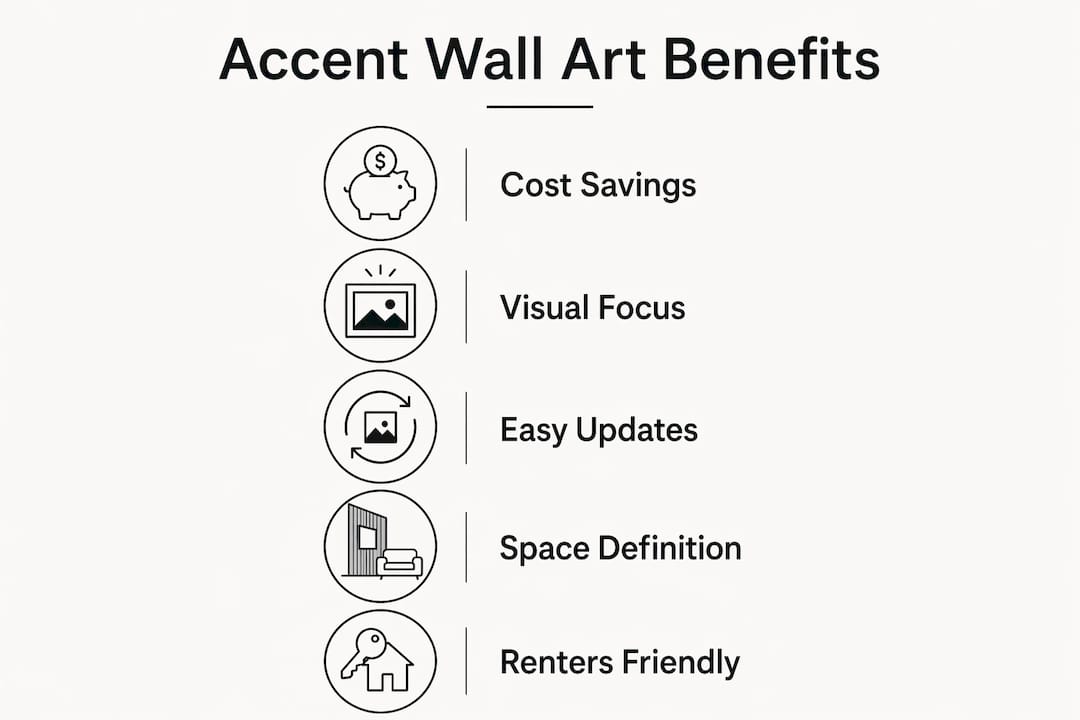
Accent walls also offer a low-risk way to test bold design choices. You commit to one surface instead of four, which keeps costs down and makes it easy to change direction later. That flexibility is why the approach appeals to both homeowners planning long-term renovations and renters who need temporary solutions.
What are the practical benefits of accent wall art?
Accent wall art delivers several concrete advantages over full-room treatments. The most immediate is cost. Finishing one wall with premium paint, wallpaper, or canvas art costs a fraction of treating an entire room. That budget difference lets you invest in higher-quality materials or larger-scale artwork than you could otherwise afford.
The spatial benefits are equally significant. Intentional accent walls help define areas such as reading nooks, anchor furniture like beds, and improve room flow. A canvas placed behind a sofa tells the eye where the seating area begins and ends. The same logic applies to a bedroom headboard wall or a dining room wall behind the table.
Key placement areas where accent wall art works best include:
- Behind the bed: The headboard wall is the natural focal point of any bedroom. Large-scale canvas art here replaces the need for a headboard entirely.
- Behind the sofa: In living rooms, the wall behind the main seating anchors the conversation area and gives the room a clear center.
- Fireplace wall: An existing architectural feature becomes even stronger when the surrounding wall is treated differently.
- Entryway: The first wall a guest sees sets the tone for the entire home.
- Dining room: The wall behind the host’s seat creates a natural backdrop for the table.
Renters benefit most from non-permanent accent options like peel-and-stick wallpaper, modular photo tiles, or tension-mounted systems. These leave no damage and can be removed in hours. Most DIY accent wall projects finish in a single weekend with basic household tools and a modest budget.
Pro Tip: Before committing to a wall, stand in the room’s main entry point and note where your eyes land first. That wall is your accent wall candidate.
How to choose wall art that complements your accent wall
Choosing art for an accent wall is not just about picking something you like. The artwork and the wall must hold a visual conversation. Wall colors establish mood through their undertones, and those undertones directly influence which art palettes create harmony rather than conflict.
The core rule is contrast management. Bold accent wall colors pair best with art featuring simpler palettes or black-and-white photography. A deep navy wall, for example, can easily overwhelm a multicolored abstract print. A single-tone photograph or a graphic canvas with limited colors lets the wall breathe while still making a statement.
The reverse is equally true. Neutral accent walls, in warm whites, soft grays, or greige tones, act as versatile canvases for vivid, multicolored, or textured art pieces. On a neutral wall, a bold pop art canvas with saturated reds and yellows reads as intentional and confident rather than chaotic.
Sizing your artwork correctly
Artwork that is too small floats on the wall and looks like an afterthought. The rule of thirds for art sizing recommends that artwork cover approximately two-thirds of the wall’s horizontal width. For a 9-foot-wide wall, that means artwork spanning roughly 6 feet, whether as a single large canvas or a grouped gallery arrangement.
Common mistakes to avoid when selecting accent wall art:
- Choosing art that repeats the wall color exactly. Unless you are creating deliberate thematic continuity, matching art to wall color flattens the visual effect.
- Going too small. A single 12x16 canvas on a large wall looks lost. Scale up or group multiple pieces.
- Ignoring undertones. A warm-toned wall paired with cool-toned art creates subtle tension that most people feel but cannot name.
- Overloading a patterned wall. Busy patterned wallpaper requires minimalist or monochromatic large-scale art to prevent visual clutter.
| Wall type | Best art pairing |
|---|---|
| Bold solid color | Simple palette, black-and-white, or graphic line art |
| Neutral solid color | Vivid multicolor, textured, or large-scale statement pieces |
| Patterned wallpaper | Monochromatic or minimalist large-scale canvas |
| Textured surface | Flat, high-contrast photography or graphic prints |
Pro Tip: Pull one color from your accent wall and repeat it in a small element of the artwork, such as a frame mat or a single tone in an abstract print. That connection ties the two together without making them identical.
What are the best installation methods for accent wall art?
Installation method determines whether your accent wall is a weekend project or a permanent commitment. The right choice depends on whether you own or rent, your budget, and how often you want to change things up.
- Peel-and-stick wallpaper panels. These apply directly to a clean, flat wall and remove without damaging paint. They work on most standard drywall surfaces and come in textures ranging from linen to geometric prints. Installation takes two to four hours for an average bedroom wall.
- Canvas art with standard hardware. A single large canvas or a gallery arrangement hung with picture hooks is the most common approach for homeowners. Patching nail holes is straightforward, and the art itself can be swapped out any time.
- Modular photo tiles. Adhesive-backed tiles mount without tools and reposition without leaving marks. They suit renters who need zero-damage solutions and work well for creating grid-style gallery walls.
- Tension-mounted systems. These floor-to-ceiling frames hold panels or fabric art without touching the wall at all. They are the most renter-friendly option for large-scale installations.
- Command strip mounting. For canvases under 20 pounds, adhesive strips rated for the weight provide a clean, damage-free hang. Check the strip’s weight rating before use.
Most DIY accent wall projects complete in a single weekend. A peel-and-stick wallpaper installation on a standard bedroom wall takes roughly four hours. Hanging a gallery arrangement of five to seven canvases takes two to three hours once you have planned the layout. Understanding canvas finish options also affects the final look, since matte finishes reduce glare in bright rooms while glossy finishes add depth in low-light spaces.
Pro Tip: Cut paper templates the same size as each canvas and tape them to the wall before drilling or sticking anything. Live with the layout for a day and adjust before committing.
Creative accent wall ideas to inspire your home decor
The most effective creative accent wall ideas treat the wall as a design problem to solve, not just a surface to decorate. The best results come from asking what the room needs, not just what looks good in isolation.
Bold and modern approaches include:
- Large-scale graffiti canvases. A single oversized graffiti print on a white wall creates an urban gallery effect without permanent paint. This works especially well in living rooms and home offices.
- Gallery walls with mixed media. Combining canvas prints, framed photography, and sculptural elements on one wall adds dimension. Keep a consistent color thread running through the pieces to avoid a cluttered look.
- Architectural paneling with art inserts. Wood slat panels or board-and-batten trim create texture, and canvases mounted within the panels add a layered, curated effect.
- Mural-style canvas arrangements. Multiple canvases arranged edge-to-edge create the effect of a single large mural. This approach works well with abstract or landscape imagery.
- Tonal texture walls. Limewash paint or textured plaster in a single color adds depth without pattern. Pair with flat, high-contrast art for maximum effect.
Accent walls also anchor open layouts and define zones in studio apartments or open-plan living spaces. A treated wall behind a desk creates a home office zone within a larger room. A gallery wall behind a dining table separates the eating area from the living area without a physical partition.
The choice between bold and subtle styles comes down to the room’s existing palette and natural light. Rooms with strong natural light can handle darker, more saturated treatments. Rooms with limited windows benefit from lighter accent walls that reflect rather than absorb light. Exploring living room wall art options by style and scale helps narrow down the right direction before purchasing.
Key Takeaways
Accent wall art works best when it solves a spatial problem and maintains visual harmony between the wall treatment and the artwork’s scale, color, and finish.
| Point | Details |
|---|---|
| Core definition | An accent wall is one surface finished differently to create a focal point and add depth. |
| Art sizing rule | Artwork should cover roughly two-thirds of the wall’s horizontal width for balanced proportions. |
| Color coordination | Bold walls need simpler art palettes; neutral walls support vivid, multicolored pieces. |
| Renter-friendly options | Peel-and-stick wallpaper, modular tiles, and adhesive strips install and remove without wall damage. |
| Placement priority | The wall your eye lands on first when entering a room is the strongest accent wall candidate. |
Why most accent walls miss the mark
The biggest mistake I see is treating an accent wall as decoration rather than design. Homeowners pick a wall because it is the largest, or because they saw a color they liked online. The result looks applied rather than intentional, and the room never quite comes together.
The accent walls that actually work solve a problem first. They anchor a floating furniture arrangement, define a zone in an open-plan space, or draw attention away from an awkward architectural feature. The treatment is a response to the room, not an addition to it.
I have also seen the opposite error: accent walls so loud they compete with everything else in the room. A heavily patterned wallpaper paired with colorful art and busy furniture creates visual noise that exhausts rather than excites. The execution and balance matter far more than the material. A simple painted wall with one well-chosen canvas often outperforms an elaborate installation that ignores the room’s proportions.
My advice is to start with the room’s weakest point, the area that feels undefined or awkward, and treat the accent wall as the fix. Then choose art that coordinates with your wall color rather than competing with it. That sequence produces results that feel considered and lasting rather than trendy and temporary.
— James
Bold canvas art for your accent wall from Luxuryartcanvas
Luxuryartcanvas carries over 1,000 canvas designs crafted in the USA, built specifically for homeowners and renters who want a strong visual statement without permanent installation headaches. The collection spans graffiti wall art and pop art canvases inspired by iconic brands like Chanel, Louis Vuitton, and Supreme, making it straightforward to find a piece that fits both your accent wall color and your personal aesthetic.

Each canvas ships ready to hang, with hardware included. The graffiti art wall decor collection is particularly well suited for neutral accent walls where bold, saturated prints read as intentional and confident. With more than 10,000 satisfied customers and a catalog that covers everything from large-scale urban murals to refined fashion-inspired prints, Luxuryartcanvas makes it easy to find the right piece at the right scale for your space.
FAQ
What is the difference between an accent wall and a feature wall?
The terms are interchangeable. Both refer to a single wall finished differently from the surrounding surfaces to create a focal point and add visual depth to a room.
How do I know which wall to make my accent wall?
Stand at the main entry point of the room and note where your eyes land first. That wall is the natural focal point and the strongest candidate for accent treatment.
What size art should I hang on an accent wall?
Artwork should cover approximately two-thirds of the wall’s horizontal width. A piece that is too small will appear disconnected from the wall and the furniture below it.
Can renters use accent wall art without damaging walls?
Yes. Peel-and-stick wallpaper, modular photo tiles, adhesive-backed canvas strips, and tension-mounted systems all install and remove without leaving damage on standard drywall.
Does accent wall art work in small rooms?
Accent wall art works well in small rooms when the treatment adds depth rather than weight. Light-toned walls with high-contrast art, or a single large canvas on the main wall, create visual interest without making the space feel smaller.
Recommended
- What Is Statement Wall Art? Your Complete Design Guide – Luxury Art Canvas
- Creating A Luxurious Ambiance With Wall Art : A Complete Guide – Luxury Art Canvas
- Wall Art in Client-Facing Spaces: A 2026 Design Guide – Luxury Art Canvas
- Why Wall Art Changes Room Atmosphere: A Full Guide – Luxury Art Canvas
Staging Homes with Contemporary Canvas Art in 2026
Dining Room Wall Art Placement: A Decorator's Guide