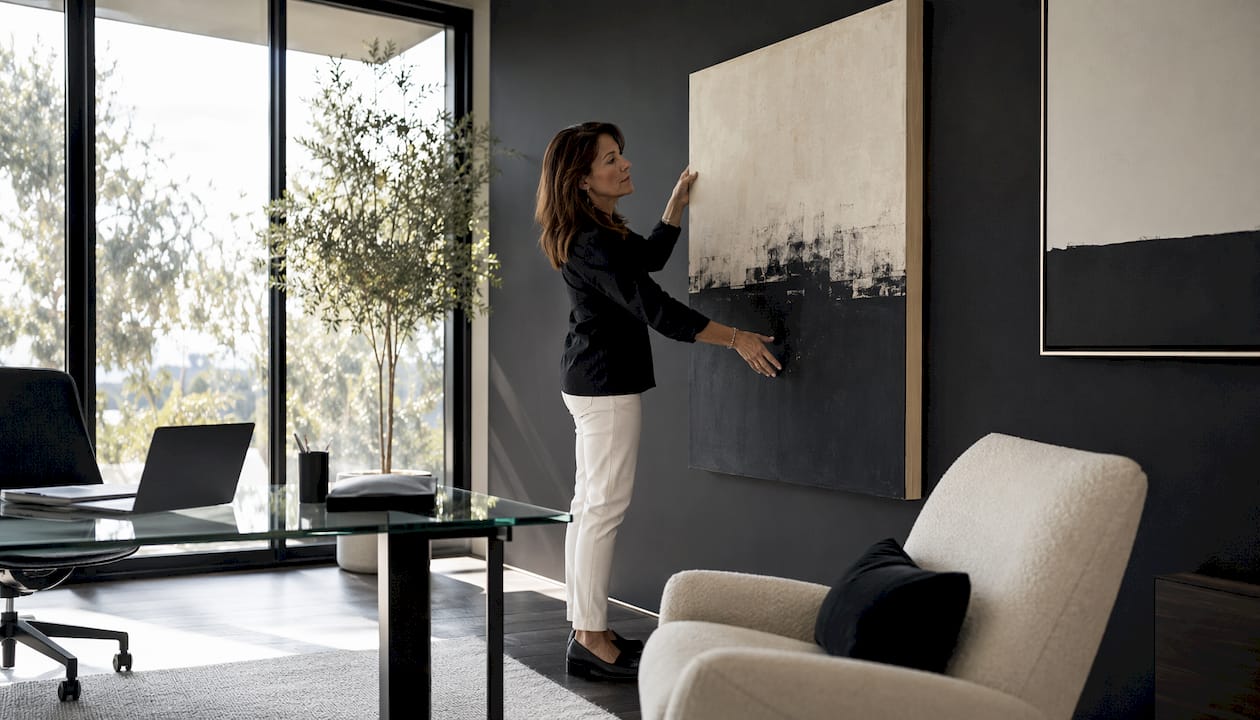
The dominant canvas-art directions for living spaces in 2026 are texture-forward mixed media, biophilic palettes, oversized statement pieces, and minimalist line art. Pantone’s Cloud Dancer, a warm off-white with soft luminosity, is anchoring the year’s color story and pushing designers toward canvases that feel tactile and grounded rather than flat and graphic. The wall art market is showing strong growth momentum, with textured and large-scale pieces leading consumer demand. Three things to do right now: buy at least one piece with physical texture or depth, start your room refresh by measuring the wall above your sofa before you shop, and always confirm archival pigment inks before you order.
Table of Contents
- What are the top canvas art trends for living spaces in 2026?
- Which color palettes define 2026 canvas art?
- How do you choose the right scale and format for your living room?
- What canvas surfaces and textures are worth buying in 2026?
- How do you hang and style canvas art in a living space?
- Where should you buy canvas art in the U.S., and what should you pay?
- Why museum-quality canvas matters: Luxuryartcanvas
- Key Takeaways
- Where canvas trends are actually headed
- Ready-to-hang canvas art that matches 2026’s best trends
- Useful sources for further reading
What are the top canvas art trends for living spaces in 2026?
Trending wall art styles in 2026 center on eight directions, each with a distinct mood and a clear place in a living room.
-
Biophilic and natural textures. Woodgrain tones, leafy botanical patterns, and tactile linen-like surfaces that pull the outdoors in. Works best as a single large canvas on a feature wall opposite a window, where natural light activates the organic palette. The trend is driven by a broader shift toward restorative interiors after years of high-contrast, graphic-heavy design.
-
Oversized statement canvases. A single canvas that fills a substantial portion of a wall’s width, commanding a room the way a fireplace once did. Position one above a sofa or on a bare dining-room wall to create an instant focal point. Large-scale prints are the fastest way to transform an open-plan space without furniture changes.
-
Mixed-media and textured surfaces. Canvases that combine paint, collaged paper, textile appliqué, or layered varnish so the piece reads differently from across the room than it does up close. These work especially well in living rooms with neutral furniture because the texture carries the visual weight.
-
Soft surrealism and dreamscapes. Fluid, slightly otherworldly compositions in muted lavender, sage, and warm sand. Think melting landscapes or figurative forms dissolving into abstract shapes. A reading nook or a corner accent wall is the right scale for this mood.
-
Digital and AI-generated art. Surreal compositions and fluid geometry produced with generative tools are now mainstream consumer art. The advantage for buyers is precise color calibration and easy scaling to any canvas dimension. Look for pieces printed with archival inks to protect the color depth.
-
Nostalgic and retro revival. 1970s earth tones, vintage travel-poster typography, and warm amber palettes are back with a contemporary edit. Pair a retro-style canvas with walnut furniture and a terracotta rug for a cohesive, lived-in feel.
-
Minimalist line art and monochrome. Single-stroke figure drawings, botanical outlines, and high-contrast black-on-white compositions. Minimalist line art visually calms a room and makes smaller spaces read as larger, which is why it keeps appearing in apartment living rooms and compact open-plan layouts. Luxuryartcanvas carries a dedicated range of minimalist line art if you want to see what this looks like at scale.
-
Sustainable materials and eco-production. Recycled frames, organic canvases, and plant-based inks are now a recognized buying criterion, not just a marketing claim. Eco-conscious buyers are asking for carbon-neutral printing documentation and FSC-certified stretcher bars before they commit.
Which color palettes define 2026 canvas art?
The year’s palette story splits into four families, each with a distinct living-room mood.
Grounding neutrals and warm minimalism lead the pack. Beige, warm white, charcoal, and soft taupe create a backdrop that lets textured canvases breathe. Pantone’s Cloud Dancer, the 2026 Color of the Year, sits at the heart of this family: a luminous, slightly creamy off-white that pairs with natural wood tones, linen upholstery, and matte black hardware without competing with any of them. Pantone’s influence on retail art collections is real; designers and retailers coordinate new releases around Pantone cues each year, and Cloud Dancer has already pushed canvas collections toward warmer, softer whites over the cooler grays that dominated 2023–2024.
Soft biophilic greens are the second major family. Sage, eucalyptus, and dusty olive work as both canvas palette and wall-paint color. A sage canvas against a white wall reads serene; the same canvas against a deep forest-green wall reads dramatic. Either works, depending on how much contrast you want.
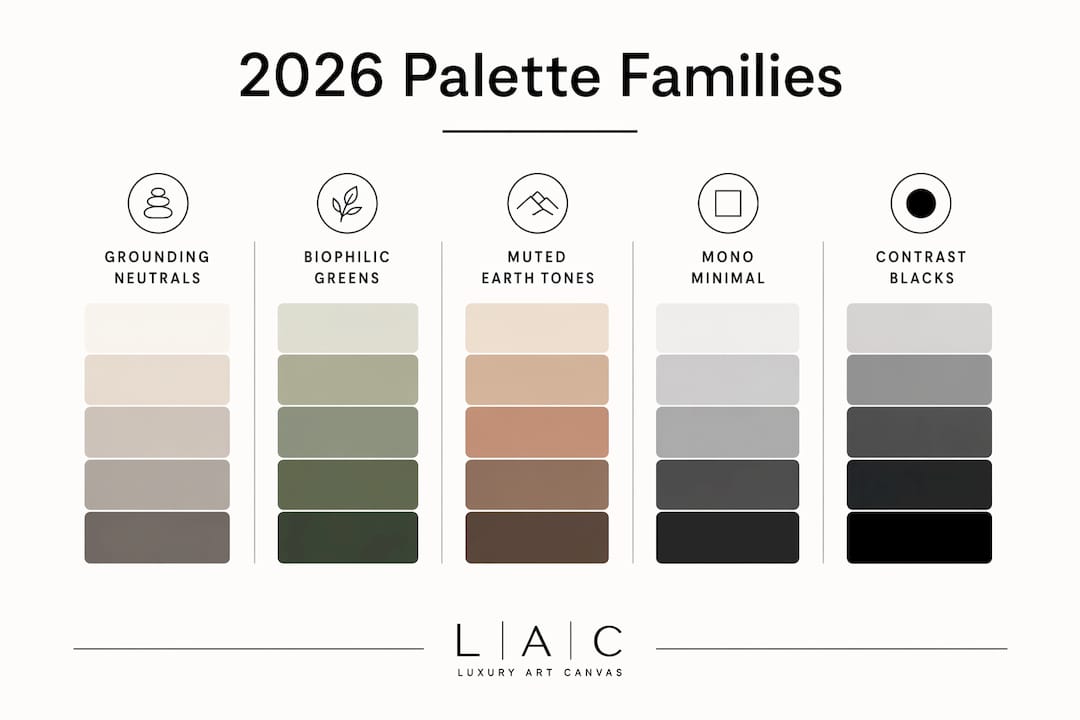
Muted retro earth tones bring amber, rust, warm brown, and faded mustard. These pair naturally with 70s-inspired furniture revivals and look strongest against warm white or off-white walls. Avoid pairing them with cool gray walls, which flatten the warmth out of the palette entirely.
Monochrome and high-contrast minimal palettes round out the year. Black-and-white line art, charcoal figure drawings, and ink-wash compositions suit rooms where the furniture already carries color and the art needs to anchor without competing.
Pro Tip: In a small living room, choose a canvas palette that pulls one color directly from your largest piece of furniture. A warm beige sofa? A canvas in warm white, soft sage, or amber will feel intentional rather than accidental.
Pro Tip: In an open-plan space, use the canvas palette to define zones. A biophilic green canvas clusters the reading area; a monochrome piece anchors the TV wall. Two different palette families in one room work when each one belongs to a distinct zone.
Pairing art with interior door and trim finishes matters more than most buyers realize. A warm-toned canvas next to a cool-white door trim creates a subtle clash that reads as “off” without anyone being able to name why. Match the warmth or coolness of your trim to your canvas palette and the room settles.
How do you choose the right scale and format for your living room?
Scale is where most buyers go wrong, and the fix is simple math before you shop.
Sizing rules of thumb:
- Above a sofa: the canvas or grouping should span a significant portion of the sofa’s width. For a standard sofa, that means a sizable art width that complements the furniture.
- Above a console or credenza: aim for 75–80% of the furniture’s width, and keep the bottom edge of the canvas 6–8 inches above the surface.
- On a large open wall with no anchor furniture: an oversized single canvas works when it fills at least half the wall’s width. Anything smaller reads as an afterthought.
- Centerline height: hang the visual center of any canvas at 57–60 inches from the floor, which aligns with average eye level.
Oversized statement canvases vs. gallery walls vs. diptychs/triptychs:
- Oversized single canvas: maximum visual impact, minimal installation complexity. Best for rooms with one dominant blank wall and furniture that is already doing the styling work. The risk is that a wrong choice is hard to hide.
- Curated gallery wall: mixing minimalist line art with textured pieces creates intentional contrast and lets you evolve the collection over time. The anchor element, whether a consistent frame color or a shared palette, keeps it from looking chaotic. Gallery walls suit living rooms where the wall is broken up by windows or doors.
- Diptychs and triptychs: two or three canvases that form a single composition. They give you the visual scale of an oversized piece with the flexibility of separate panels. Space panels 2–3 inches apart for a cohesive look; go 4–6 inches apart for a more modular, collected feel.
Pro Tip: Before you order, tape kraft paper cut to your intended canvas dimensions onto the wall and live with it for a day. What looks right in a product photo often reads too small in an actual room.
What canvas surfaces and textures are worth buying in 2026?
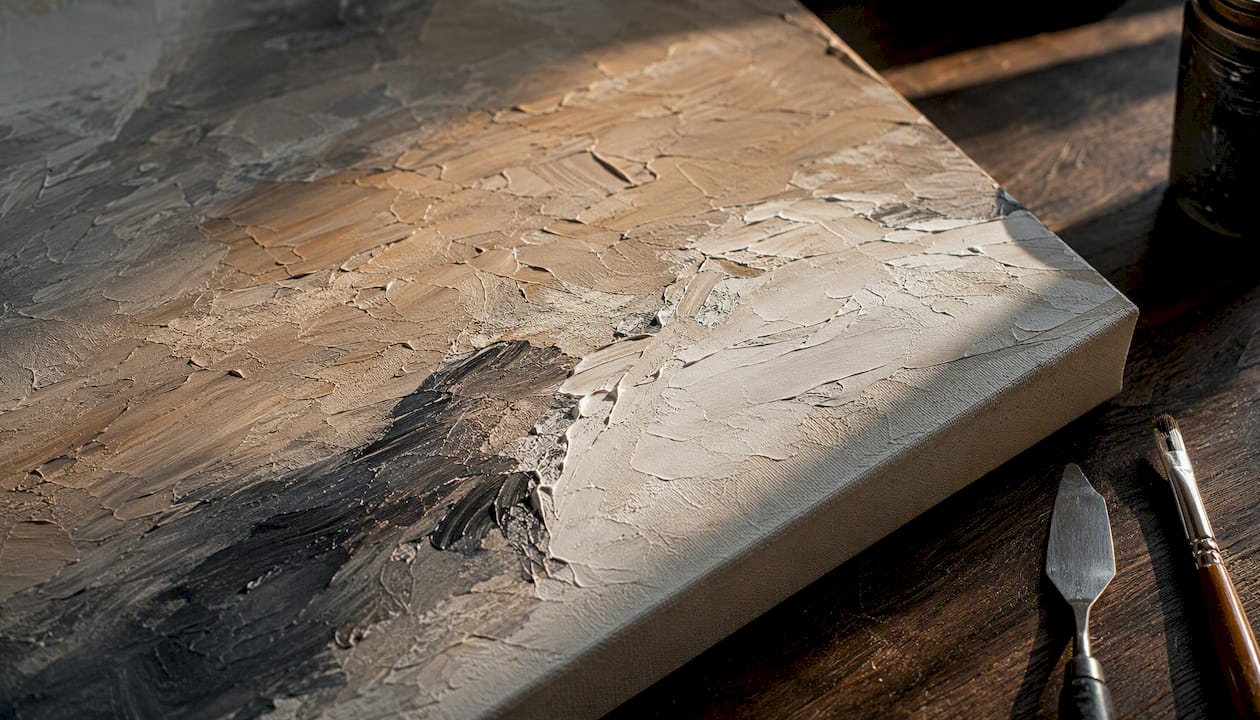
Texture is the primary lever designers are using in 2026 to change a living room’s perceived depth and emotional tone. A flat print and a textured canvas of the same image read as completely different objects in a room.
Materials quality checklist
| Feature | What to look for | Why it matters |
|---|---|---|
| Canvas weight | Cotton or linen blend, substantial weight | Heavier canvas resists warping and holds texture |
| Priming | Acid-free gesso | Prevents yellowing and ink bleed over time |
| Inks | Archival pigment inks | Color stability for decades, not years |
| Stretcher bars | Kiln-dried solid wood, corner-keyed | Prevents sagging; keys allow re-tensioning |
| Substrate | Organic or recycled canvas options | Meets eco-buyer criteria; often higher base quality |
| Finish | Museum wrap or gallery wrap | Clean edges; no need for a frame |
Mixed-media treatments change the experience of a canvas in ways a flat print cannot. Impasto paint layers catch raking light and cast micro-shadows that shift as the day progresses. Collaged paper elements add a matte-against-gloss contrast that reads as handmade. Textile appliqué, where fabric is adhered to the canvas surface, brings warmth that works particularly well in living rooms with soft furnishings. Layered varnishes, matte in some areas and gloss in others, add depth without adding physical relief.
Where these work best: mixed-media and textured canvases belong in rooms where you spend time at close range, not in hallways or above stairwells where they are seen only in passing. A living room sofa wall is ideal because viewers naturally sit and look at the piece for extended periods.
For heavy textured canvases, ordinary picture hooks are often insufficient. Use French cleat systems or wall anchors rated to the piece’s weight, particularly for large mixed-media works that may be significantly heavier than a standard print.
Sustainable wall art with recycled frames and plant-based inks is now a legitimate quality tier, not a compromise. Organic canvas substrates often have a tighter weave than commodity poly-cotton blends, which benefits both texture and ink adhesion.
How do you hang and style canvas art in a living space?
Follow these steps in order and the result will look deliberate every time.
-
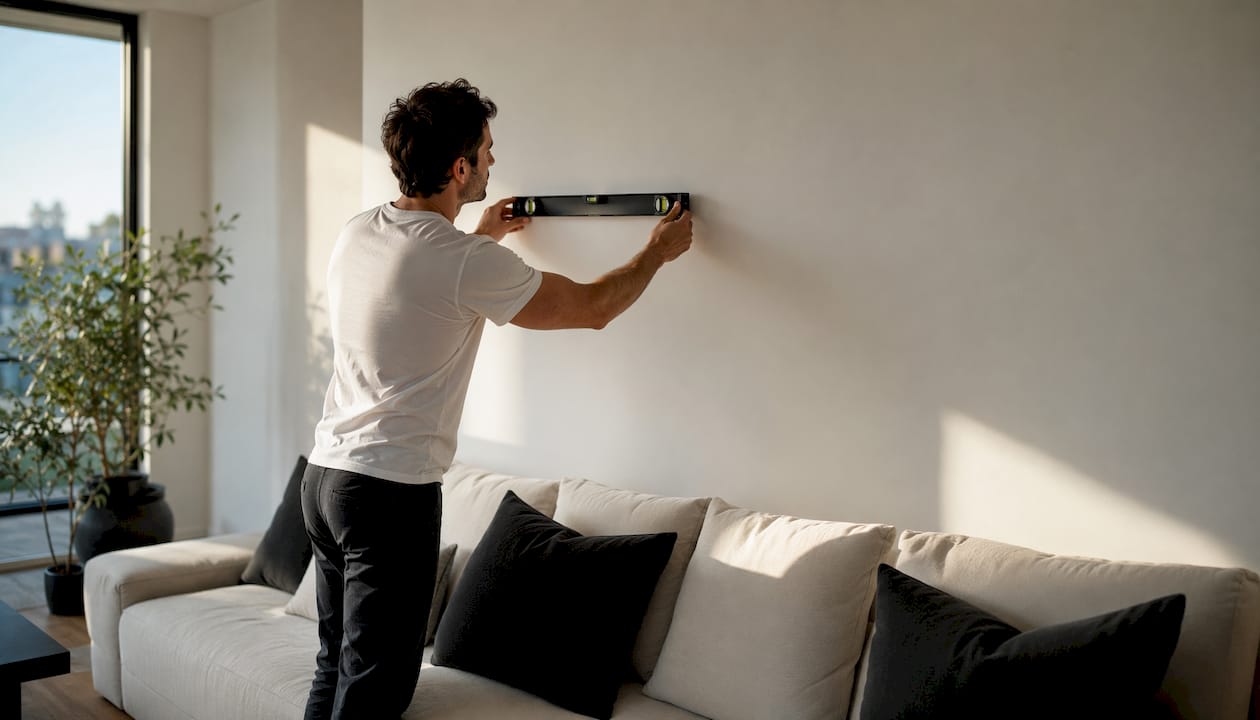
Measure the wall and the furniture. Note the wall’s width and height, the furniture’s width, and the distance from the floor to the top of the furniture. Write these down before you open a single product page.
-
Calculate your target canvas dimensions. Apply the 60–75% rule for above-sofa placement. For a gallery wall, sketch the grouping on paper first and calculate the total footprint including gaps.
-
Mark the centerline. Measure 57–60 inches from the floor and mark it lightly with a pencil. This is where the visual center of your canvas (or grouping) should land.
-
Choose the right hardware. For canvases under 10 lbs, standard picture hooks work. For heavier pieces, use a French cleat or toggle anchors rated to at least twice the canvas weight. Always locate studs for anything over 15 lbs.
-
For gallery walls, lay the grouping on the floor first. Arrange the pieces until the composition feels balanced, then trace each frame onto kraft paper, cut out the templates, and tape them to the wall before driving a single nail.
-
Check spacing. For gallery walls, 2–3 inches between frames reads as a cohesive unit. More than 4 inches and the grouping starts to feel like separate, unrelated pieces.
-
Step back and check from sitting height. Most people hang art too high because they check it while standing. Sit on your sofa and look at the wall. That is the view that matters.
Pro Tip: For textured or mixed-media canvases, add a picture light or an adjustable track light aimed at a 30-degree angle from the wall. Raking light from that angle catches the surface relief and makes the texture visible from across the room. Avoid direct overhead lighting, which flattens texture and creates glare on any varnished surface.
The most common mistake is hanging a canvas too small above a sofa. If the canvas width is less than half the sofa’s width, it will look like a postage stamp no matter how good the art is.
Where should you buy canvas art in the U.S., and what should you pay?
The U.S. canvas art market splits into three tiers, each with different quality signals and timelines.
Typical price ranges and timelines
| Tier | Typical price range | Production type | Turnaround |
|---|---|---|---|
| Entry-level | $30–$150 | Mass-produced, rolled prints | 3–7 business days |
| Mid-range | $150–$300 | Stretched canvas, standard inks | 5–10 business days |
| Museum-quality | $300–$500 | Archival inks, kiln-dried bars, USA-made | 10 business days |
Custom and made-to-order canvases at the museum-quality tier typically add 5–10 business days to the standard timeline. Rush orders are available from some U.S. producers but usually carry a 20–40% surcharge and may limit size options.
Buyer checklist before you order:
- Archival pigment inks confirmed in writing (not just “high-quality inks”)
- Stretched and ready-to-hang, or rolled with clear re-stretching instructions
- Return or exchange policy that covers transit damage
- Framing options or gallery-wrap finish specified
- Made-in-USA manufacturing claim with a verifiable production location
- Customer review volume and recency (look for recent reviews, not just a high aggregate score)
Shipping for large canvases is a real variable. A 48x60-inch canvas ships flat or in a custom crate, and freight costs can add $50–$150 to the order total. Confirm shipping method and packaging before checkout, especially for oversized pieces.
Why museum-quality canvas matters: Luxuryartcanvas
Not all canvas art is built to last a decade on your wall. The difference between a piece that fades and warps within three years and one that holds its color and tension for decades comes down to a short list of production decisions.
Luxuryartcanvas produces every canvas in the USA using archival pigment inks, acid-free priming, and kiln-dried stretcher bars with corner keys. The catalog runs to over 1,000 designs spanning graffiti, pop art, minimalist line art, black-and-white compositions, and high-fashion-inspired pieces featuring Chanel, Louis Vuitton, Dior, Hermès, Versace, and Prada. Every piece ships ready to hang.
The brand has earned positive reviews from more than 10,000 customers, which at that volume reflects consistent production quality rather than a handful of favorable outliers. For buyers who want minimalist art prints or bold street-art statements, the catalog covers both ends of the 2026 trend spectrum.
Key Takeaways
The single most important move for a 2026 living-room refresh is choosing canvas art with physical texture and a scale that genuinely fills the wall, anchored by a palette that connects to Pantone’s Cloud Dancer warmth.
| Point | Details |
|---|---|
| Lead with texture and scale | Textured mixed-media canvases and oversized formats are the defining 2026 moves for living rooms. |
| Anchor to Cloud Dancer palettes | Warm neutrals, soft biophilic greens, and muted earth tones align with Pantone’s 2026 direction. |
| Measure before you buy | Canvas width above a sofa should cover 60–75% of the sofa’s width; hang the visual center at 57–60 inches. |
| Verify archival materials | Confirm archival pigment inks, acid-free priming, and kiln-dried stretcher bars before ordering. |
| Luxuryartcanvas for ready-to-hang quality | Over 1,000 USA-made designs with archival inks, covering graffiti, pop art, and minimalist line art. |
Where canvas trends are actually headed
The conversation around 2026 canvas art trends tends to focus on what is new. The more useful question is what will still look right in 2030.
Texture and biophilic palettes are not a seasonal spike. They reflect a genuine shift in how people want their homes to feel: quieter, more tactile, less screen-like. A well-chosen textured canvas in a neutral palette will not read as dated in four years the way a high-contrast neon pop piece from 2019 does now. That said, there is real value in keeping one or two interchangeable prints in your rotation for seasonal refreshes, rather than committing every wall to a permanent investment piece.
The buyers I see making the smartest long-term choices are the ones who invest in one or two museum-quality anchor pieces, then rotate smaller prints around them. The anchor piece carries the room’s identity; the prints let it breathe and change. Minimalist line art is the most durable anchor category right now because it reads as timeless rather than trend-specific.
Sustainability is not going away as a buying criterion. Organic substrates and plant-based inks are moving from niche to expected, and producers who cannot document their materials will lose buyers to those who can. That shift will accelerate through the next design cycle.
Ready-to-hang canvas art that matches 2026’s best trends
Luxuryartcanvas gives you a direct path from trend to wall, without the guesswork of sourcing from multiple vendors or waiting on custom fabrication timelines that stretch past a month.
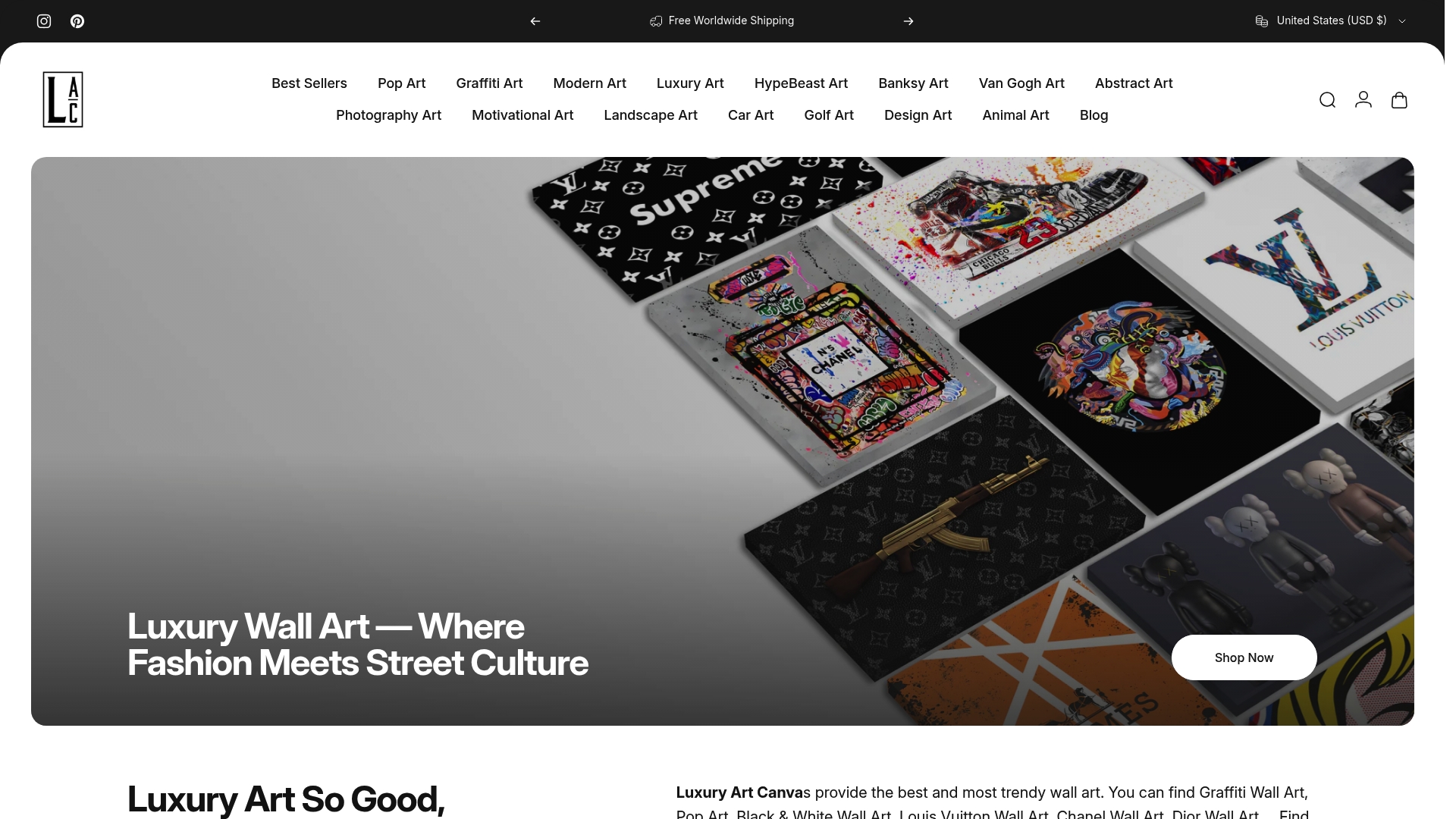
Every piece is made in the USA with archival pigment inks and kiln-dried stretcher bars, arriving ready to hang. The catalog covers the full range of 2026’s strongest directions: large graffiti statement canvases for oversized focal walls, pop art canvases for bold color and graphic energy, and minimalist line art for the calm, space-expanding look that works in almost any room. More than 10,000 customers have reviewed the brand positively, which is the kind of track record that matters when you are buying something that will live on your wall for years. Browse the full catalog at Luxuryartcanvas and filter by style, size, or color palette to find pieces that fit your 2026 refresh.
Useful sources for further reading
- Trending wall art styles (2026) | Printful — the most comprehensive 2026 wall-art trend roundup available, covering 11 styles with styling rationale.
- Pantone Color of the Year 2026 — primary source for Cloud Dancer and its palette implications.
- 10 go-to art styles for decorating your wall | Picture Hang Solutions — practical style reference covering enduring art movements and where they work in a home.
- Wall art ideas for living rooms | Living Spaces — 46 room-specific ideas with scale and placement examples.
- Top 2025 interior door designs and trends | One Day Doors & Closets — useful for matching canvas palettes to interior trim and finish directions.
- Luxuryartcanvas — USA-made, museum-quality canvas art across graffiti, pop art, and minimalist styles; over 1,000 designs available.
Why Street Art Influences Luxury Interiors: A Designer's Guide
Romantic Wall Art That Reads Luxury: A 2026 Buyer's Guide