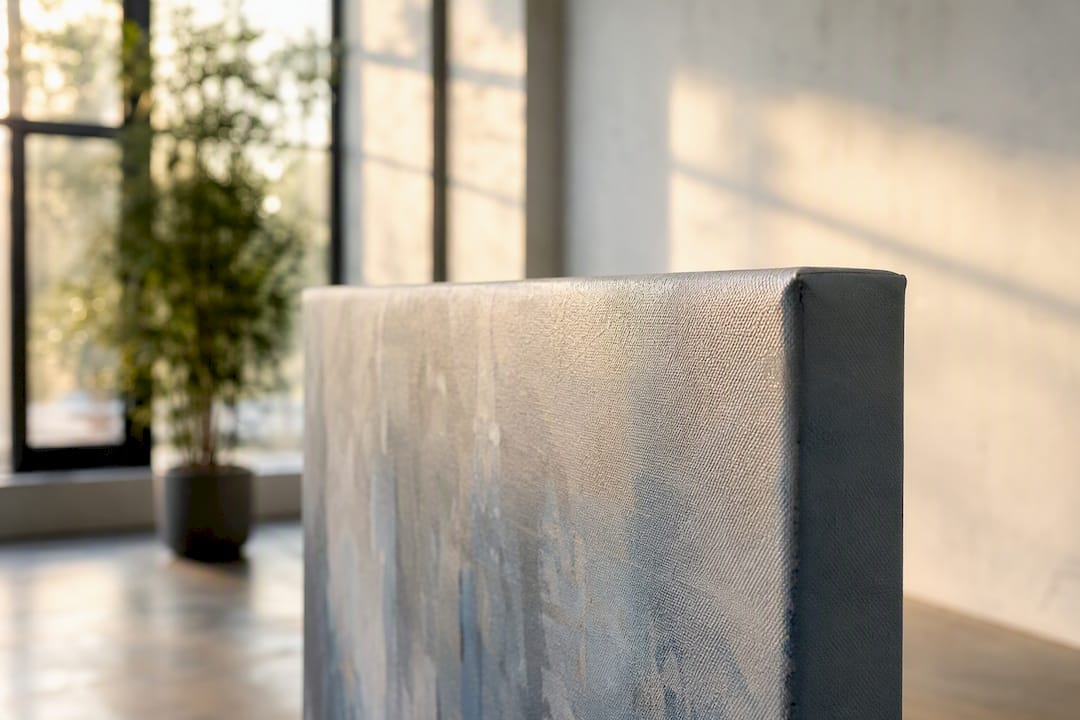
A gallery wrapped canvas is a printed or painted canvas stretched around deep wooden stretcher bars so the image or a solid color continues around the sides, creating a frameless, finished piece that hangs straight out of the box. The main advantage is simple: no frame required, no extra hardware to buy, and a look that reads as contemporary the moment it’s on the wall.
Choose gallery wrap when either of these is true:
- The image can lose an inch or so at the edges without losing its meaning
- You want a clean, frameless look instead of a traditional framed presentation
Key Takeaways
Gallery wrap works best when the edge treatment is chosen to match the image’s composition, not just picked by default alongside size and depth.
| Point | Details |
|---|---|
| Definition first | A gallery wrap stretches canvas around deep stretcher bars so the image or color wraps the sides with no visible staples. |
| Match edge to image | Use mirror or cloned edges for portraits and detailed photos; image wrap works fine for open landscapes and graphic art. |
| Depth is aesthetic, not urgent | ¾ inch suits smaller or subtle pieces; 1.25 to 1.5 inch gives the classic dimensional gallery look. |
| Protect the piece | Keep canvases out of direct sunlight and high humidity, and check corner tension on large-format pieces over time. |
| Buy from a builder who shows the specs | Luxuryartcanvas produces USA-made, archival-ink canvases with ready-to-hang hardware across 1,000+ designs. |
Table of Contents
- What Makes a Canvas “Gallery Wrapped”?
- Should You Choose Image Wrap, Mirror Edge, or Solid Color?
- How Deep Should the Stretcher Bars Be?
- What Are Your Display and Framing Options?
- Is Gallery Wrap Worth It? Pros, Cons, and Best Uses
- How Do You Pick the Right Size, Depth, and Edge for Your Wall?
- What Drives the Price of a Gallery Wrapped Canvas?
- How Do You Care for and Hang a Gallery Wrapped Canvas?
- How Does Luxuryartcanvas Match These Standards?
- What Actually Matters When You’re Choosing a Gallery Wrap
- Ready to Order Your Own Gallery Wrapped Canvas?
What Makes a Canvas “Gallery Wrapped”?
The canvas gets pulled taut around the sides of a wooden stretcher bar frame, then stapled or glued to the back panel, not the visible edges. That’s the trick: staples stay hidden behind the piece, so nothing interrupts the front or the sides. The result is what Wikipedia’s entry on gallery wrap describes as a canvas where the sides stay visible and fastener-free.
A few distinctions matter here:
- A stretched canvas built for framing usually has shallower bars and expects a frame to cover raw edges and staples.
- A museum wrap (sometimes called front-only wrap) prints the image on the face only, wrapping blank or painted canvas around the sides instead of the image itself.
- True gallery wrap extends the actual image or a chosen color treatment around every edge.
Should You Choose Image Wrap, Mirror Edge, or Solid Color?
Not every photo or painting survives the wrap the same way, so vendors offer three standard treatments. Pick wrong and you can lose a subject’s hand, a building’s corner, or a signature.
- Image wrap. The photograph or artwork continues directly onto the sides. Depending on stretcher depth, this typically folds over roughly half an inch to a couple of inches of the original image. Fine for images with breathing room at the margins.
- Mirror or cloned edge. The outer band of the image is duplicated and flipped onto the sides instead of stretched over them, preserving the full frontal composition.
- Solid color or blank edge. The sides get a flat color, letting the front image stay untouched and giving a clean, gallery-like border.
Pro Tip: Portraits and detailed photography almost always do better with a mirror edge. Landscapes and abstract graphic art with open sky or negative space near the border can usually handle a standard image wrap without losing anything important.
How Deep Should the Stretcher Bars Be?
Depth is where gallery wrap starts to feel sculptural instead of flat. Vendors typically list options in the ¾ inch to 1.5 inch range, and the terminology varies by supplier, so check spec sheets before ordering.
- ¾ inch to 1 inch: A subtler profile, closer to a traditional canvas, good for smaller pieces or tight wall groupings.
- 1.25 inch to 1.5 inch: The classic gallery look, with enough shadow depth that the piece visibly projects off the wall, a depth Wikipedia notes is common specifically because it hides staples on the back while giving the sides real presence.
- Large-format pieces (roughly 30 inches and up) often need cross-bracing or thicker bars so the canvas doesn’t bow at the center over time.
Deeper bars mean more visible side surface, which matters directly for which edge treatment you pick.
What Are Your Display and Framing Options?
Gallery wrap is designed to skip the frame, but that doesn’t mean framing is off the table. Ready-to-hang pieces typically arrive with one of a few standard hardware setups.
- Wire hanging systems for flexible height adjustment, common on mid-to-large canvases.
- D-rings with wall hooks for a more secure, gallery-standard mount.
- Sawtooth hangers on smaller, lighter pieces where simplicity wins.
If you do want a frame, a floater frame is the move; see top framing options for wall art to explore materials and tips that enhance your canvas display. It surrounds the canvas with a gap on all sides so the wrapped edges stay visible, adding a formal border without covering the work. Compare that against a fully framed minimalist presentation if you’re weighing both looks side by side, or check hanging hardware basics before you commit to a wall layout.
Is Gallery Wrap Worth It? Pros, Cons, and Best Uses
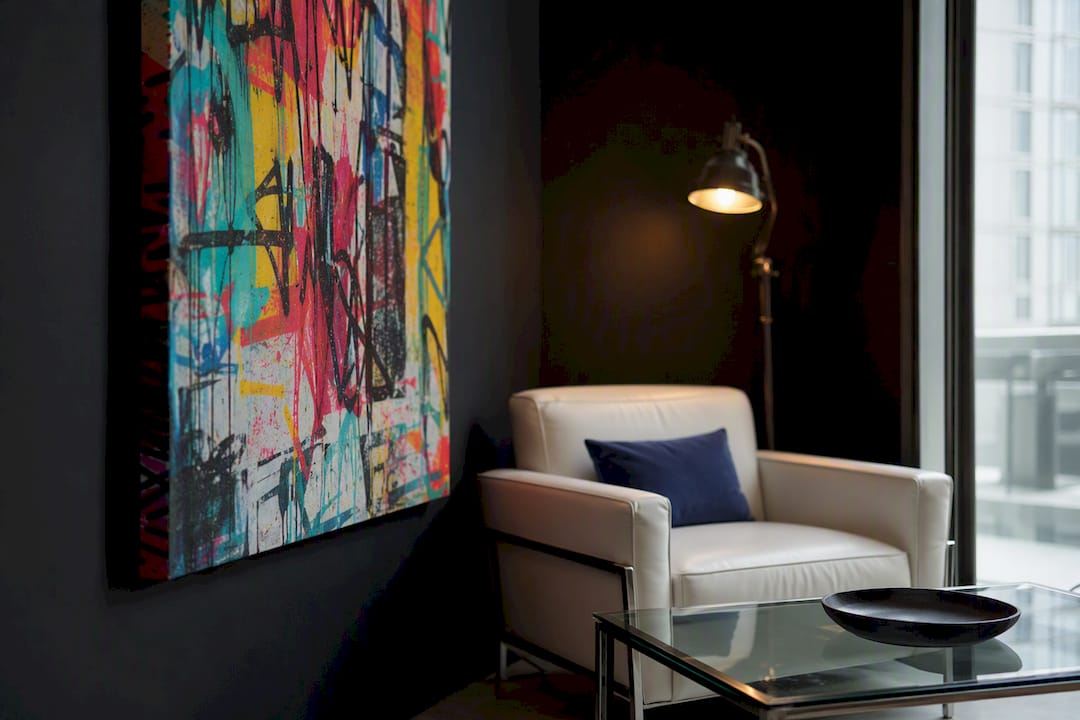
The frameless look isn’t automatically the right call for every piece, so weigh the trade-offs honestly before you order.
What works in its favor:
- A modern, frameless finish that suits minimalist and contemporary rooms
- Ready-to-hang out of the box, no separate framing purchase or wait
- Genuinely durable when built over solid wood stretchers with proper reinforcement
What to watch for:
- Edge cropping can eat into detail near the border of the image
- Corners can show slight stretching artifacts on busy patterns or text
- A frameless look can clash with traditional, ornate, or period interiors
Roughly half an inch to a couple of inches per side gets wrapped depending on stretcher depth, which is exactly why photographers and painters increasingly build a safety margin into their files before printing. Gallery walls, statement pieces above a sofa, and portrait photography with mirrored edges are the classic use cases. Original paintings where the artist deliberately painted the sides are the other end of the spectrum, and they’re built for wrap from the start.
How Do You Pick the Right Size, Depth, and Edge for Your Wall?
Getting this right before you order saves a reprint. Run through these checks in order.
- Check your margins first. If anything critical (a face, a logo, text) sits within about an inch of the image edge, switch to a mirror or solid-color wrap instead of a straight image wrap.
- Match depth to viewing distance. A large canvas viewed across a living room can carry a 1.5 inch profile without looking heavy; a small piece in a hallway usually looks better at ¾ inch to 1 inch.
- Scale to the wall, not just the image. A 16x20 canvas on a two-story stairwell wall reads as an afterthought; size up or group multiple pieces instead.
Pro Tip: When in doubt, order a mirror edge. It costs the same as a standard image wrap in most cases and completely removes the risk of cropping something you’ll notice every time you walk past it.
What Drives the Price of a Gallery Wrapped Canvas?
Four factors move the price more than anything else: size, stretcher depth, printing method, and finishing.
- Size is the biggest lever. Small pieces (under 16x20) sit at the low end; oversized statement pieces (40 inches and up) cost substantially more due to material and shipping.
- Stretcher depth adds cost as bars get thicker, since deeper wood and more canvas are needed to wrap the sides.
- Giclée printing with archival inks, the standard for fine-art canvas reproduction, costs more than basic inkjet but holds color longer.
- Floater frames or reinforcement bracing for large formats add a real line item on top of the base canvas price.
Custom sizing or a nonstandard edge treatment (a custom-colored border, for instance) also typically pushes a quote above standard catalog pricing.
How Do You Care for and Hang a Gallery Wrapped Canvas?
Canvas is tougher than paper prints, but it isn’t maintenance-free. Keep it out of prolonged direct sunlight and away from high humidity, since UV exposure fades ink over time and humidity can loosen canvas tension on the frame.
- Dust gently with a dry, soft cloth; spot clean only if necessary and never soak the canvas
- Check corners periodically on larger pieces, since stretcher bars can loosen slightly over years
- For anything over 24 inches wide, use two wall anchors rated for the weight, not one center hook
Pro Tip: If a canvas over 36 inches wide feels the slightest bit loose at the corners, don’t wait. A quick re-stretch is a cheap fix; a warped panel later is not. For step-by-step mounting advice on heavier pieces, this hanging guide walks through anchor placement.
How Does Luxuryartcanvas Match These Standards?
Every specification above (stretcher depth, edge treatment, archival printing) is a real decision Luxuryartcanvas makes for each of its designs, produced in the USA with archival inks built for the sunlight and humidity concerns covered earlier.
- Over 1,000 designs spanning graffiti, pop art, and high-fashion-inspired pieces, giving you edge and depth options across a genuinely wide catalog
- A track record backed by more than 10,000 customer reviews, which matters when you’re buying art without seeing the physical piece first
- Ready-to-hang hardware included standard, so the selection rules above (depth for scale, edge treatment for composition) translate directly into a piece that arrives wall-ready
What Actually Matters When You’re Choosing a Gallery Wrap
Most buying guides treat edge treatment as a footnote. That’s backwards. The single decision that determines whether you’ll be happy with a gallery wrap in six months is whether you picked the right edge option for your specific image, not the stretcher depth or the hardware.
Conventional advice leans hard on depth (“go deeper for more impact”) without asking whether the image can survive the wrap at all. A 1.5 inch profile on a photo with a face near the border is a mistake regardless of how good it looks in the corner shot on a product page. Depth is an aesthetic choice. Edge treatment is a preservation choice, and it should come first in your decision, not second.

Here’s what conventional guidance also underplays: bold, graphic art (street-style pieces, pop art, high-contrast illustration) tolerates gallery wrap far better than delicate photography or fine detail painting. If you’re drawn to work with strong color blocking or graffiti-style composition, you have far more margin for error on edge choice than someone hanging a wedding portrait.
Prioritize the edge decision first, size and wall scale second, depth last. Get that order backwards and you’ll spend more time troubleshooting a crop than enjoying the piece.
— James
Ready to Order Your Own Gallery Wrapped Canvas?
Luxuryartcanvas builds every piece with the exact specs this guide covers: archival inks, USA-made construction, and ready-to-hang hardware, so you’re not guessing whether a design will hold up on your wall.

If bold, graphic work is what drew you to gallery wrap in the first place, browse the graffiti wall art collection or the pop art canvas lineup for pieces built specifically to handle the edge wrap without losing composition. Every listing shows the available sizes and depth options up front, and customer reviews on each product page give you a real read on how a design looks once it’s actually on a wall. Pick a size, check the edge treatment noted on the listing, and place the order. It arrives ready to hang, no separate frame purchase needed.
Bold, Minimal, Unmistakable: Choosing High-Contrast Art
What "Ready to Hang" Really Means for Art Buyers