
Luxury brand art for modern spaces is defined as the fusion of iconic fashion imagery, such as Chanel and Louis Vuitton iconography, with contemporary art styles including pop art, graffiti, and abstraction. The industry term for this category is “brand-inspired fine art.” 77% of interior designers consider art a critical early-stage factor for setting mood in luxury spaces. That figure tells you art is not decoration added at the end. It is a design decision made at the start. Luxuryartcanvas specializes in exactly this category, offering over 1,000 designs crafted in the USA for homeowners, renters, and businesses who want spaces that say something.
Top 9 types of luxury brand art for modern spaces
Selecting the right category of brand-inspired fine art starts with one question: what emotional tone do you want the room to hold? The answer narrows your choices fast.
1. Iconic logo-based art
Logo-based art takes the most recognizable symbols in fashion, such as the Chanel double-C or the Louis Vuitton monogram, and renders them at scale on canvas. The result is immediate visual authority. These pieces work best in entryways, living rooms, and reception areas where first impressions matter. They signal taste without requiring explanation.
2. Pop art brand collages
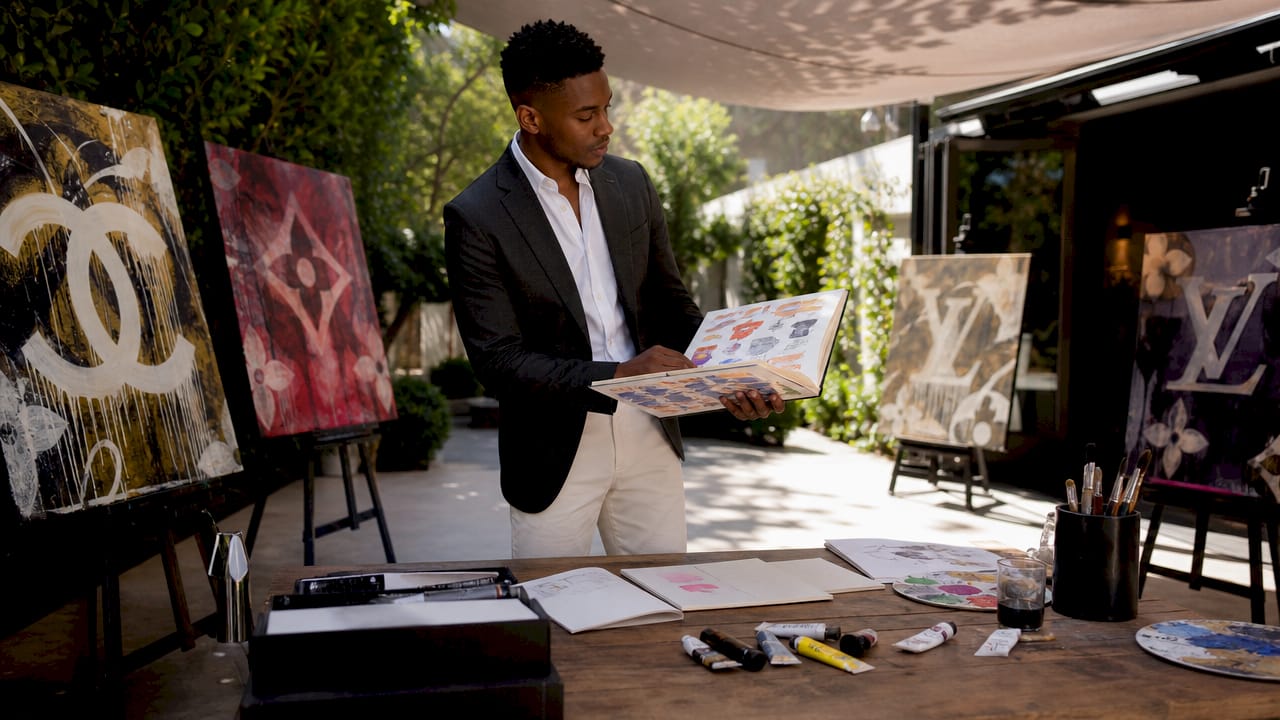
Pop art collages layer brand imagery with bold color fields, halftone dots, and graphic repetition in the tradition of Andy Warhol. Oversized artwork and limited edition collaborations are dominant trends shaping luxury interiors right now. Pop art collages fit that trend perfectly. They bring energy to neutral rooms and pair well with mid-century modern or industrial interiors. Luxuryartcanvas carries a strong range of pop art wall decor that captures this aesthetic.
3. Graffiti and street art interpretations
Graffiti art reframes luxury brand symbols through the visual language of street culture. Think spray-painted Chanel logos on distressed backgrounds or Louis Vuitton monograms rendered in dripping paint. This category creates productive tension in a room. It works especially well in loft apartments, creative offices, and any space that wants to feel current rather than conservative. Luxuryartcanvas’s graffiti canvas collection is one of its strongest offerings for this style.
Pro Tip: Pair a graffiti-style brand canvas with raw concrete walls or exposed brick for maximum visual contrast. The friction between refined subject matter and rough surfaces is exactly what makes the piece memorable.
4. Limited edition artist collaborations
Artist-brand collaborations produce some of the most collectible pieces in this category. These works carry dual provenance: the brand’s cultural weight and the artist’s individual voice. Luxury brand art differentiates interiors from high-end but generic spaces by injecting a strong maker’s voice and story. That is precisely what collaboration pieces deliver. They are ideal for collectors who want art that holds both aesthetic and narrative value.
5. Abstracted brand symbols in fine art format
This category takes recognizable brand elements and deconstructs them into shape, line, and color. The source brand is implied rather than stated. The effect is sophisticated and works in spaces where you want cultural reference without overt branding. Minimalist apartments and executive offices respond well to this approach. The art rewards viewers who recognize the reference and stands alone for those who do not.
6. Textile and mixed media brand art
Mixed media works incorporate fabric, texture, and layered materials alongside printed or painted brand imagery. The tactile quality adds depth that flat prints cannot replicate. These pieces perform well in bedrooms and sitting rooms where warmth and sensory richness matter. They also photograph exceptionally well, which matters for anyone curating a space for social media or client presentations.
7. Minimalist monochrome brand prints
Monochrome prints strip brand iconography down to its essential form, rendering it in black, white, or a single neutral tone. The restraint is the point. These pieces integrate into almost any color palette and scale from small accent pieces to large statement canvases. They are the most versatile category in this list and the safest starting point for anyone new to high-end art for interiors.
8. Large-scale canvas artworks
Scale changes everything in a room. A canvas that runs floor to ceiling or spans a full wall stops being decoration and becomes architecture. Contemporary fine art is increasingly used as a planning tool influencing lighting, layout, and emotional mood. Large-scale brand art earns that role. It anchors sightlines, defines zones in open-plan spaces, and creates the kind of focal point that furniture alone cannot. For guidance on sizing, Luxuryartcanvas’s oversized prints guide covers scale decisions in detail.
9. Digital and multimedia luxury brand art installations
Digital art installations display brand-inspired imagery through screens, projection, or LED panels that can cycle through multiple works. This category suits commercial spaces, hospitality environments, and tech-forward residential interiors. The ability to update the display without changing the physical installation is a genuine practical advantage. It also positions the space as current in a way that static pieces cannot.
How to display luxury brand art effectively
Art placement is a planning decision, not a finishing touch. Art shapes narratives and mood from the start, functioning as the silent lead actor in a room’s design. That means you choose the art before you finalize the furniture layout, not after.
Room placement by type: Living rooms support large-scale statement pieces above sofas or on feature walls. Offices respond better to abstracted or monochrome works that hold attention without distraction. Transitional spaces like hallways and entryways suit series of smaller works that create a visual sequence as you move through the space.
Scale and focal points: The most common mistake is hanging art too small. A piece should occupy 60–75% of the wall width above a sofa or console. Anything smaller reads as an afterthought. When in doubt, go larger.
Lighting: Layered lighting is crucial to highlight textures and complexity in luxury brand art. Adjustable picture lights mounted directly to the frame give you control over angle and intensity. Avoid fixed overhead lighting that creates glare on canvas surfaces.
Pro Tip: Before hanging anything, create a “curatorial brief” for the room: write down the emotional tone you want, the dominant colors, and the scale of the largest piece. This single step prevents the most expensive decorating mistakes.
Impactful luxury interiors feature art that introduces tension and individuality rather than art chosen to match the sofa. That distinction separates a room with character from a room that looks like a hotel lobby.
Choosing the right category for your style and budget
Different categories of brand-inspired fine art suit different spaces, styles, and price points. The table below maps the main categories against key decision factors.
| Category | Style compatibility | Best placement | Investment level |
|---|---|---|---|
| Iconic logo-based art | Contemporary, maximalist | Entryways, living rooms | Mid to high |
| Pop art collages | Mid-century, eclectic | Living rooms, creative offices | Mid |
| Graffiti and street art | Industrial, loft, urban | Studios, offices, lofts | Entry to mid |
| Abstracted brand symbols | Minimalist, Scandinavian | Executive offices, bedrooms | Mid to high |
| Large-scale canvas | Any | Feature walls, open-plan spaces | Mid to high |
| Functional art pieces | Contemporary, collector | Shelves, desks, display surfaces | High |
| Minimalist monochrome | Universal | Any room | Entry to mid |
Budget-conscious buyers get the most value from graffiti, pop art, and monochrome prints. These categories offer genuine visual impact without the premium attached to limited editions or functional art. Commercial spaces benefit most from large-scale canvases and digital installations, which hold attention across a wider viewing distance. For office-specific guidance, Luxuryartcanvas’s office art guide covers placement and category selection in a professional context.
Emerging trends in luxury brand art for 2026 and beyond
The category is moving fast. Several directions are worth watching:
- Sustainability and craft: Buyers increasingly favor art produced with traceable materials and artisan processes. Provenance matters as much as aesthetics.
- Street art and luxury convergence: Collaborations between luxury houses and contemporary street artists are accelerating. Expect more works that sit at the intersection of graffiti culture and high fashion.
- Digital and rotating displays: Residential buyers are adopting commercial-grade display technology to rotate collections without changing walls.
- Narrative-driven curation: Designers are building collections around a single emotional or cultural theme rather than mixing unrelated pieces.
Key takeaways
The most effective approach to luxury brand art for modern spaces is to treat art as a planning tool, not a finishing touch, selecting pieces that introduce tension, scale, and personal narrative from the start.
| Point | Details |
|---|---|
| Art is a planning tool | Choose your art before finalizing furniture layout and lighting. |
| Scale drives impact | Pieces should span 60–75% of the wall width above furniture to read as intentional. |
| Category matches style | Graffiti and pop art suit urban and eclectic spaces; abstracted works suit minimalist rooms. |
| Lighting is non-negotiable | Adjustable picture lights prevent glare and bring out texture in canvas art. |
| Avoid decorator art | Choose pieces for tension and individuality, not because they match the color palette. |
Why I think most people get luxury brand art completely wrong
The standard advice is to find art that “complements” your space. That advice produces forgettable rooms. The most memorable interiors I have encountered treat art as the starting point, not the conclusion. The furniture, the lighting, the layout all respond to the art. Not the other way around.
The second mistake I see constantly is scale. People buy pieces that are technically correct but visually timid. A canvas that should be 60 inches wide gets replaced by something 30 inches wide because it felt “safer” in the store. The result is a room that looks unfinished. Go larger than feels comfortable. You will not regret it.
The third issue is what designers call “decorator art.” This is art chosen because it matches the sofa or picks up the wall color. It is inoffensive and completely without character. Luxury brand art, done well, should create a small amount of productive friction. The Chanel logo rendered in graffiti style on a raw canvas should feel slightly unexpected in a polished living room. That tension is the point. It signals that the person who lives there has a genuine point of view.
My honest recommendation: write down the emotional tone you want the room to hold before you buy anything. Then find art that serves that tone, even if it does not match the palette. That single shift in thinking produces better rooms than any style guide.
— James
Luxuryartcanvas: original brand-inspired art for modern interiors
Luxuryartcanvas carries over 1,000 designs that span the full range covered in this article, from bold graffiti canvas art to pop art canvases built around iconic brand imagery. Every piece is crafted in the USA with materials selected for durability and visual impact. The collection includes large-format options for feature walls and smaller works for layered displays.
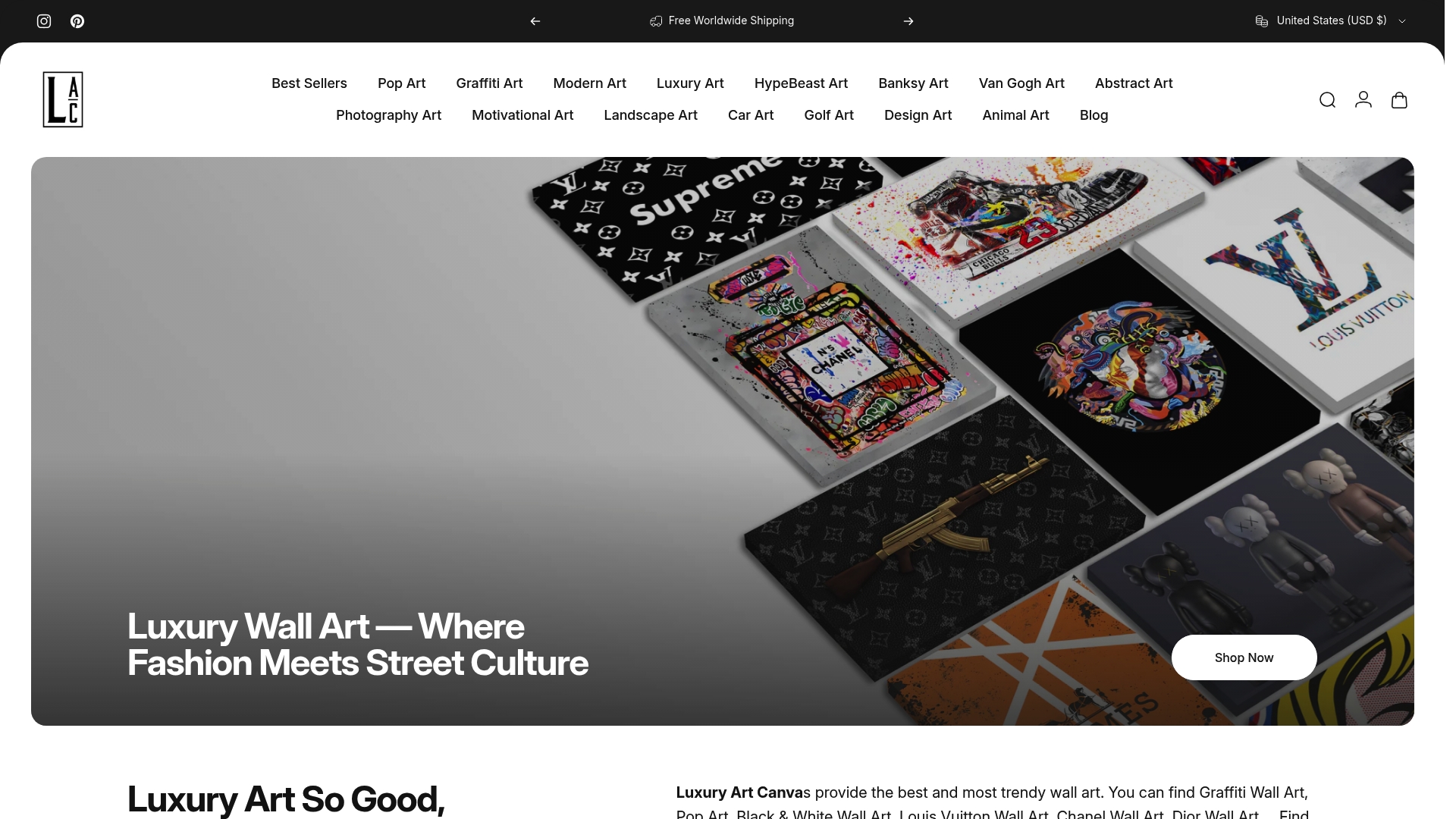
More than 10,000 satisfied customers have used Luxuryartcanvas to move their spaces from generic to genuinely personal. Whether you are furnishing a home, a loft, or a commercial environment, the catalog covers every category and budget tier discussed here. Browse the full collection at Luxuryartcanvas and find the piece that makes your room say something.
FAQ
What is luxury brand art?
Luxury brand art is canvas or print-based artwork that incorporates the visual identity of high-fashion brands like Chanel and Louis Vuitton, rendered through styles such as pop art, graffiti, or abstraction. It merges fashion culture with fine art to create statement pieces for modern interiors.
How do I choose the right size for luxury wall art?
A piece should span 60–75% of the wall width above a sofa or console. For feature walls, larger is almost always better. Scale is the single factor most buyers underestimate.
Where should I hang luxury brand art at home?
Living rooms and entryways suit bold, large-scale pieces. Bedrooms respond better to mixed media or monochrome works. Offices benefit from abstracted or minimalist brand art that holds attention without distraction.
Is graffiti-style brand art appropriate for professional spaces?
Graffiti-style brand art works well in creative offices, studios, and co-working environments where an urban, forward-looking aesthetic is part of the brand identity. For more traditional offices, abstracted or monochrome brand art is the stronger choice.
What makes luxury brand art a good investment?
Limited edition collaborations and large-format canvases from recognized artists hold value because they carry dual provenance: the brand’s cultural weight and the artist’s individual voice. Pieces that introduce genuine tension and individuality appreciate more reliably than generic decorator art.
The Role of Canvas Art Above Sofa Placement
Why Canvas Quality Matters in Fine Art: A Collector's Guide