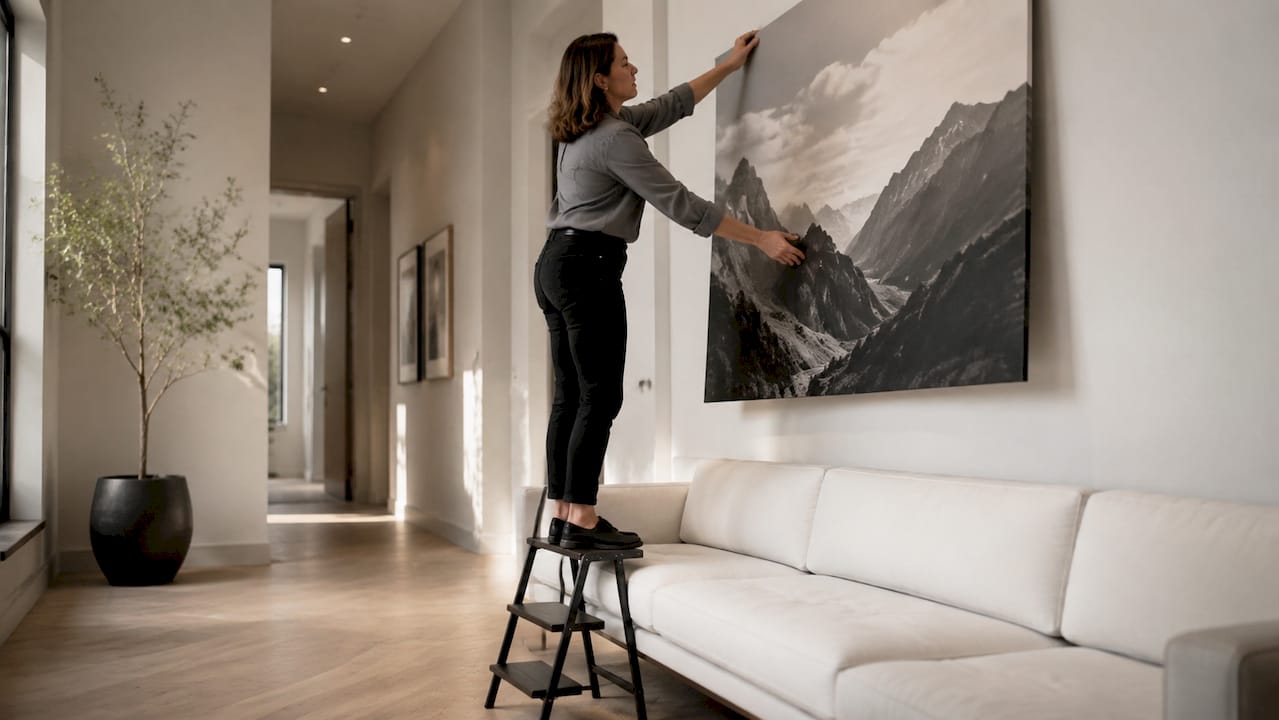
Oversized prints are defined as large-format artworks that function as architectural elements, not just decoration. The role of oversized prints in modern decor is to create commanding focal points that unify furnishings, balance scale, and give rooms a sense of intentionality. In 2026, designers from Bella Vie Interiors to Grayson Luxury treat large-scale art as a deliberate focal strategy that generates drama, depth, and clear visual hierarchy. A single well-chosen oversized print does what wallpaper, gallery walls, and accent furniture often fail to do: it anchors the entire room in one move.
How do oversized prints function as visual anchors in modern interiors?
Oversized prints create what designers call “visual mass,” a concentrated weight that stops the eye and organizes the space around it. Without that mass, large walls read as unfinished, and furniture floats without context. Oversized art acts as an anchor that replaces wallpaper-like coverage in neutral rooms, giving the eye a clear destination.
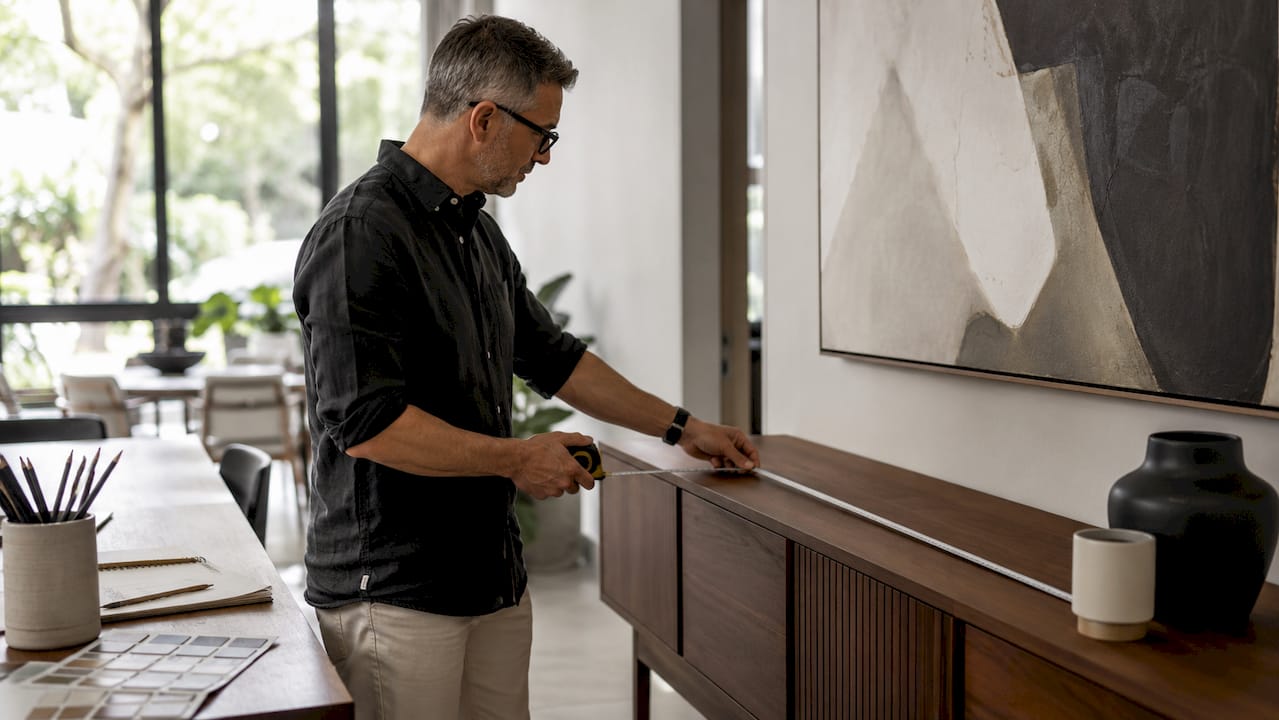
The standard sizing principle is straightforward. A print should cover 60–75% of the width of the furniture it sits above. An 84-inch sofa, for example, pairs well with artwork that runs 56–63 inches wide. That ratio creates proportion without overwhelming the room or leaving awkward empty space on either side.
Oversized prints also replace the need for multiple smaller pieces. A gallery wall of six frames creates visual noise. One large-format canvas creates visual authority. The difference is the same as the difference between a chorus and a soloist.
Key functions oversized prints serve in modern interiors:
- Focal point creation: They give the eye a single, clear destination in any room.
- Scale correction: They fill large walls that furniture alone cannot address.
- Style unification: They tie together color palettes, textures, and furniture styles.
- Spatial definition: They signal where a seating area, dining zone, or bedroom begins.
Pro Tip: If your room feels unfinished despite good furniture, the wall above your sofa or bed is almost certainly undersized. Go larger than your instinct tells you.
What are effective placement and sizing strategies for oversized prints?
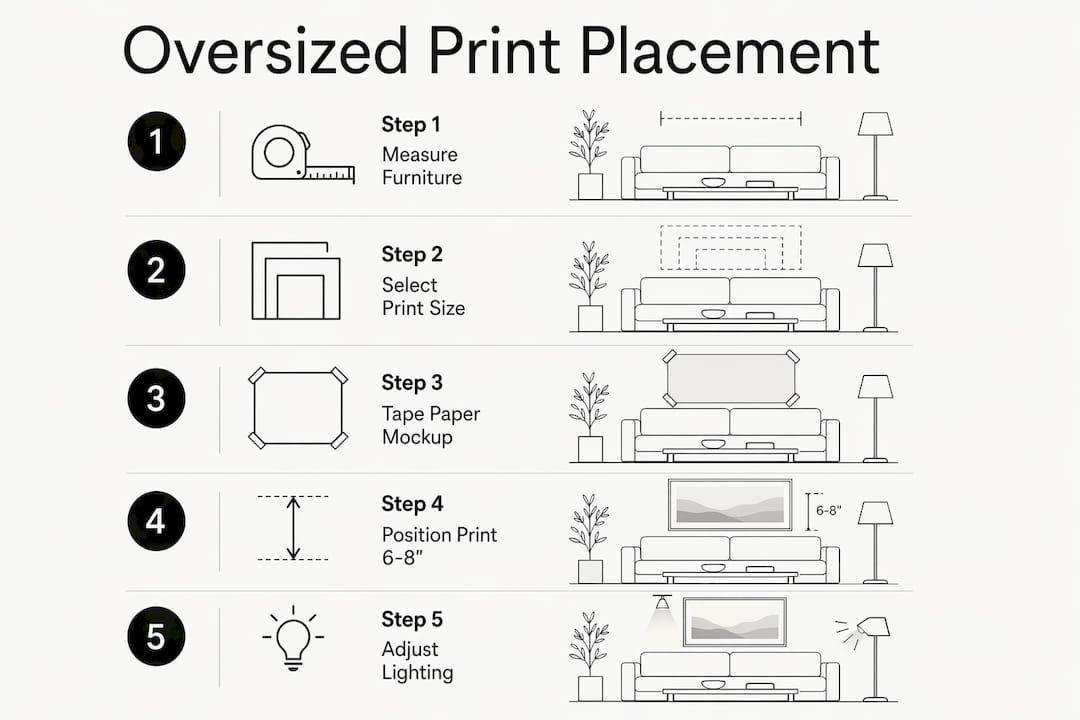
Placement determines whether an oversized print reads as intentional or accidental. The most common mistake is hanging art too high. Spacing artwork 6–8 inches above the top of furniture creates visual cohesion and prevents the piece from looking detached when you are seated. The traditional center-at-eye-level rule works for standalone walls but fails above sofas, beds, and consoles.
Room-by-room placement works differently for each space. Use this framework:
- Living room: Center the print above the sofa, 6–8 inches from the top cushion. Width should hit the 60–75% furniture rule. A bold pop art canvas or abstract print works well here because the room tolerates strong color and contrast.
- Bedroom: Position above the headboard, centered on the bed width rather than the full wall. Calmer tonal compositions or oversized photography work better than high-contrast pieces in sleep spaces.
- Hallway: Use a vertically oriented oversized print to draw the eye forward and make the corridor feel longer. Avoid horizontal formats in narrow hallways.
- Home office: A single large print behind the desk creates a strong visual backdrop for video calls and anchors the workspace without adding clutter.
For small rooms, go against instinct. Artwork larger than your first impulse creates balance and harmony rather than crowding. One large piece reads as intentional. Three small pieces read as indecision.
Pro Tip: Before you hang anything, tape paper to the wall in the exact dimensions of the print. Live with it for 24 hours. You will almost always decide to go bigger.
For a detailed room-by-room breakdown, the scaling wall art guide from Luxuryartcanvas covers proportions across every major space type.
How does lighting impact the display of oversized prints?
Lighting is the most overlooked variable in displaying large-format art. Glare is one of the fastest ways to ruin the viewing experience of large artwork. A single wide-beam fixture aimed directly at a canvas creates hot spots, washes out color, and flattens texture across the entire surface.
Museum and gallery professionals use the 30-degree rule for accent lights to minimize glare and reflections. Aim your fixture 30 degrees from vertical, not straight at the surface. That angle redirects reflected light away from the viewer’s eye line.
“Treat oversized print selection and lighting as one system. Adjustable beams and multi-fixture layouts prevent flattening and glare.” — Bano Lighting
Practical lighting rules for large prints at home:
- Use multiple fixtures. One light source creates uneven coverage. Two or three adjustable spotlights distribute illumination across the full surface.
- Choose adjustable beam angles. Fixed-angle recessed cans cannot adapt to different print sizes or positions. Adjustable track lighting gives you control.
- Avoid direct overhead placement. A fixture directly above a canvas throws harsh shadows at the bottom edge and overexposes the top.
- Consider color temperature. Warm white (2700–3000K) flatters most art. Cool white (4000K+) creates a clinical look that works in offices but not living spaces.
Large prints require lighting approaches distinct from smaller works. The investment in proper fixtures pays off every time you walk into the room.
How can oversized prints enhance emotional resonance and modern aesthetic themes?
Oversized prints do more than fill space. Bold large-scale paintings set the tone, unify style, and invite longer viewer engagement. A room with a commanding abstract print feels different from the same room with bare walls, even when every other element stays identical. That difference is emotional, not just visual.
The style of the print determines the emotional register of the room. Textured abstracts and tonal neutrals contribute to mood and narrative, creating sophistication and calm. High-contrast graffiti or pop art prints create energy and personality. The choice is not about what looks good in isolation. It is about what the room needs to feel complete.
Oversized prints work across both minimalist and maximalist design schemes, but the approach differs.
| Design Style | Print Type | Effect |
|---|---|---|
| Minimalism | Tonal abstract, oversized photography | Adds depth without visual noise |
| Maximalism | Bold color, graphic pop art | Provides coherence among competing elements |
| Industrial | Urban graffiti, street photography | Reinforces raw material palette |
| Transitional | Geometric or soft abstract | Bridges traditional and contemporary elements |
| Scandinavian | Muted landscape, line art | Maintains calm while adding warmth |
Oversized art introduces emotional resonance through compositions that convey sophistication and serenity, or provide coherence in maximalist schemes. The print is not a finishing touch. It is a design decision that shapes how every other element in the room is perceived.
Do oversized prints work in small spaces?
The counterintuitive answer is yes, and often better than small prints do. A commanding single focal piece prevents clutter and organizes the surrounding space in studios and compact apartments. Multiple small prints in a tight room create fragmented visual cues that make the space feel busier and smaller.
The psychological effect is real. One large print gives the eye a place to rest. It signals that the space is curated, not crowded. That perception of intentionality makes a small room feel larger than its square footage suggests.
Practical rules for oversized prints in small spaces:
- Choose compositions with open space. A print with a lot of negative space or a single subject on a light background reads as expansive, not heavy.
- Avoid busy, all-over patterns. Dense pattern repeats amplify the sense of enclosure in small rooms.
- Limit the wall to one large piece. Adding secondary art around an oversized print in a small space cancels out the focal effect.
- Use vertical formats in low-ceiling rooms. A tall, narrow print draws the eye upward and makes ceilings feel higher.
The placement guide from Luxuryartcanvas on oversized art placement best practices covers small-space strategies in detail, including which compositions to avoid.
Key takeaways
Oversized prints function as architectural design elements that anchor rooms, define zones, and shape emotional tone more effectively than any other single decor decision.
| Point | Details |
|---|---|
| Sizing follows furniture width | A print should cover 60–75% of the furniture width below it for proper proportion. |
| Hang closer to furniture, not higher | Position art 6–8 inches above furniture tops, not at generic eye level. |
| Lighting requires multiple fixtures | Use adjustable multi-fixture setups at 30 degrees from vertical to eliminate glare. |
| Small spaces benefit from large prints | One oversized piece prevents clutter and creates intentional focus in compact rooms. |
| Style match drives emotional impact | Match print style to room mood: tonal abstracts for calm, bold graphics for energy. |
Why i think most people are still playing it too safe with scale
I have spent years watching people undersize their art and then wonder why their rooms feel unfinished. The instinct to go small is understandable. A large print feels like a commitment. But that commitment is exactly the point.
The rooms that stop people in their tracks share one quality: they made a decision. A single oversized graffiti canvas or a large-format abstract did not just fill a wall. It told you what the room was about. That clarity is what most interiors are missing, not more furniture or better accessories.
The lighting piece is where I see the most avoidable mistakes. People spend real money on a beautiful large canvas and then light it with a single recessed can directly overhead. The result is a washed-out, flat version of what the piece could be. Two adjustable track lights at the right angle change everything.
My honest advice: go bigger than you think you should, hang it lower than feels natural, and light it with at least two adjustable fixtures. Those three moves will do more for a room than any other single change. The trend toward oversized art in 2026 is not a trend. It is a correction toward what good design has always known.
— James
Find your statement piece at Luxuryartcanvas
Luxuryartcanvas carries over 1,000 large-format canvas designs crafted in the USA, built specifically for the kind of bold, intentional display this article describes. Whether you are drawn to the raw energy of graffiti wall art or the graphic punch of pop art canvases, every piece is designed to function as a true statement anchor in modern interiors.

The catalog spans graffiti, street art, luxury brand-inspired designs, and minimalist formats, giving you the range to match any room’s aesthetic direction. With 10,000+ satisfied customers and fast domestic shipping, Luxuryartcanvas makes it straightforward to move from inspiration to installation. Browse the full collection at Luxuryartcanvas and find the piece your walls have been waiting for.
FAQ
What size print qualifies as “oversized” in interior design?
Oversized prints are generally defined as artwork exceeding 24 by 36 inches, though the functional definition depends on proportion. A print covering 60–75% of the furniture width below it is considered correctly scaled for an oversized effect.
How high should you hang an oversized print above a sofa?
Position the bottom edge of the print 6–8 inches above the top of the sofa back. This spacing creates visual cohesion and prevents the artwork from looking detached when viewed from a seated position.
Can one large print really make a small room feel bigger?
Yes. A single commanding oversized print with open composition prevents visual clutter and creates a focal point that makes small spaces feel intentional and more spacious than multiple smaller pieces would.
What lighting setup works best for large-format canvas prints?
Use two or more adjustable spotlights aimed at 30 degrees from vertical to minimize glare and distribute light evenly. A single overhead fixture creates hot spots and flattens the texture of large canvases.
Do oversized prints work in both minimalist and maximalist interiors?
Yes, but the print style must match the room’s design direction. Tonal abstracts and oversized photography suit minimalist spaces, while bold pop art and graphic graffiti prints provide coherence in maximalist schemes.
Collecting Graffiti-Inspired Canvas Art: A Collector's Guide
Why Wall Art Changes Room Atmosphere: A Full Guide