
Canvas quality is the single most important material decision in fine art. It determines how paint adheres, how colors read from across a room, and whether a piece survives decades or deteriorates within years. Archival-grade canvas with proper pigment inks and UV coatings lasts 70–100 years indoors. Budget materials degrade in as little as 5–10 years. For collectors and art enthusiasts who invest in pieces they love, understanding why canvas quality matters in fine art is not optional. It is the foundation of every smart acquisition.
Why canvas quality matters in fine art: the core criteria
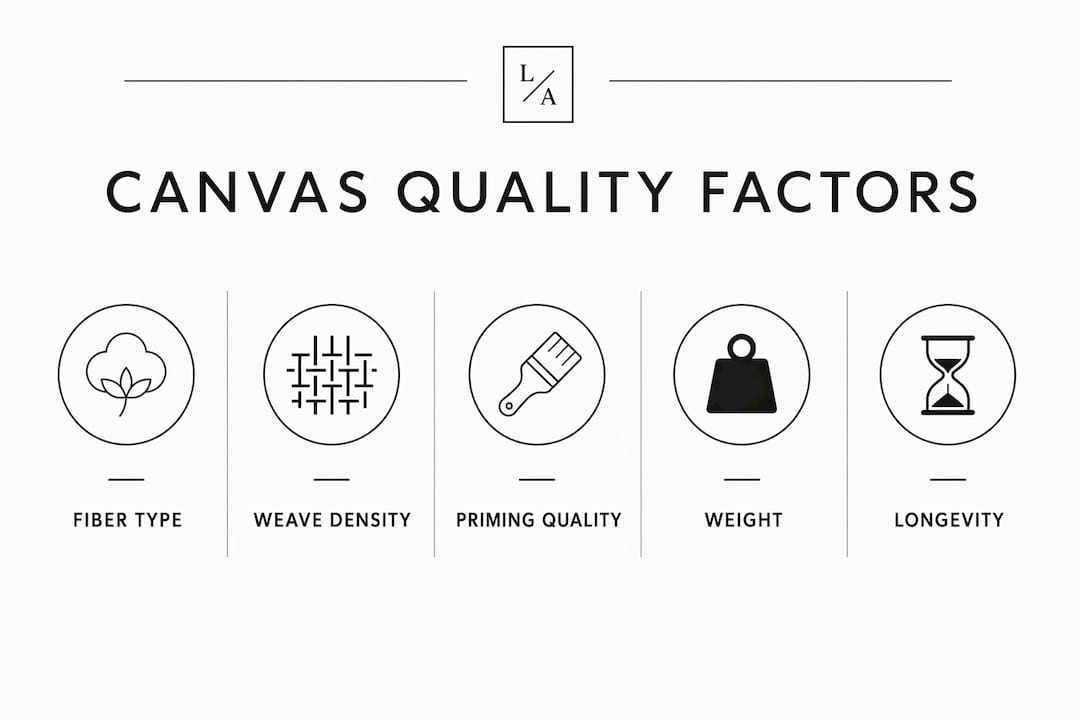
Good canvas is defined by four measurable properties: fiber type, weave density, priming quality, and weight. Each one shapes how the finished artwork looks and how long it holds up.
Fiber type is the starting point. Cotton and linen are the two primary fibers used in fine art canvas. Cotton duck is affordable, widely available, and works well for acrylic and mixed media. Linen is the archival standard. Linen fibers are longer and stronger, retaining natural oils that preserve flexibility and resist brittleness over decades. Museums and serious collectors favor linen for oil paintings precisely because it does not become fragile with age.
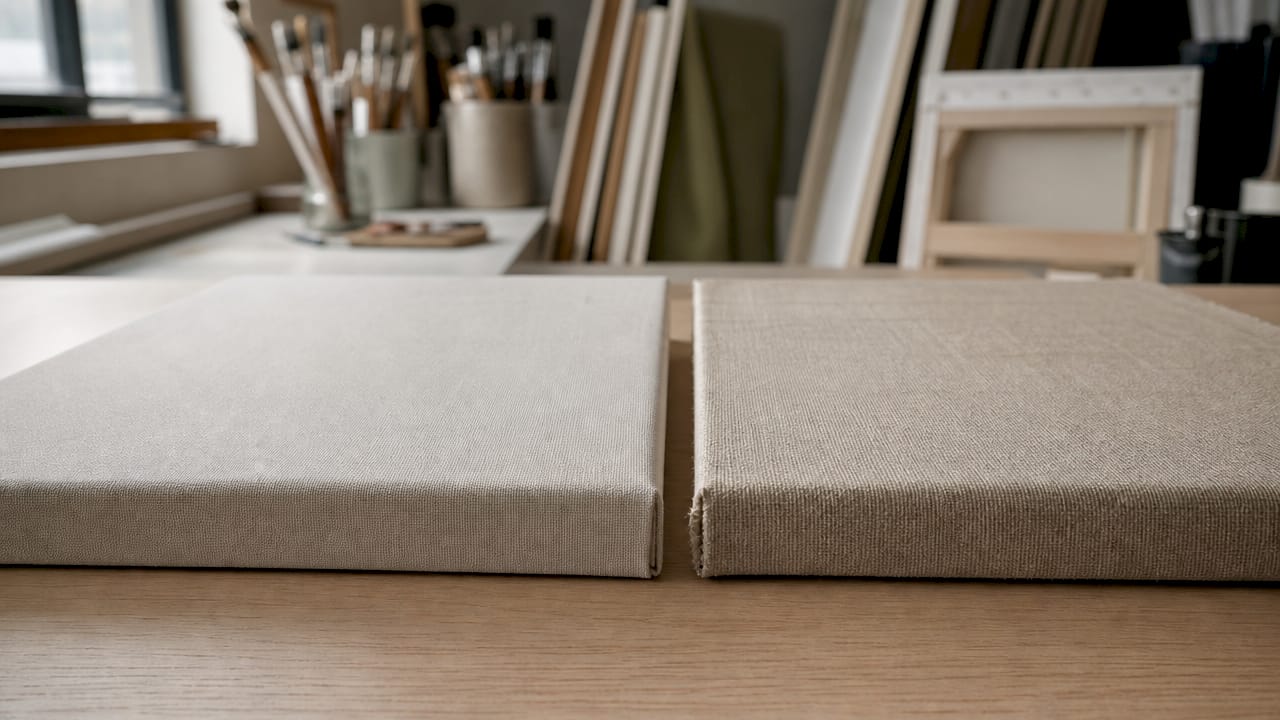
Weave density controls the surface texture. A tight, consistent weave creates a smooth ground for detailed work. A loose or uneven weave produces a coarser surface that interrupts fine brushwork and causes uneven paint absorption. You can feel the difference by running a finger across the surface before a canvas is primed.
Priming is where many budget canvases cut corners. Proper priming involves sizing the fabric first, then applying gesso. Sizing seals the fibers and prevents fabric rot from acidic oil binders. A minimum dry film thickness of 150–200 microns is the recommended standard. Without it, oil binders penetrate the fibers directly and cause the canvas to rot from within over time.
Weight, measured in ounces per square yard, correlates directly with durability. Heavier canvas resists sagging on large frames and supports thicker paint applications without distortion.
- Cotton duck: 7–10 oz, good for acrylics and student-grade work
- Medium-weight linen: 10–12 oz, suited for detailed oil painting
- Heavyweight canvas: 12–15+ oz, built for impasto and large-format pieces
- Double-primed canvas: factory-applied gesso on both sides for maximum stability
Pro Tip: Run your fingernail lightly across an unprimed canvas edge. If the weave shifts or separates easily, the thread count is too low for serious work.
How does canvas quality affect paint behavior and color?
The surface a painter works on controls everything about how paint moves, sits, and reads. High-quality canvas with consistent micro-texture improves light scattering and depth, allowing paint to glide smoothly across the surface. Material scientist Amy Odell Smith describes canvas texture as the “soul” of the support, critical for both aesthetic and functional paint handling. That is not poetic language. It is a technical reality.
Low-quality canvas causes uneven absorption. Paint sinks into loose fibers at different rates, dulling colors and creating patchy gloss levels across the surface. A collector viewing the finished piece sees muddy tones where the artist intended saturation.
The effect varies by medium:
- Oil paint requires a non-absorbent ground. Properly sized and primed linen holds oil paint at the surface, preserving color depth and allowing glazing techniques to build luminosity layer by layer.
- Acrylic paint is more forgiving but still benefits from a consistent surface. On low-quality canvas, fast-drying acrylics can crack along uneven weave ridges as the paint film contracts.
- Mixed media demands the most from a canvas. Collage elements, heavy gels, and ink washes all respond differently to surface porosity. A tight, well-primed canvas handles all of them without buckling or delaminating.
The canvas finish also shapes how light interacts with the artwork on your wall. A matte finish absorbs light and creates a soft, gallery-like appearance. A gloss or satin finish reflects light and intensifies color saturation. Neither is superior in isolation. The right choice depends on the piece and the room it lives in.
Non-archival dye-based inks fade noticeably within 6–12 months in high sunlight. That timeline should alarm any collector who has placed a canvas print near a south-facing window.
Do stretcher bars really affect canvas longevity?
The stretcher bar is the skeleton of a canvas. A great fabric on a poor frame will sag, ripple, and warp within a few years. The frame is not a secondary concern. It is half the equation.
Kiln-dried pine or poplar stretcher bars with tensioning keys resist warping and maintain canvas tightness over time. Unsealed softwood absorbs moisture from the air and warps, pulling the canvas unevenly and creating visible distortion across the painted surface. This happens regardless of how good the canvas fabric is.
Tensioning keys, also called expansion wedges, sit in the inner corners of the stretcher frame. Tapping them gently with a mallet increases the frame’s dimensions by a few millimeters, restoring tautness to a canvas that has relaxed over time. Stretcher bar frames with tensioning wedges are critical for maintaining canvas tautness even in ideal canvas fabrics. Without them, there is no way to correct sag without removing the canvas entirely and re-stretching it.
Collectors inspecting a canvas purchase should check for the following:
- Corner joints that are flush and square, with no visible gaps
- Crossbars on larger frames (anything over 24 inches) to prevent bowing
- Tensioning keys present in all four corners
- Wood that feels dry and solid, not soft or slightly damp
Pro Tip: Press lightly on the center of a stretched canvas. It should feel taut like a drum. Any give or ripple indicates either a frame problem or a canvas that has been improperly tensioned.
A practical guide on how to stretch canvas correctly shows that even a high-quality fabric loses its structural integrity when the stretching process is careless. The tension must be even across all four sides.
Canvas types and weights: which is right for your collection?
Choosing the right canvas type depends on the painting technique, the medium, and how long you expect the piece to last. The table below compares the most common options across the criteria that matter most to collectors.
| Fabric type | Weight range | Surface texture | Durability | Best use |
|---|---|---|---|---|
| Cotton duck | 7–10 oz | Medium to coarse | Moderate | Acrylics, student work, prints |
| Medium linen | 10–12 oz | Fine to medium | High | Detailed oil painting, portraiture |
| Belgian linen | 12–15 oz | Fine and consistent | Archival | Museum-quality oils, long-term collection |
| Heavyweight cotton | 12–15+ oz | Medium | High | Impasto, large-format, mixed media |
| Linen-cotton blend | 9–12 oz | Medium | Moderate to high | Versatile studio use, acrylics and oils |
Belgian linen is the gold standard for archival oil painting. Its fibers are denser and more uniform than standard linen, producing a surface that holds paint with exceptional consistency. Heavyweight canvas at 12–15+ oz can support thick paint layers up to 3.5 pounds per square foot before sagging. That load capacity matters for impasto work, where paint is applied in thick ridges that add significant weight to the surface.
Cotton duck remains the practical choice for most printed canvas art and acrylic-based work. It is lighter, more affordable, and widely available in consistent quality. For collectors focused on canvas prints that outlast other wall art formats, a heavyweight cotton with archival priming and UV-resistant inks delivers strong long-term value without the cost of linen.
High-resolution art reproduction sometimes favors archival paper over canvas because canvas weave can affect sharpness and color accuracy at very fine detail levels. For bold, graphic work like graffiti art and pop art, canvas texture actually enhances visual presence rather than detracting from it.
Key Takeaways
Canvas quality determines artwork longevity, color vibrancy, and structural integrity, making material selection the most consequential decision for any serious collector.
| Point | Details |
|---|---|
| Fiber type sets the archival standard | Linen outlasts cotton for oil paintings, retaining flexibility and resisting brittleness over decades. |
| Priming protects from the inside out | Proper sizing and gesso prevent fiber rot and ensure stable paint adhesion for the life of the piece. |
| Weight determines load capacity | Heavyweight canvas at 12–15+ oz supports thick media and large formats without sagging. |
| Stretcher bars are half the equation | Kiln-dried wood with tensioning keys maintains tautness and prevents warping over time. |
| Archival materials extend lifespan dramatically | Quality canvas with proper coatings lasts 70–100 years indoors versus 5–10 years for budget alternatives. |
What I’ve learned from years of watching collectors get this wrong
Most collectors focus on the image. That is understandable. The image is what you see. But the canvas is what you keep.
The most common mistake I see is treating canvas as a commodity. Collectors will spend serious money on a piece and then hang it in a room with no thought given to whether the stretcher bars are kiln-dried, whether the priming is archival, or whether the fabric weight is appropriate for the size of the frame. Five years later, they notice sagging, color shift, or surface cracking and assume the artist is to blame.
The second mistake is confusing visual quality with material quality. A canvas can look sharp and vibrant at purchase and still be built on materials that will degrade within a decade. Dye-based inks, unsealed softwood frames, and thin cotton with minimal priming all look fine on day one. The difference shows up at year three, year five, year ten.
My honest recommendation for collectors: ask about materials before you buy. A reputable source will tell you the fiber type, the primer specification, and the frame construction without hesitation. If the answer is vague, that is your answer.
For choosing canvas art for high-end rooms, the material specification is as important as the design. A piece that holds its color and structure for decades is worth far more than one that looks identical at purchase but fades within a few years.
— James
Premium canvas art built to last, from Luxuryartcanvas
Luxuryartcanvas crafts every piece in the USA using archival-grade materials, kiln-dried stretcher bars, and UV-resistant coatings built for long-term display. The collection spans bold graffiti art, pop art, and iconic fashion-inspired designs from Chanel and Louis Vuitton, with over 1,000 distinct designs backed by more than 10,000 satisfied collectors.
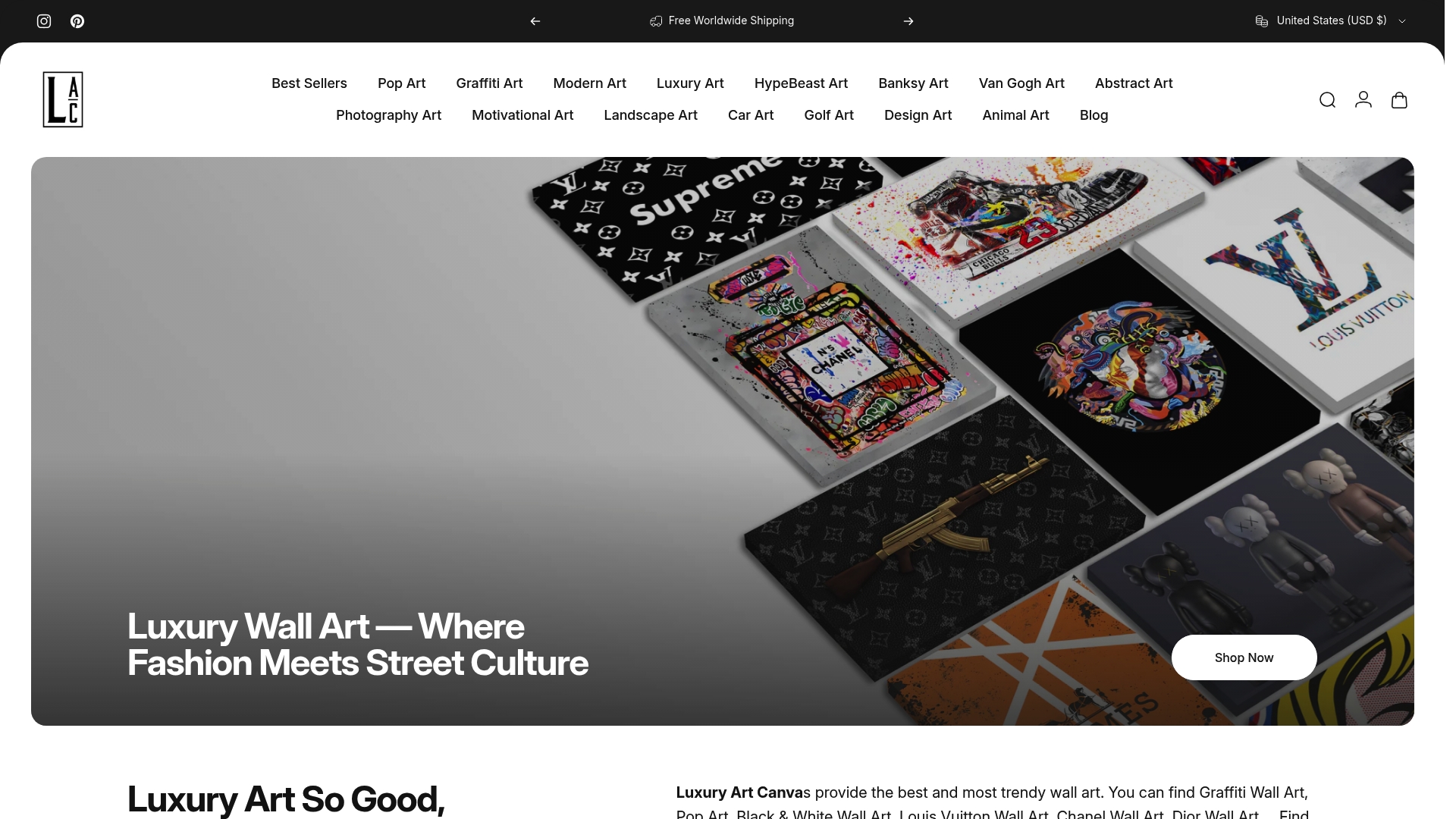
For collectors who want art that holds its visual impact for decades, the premium graffiti canvas collection at Luxuryartcanvas delivers both the aesthetic statement and the material integrity that serious walls demand. Browse the full range of pop art canvas options and graffiti wall art to find pieces built to the archival standard your space deserves.
FAQ
What makes a canvas archival quality?
Archival canvas uses acid-free materials, proper sizing, and UV-resistant coatings that extend the lifespan of a piece to 70–100 years indoors. The fiber type, primer thickness, and ink or paint formulation all contribute to archival classification.
Is linen always better than cotton for fine art?
Linen is the superior choice for oil painting and long-term preservation because its longer fibers retain natural oils and resist brittleness. Cotton duck performs well for acrylics and printed canvas art, especially when heavyweight and properly primed.
How do I know if a stretched canvas has good frame quality?
Check for kiln-dried wood, flush corner joints, crossbars on frames over 24 inches, and tensioning keys in all four corners. A properly tensioned canvas feels taut when pressed lightly at the center.
Does canvas texture affect how colors look?
Yes. Consistent micro-texture improves light scattering and enhances visual depth, making colors appear richer and more dimensional. Uneven or coarse weave causes patchy absorption that dulls color saturation across the surface.
How long do canvas prints last compared to posters?
Archival canvas prints with pigment inks and UV coatings last 70–100 years indoors. Standard posters and non-archival prints typically degrade within 5–10 years, with dye-based inks fading noticeably within 6–12 months in direct sunlight.
Luxury Brand Art for Modern Spaces: 2026 Guide
Gallery Wall Ideas for Luxury Homes: 2026 Guide