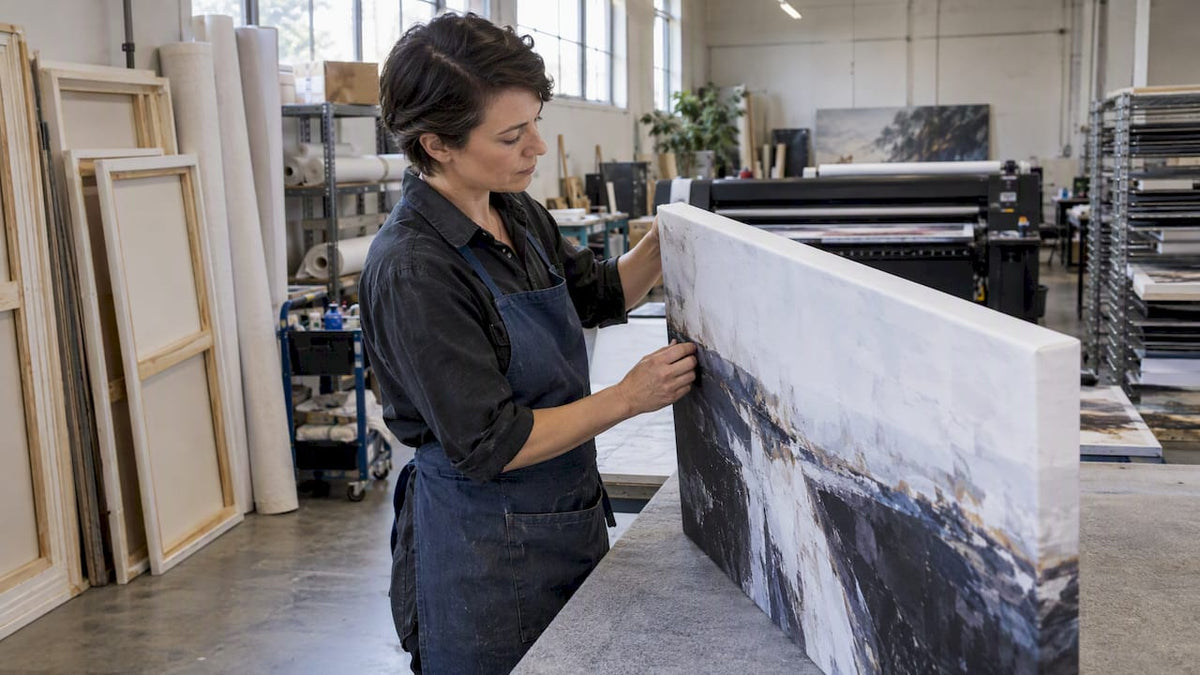
Ready-to-hang, museum-quality canvases made in the USA give buyers clearer provenance, tighter production quality control, and easier access to archival materials and after-sale service. This guide covers the materials that earn a “museum-quality” label, how to care for your canvas, how to verify an origin claim, and where a domestic-made piece pays off.
Table of Contents
- Practical buyer benefits beyond the marketing label
- What materials and workmanship earn the museum-quality label
- How to display and care for your canvas so it lasts
- How to verify a seller’s Made in USA claim
- Weighing the price premium against long-term value
- How Luxury Art Canvas fits this buyer need
- A straight answer on what to prioritize
- Browse US-crafted, ready-to-hang canvas art
- FAQ
- Sources
Practical buyer benefits beyond the marketing label
A “Made in USA” sticker means little on its own. What matters is what domestic production actually changes for the buyer, and the differences show up in a few specific places.
- Quality control: domestic print shops can monitor color accuracy and stretch tension during production instead of relying on a distant third party.
- Archival materials: U.S. makers have easier access to pigment inks, acid-free canvas, and UV coatings that reduce unpredictable fading.
- Customization and lead time: custom sizes, framing options, and rush orders move faster when the workshop is a phone call away.
- Service and repairs: returns, replacements, and color-matching issues get resolved faster when the maker is domestic.
- Provenance and value: a verifiable origin can matter for insurance documentation and resale, particularly for collectors and commercial buyers outfitting offices.
Canvas also simply holds up better than cheaper print formats over time, a point worth considering regardless of origin, as detailed in why canvas prints outlast wall posters.
Pro Tip: Ask any seller for a sample swatch or close-up photo of the canvas weave and ink finish before buying a large statement piece.

What materials and workmanship earn the museum-quality label
“Museum-quality” is a production standard, not a marketing word, and a few technical choices separate it from a standard print.
Pigment-based inks resist fading far better than dye-based inks because the pigment particles sit on the surface rather than soaking into fibers that break down with light exposure. Canvas substrate matters too: acid-free cotton canvas with a tight, even weave holds detail and color better than cheap polyester blends, and heavier weights (measured in GSM) resist sagging over time. Stretcher bar quality, hand stretching versus machine stretching, and clean edge finishing all affect how the piece looks once it is on the wall.
- Pigment inks for color permanence versus dye-based alternatives that fade faster.
- Acid-free cotton canvas with a tight weave for texture and longevity.
- Solid stretcher bars and careful hand stretching to prevent sagging or warping.
- UV-resistant coatings applied after printing to shield against light damage.
- Consistent color profiling and test proofing so the final print matches the proof.
One widely referenced museum print program prints on heavy, acid-free cotton canvas with pigment inks and adds a semi-matte UV coating after printing. Luxury Art Canvas covers the same UV coating topic in more depth in its UV-resistant canvas guide, including the glare-versus-protection tradeoff buyers should weigh before choosing a finish.
How to display and care for your canvas so it lasts
Conservation guidance built for paintings and photographs applies just as well to a premium canvas print hanging in a living room or office.
- Keep canvases out of direct sunlight. The Smithsonian’s Museum Conservation Institute notes that UV light is a primary cause of pigment fading, and visible changes can appear within 2 to 5 years without protection.
- Maintain stable humidity. Avoid hanging canvases over fireplaces, radiators, or in bathrooms where humidity swings are common; Luxury Art Canvas recommends a 40 to 55% relative humidity range for most homes.
- Consider acrylic glazing for valuable pieces. The Library of Congress notes acrylic filters UV light and is lighter and safer than glass, though it scratches more easily and can bow in larger sizes.
- Mount securely on wall anchors rated for the canvas weight to prevent warping from uneven stress.
- Dust gently with a soft, dry cloth and avoid solvents or household cleaners entirely.
Lighting choices around the piece matter too; see this art lighting guide for gallery results at home for placement ideas that protect color while still showing the piece well.
Pro Tip: If a canvas is a significant investment or a one-of-a-kind commission, have a conservator inspect it every few years rather than relying on guesswork.
How to verify a seller’s Made in USA claim
The Federal Trade Commission requires that an unqualified “Made in USA” claim mean final assembly and all significant processing happen domestically, with all or virtually all components sourced in the United States. That is a high bar, and plenty of sellers blur it.
- Ask where final assembly and finishing actually take place, not just where the order is processed.
- Request a materials origin statement covering canvas, ink, and stretcher bars.
- Ask for sample photos of the workshop, batch labels, or production floor.
- Learn the difference between an unqualified claim and a qualified one like “assembled in USA from imported parts,” which the FTC treats differently.
- Treat vague origin wording, inconsistent product pages, or no warranty information as red flags.
The FTC strengthened its enforcement with a rule allowing civil penalties for deceptive origin claims, which raises the cost of lying about where a product was made.
Weighing the price premium against long-term value
Domestic production usually costs more, and that premium traces back to a few specific line items: local labor, domestic materials sourcing, and the stricter quality checks that catch problems before shipping rather than after a return.
- The premium often pays off for statement pieces, commissioned sizes, or anything going into a commercial space where a damaged or faded piece is expensive to replace.
- Material longevity, easier repair access, and lower return risk all factor into lifecycle value, not just the sticker price.
- Custom sizing and rush orders carry their own cost versus time tradeoff worth asking about upfront.
- Always ask about warranty terms, repair or replacement options, the return policy, and whether shipping is insured.
How Luxury Art Canvas fits this buyer need
We specialize in bold, contemporary wall art that blends high fashion and street culture, offering a large selection of distinct designs and serving many satisfied customers. Our canvases are crafted in the USA, aligning with the quality control and service advantages covered above.
Readers who want the technical detail behind the UV coatings and care steps mentioned here can read the UV-resistant canvas guide for a fuller breakdown. If provenance documentation matters for insurance or resale purposes, it is reasonable to ask any seller, including this one, for production details or photos before buying a significant piece.

A straight answer on what to prioritize
If you are buying a canvas meant to last on your wall for a decade or more, prioritize archival materials and verifiable origin over the lowest price you can find. The fading and warping problems buyers complain about almost always trace back to cheap ink, thin canvas, or no UV protection, not bad luck.
Check the verification checklist above before you buy, and do not hesitate to ask a seller directly about production location and materials if provenance matters to your purchase.
— James
Browse US-crafted, ready-to-hang canvas art
We craft every canvas in the USA using archival materials and ready-to-hang construction, so a piece arrives ready to mount without separate framing costs or wait times for stretcher assembly.
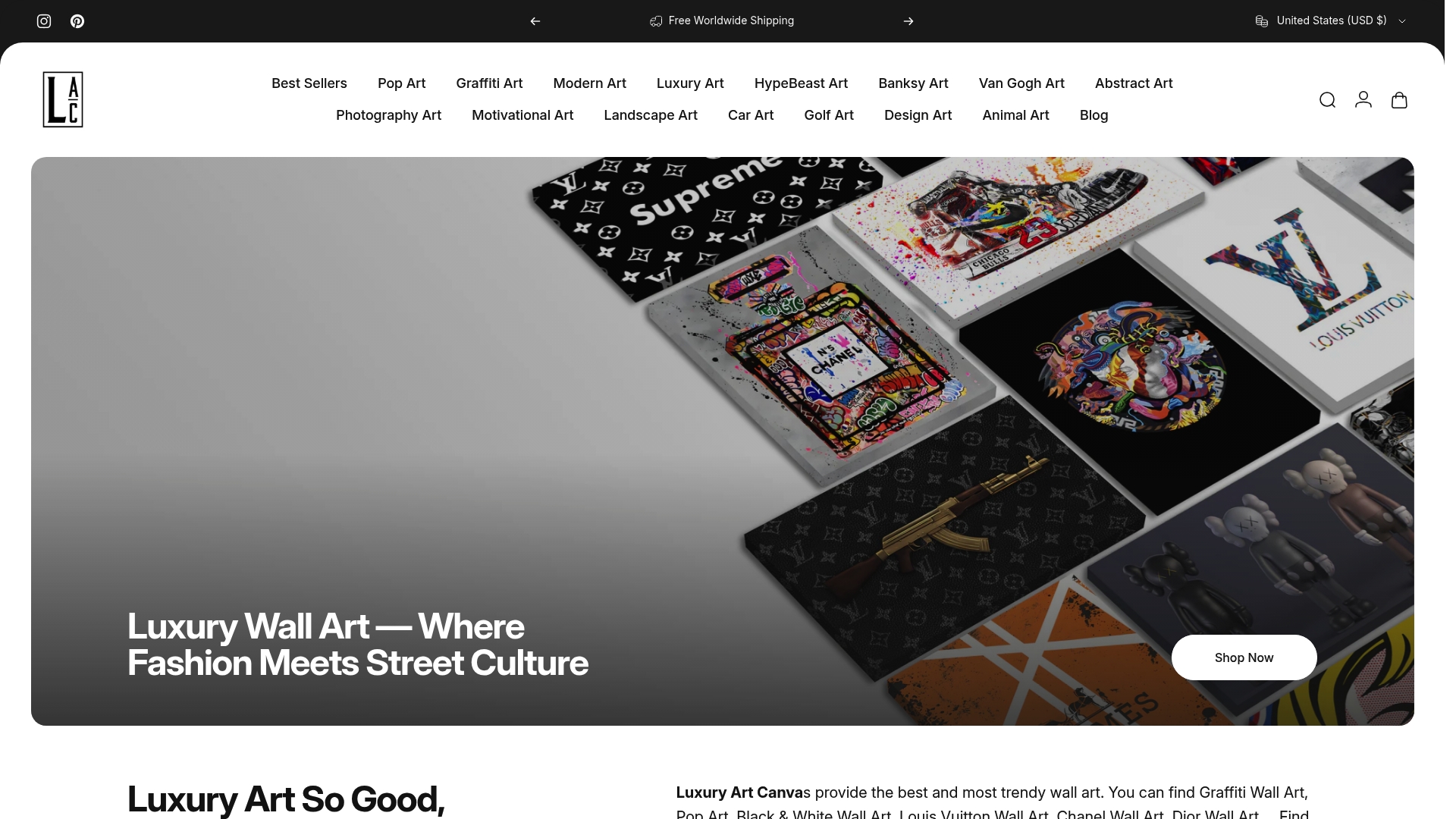
Browse the Pop Art Canvas Prints collection or the Graffiti Wall Art & Street Art Canvas line to see current designs, and reach out if you want production details or provenance documentation before you order.
FAQ
What does “Made in USA” legally mean for wall art?
An unqualified “Made in USA” claim means final assembly and all significant processing happen in the United States, with all or virtually all components domestically sourced, according to the FTC’s standard. A qualified claim like “assembled in USA from imported parts” is different and should be labeled as such.
How long before a canvas fades without UV protection?
Visible fading can start within 2 to 5 years without UV protection, based on Smithsonian Museum Conservation Institute guidance on how UV exposure affects pigments over time. Archival inks and UV coatings slow this significantly but do not make any print permanently lightfast.
Should I use glass or acrylic to protect a canvas print?
Acrylic glazing filters ultraviolet light and is lighter and safer to handle than glass, though it scratches more easily and can bow in larger sizes, per Library of Congress preservation guidance. Most ready-to-hang canvases skip glazing entirely in favor of a UV-resistant surface coating.
What ideal humidity range protects canvas art at home?
A relative humidity range of roughly 40 to 55% is a safe target for most canvas art, as outlined in Luxury Art Canvas’s humidity guidance. Avoid hanging canvases near fireplaces, radiators, or bathrooms where humidity swings often.
Does buying US-made canvas art support local jobs?
Yes, domestic production relies on US-based labor and materials sourcing rather than overseas manufacturing, which keeps more of the purchase within the local economy. It also tends to shorten the distance between a buyer’s service request and the people who can actually fix it.
Buy Modern Glam Wall Art Right: 4 Decisions for U.S. Buyers
57 Inch Baseline for Staircase Wall Art: Measurement First Method