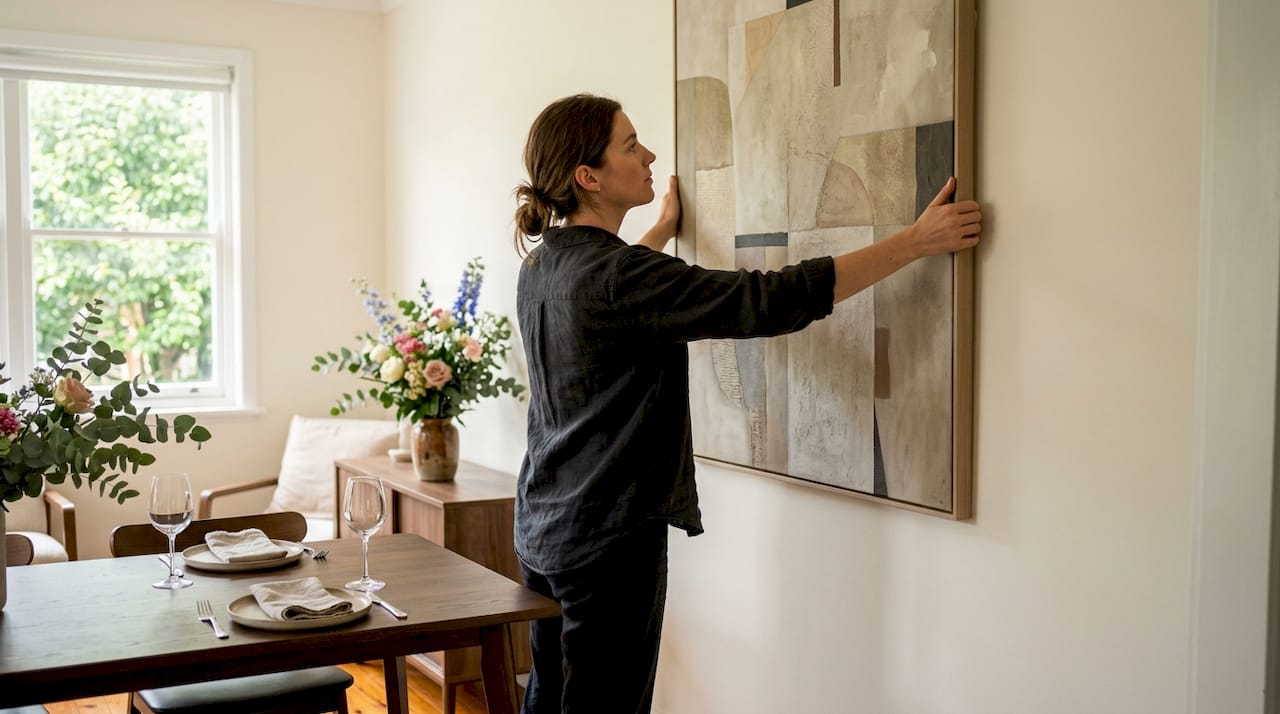
Large format art is the single most effective tool for anchoring a room because it creates a defined visual focal point that organizes every other element around it. Interior designers call this effect “visual containment,” and it works by giving your eyes a clear place to land, which signals to your nervous system that the space is settled and complete. Without it, a room feels unfinished regardless of how carefully you’ve chosen furniture or lighting. Designers have built entire methodologies around this principle, and the research backing it up has grown considerably in recent years. Understanding why large format art anchors a room gives you a practical advantage when decorating any space.
Why large format art anchors a room through proportional scale
Scale is the mechanism behind the anchoring effect, and getting it wrong is the most common mistake homeowners make. The two-thirds rule recommends that artwork width should equal roughly 60 to 75% of the furniture width it accompanies. For a standard sofa, that translates to statement pieces typically ranging from 40x60 to 60x90 inches. A piece that falls short of this range reads as uncertain and visually disconnected from the furniture below it.
Proper scale does more than satisfy a design formula. Proportionally sized art reduces visual noise and fragmentation compared to multiple small pieces, creating a calmer emotional atmosphere throughout the room. Your brain stops scanning for the next thing to process and settles on a single, confident statement. That shift from scanning to settling is the anchoring effect in action.
Rooms with high ceilings and strong sightlines present a specific challenge. In those spaces, scale must increase proportionally to the architectural volume for the art to visually connect and prevent it from looking lost on the wall. A 24x36 inch canvas that looks bold in a compact bedroom will disappear entirely in a double-height living room.
Key sizing benchmarks by room context:
- Living room above sofa: 40x60 to 60x90 inches, centered with 6 to 8 inches of clearance above the sofa back
- Bedroom above headboard: Width should match or slightly exceed the headboard width
- Dining room: Art should span roughly two-thirds of the table length when hung on an adjacent wall
- Open floor plan: Scale up aggressively. A piece that feels oversized in isolation will read correctly once furniture is in place
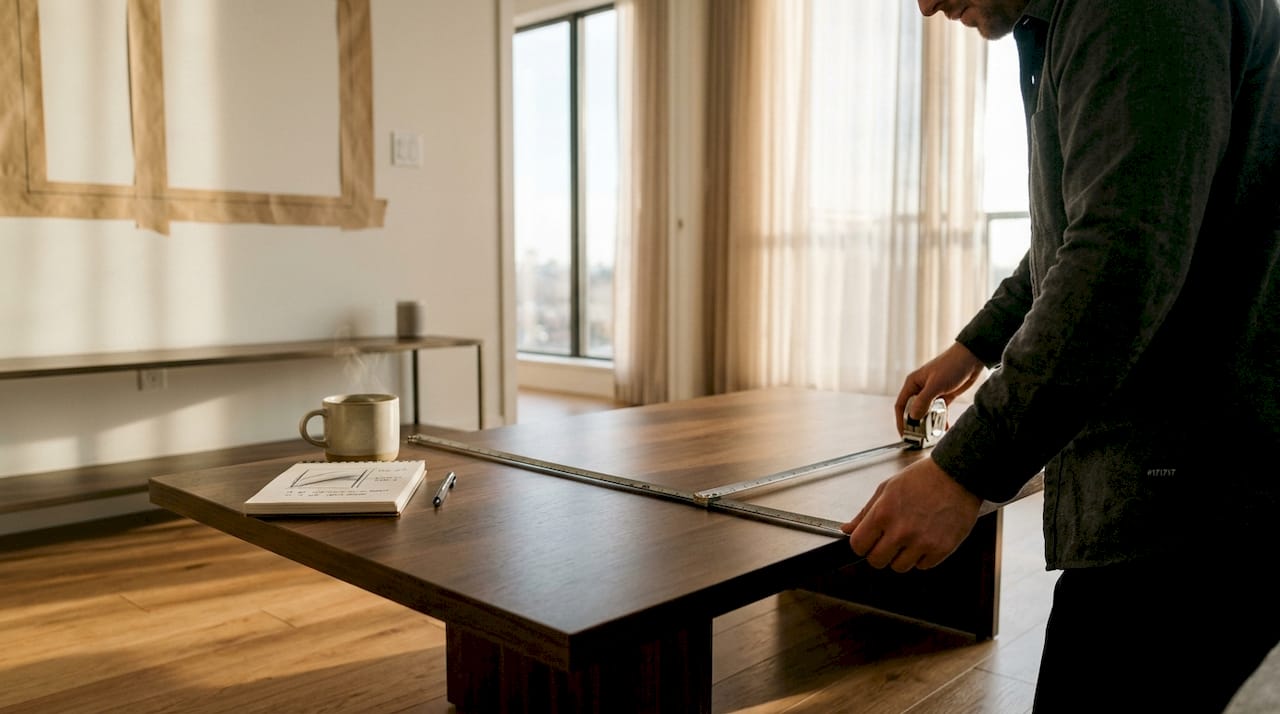
Pro Tip: Before buying, cut kraft paper to your target dimensions and tape it to the wall. Live with it for 24 hours. Most people discover they need to go larger than their first instinct.
Many people underestimate the visual mass required for effective anchoring. Measuring both furniture width and available wall space before selecting art is the single step that separates a confident room from an awkward one.
What psychological benefits does large format art provide?
The emotional case for large format art is now supported by measurable data, not just design intuition. Exposure to biophilic art environments featuring large artworks shows reductions in depression and anxiety in 78% and 74% of participants respectively over 12 months. That is a significant finding. It means the art on your walls is not decorative in a superficial sense. It is actively participating in how you feel inside your home.
The mechanism is visual containment. Too-small artwork behaves like visual noise, triggering low-level unsettledness because your nervous system keeps scanning for spatial cues that never arrive. A properly scaled large piece provides those cues immediately, allowing the body to relax. Think of it as the visual equivalent of a well-defined room within a room.
“Large artwork supports emotional safety by reducing visual effort and providing a calming spatial center rather than demanding attention.” — Viktoria Thorbjorn
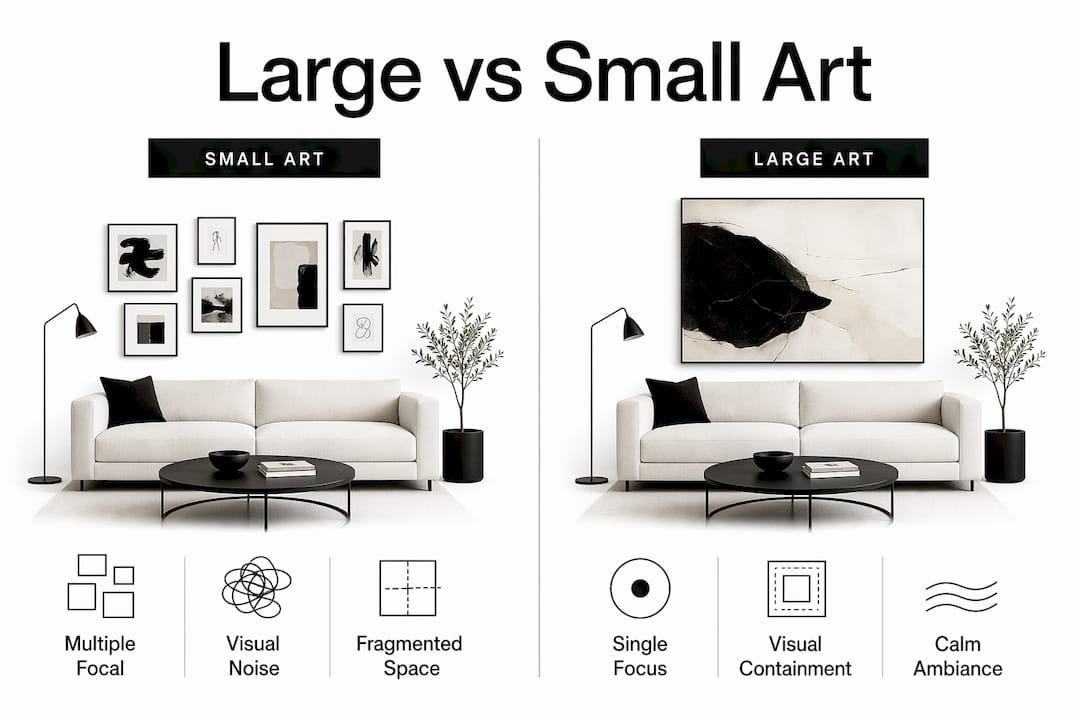
The contrast between large format art and a gallery of small pieces is instructive. A cluster of five small frames creates five competing focal points, which multiplies the scanning effort your brain performs. One large canvas resolves that competition entirely. This is why interior designers consistently recommend a single oversized piece over a collection of smaller works when the goal is calm and coherence.
| Effect | Small art (multiple pieces) | Large format art (single piece) |
|---|---|---|
| Visual focal points | Multiple, competing | One, defined |
| Nervous system response | Continued scanning | Settled, contained |
| Emotional atmosphere | Fragmented, busy | Calm, grounded |
| Room coherence | Dependent on arrangement | Immediate |
The anchoring function of large art is grounding rather than attention-seeking. The goal is not to shout. It is to give the room a center of gravity that everything else orbits naturally.
How to select and position large format art for maximum impact
Placement strategy determines whether large art fulfills its anchoring potential or simply occupies wall space. The most reliable starting position is centered above the primary seating area, with the midpoint of the artwork at eye level, roughly 57 to 60 inches from the floor. This is the standard used by most galleries and museums, and it works equally well in residential spaces.
Artwork lighting is the factor most homeowners overlook. Track lighting or wall washers directed at the canvas reveal texture and color depth that ambient room lighting simply cannot achieve. A piece that looks flat under overhead lighting can transform entirely under a dedicated picture light. Lighting is what makes large art truly seen rather than merely present.
Negative space around the artwork is equally important. Overcrowding a focal piece with adjacent shelving, mirrors, or smaller frames dilutes its anchoring power. The wall around large art should breathe. A general rule: leave at least 10 to 12 inches of clear wall on each side of the canvas.
Pro Tip: Match one dominant color from the artwork to a secondary element in the room, such as a throw pillow or rug accent. This creates visual continuity without forcing a matchy-matchy look.
Orientation choice also shapes the anchoring effect. For guidance on portrait versus landscape formats, consider the wall’s proportions first. Landscape orientation suits wide, low walls and horizontal furniture arrangements. Portrait orientation draws the eye upward and works well in rooms with high ceilings or narrow wall sections.
| Room type | Recommended placement | Orientation | Minimum size |
|---|---|---|---|
| Living room | Centered above sofa | Landscape | 40x60 inches |
| Bedroom | Above headboard, centered | Landscape or square | Matches headboard width |
| Dining room | Adjacent wall, centered | Portrait or landscape | Two-thirds of table length |
| Entryway | Eye-level on primary wall | Portrait | 24x36 inches minimum |
| Open plan | Zone-defining focal wall | Landscape | 48x72 inches or larger |
The strongest focal points are created intentionally, not discovered accidentally. Choosing your art placement before arranging furniture gives you far more control over the room’s visual hierarchy.
How does large format art change the feel and size of a room?
Large artwork changes spatial perception in ways that furniture and paint cannot replicate. Larger artwork gives the eyes somewhere to rest, creating a grounded and open feeling that makes rooms feel simultaneously bigger and calmer. This is not a subjective impression. It is a predictable result of reducing competing visual elements and establishing a clear spatial hierarchy.
In open floor plans, large art serves as a zoning tool. A single oversized canvas on the wall behind a sofa defines the living area without physical barriers. The art creates a visual boundary that tells the brain “this zone has a purpose,” which is the same psychological function that walls perform in closed-plan homes.
Color and style choices within the artwork amplify this effect. Cool-toned abstracts in blues and greens expand perceived space and lower the emotional temperature of a room. Warm-toned pieces in ochres and terracottas pull walls inward and create intimacy. Bold graphic works, including pop art and graffiti-style canvases, inject energy and define a room’s personality with a single decision.
Large art also functions as a surrogate window in rooms with limited natural light or no exterior views. A landscape canvas or an expansive abstract with depth and movement gives the eye a sense of distance, which relieves the compressed feeling of small or windowless rooms. This is one of the most underused benefits of large scale art decor in urban apartments and basement living spaces.
Rooms with high ceilings gain a specific benefit. Art scaled to the architectural volume connects the upper and lower halves of the room visually, preventing the hollow, unfinished feeling that tall walls create when left bare or decorated with undersized pieces.
Key takeaways
Large format art anchors a room by providing visual containment, reducing nervous system scanning, and creating a single focal point that organizes every other design element around it.
| Point | Details |
|---|---|
| Scale drives the anchoring effect | Art width should equal 60 to 75% of accompanying furniture width for visual balance. |
| Visual containment calms the nervous system | Large art stops the brain from scanning, producing a measurably settled emotional atmosphere. |
| Placement and lighting are non-negotiable | Center art at 57 to 60 inches from the floor and use directed lighting to reveal full depth. |
| Negative space amplifies impact | Leave 10 to 12 inches of clear wall around large art to preserve its focal power. |
| Large art changes perceived room size | A properly scaled piece makes rooms feel bigger, calmer, and more spatially coherent. |
What I’ve learned from watching people get this wrong
I’ve spent years watching homeowners make the same mistake: they buy art they love in a size that feels “safe,” hang it on the wall, and then wonder why the room still feels unfinished. The art is good. The size is the problem. A 20x24 inch canvas above a seven-foot sofa is not a focal point. It is a postage stamp on a billboard.
The second mistake is waiting until the room is fully furnished before thinking about art. Art should inform furniture placement, not the other way around. When you start with the artwork, you build the room around a clear visual anchor. When you add art last, you are trying to solve a problem that was baked in from the beginning.
What I find most interesting is how emotional the sizing decision becomes. People consistently resist going as large as the math suggests. There is a fear of commitment, of getting it wrong, of the piece being “too much.” But the research work on emotional safety in space confirms what experienced designers already know: the piece that feels slightly too bold in the store is almost always exactly right on the wall.
Bold scale is not about ego. It is about giving your room the visual structure it needs to feel like a place rather than a collection of objects. For anyone exploring wall art options for living rooms, I’d encourage starting with size as the first filter, not the last.
— James
Find your anchor piece at Luxuryartcanvas

Luxuryartcanvas carries over 1,000 large format designs built specifically for the anchoring effect described in this article. The collection spans bold large graffiti wall art and high-impact pop art canvases sized for statement installations in living rooms, bedrooms, and open-plan spaces. Every canvas is crafted in the USA with materials chosen for color depth and long-term durability. Designs draw from iconic fashion references including Chanel and Louis Vuitton, making each piece a conversation starter as much as a focal point. If you know your wall dimensions and want a piece that genuinely anchors the room, Luxuryartcanvas is the place to start.
FAQ
Why does large format art make a room feel more complete?
Large format art provides visual containment, giving the eyes a clear focal point that signals the space is organized and settled. Without it, the brain continues scanning for spatial cues, which creates a low-level sense of incompleteness.
What size counts as large format art for a living room?
For most living rooms, large format art starts at 40x60 inches. The two-thirds rule recommends the artwork width equal 60 to 75% of the sofa or primary furniture width it accompanies.
Can large art make a small room feel bigger?
Yes. Large artwork reduces competing visual elements and gives the eyes a resting point, which creates a grounded and open feeling even in compact spaces. Cool-toned pieces amplify this effect further.
Where should large format art be hung in a living room?
Center the artwork above the primary seating area with the midpoint at 57 to 60 inches from the floor. Allow at least 6 to 8 inches of clearance above the sofa back and 10 to 12 inches of negative space on each side.
Does one large piece work better than a gallery wall?
For anchoring a room, a single large piece outperforms a gallery wall because it creates one defined focal point rather than multiple competing ones. Gallery walls can work when arranged as a single visual unit with consistent spacing and proportional guidelines applied to the overall arrangement.
Scaling Wall Art for Large Spaces: A Room-by-Room Guide
Bold Wall Art Statement Piece Examples for Any Room