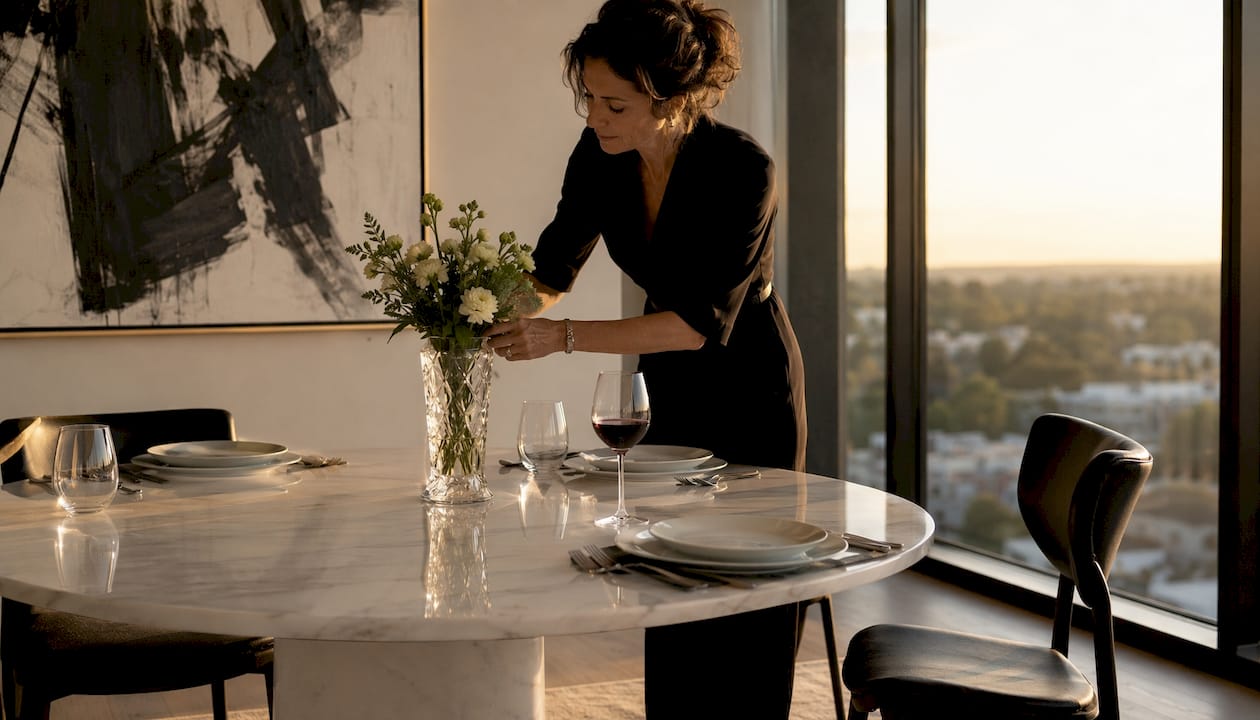
One gallery-wrapped statement canvas, sized to span approximately two-thirds to three-quarters of your dining table’s width, is the fastest way to anchor a luxury dining room and give it a genuine focal point. Southern Living puts a single large piece above the table at the top of its dining-room art recommendations, and Luxuryartcanvas has seen the same principle validated across 10,000+ satisfied customers.
Before you read further, use this as your quick reference:
- Scale: canvas width = 60–75% of the dining table width
- Hanging height: center of canvas at 57–60 inches from the floor (lower if a pendant drops into that zone)
- Lighting: warm-white picture light or adjustable track head aimed at the canvas
- Material: gallery-wrapped canvas with archival inks or original oil/acrylic with UV-protective varnish
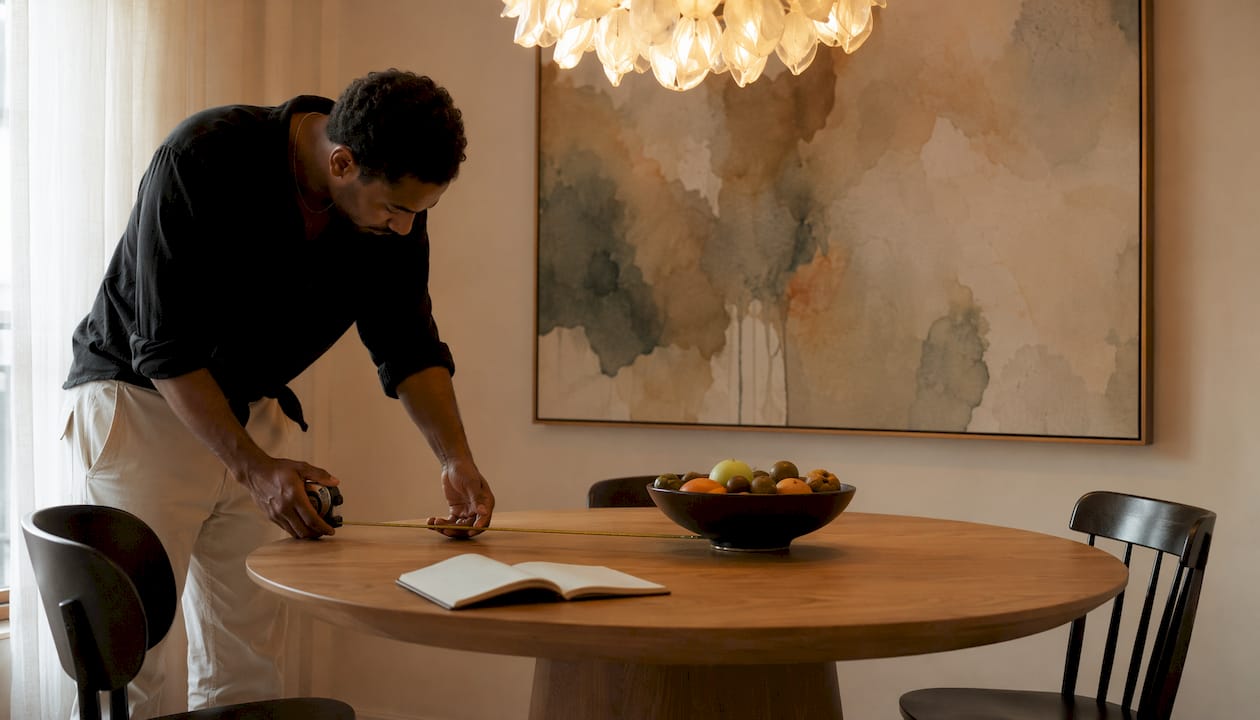
Pro Tip: Measure your table width first, then multiply by a little over half for your canvas target width. That single number eliminates most sizing mistakes before you ever open a browser.
Table of Contents
- How do you choose the right statement canvas for a dining room?
- Where exactly should you hang a statement canvas in a dining room?
- How do you style a statement canvas with furniture, lighting, and table settings?
- Can you DIY a luxury-looking statement canvas?
- What do you need to know about lighting, installation, and maintenance?
- Where should you buy or commission a statement canvas in the U.S.?
- Key Takeaways
- Why bold canvases belong in the dining room
- Bold, made-in-USA canvases for your dining room
- Useful sources and further reading
How do you choose the right statement canvas for a dining room?
Size is where most people go wrong. A canvas that looks bold in a product photo can disappear on a 12-foot dining-room wall. For a small dining room with a modestly sized table, a canvas scaled proportionally reads confidently. Medium-sized rooms call for moderately larger canvases. Large, formal dining rooms can carry noticeably wider canvases without feeling crowded.
Subject matter shapes the entire mood of the meal. Abstract color-field pieces, modern fashion portraits, and graphic pop-art compositions all work beautifully because they create atmosphere without competing with the food or conversation. Literal food imagery — a painted charcuterie board, a still life of fruit — tends to read as decorative rather than luxurious, and it dates quickly. Southern Living recommends letting the art communicate the room’s formality level: a restrained palette and strong scale for formal rooms, livelier color and subject matter for casual ones.
Color strategy matters more than most buyers expect. The most cohesive approach is to pull one dominant color from your upholstery or drapery and find it as an accent in the canvas, not the other way around. A deliberately contrasting canvas, say a cobalt blue piece in a room of warm neutrals, creates fashion-forward drama when the contrast is intentional and the scale is large enough to hold it.
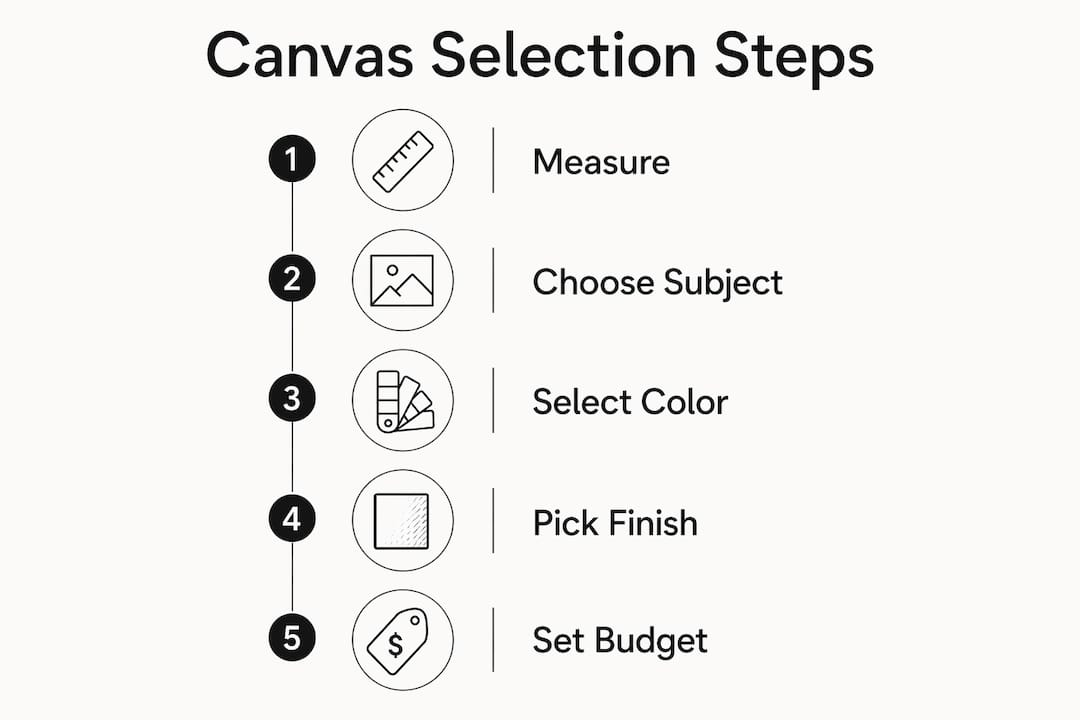
For finish and materials, gallery-wrapped canvas (the image wraps around the stretcher bars with no frame required) reads cleanest in contemporary and minimalist dining rooms. Float frames add a shadow gap that suits more formal or traditional settings. For longevity, UV-protective varnish on originals and archival inks on prints are non-negotiable in a dining environment where light and humidity fluctuate. You can learn more about why canvas suits diverse interiors before committing to a finish.
Budget in the U.S. market runs from under $200 for quality fine-art prints to $500–$1,500 for limited-edition gallery prints, $2,000–$8,000 for studio originals, and $5,000 and up for fully commissioned large-format works from established artists.
Pro Tip: When your wallpaper is busy or patterned, choose a single graphic piece rather than a gallery wall. One strong canvas cuts through visual noise; six small ones add to it.
Where exactly should you hang a statement canvas in a dining room?
The standard museum hang places the canvas center at 57–60 inches from the floor. In a dining room, adjust downward by 3–5 inches so the art connects visually with the table rather than floating above it. If a pendant light hangs over the table, the bottom edge of the canvas should clear the fixture by at least 6–8 inches. For rooms with ceilings above 10 feet, you can raise the center line to 62–65 inches without losing the connection to the table. Detailed dining room placement rules are worth reviewing before you put a nail in the wall.
Laterally, center the canvas to the table, not the wall, unless the table is centered on the wall anyway. When a fireplace or architectural feature competes for attention, align the canvas to the dominant feature and let the table follow.
| Arrangement | Best for | Visual effect | Watch out for |
|---|---|---|---|
| Single large canvas | Formal, minimal, hospitality-style rooms | Clean focal point, curated feel | Must be correctly scaled or it looks lost |
| Triptych (3-panel) | Rectangular tables, long walls | Symmetry, gallery depth | Panels must align precisely or it reads sloppy |
| Grouped gallery | Eclectic, layered interiors | Energy, personal narrative | Busy wallpaper makes this chaotic |
| Diptych (2-panel) | Square tables, alcoves | Balance without rigidity | Gap width critical: 2–3 inches maximum |
For multi-panel arrangements, keep gaps between panels at 2–3 inches for a tight, intentional look. Staggered heights work in eclectic rooms but undermine symmetry in formal ones. Round tables favor a single canvas or a circular/square format; rectangular tables carry triptychs and horizontal formats naturally.
Pro Tip: Cut paper templates to the exact canvas dimensions and tape them to the wall before drilling. Spend ten minutes with paper; save yourself an afternoon of spackle.
How do you style a statement canvas with furniture, lighting, and table settings?
Cohesion comes from repetition of one element, not everything. Pull a single color from the canvas and repeat it in one textile, whether that’s the chair upholstery, a linen runner, or the drapery. That one thread ties the room together without making it feel matchy. Mixing art styles and using layering techniques adds dynamism; the key is to anchor the layers with that one repeated color.
Contrast is a legitimate design move when it’s deliberate. A large-scale graffiti canvas in a room of dark walnut and linen reads as fashion-forward, not jarring, because the scale matches the furniture’s weight. A tiny canvas in the same room would look accidental.
For layering depth, place a narrow console beneath a large canvas and add a single sculptural object or a smaller framed work on the console. That vertical stack creates a vignette that makes the canvas feel installed rather than just hung. Mirrors work the same way when positioned to catch candlelight.
Lighting changes everything at dinner. Warm-white light (2700–3000K) makes warm-toned canvases glow and flatters skin tones at the table. Cool-white light (4000K+) suits high-contrast black-and-white or cool-palette pieces but can make a dining room feel clinical after dark. Tableware choices echo this: matte black plates against a bold canvas create graphic contrast; white porcelain lets the art breathe.
For formal dining rooms, a large-scale fashion portrait or abstract in a restrained palette communicates authority. Modern minimal rooms carry bold pop-art or urban expressionist pieces without effort. Eclectic luxury rooms can handle a layered gallery arrangement, provided one piece clearly dominates.
Can you DIY a luxury-looking statement canvas?
Yes, and three techniques in particular produce results that read as curated rather than crafted. BHG confirms that swirled-watercolor abstracts, paint-swatch color-block canvases, and graphic statement canvases are all beginner-friendly and can be finished to a polished standard.
Materials you’ll need:
- Pre-stretched gallery-wrap canvas (at least 1.5-inch deep bars for a professional profile)
- Archival acrylic paints (Golden or Liquitex for lightfastness)
- Gesso primer if the canvas isn’t pre-primed
- Soft-body brushes and a palette knife for texture
- Satin or gloss archival varnish (Liquitex or Golden Polymer Varnish)
- Vinyl letters for typographic canvases
Step-by-step time estimates:
- Prime and dry (30 minutes active, 2 hours dry time)
- Base coat (20 minutes active, 1–2 hours dry)
- Main painting pass (1–3 hours depending on technique)
- Second pass and detail work (1–2 hours, next day)
- Final varnish coat (20 minutes active, 24 hours cure)
- Mount and hang (30 minutes)
For the vinyl-resist typographic method: paint your base color, apply vinyl letter stickers to spell your statement, paint the second color over everything, let it dry slightly, then peel the vinyl. The first color appears as crisp letterforms. Apartment Therapy notes that a single DIY canvas is often easier to hang and coordinate than a full gallery wall, which makes it a practical choice for dining rooms where you want impact without complexity.
For commissioning, brief the artist with a moodboard (3–5 reference images), exact dimensions, your color palette, and a firm budget. Expect a 30–50% deposit upfront, a 4–12 week production window for originals, and delivery in a crate for large canvases. Limited-edition prints offer better resale value than open editions; originals appreciate when the artist has a documented exhibition history.
What do you need to know about lighting, installation, and maintenance?
Lighting temperature is the detail most guides skip. For dining rooms, 2700–3000K is the target range for picture lights and track heads. A wall-mounted picture light positioned 12 inches above the top edge of the canvas and angled at 30 degrees gives even wash coverage without hot spots.
Key installation specs: For drywall, use 1.5-inch coarse-thread screws into studs, or toggle anchors rated for at least twice the canvas weight. French cleats distribute weight across a wider span and are the preferred method for canvases over 40 pounds. D-ring hardware on the canvas back should be positioned one-quarter of the way down from the top edge on each side.
Dining rooms present specific maintenance challenges: airborne grease from cooking and humidity from serving hot food. Dust the canvas surface monthly with a dry microfiber cloth. Never use water directly on an unvarnished original. For varnished canvases, a barely damp cloth removes light grease; reapply varnish every 3–5 years. Keep canvases at least 3 feet from heat sources and away from direct splatter zones.
For prints under glass or acrylic, UV-filtering glazing blocks the wavelengths that cause fading. Position the canvas so it receives no direct sunlight during peak hours.
Where should you buy or commission a statement canvas in the U.S.?
The buying route you choose determines turnaround time, customization depth, and the level of exclusivity you get.
- Curated luxury retailers (made-in-USA): Fastest turnaround, predictable quality, gallery-wrapped and ready to hang. Best for buyers who want a specific aesthetic without a long lead time. Look for archival materials, certificate of authenticity, and a clear return policy.
- Gallery purchases: Higher price point, but you get provenance documentation and often a relationship with the artist. Ideal for investment-grade originals.
- Direct artist commissions: Maximum personalization. Expect 6–16 weeks, a deposit schedule, and shipping in a custom crate. Vet the artist’s exhibition history and ask for material specifications in writing.
- Vetted print studios: Good for large-format reproductions of licensed works. Confirm archival inks, canvas weight (minimum 400gsm for dining-room scale), and whether the print is gallery-wrapped or requires separate framing.
When vetting any seller, confirm: materials specification (canvas weight, ink type, varnish), return or exchange policy, installation support availability, and whether reviews are verified. Large-format canvases read more curated than multiple small pieces in hospitality-style dining rooms, so prioritize one strong piece over a budget gallery wall.
Key Takeaways
A single gallery-wrapped canvas sized to 60–75% of your dining table’s width, hung with its center at 57–60 inches from the floor, and lit at 2700–3000K is the most direct path to a luxury dining-room focal point.
| Point | Details |
|---|---|
| Scale rule | Canvas width should equal about two-thirds to three-quarters of your dining table’s width for correct visual proportion. |
| Hanging height | Center the canvas at approximately five feet from the floor; drop a few inches to connect it visually to the table. |
| Lighting priority | Use warm-white light in the lower 3000 kelvin range aimed at 30 degrees for even coverage without hot spots. |
| Material standard | Gallery-wrapped canvas with archival inks or UV-varnished originals hold up in dining environments. |
| Luxuryartcanvas option | Over 1,000 made-in-USA designs, gallery-wrapped and ready to hang, backed by 10,000+ satisfied customers. |
Why bold canvases belong in the dining room
Most designers treat the dining room as the safest room in the house, and that’s exactly why it ends up the most forgettable. A neutral print above a credenza, a small botanical cluster above the buffet. Nothing that asks anything of the room or the people in it.
The dining room wall is actually the highest-stakes wall in the house. People sit facing it for an hour at a time. They have nothing else to do but talk and look. A canvas that commands that wall, one with real scale, a strong palette, and a point of view, does more for a dinner party than any table setting ever could.
The fashion-forward approach Luxuryartcanvas takes, graffiti-influenced, pop-art driven, unapologetically bold, works in dining rooms precisely because it refuses to be background. Archival materials and made-in-USA craftsmanship mean the piece holds its color and finish through years of dining-room humidity and candlelight. That’s not a luxury detail. It’s the baseline for anything worth hanging.
Bold, made-in-USA canvases for your dining room
If you want a statement canvas without the 12-week commission timeline, Luxuryartcanvas offers over 1,000 designs crafted in the USA, gallery-wrapped and ready to hang the day they arrive.

Two styles that consistently work in dining rooms: the Louis Vuitton canvas art for a high-fashion, monogram-forward focal point, and the graffiti pop art canvas for rooms that want energy and graphic impact. Both ship gallery-wrapped with archival inks on heavyweight canvas. Custom sizing and commission inquiries are handled directly through the site. Browse the full collection at Luxuryartcanvas and use your table-width measurement to filter by size from the start.
Useful sources and further reading
- 50 Dining Room Wall Art Ideas For Elevated Entertaining — Southern Living’s curated guide to dining-room art placement, scale, and style
- 14 DIY Canvas Art Ideas for One-of-a-Kind Wall Designs — BHG’s practical DIY canvas techniques including watercolor and paint-swatch methods
- Easy Wall Art Canvas Painting Ideas for Beginners — Apartment Therapy on single-canvas solutions and coordination strategies
- Dining Room Wall Art Placement: A Decorator’s Guide — Luxuryartcanvas’s placement and hanging-height guide
- Mixing and Matching Canvas Art for a Stunning Effect — Layering and asymmetry techniques for multi-canvas arrangements
- Types of Canvas Art for Open Plans — Sizing strategies for open-plan dining and living spaces
- 31 Easy Painting Ideas to Try on Canvas — Beginner-friendly painting ideas including gradient and abstract techniques
- Think Create Art: Painted Statements on Canvas — Step-by-step vinyl-resist typographic canvas method
Art Scale in Large Offices: A Buyer's Guide
Wall Art Arrangement Ideas by Room: The Pro Hang Guide