
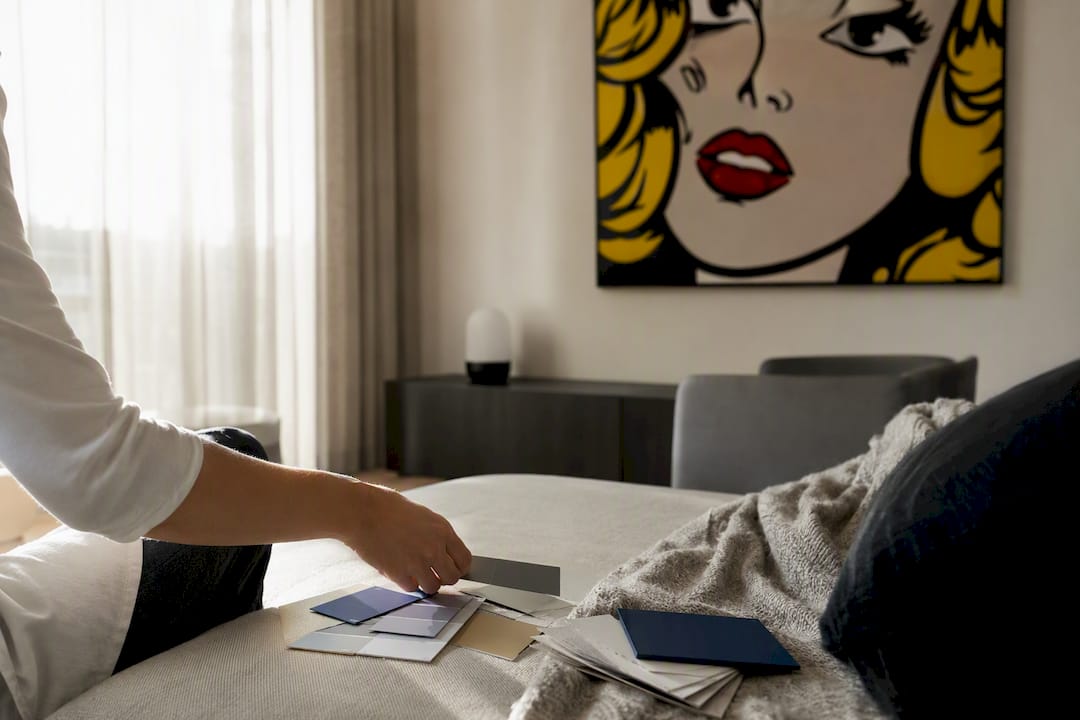
An art-driven room concept is a design approach where a piece of art (not the sofa, not the rug) sets the palette, scale, lighting, and mood, and everything else in the room answers to it. This works best for anyone with one striking piece or a collection they actually want to look at, not just store. The caveat: it fails fast if you buy furniture first and hope the art fits later.
- Anchors the palette: colors get pulled from the artwork using a method like the 60-30-10 rule
- Sets the scale: furniture size and wall arrangement respond to the art, not the other way around
- Backed by ready-to-hang sourcing: brands like Luxuryartcanvas make it possible to start with a museum-quality piece instead of hunting for years
Key Takeaways
An art-driven room concept works because the artwork, not the furniture, dictates palette, scale, and mood, and every other decision follows from that one anchor.
| Point | Details |
|---|---|
| Choose the anchor first | Select and measure your artwork before buying furniture, paint, or textiles. |
| Apply the 60-30-10 rule | Pull dominant, secondary, and accent colors directly from the art for a balanced palette. |
| Size art to furniture | Statement pieces should run roughly two-thirds the width of the sofa or wall below them. |
| Light and protect the piece | Use layered lighting and UV-aware placement to preserve color and detail long term. |
| Start with ready-to-hang canvas | Luxuryartcanvas offers archival-ink, USA-made canvases sized for statement walls, cutting the sourcing timeline dramatically. |
Table of Contents
- What Counts as “Art” in an Art-Driven Design?
- Why Design a Room Around Art in the First Place?
- How Do You Plan an Art-Driven Room?
- What Are the Color and Scale Rules for Art-Driven Rooms?
- How Should You Light, Hang, and Protect Art in a Living Room?
- How Do You Arrange Furniture So Art Doesn’t Look Like a Gallery?
- Where Should You Source Art, and How Do You Rotate It?
- What Mistakes Do Homeowners Make With Art-Driven Rooms?
- What Does an Art-Driven Concept Look Like Room by Room?
- What Do Designers and Research Say About Art-First Rooms?
- How Do You Maintain Art Once It’s Part of the Room?
- How Does an Art-Driven Concept Work Across Different Styles?
- How Much Should You Budget for an Art-Driven Room?
- Does This Concept Work in Small Rooms and Large Rooms Alike?
- Living With Art, Not Just Arranging Around It
- Skip the Search, Start With the Canvas
- Frequently Asked Questions
- Sources
What Counts as “Art” in an Art-Driven Design?
Art-driven design isn’t limited to a framed oil painting over the mantel. It covers canvas prints, large-scale photography series, sculpture, mural or statement wallpaper, and even room-scale installations, as long as the piece is strong enough to organize decisions around it.
The approach also scales in intensity. A single statement artwork above a console is the lightest version. A gallery wall of curated pieces is a step up, requiring more coordination between frames and spacing. A full mural or integrated installation is the most immersive version, where the art essentially becomes the room’s architecture.
- Single-statement piece: one oversized canvas dictates wall color and furniture tone
- Gallery wall: multiple works share a palette but vary in scale and subject
- Immersive mural or installation: art extends across a wall or ceiling and drives the entire layout
A deep indigo abstract painting, for instance, can push you toward warm wood tones and brass fixtures purely because that combination reads well against blue. That’s the art doing the design work for you.
Why Design a Room Around Art in the First Place?
Art gives a room a narrative it wouldn’t otherwise have. Furniture-first rooms tend to look competent but forgettable; art-first rooms have a focal point that tells you something about the person who lives there. Designers who treat a significant work as an early design driver consistently report more connected, authentic interiors than those bolted together from a furniture catalog.
The practical upside matters just as much as the emotional one:
- Fewer decisions to make: once the art sets the palette, paint colors and fabric choices narrow themselves down
- Built-in cohesion: everything in the room ties back to one visual source instead of competing for attention
- Easy refreshes: swap the art and the room feels new without repainting or replacing furniture
Pro Tip: Don’t chase a “gallery” look so hard that the room stops feeling lived-in. Leave a stack of books on the console, a throw blanket on the chair. A room that looks like nobody’s allowed to sit in it isn’t art-driven, it’s just cold.
How Do You Plan an Art-Driven Room?
Start with the art, not the floor plan. Here’s the order that actually works:
- Identify the anchor artwork. Choose the piece with enough visual weight to carry the room.
- Photograph and measure it. Take a well-lit photo for color reference and record exact dimensions before you shop for anything else.
- Choose sightlines and a focal wall. Decide where the piece is visible from the entry, the seating area, and any adjoining room.
- Extract the palette. Pull dominant, secondary, and accent colors directly from the piece.
- Set scale and furniture footprint. Size everything else in proportion to the art.
- Plan lighting and protection. Address glare, UV exposure, and mounting hardware before installation day.
- Build in room for rotation. Leave wall space or storage for swapping pieces later.
Designers who start with the art pull texture and shape from the piece, not just color, so fabric weaves or furniture curves can echo brushstrokes or geometry.
Pro Tip: Photograph your artwork in natural daylight, not under a lamp. Warm bulbs shift blues toward green and throw off every paint sample you try to match later.
What Are the Color and Scale Rules for Art-Driven Rooms?
The 60-30-10 rule is the backbone of art-led color planning: 60% of the room takes the dominant color pulled from the artwork, 30% goes to a secondary tone, and 10% is reserved for a bold accent. This proportional split is what keeps an art-anchored room from turning into a chaotic color clash, since every hue in the space traces back to one source.
Color rule callout: Professionals commonly apply 60-30-10 when translating a painting into a full room palette. Skip the ratio and you get a room where every color argues with every other color.
Pulling the actual hues is simpler than it sounds. Photograph the piece, then run it through a digital color-picking tool to isolate the dominant, secondary, and accent values before testing them as paint or fabric swatches.
Scale follows its own logic:
- A statement piece over a sofa should run roughly two-thirds the width of the sofa itself
- Gallery walls need consistent spacing (2 to 3 inches between frames is standard) so the grouping reads as one composition
- Ceiling height matters: a 9-foot ceiling can carry a large vertical piece that would overwhelm a standard 8-foot room
Pro Tip: If you’re torn between one large piece and a gallery wall, measure the wall’s total width first. Walls under 8 feet usually favor a single statement work; wider walls have room for a curated grouping.
How Should You Light, Hang, and Protect Art in a Living Room?
Lighting changes how art reads throughout the day, so plan for more than one light source. Picture lights mounted directly above a frame create dedicated highlighting, track lighting works well for gallery walls, and ambient layering (lamps, dimmers) keeps the piece from looking flat once the sun goes down.
Hanging follows a simple rule: center artwork at eye level, roughly 57 to 60 inches from the floor to the piece’s midpoint. Gallery walls need consistent spacing between frames, and heavier pieces require French cleats or toggle bolts rather than standard picture hooks.
Protection is where people cut corners and regret it:
- Keep unglazed canvases out of direct sunlight to slow UV fading
- Avoid hanging valuable pieces in bathrooms or kitchens with high humidity swings
- Choose UV-filtering glazing for works on paper or photography
- Confirm hardware is rated for the piece’s actual weight, not an estimate
- Check whether homeowner’s insurance covers high-value pieces separately
Pro Tip: Read more on the specifics of why art lighting enhances canvas display before you commit to fixture placement.
How Do You Arrange Furniture So Art Doesn’t Look Like a Gallery?
Furniture height is the difference between “art-driven room” and “museum exhibit.” Keep pieces beneath large artwork low-profile: a low sofa, a narrow console, or a slim credenza lets the eye travel straight to the wall instead of getting blocked by a tall bookcase or an oversized armoire.
A striking painting can counterbalance bulky permanent furniture, which means you can actually get away with a heavier sectional if the art above it does enough visual lifting to offset the mass.
- Keep furniture under large art at least 6 to 8 inches lower than the piece’s bottom edge
- Skip tall lamps or floor plants directly in front of a statement wall
- Maintain a clear sightline from the room’s main entry point to the artwork
- Use lucite or low metal stands for sculpture so nothing visually competes with the base
Where Should You Source Art, and How Do You Rotate It?
Sourcing depends on budget and patience. Galleries and art fairs offer originals but require travel and negotiation. Local artists often sell directly at lower markups. Online marketplaces and ready-to-hang canvas retailers offer speed and consistent sizing. Commissioned work gets you an exact fit for an odd wall, at a higher price and longer wait.
Before committing to nails, test the placement:
- Lean the piece against the wall for a few days to live with it
- Ask galleries about temporary loan programs
- Use a printed mockup taped to the wall to check scale
Re-hanging and rotating artworks keeps a home from feeling static, and some consultants offer “try before you buy” loans specifically for this reason. Keep valuable rotated pieces stored flat, climate-controlled, and insured if they leave the wall for any length of time.
What Mistakes Do Homeowners Make With Art-Driven Rooms?
The most common error is buying the sofa first and shopping for art that “matches” it later. That approach guarantees the room looks furniture-driven no matter how good the final piece is. Undersized art is a close second: a small canvas over a large sofa reads as an afterthought, not a focal point.
- Choosing art to match existing furniture instead of the reverse
- Hanging art too high, disconnected from the seating line below it
- Ignoring lighting entirely, leaving the piece flat and shadowed at night
- Skipping UV or humidity protection on valuable or original work
Quick fixes: rescale with a companion gallery wall if the single piece feels lost, lower the hanging height to align with furniture, and add a daylight-balanced accent light before assuming the piece itself is the problem. Call a professional for heavy sculpture installation, electrical work tied to lighting, or museum-grade glazing on originals.
What Does an Art-Driven Concept Look Like Room by Room?
Living room: A large statement piece over the sofa, with one or two textile accents (a throw pillow, a rug border) pulling directly from the art’s palette.
Bedroom: Calmer, quieter pieces work better here. Pull one accent hue for the linens and confirm the art is visible from both the bed and the doorway.
Hallway and transitional spaces: A single tall work or a curated sequence of smaller pieces reads well in narrow spaces. Leaning art against the wall keeps things flexible for renters, and swapping out a hallway’s interior door for a statement transition can reframe the entire sightline into the space.
Kitchen and bathroom: Stick to durable, framed prints or glazed surfaces here. Keep unprotected canvases away from direct steam or splash zones.
Quick checklist for any room: confirm the sightline from the main entry, size the piece to at least two-thirds the width of the furniture below it, and protect anything near moisture or direct sun.
- Identify the room’s primary sightline
- Choose a piece sized to the furniture beneath it
- Adjust materials (framed vs. canvas) based on humidity exposure
What Do Designers and Research Say About Art-First Rooms?
The 60-30-10 rule isn’t a decorating trend, it’s a proportional habit borrowed from color theory that keeps art-led palettes from feeling cluttered. Gallerists back this up from the curation side too.
Gallerists Nacho Polo and Robert Onuska argue that art should participate in shaping a room’s identity and atmosphere, not arrive as an afterthought, and that the most successful interiors place art in the conversation from the start.
That “start with the art” logic shows up repeatedly in high-end projects, where designers have reworked entire layouts and finishes to let a major installation integrate fully with the architecture around it. At a homeowner scale, the same principle applies on a smaller budget: treat the art as mobile, use flexible furniture and neutral backgrounds, and extract exact hues with a photo and color-picking tool rather than eyeballing a paint chip against your phone screen.
How Do You Maintain Art Once It’s Part of the Room?
Art that anchors a room’s design still needs the same environmental care as art in a museum, just adapted to a home. Dust canvases with a soft, dry microfiber cloth. Skip glass cleaner or household sprays directly on canvas surfaces since chemical residue can dull archival inks over time.
Humidity swings are the bigger threat than dust. Aim to keep relative humidity in the 40% to 55% range where possible, and avoid hanging unprotected canvases directly above radiators, fireplaces, or bathroom exhaust fans. Rapid temperature shifts cause canvas to expand and contract, which eventually shows up as slack fabric or warped stretcher bars.
Direct sunlight is the other slow killer. UV exposure fades pigments gradually, so pieces on a south-facing wall benefit from UV-filtering window film or, at minimum, sheer curtains that cut peak afternoon light. Original works on paper or photography need glazing with UV protection built in; canvas prints from quality producers using archival inks tolerate ambient light better but still benefit from indirect placement.
Check mounting hardware annually, especially in older homes where wall material shifts with the seasons. A loose french cleat or a stretched picture wire is a maintenance issue until it’s a broken frame on the floor. For anything with real value, whether financial or sentimental, photograph the piece and its wall placement once a year. It’s a fast way to document condition changes before they become expensive repairs, and it gives you a reference if you ever need to file an insurance claim.
Rotation itself is a form of maintenance. Pieces that stay in one spot for years accumulate dust in the same creases and fade unevenly along one edge if any light source is directional. Swapping pieces seasonally, even briefly, gives you a natural excuse to inspect condition up close.

How Does an Art-Driven Concept Work Across Different Styles?
Art-driven design isn’t a style itself, it’s a method, which means it adapts to whatever aesthetic you already lean toward.
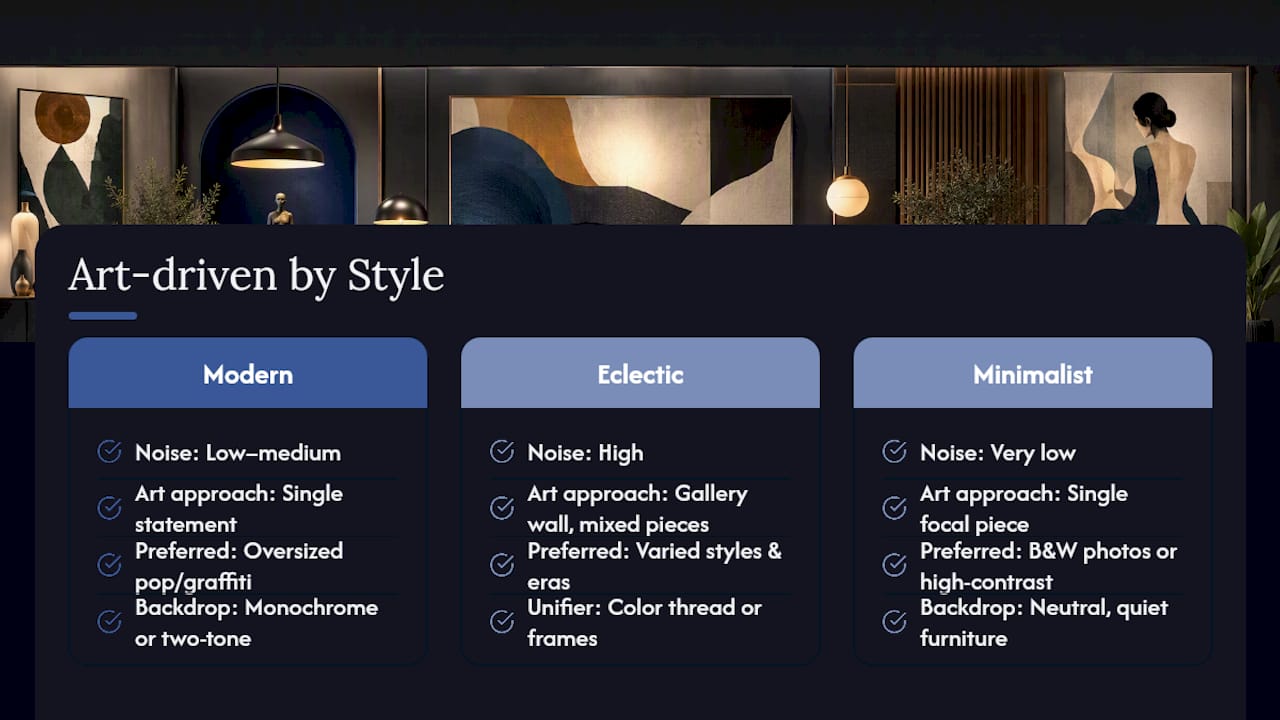
Modern interiors tend to favor a single, oversized statement piece against a restrained backdrop, often monochrome or a two-tone palette. The art gets to be the only loud element in the room, which suits modern design’s preference for clean lines and negative space. A bold graffiti or pop art canvas works particularly well here because the surrounding minimalism gives the piece room to breathe.
Eclectic interiors go the opposite direction, building toward a gallery wall where multiple pieces, styles, and eras coexist. The unifying thread isn’t a shared subject matter, it’s a shared color thread pulled across the grouping, or consistent frame treatment that ties disparate works together visually. Eclectic rooms tolerate more visual noise than modern ones, but they still need that one connective rule or the wall starts to look like storage instead of curation.
Minimalist interiors need the most restraint and arguably benefit the most from an art-driven approach, since a single piece becomes the room’s entire personality. With almost no other visual competition, furniture that’s low, neutral, and quiet, the artwork has to carry real weight. A black-and-white photographic series or a high-contrast abstract canvas often works better here than a busy, multicolor piece, since minimalist rooms punish visual clutter more than any other style.
The through line across all three: identify the style’s baseline tolerance for visual noise, then match the art’s boldness and the surrounding palette’s restraint to that baseline. A graffiti piece that reads as electric in a modern room can feel chaotic in a minimalist one if the supporting palette doesn’t dial back to compensate.
How Much Should You Budget for an Art-Driven Room?
Budget conversations usually start in the wrong place: people ask what a room costs before asking what the anchor piece costs, when it should be the other way around. Once you know your artwork’s price, everything else (paint, textiles, furniture adjustments) gets budgeted as a percentage of that anchor investment, not as a separate line item.
Reserve 20% to 30% for paint, textiles, and small styling elements that echo the art’s palette.
Ready-to-hang canvas art gives you cost predictability that original paintings or commissioned pieces don’t. An original from a gallery or a bespoke commission can run into the thousands with an uncertain timeline, while a quality canvas print with archival inks gives you a fixed price and immediate availability, which makes budgeting for the rest of the room far easier since you’re not waiting months to know your true starting cost.
Don’t skip the “hidden” line items. Proper lighting fixtures, museum-grade mounting hardware for heavier pieces, and UV-protective glazing for anything near a window all add real cost that beginners tend to forget until installation day. Building a small contingency, roughly 10% of your total budget, covers these without derailing the project.
Does This Concept Work in Small Rooms and Large Rooms Alike?
Art-driven design scales in both directions, but the rules shift depending on square footage. In a small room, like a powder room, entryway, or reading nook, one well-chosen piece does more work than a whole grouping would. Small spaces get visually noisy fast, so a single statement work with a tight, restrained palette keeps the room feeling intentional instead of cramped.
Larger rooms, open-concept living areas, great rooms, or double-height entries, can support either a genuinely oversized single piece or a more ambitious gallery wall, since there’s enough negative space to let a grouping breathe. The risk in big rooms runs the opposite direction from small ones: art that’s too modest gets swallowed by the volume of the space and stops functioning as a focal point at all.
Room type matters as much as size. A home office benefits from art that’s energizing without being distracting during long work sessions, since you’re living with the piece for hours at a stretch rather than passing through it. A primary bedroom needs the calmest end of your palette. A open-plan kitchen and living space needs art visible and legible from multiple angles and distances, which usually rules out anything with fine detail that only reads up close.
The consistent rule across every scale: measure the actual sightline distance before choosing size. A piece that reads perfectly at 6 feet in a small den can look undersized and lost at the 20-foot viewing distance common in an open-concept great room.
Living With Art, Not Just Arranging Around It
The best art-led rooms I’ve studied aren’t frozen showrooms. They shift as the homeowner’s eye changes, and a periodic rehang keeps the whole space feeling awake instead of curated into stillness.
Skip the Search, Start With the Canvas
Everything covered here (the anchor piece, the palette extraction, the scale math) gets a lot easier when you start from a canvas that’s already sized, framed, and ready to hang. Luxuryartcanvas removes the biggest bottleneck in art-driven design: the months-long hunt for an original that fits your wall, your budget, and your timeline.

Every piece is produced in the USA with archival inks, so fading and color shift stay minimal even under normal window light. The catalog runs over 1,000 designs, including oversized options sized specifically for statement walls, so you’re not stuck scaling a small print up and losing detail. If graffiti or pop art fits the mood you’re building, browse the graffiti canvas collection or the pop art canvas selection for pieces bold enough to anchor a whole room’s palette on their own. Pick your anchor first, then build the room around it.
Frequently Asked Questions
What is an art-driven room concept in simple terms? It’s a design method where a piece of art determines the room’s color palette, furniture scale, and lighting plan, rather than being added after the furniture is chosen.
Do I need an expensive original painting to do this? No. A quality ready-to-hang canvas with archival inks can anchor a room just as effectively as an original, often with far more predictable cost and sizing.
How big should my statement artwork be? A common guideline puts art width at roughly two-thirds the width of the furniture beneath it, adjusted up or down based on ceiling height and wall size.
Can this approach work in a small apartment? Yes. Smaller rooms often benefit even more from one well-chosen statement piece, since a single anchor avoids the visual clutter a gallery wall can create in tight spaces.
How often should I rotate or rehang art? There’s no fixed rule, but rehanging periodically, even once every year or two, keeps a home feeling current and gives you a chance to inspect the piece’s condition.
Sources
- How to design a room inspired by a painting – The House That Lars Built
- How to incorporate art into an interior: designers’ tips for a harmonious space – Vogue Adria
- How to transform your home with art – BBC Culture
- Start with the art method loved by interior designers – House & Garden
- How to hang art, artfully – Elle Decor
Recommended
- How to Make Every Room a Statement: The Interior Design Approach to Ar – Luxury Art Canvas
- Why Wall Art Changes Room Atmosphere: A Full Guide – Luxury Art Canvas
- Wall Art in Client-Facing Spaces: A 2026 Design Guide – Luxury Art Canvas
- Why Street Aesthetic Shapes Contemporary Room Design – Luxury Art Canvas
Mixing Pop Art With Thrift Store Furniture
Refresh Your Home's Art Every Season, Room by Room